Home Blog Page 1083

A Beginner’s Guide Bus Etiquette

0

Think hygiene

CMYK-BUS1-Eleanor

There’s nothing worse than a man who smells like he hasn’t showered in a week, and you certainly don’t want to be that guy. Clearly, the only solution is dousing yourself in a whole can of AXE or whatever overly strong cologne or perfume you wear.

NOTE: Sneezes and watery eyes are signs of appreciation. “I’m allergic” is transit speak for, “Man, you smell real good.”

Sharing is caring

CMYK-BUS3-Eleanor

Unfortunately, a lot of people forget to bring their music playing devices. If you happen to bring your iPod, why should you hog all your music to yourself? Instead, share it with the other passengers by blaring it as loudly as possible. Perhaps even sing along at the top of your lungs for the added enjoyment of other passengers.

NOTE: Consider the musical attitudes of others as well, pick music that everyone is likely to enjoy such as profanity laced rap that is heavy in racial slurs and discusses the defiling of one’s mother.

Don’t discriminate

CMYK-BUS2-Eleanor

If you’re like me, you probably hate being singled out. So why would you single out perhaps our most vulnerable citizens — the elderly? Next time you’re sitting at the front and you see an elderly person standing, resist your urge to offer them your seat. Instead, help them re-experience the joys of youth by ignoring them and letting them stand for the whole 30 minute bus ride.

NOTE: A smartphone with lots of pointless apps is optimum for ignoring people. However, a single, featureless screen to stare at for the entirety of the trip signals your commitment to ignoring them.

Help those in need

CMYK-BUS4-Eleanor

You have a duty to help your fellow man, so it’s only fitting that you, the only man to foresee judgement day, must do everything in your power to save the souls of your fellow passengers. Yell at them to repent, tell them they will burn in Hell, yell at their children, commandeer the bus — do whatever you must do.

NOTE: A good, catchy sign would probably be good as well so those who are hearing impaired can be saved too.

Board Shorts

0

WEB - shorts - sexyli

Napping space reconsidered

Build SFU general manager Marc Fontaine asked the board of directors to reconsider the inclusion of a napping room in the Build SFU space programme. 

Fontaine explained that the decision passed last week — to replace one of the smaller suites in the SUB with a napping room — was troublesome because it would sit across from the proposed workshop space.

Board amended their decision, deciding to replace one of the larger suites with a napping room instead.

SFSS Shorts

Board tasked Shirin Escarcha, communications, art, and technology representative, to work with the executive director and the Communications Office to pursue a new multimedia segment called SFSS Shorts.

The videos would present either condensed reports from board members or would be informational videos centered around SFSS initiatives.

Escarcha told the board that she hopes SFSS Shorts will fulfill the board’s goals of increasing the visibility and accessibility of the SFSS, as well as aligning the society’s services to the members’ needs.

The fraternity question

Board discussed the problems inherent with the Greek life support club, GRID, for over an hour at their July 22 meeting.

The club assists fraternities and sororities with renting tables at clubs days and rooms for recruitment meetings; however, fraternities and sororities are banned under university policy because of their exclusionary nature.

Board debated whether or not GRID itself fell under the exclusionary label, but could not reach a decision on what needed to be done concerning the issue, despite VP university relations, Moe Kopahi, insisting that a change was required lest their insurance costs be raised.

Satellite signals

0

  WEB-woodwardWoodward’s

Local restaurant workers took a break from the grind of mixing, cooking, and washing to don a pair of boxing gloves and duke it out for the title of Restaurant Rumble Champion.

Woodward’s partnered with Aprons for Gloves to present the third annual fundraising event, Restaurant Rumble Fight Night, last Wednesday, July 23.


Surreysurrey

Why are purple umbrellas hanging around SFU Surrey campus this July?

The umbrellas are a vibrant new feature of the Rakhi Project, which is a campaign against domestic abuse; they symbolize protection and the work done to educate and raise awareness.

The project is developed from India’s Rakhi (thread) ceremony. Rakhi tied around the wrist of a brother by his sister symbolizes love and respect, and is meant to encourage kinship and respect amongst brothers, sisters, and cousins.


vancouverHarbour Centre

Students from Communications 460, a seminar in dialogue and public issues, held a dialogue event on July 23 at Creekside Community Recreational Centre on the topic of debt and forgiveness.

Rather than focusing on financial debt, the discussions focused on everyday instances of debt. These included moral debt, historical injustices, public apologies, justice and forgiveness, and environmental debt.


University Briefs

0

WEB - University briefs - Lakehead University

Thunder Bay professor invited to research Ötzi the Ice Man

Anthropology professor Carney Matheson of Lakehead University, along with former student and Oxford University PhD candidate, Margaret-Ashley Veall, has been invited to Italy to study the tools Ötzi the Ice Man was carrying at the time of his death.

Ötzi was discovered in 1991 when German hikers found him frozen in the Italian Alps. He remains frozen in Bolzano, Italy, and is considered Europe’s oldest, naturally preserved mummy — over 5,000 years old. 

The two hope to have research results released by 2015. “I’ve dreamed of being able to work on mummies like the Ice Man and Egyptian mummies since I was a child, so this is pretty well a dream come true for me,” said Veall. 

With files from CBC News

“Shooter on Campus” survival video for Alberta universities

The University of Calgary is planning to show new students a video this fall titled, “Shooter on Campus: Know You Can Survive.” The nine minute film is intended to teach students how to react if a shooting occurs on campus. 

 The video was originally filmed at the University of Alberta, and has been distributed to other universities across the province.

U of C hopes this will give students the tools they would need to survive in a crisis situation. However, some students have responded with distaste to the video; one student told The Gauntlet that they believe it is an “unnecessary dramatization of a school shooting.” 


With files from The Gauntlet

Dalhousie University research sheds light on psoriasis 

A research team at Dalhousie Medical School, led by professor Richard Langley, has identified and confirmed the protein that causes psoriasis.

Psoriasis is a chronic medical condition which causes patches of skin to become red and itchy. It affects nearly two per cent of the population, and is most commonly found on the elbows and knees.

“We know that patients who have psoriasis are at a higher risk of diseases such as diabetes, heart disease, depression, arthritis, even inflammatory bowel disease,” Langley told CBC news. 

The study also identified an effective treatment that targets IL-17, the psoriasis-causing protein.


With files from CBC News

Ogres and lawyers at Theatre Under the Stars

0

Shrek_TUTS web

Playing this year at Stanley Park are two comedies adapted from the big screen featuring original scores, stories of overcoming adversity, and plenty of laughs. Shrek: The Musical features the lovable ogre and all his fairytale friends, and Legally Blonde: The Musical returns for a second year in all its peppy, pink glory.

Perhaps it’s the extra year of performance that the show has under its belt, or maybe it is the stronger writing, but Legally Blonde was a much more polished production. Jocelyn Gauthier was stunning as Elle, Peter Cumins complemented her well as Warner, and Cathy Wilmot was an audience favourite as Paulette.

Elle Woods proves that success is the best form of revenge as she follows her ex-boyfriend Warner to Harvard to show him that she can be the serious girl he needs. She ends up surprising herself and meeting some new friends in the process. Catchy songs such as “Gay or European,” “Omigod You Guys,” and “Positive,” were stuck in my head for days after seeing the show, and I was impressed by the talented cast. There were even two dogs in the show: Elle’s Bruiser and Paulette’s Rufus.

Elle’s Greek Chorus of girls from her Delta Nu sorority were also a highlight of the show along with the “Whipped Into Shape” scene with Brooke Wyndham and her aerobics class. The famous Bend and Snap move that Elle teaches Paulette also gets its own song. The show flew by with witty dialogue and intuitive songs that moved the story along.

Shrek is also a highly entertaining show, but even with the jokes and pop culture references that only adults understand, the show really felt geared towards a younger audience. Matt Palmer was wonderful as the bumbling Scottish ogre, and Ken Overbey stole the show as the gregarious, well-meaning Donkey. Lord Farquaad (Victor Hunter) also got plenty of laughs as he spent most of the show walking on his knees in a special costume that made it look like he had very short legs. Princess Fiona (Lindsay Warnock) complemented Shrek very well and they had great chemistry in their duet “I Think I Got You Beat” where they try to impress each other with their terrible childhoods.

Set within a storybook theme, a giant book is wheeled on stage and we first see Shrek and Fiona pop out of the pages as children. Each scene is introduced by a fairy opening the book to a different page, and there is narration in between the scenes as well. I found the narration to be a bit distracting, and it actually pulled me out of the story. I would have preferred to just watch the action without having the commentary.

Everyone’s favourite fairytale characters can be seen in this production such as the Gingy, Pinocchio, the three pigs, the three blind mice, and the Big Bad Wolf. One of the stronger songs was “Freak Flag” as the creatures sing about being yourself and being proud of who you are.

The musical sticks to the story of the film, and although all the songs are original, I liked that they included “I’m a Believer” as the extra song after curtain call. I think I would have enjoyed the show more of the rest of the songs were as well written as this one, and if the cast displayed the same level of energy and enthusiasm as they did on “I’m a Believer.” If you’re a fan of Shrek, the musical won’t disappoint, but for the adults, I would recommend Legally Blonde.

Shrek: The Musical and Legally Blonde: The Musical are presented by Theatre Under the Stars from July 11 to August 23 at Malkin Bowl. For more information, visit tuts.ca.

Former professor to represent Burnaby North-Seymour riding

0

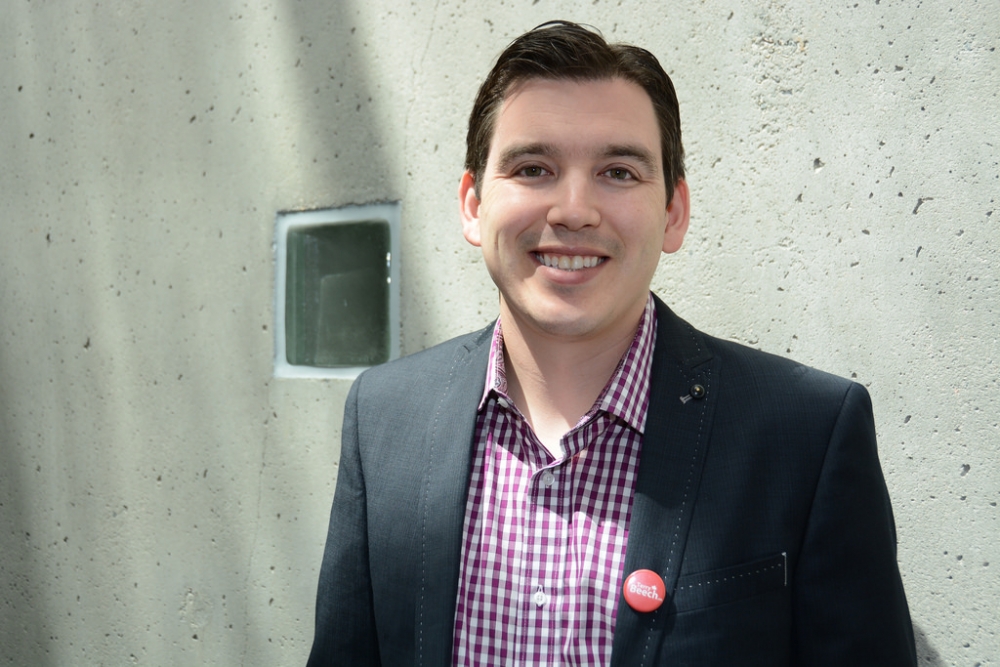
WEB-Terry Beech-Stephen HuiSFU alumnus and former Beedie School of Business adjunct professor Terry Beech has been chosen to represent the Liberals in the Burnaby North-Seymour riding for the 2015 Canadian Federal Election.

Beech was officially named the Liberal candidate at a Nomination Meeting held at the Confederation Centre of the Arts in Burnaby on July 16. The meeting included a vote, however, the process of was a formality as Beech was the only person running, winning by default.

Beech, who graduated from SFU in 2006 with a BBA in Business and Economics, is the CEO of Hiretheworld.com, an organization that calls itself “an online resource that connects employers with professional designers from around the world, allowing businesses to access top design talent quickly and easily.”

He, along with his twin brother Doug, also run the non-profit organization, Twinbro, the mission of which is “to inspire youth to be confident individuals who see the value of post-secondary education and believe in their ability to attain it.”

Beech’s motivation to run for office stems from growing up in a lower income household and having to work hard to go to university. He told The Peak, “We came from, like a lot of people, a poor background. My dad and my mom had to struggle to make ends meet [. . . and] when my parents got divorced, things got a little rocky and things got a bit harder. And because both of my parents didn’t go to university, [post-secondary education] wasn’t really talked about at the dinner table.”

“There’s a lot of potential we can unlock in our own citizens.”

– Terry Beech, 2015 Liberal candidate for Burnaby North-Seymour riding

He continued, “We were able to get the education that we wanted; we had to scrimp and save to get it, and eventually we got it. We were able to leverage that to build pretty good careers for ourselves. I want to make sure that everybody, no matter what their situation is in life, has a similar opportunity to be successful in Canada.”

Beech also stressed the importance of entrepreneurs entering government, stating, “I think there’s lot of opportunities to modernize and do things differently. There’s a lot of potential we can unlock in our own citizens to be more entrepreneurial and be more innovative.

“I think we’ve come from the last couple of generations, as a society, from where a safe career job was the way to go, and that isn’t necessarily available anymore.”

The Burnaby North-Seymour riding was recently created by the 2012 federal electoral boundaries redistribution. The new riding will be comprised of what is currently the northern part of the Burnaby-Douglas riding and a south-east portion of the North Vancouver riding.

These ridings are currently held by the NDP and the Conservatives as a result of the 2011 election, in which the Liberals, who have have traditionally lost elections in these ridings, finished second and third.

Although such circumstances may complicate Beech’s desire to become the first MP of Burnaby North-Seymour, he has beaten the odds before, running for city council at 18 — and winning. “I was captain of my debate team and we were using the city council agendas as kind of an agenda, as a way to test the group, and after a while, we didn’t agree with everything they were doing,” he said. “So, I talked to my law professor and told him I was going to take a run at this, and we took a serious shot.

“We built a campaign team, worked hard, and knocked on doors and [I] was fortunate enough to get elected.”

Although he eventually quit to focus on his studies at SFU, he believes that his experience in municipal politics has shaped him to best represent the community.

He concluded, “I think that my background, coming from municipal politics, is going to make me a better representative and I know what it takes to communicate with all the citizens in the riding, put together complex views, complex interests, and move forward doing what’s best for everyone.”

SFU alumnus finds the romance in job hunting

0

BW-Job date-xianrendujia-Flickr

University students may tend to focus their energies on courting romantic interests, but a recent column by an SFU graduate suggests that they should court career interests in a similar fashion.

Adrian Papara, an economics graduate from SFU and current MBA student in Ottawa, recently wrote a column for The Globe & Mail describing how applicants need to approach the job market like they would the dating scene.

In his column, Papara emphasized the need to stand out in interviews just like one would when trying to get a date. He wrote, ”When it comes to getting noticed at business or school-related networking events, I have adopted the habit of wearing vivid coloured neckties to make myself increasingly memorable and attract attention.”

Much like dating, searching for a job can be daunting for students, explained Tony Botelho, the director of SFU’s Career & Volunteer Services. He explained, “There are a group of students who raise secured work before they graduate, [but] there is a percentage of students who are completely intimidated and find the whole job search process intimidating and absolutely frustrating. Then there’s a huge bulk in the middle.”

Botelho, who helps students get “their best shot at ending up in employment in line with what they might want to be doing,” expressed the advantages of sorting out career priorities early. Botelho suggests students take into consideration the value they place not only on things such as income, travel, time-off, balanced lifestyle, but also believing in the work they do. “Students who start early and [are doing] activities and sort of thinking of things [. . .] tend to do better.”

According to Botelho, there are three tiers of “any effective work search,” the first of which aligns with Papara’s arguments in his column.

The first tier is what Botelho calls the “online portion.” Similar to how people search through online dating profiles, this includes searching for job postings through websites such as Craigslist. However, he cautions, “Very few people get career related jobs from job postings.”

Papara upheld the importance of a well made Linkedin account which serves as a “digital resume,” saying that “crafting a well-thought personal description always helps you stand out among other users.”

The last two tiers of Botelho’s strategies revolve around “you as a human being interacting with other human beings.”

The second tier is making connections, whether they are through networking events or one-on-one meetings.

Although Botelho agreed with Papara’s statement that standing out can be good, he noted that it has to be “in a positive way,” saying, “there’s no one thing; it is overall thinking and strategy.”

He did warn against simply networking, saying, “Networking opportunities are just part of a strategy but the bigger point is getting into situations where you are interacting with people and the type of people you want to interact with and doing it in an authentic way.”

This leads to his third tier, which he feels is perhaps the most important: making active connections. These include volunteering, serving on a board, internships, and co-ops. Botelho describes this as “put[ting] yourself into situations where people see you do something really well.

“When someone sees you do something or contribute, that raises their view of you even higher, and they’ll work harder for you, supporting you with other people or within the organization as well,” he said.

In spite of all of the planning and preparation, Botelho says finding a job really depends on the mindset of a student, as a negative mindset can hinder any search for work. Botelho shared some advice that could be applied romantically, and professionally: “It’s important to stay optimistic, to be flexible, [and] open minded.”

The Underground Sound

0

Cover-finished

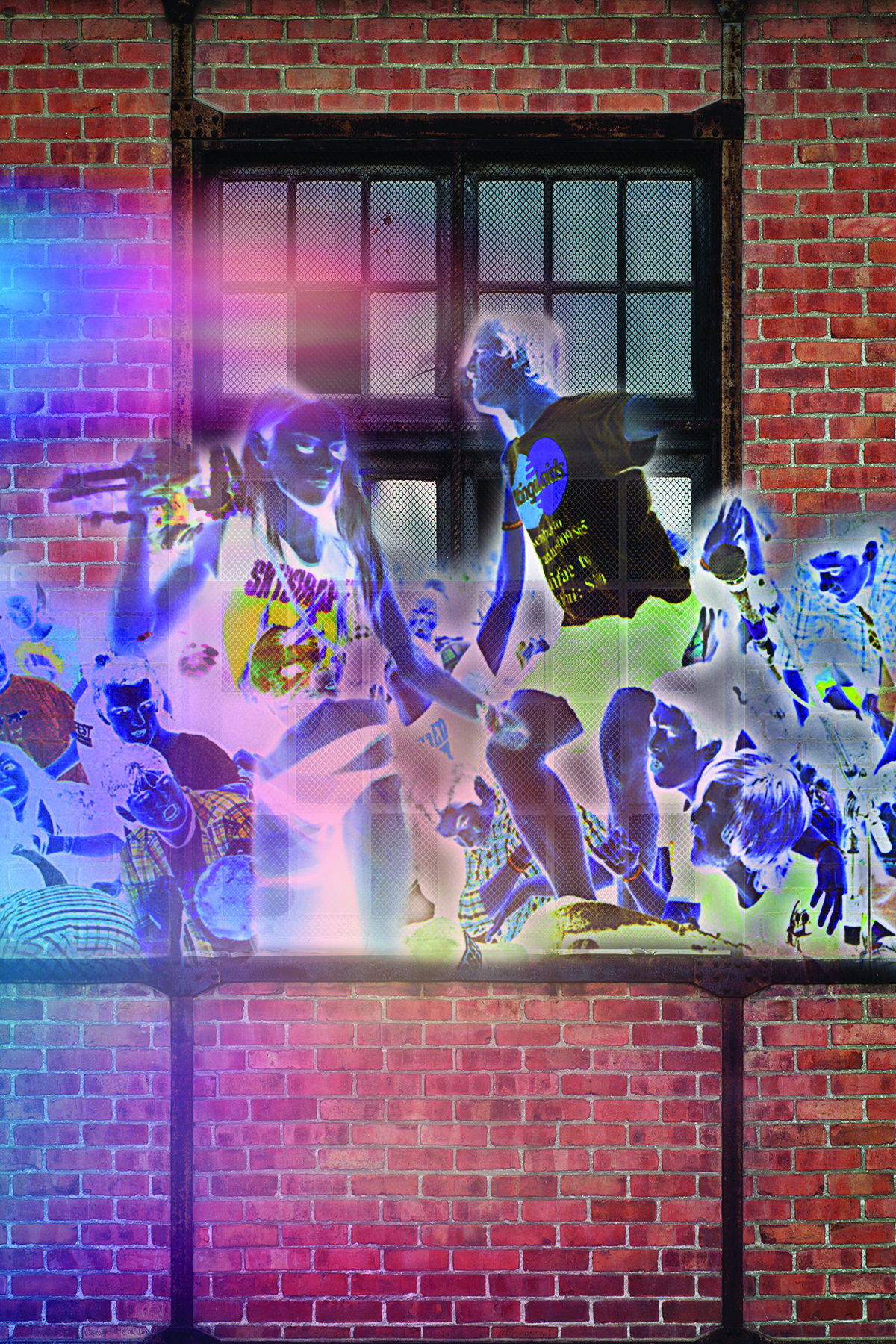
What are some of my favourite music venues in Vancouver? I’d love to tell you, but I can’t. If I published their names and gave away enough information so that anyone reading this could find them, they would be shut down within the week. That’s because a lot of my favourite venues aren’t even considered venues by municipal law: my favourite venues are illegal.

Outside the club mecca of Granville Street, beyond the cobblestones of Gastown, and away from the rest of downtown culture, illegal music venues are peppered throughout the Lower Mainland. You won’t find them being reviewed on Yelp and their shows won’t appear on livevan.ca, but these bustling counter-culture hubs do exist, and thrive, under the radar.

Featuring plenty of local bands and after-hours parties, illegal venues are a way to escape the monotony of bar culture. The only problem is in their name: they’re illegal — and sooner or later, the city always catches up with them.

The Law

What do I mean when I say underground venues? It’s a loose definition by any means. Some are art galleries or practice studios that occasionally host live performances; others are industrial spaces that exist in a sort of gray area between performance space and party location, and a surprising amount are just regular households that give bands a place to play and audiences a place to listen.

The common thread between all of them is the cultural aspect, and the way they float under the city’s radar. For most of these underground venues, there are two main legal hurdles standing in their way: various Vancouver city by-laws, and the province’s liquor laws.

These bustling counter-culture hubs exist, and thrive, under the radar of Vancouver police.

On the city of Vancouver’s website, there’s a section dedicated to outlining the particular by-laws that would come into conflict with things such as underground venues. There’s nothing that directly singles out illegal venues, but there are multiple by-laws meant to prevent them, including the Noise Control By-law, the Fire Control By-law, and the Zoning & Development By-law.

The last one is particularly important because this by-law decides how the city is geographically planned through zoning districts: every part of Vancouver is divided into districts, including residential, commercial, and industrial, limiting the kinds of uses a building within each district can have. The majority of underground venues are located in either the commercial or industrial zoning districts, where rent is cheaper and they’re less likely to garner noise complaints.

The other headache for illegal venues is liquor licensing, which is notoriously bureaucratic in British Columbia. Despite the ongoing struggle to reform many of the province’s archaic liquor laws, it remains expensive and difficult to acquire licences for many smaller events. But because liquor sales are where most venues make their money, many underground venues opt to simply sell alcohol without a licence. 

I Fought the Law…

Of the people I wanted to interview about Vancouver’s illegal venues, Samantha* was at the top of my list. I felt it was important to talk to her for a couple of reasons: she’s been involved with the art and culture scene in Vancouver for several decades now, and she’s currently operating a venue under the city’s radar.

Though any further detail would give away too much, Samantha is one of the most qualified people to talk to about running an underground venue. “What was your favourite underground venue that was closed down?” I ask her. She replies after a moment of hesitation, “Well, probably one of the ones I used to run.”

I can’t list the venues she used to run because it would reveal her identity — this is the kind of secrecy I have to operate in during all of my interviews. While there are a few people willing to speak candidly and on the record about things like their past or present involvement with illegal venues, there’s an understandable hesitancy. These venues and those behind them have enough to worry about without drawing additional attention to themselves.

Samantha’s reason for helping curate a space for local shows is simple: she believes that the only way to help grow the arts community in Vancouver to provide a safe space for artists to do so. She points to the systematic dismantling of the 100-block of West Hastings over the last decade — which saw artist hives such as the What Gallery, Red Gate, the Church of Pointless Hysteria, the Dynamo, and others either shut down or forced to relocate — as an example of how the city is failing to provide opportunities to emerging musicians and artists.

Many of these buildings would host shows and function as community art spaces in the meantime. Without these affordable spaces where artists can develop their craft, Samantha worries that there will be a negative impact on Vancouver’s culture and community.

“[Many notable artists] spent a significant amount of time there working on stuff, making mistakes and fucking up and improving their thing,” she tells me. “You need to have spaces like that. People think about supporting the arts, and they say, ‘We need to put a billion dollars into the Vancouver Art Gallery where we can showcase this art made from other places.’ Okay, that’s great, but if you don’t have places where people can spend five or 10 years improving their skills, then what are you going to have to show?”

Many of these venues host shows and function as community art spaces in the meantime.

She continues, “Culture is an interesting thing. Maslow’s hierarchy of needs says you need your basic needs fulfilled before you have time for culture, which is like the last thing on the list. Before you can enjoy cultural things you need to be able to eat and have clothes and whatever, all these necessities. But the way I see it is that culture is the reason you bother doing all of that stuff. It’s the thing that motivates people, to make them get out of bed in the morning. 

“What is it that makes you get out of bed in the morning?” she asks. “It’s your relationship to other people and the things you do together. I would flip the hierarchy around; if you don’t have any reason to live, then why bother eating and all that?”

“If someone’s reading this article,” I ask, “and they don’t know a lot about underground venues, what’s the one thing you’d want them to know about these kinds of venues?”

“It’s basically the R&D lab for culture,” she replies. “And culture is self-generating. You can create all kinds of bureaucracy and institutions around the results of that process. What needs to get supported is that ground layer and it doesn’t have to be active support — just don’t actively destroy it.”

… and the Law Won

While the name 333 may not ring a bell, it was one of Vancouver’s most prominent underground venues between 2013–14. I had the chance to catch up with the proprietor of 333, Chris Merrell, and he told me about what happened the night the police finally came to shut things down.

“Toward the end of the night when everything was dying down, three or four police cars quietly rolled up and they kind of just ruffled our feathers a bit. Looked through everything, asked us a million questions, and ultimately told me clearly, ‘You can’t just do this.’

 “[The officer] spoke to me for nearly an hour and was pretty upfront, there wasn’t any hidden agenda. He was like, ‘You know how this works, you can’t just do this. You can’t just be open all the time and be a busy venue.’”

Once known for its late hours and eclectic range in shows, varying from hard-core punk-rock to EDM, 333 was shut down back in April of this year. It wasn’t a shock to the rest of the underground community, since that’s what usually ends up happening to these sorts of venues, but it still stung. But Merrell hasn’t given up just yet.

“The reason I think this is an issue and why artists should care about it isn’t because I think it’s cool to not follow the law and not play by the rules in the city you live in,” Merrell explains, “but because this all happened because me and any other venue like mine are expected to abide by licensing and permitting that even [some of the bigger venues] are struggling to keep up with. It’s difficult to open up a business and keep open that business and thrive for people who aren’t coming in with tons of capital.

“At the risk of making some generalizations here, artists don’t tend to have money when it comes to the independent art scene,” he continues. “It’s not economically possible for there to be a punk-rock venue that’s the right space, the right room for it, and in the right neighbourhood and can cost what it needs to cost for people to see that show so it can support touring bands. It’s not economically possible for it to be done and to not be constantly struggling to stay open.”

Where Do We Go from Here?

After a three-month hiatus from 333, during which time most people in Merrell’s position would probably have moved on to other projects, the landlord dealt with the city and has returned with a new occupancy permit for the building. Merrell is now free to start hosting shows at his venue again, with a few restrictions in place: no liquor sales without the proper permits, and the promise that every show be all-ages.

“I can do as many all-ages gigs as I want, as long as I keep it at a safe capacity and everything. My plan for the future is basically to just get it rolling, book high-quality live music gigs, and try and stay within a reasonable limit so that the city is happy with me,” Merrell says.

“We’re going to go for it and it’s going to be way harder, but we’re going to play by the rules.”

Public safety is important, and the city does a thorough job ensuring that buildings are up to fire code and other safety regulations — but restrictions have become a double-edged sword for many of these venues, which are arguably safe but not always up to the specific standards held by by-laws.

“[The city] generally shuts places down on the basis of fire code and safety-type of regulations,” explains Samantha, when I bring up why so many of these spaces are disappearing. “That’s certainly the thing that’s brought up the most. When there’s ever a public discussion on it, people say ‘Oh, well places have to be safe.’

“Safety is important but I can go skydiving if I want to [. . .] I can take that risk, that’s an acceptable risk. How many people have died from cars in Vancouver in the last five years? How many people have died or been injured at an underground party in the last five years? What are the relative risks that we’re talking about here? [. . .] It’s kind of a sacred cow, they can say ‘Well, we don’t want people to die in a fire.’ Well, I don’t want people to die in a fire either.

“If people come to us asking to have a show here and we say ‘Sorry, the city won’t let us; go somewhere else’ then they will go somewhere else and it’ll be somebody’s basement or some place that’s hiding. A lot of the scene in Vancouver is actively hiding from the city, and so that’s why people don’t know about it.”

Will there ever be a day when venues like Samantha’s or the old 333 are welcomed into the Vancouver culture scene, instead of being forced to operate on the outskirts or underground? It’s hard to say for sure — with the by-laws and restrictions currently facing Samantha and other owners, it seems like we’re a long way from seeing underground venues spread into the mainstream of Vancouver’s music scene. But as long as there are fans and bands willing to support it, this underground scene will continue to thrive, with or without police intervention.

It’s easy to get caught up in the city’s infamous reputation as No Fun City, but drop the moniker and preconceived notions for a moment: you may find there are a considerable number of amazing people in Vancouver doing amazing things for the arts community — if only you’re willing to look a little closer.

*Name was changed at the request of interviewee.

Researchers generate a buzz around wild bees

0

CMYK-Bombus_cropped

SFU biology professor Elizabeth Elle and PhD student of biology Kyle Bobiwash are currently studying Lower Mainland and Fraser Valley pollinators in order to help conserve the bee population and improve how they are used in agricultural practices.

The two are especially interested in gathering information on wild bees, a species that is often left out of farmers’ consideration due to the lack of research that has been conducted on them.

Due to increased pesticide use, there has been a recent decline in the bee population in North America. As Bobiwash explained, farmers often “only think of the crop and not at all [about] the free services we get from the bees.” Bees spend their time pollinating the crops we eat every day, creating honey, and ensuring that a large variety of foods continue to exist.

In order for bees to continue to survive in our changing agricultural landscape, many researchers, including Elle, feel that harmful practices need to be changed.

Of special interest to the duo is a particular Abbotsford farm, which has a unique partnership with their black and yellow striped friends. Most farms, Elle explained, rely on the purchase of honeybee colonies to pollinate their crops.

Often, farmers will use two honeybee colonies per acre, with each colony costing them as much as $100. This farm in Abbotsford, however, is entrusting care of their crops to wild bees alone.

image_2

These wild bees, most of which are wild bumblebees, not only help free of charge, but are also often better pollinators than their expensive counterparts.

At SFU, Elle and Bobiwash are working towards understanding which pollinators are important to different crops, what the species diversity has to do with the area and farm system in place, and how it all relates to the farm’s landscape and the pesticides it uses.

From this, they hope to enhance wild bee populations by creating alternative food and nesting sources for them, including ‘bee pastures’ to sustain them when crops are no longer in season. These pastures are areas of land planted with flowers where bees have access to nourishment in colder months.

The two also plan to inform people of the key significance wild bees hold in our agricultural practices, and how we should be managing our lands if we want our practices to be sustainable in the long run.

BC has approximately 450 different species of wild pollinators, and the goal is to ensure they all have as much assistance as possible, so that they might, in turn, assist us.

This is a multifaceted project, explained the two, both at SFU and throughout the province in general; it is a project that will not happen overnight. However, there are ways people can encourage wild bee population sustainment and growth: The simple act of putting a pot out on your deck or balcony can provide food for a passing bee, who in turn might pollinate a plant in your vegetable garden.

As Elle said, “When you provide food for the bees, they provide food for us.”

The Real World

1

Family_watching_television_1958-1

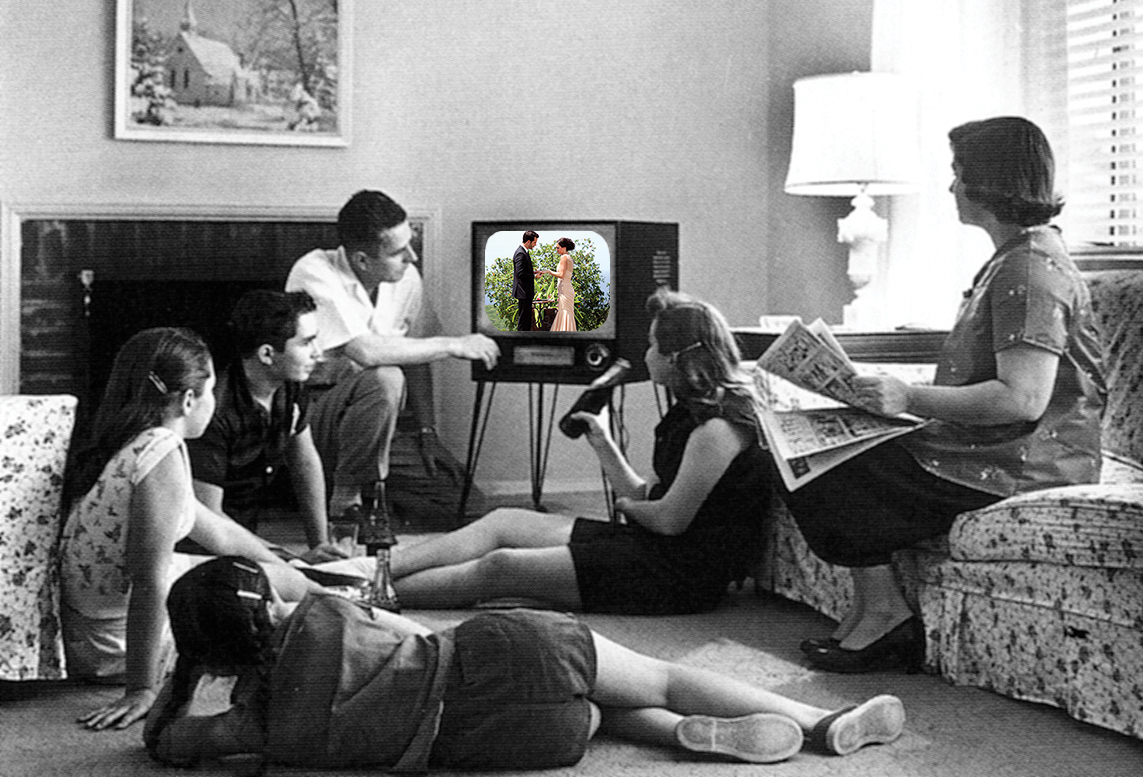
Sitting with my roommate on a Saturday night while having dinner, I decided to join her in one of her favourite activities: watching reality TV. That night, it was The Kardashians. As I quickly realized, this may not have been the best place to jump into the strange, convoluted world of reality television. Every time someone had a happy moment or broke down in tears, cameras would appear, zooming in on people’s faces while dramatic music swelled.

Something about this seemed about as far from ‘reality’ as anything. I had two choices: either I could burst my roommate’s bubble by arguing that all of this had to be elaborately staged, something I’m sure she’s aware of, or I could just quietly step away. I chose the latter.

The promise of a reality TV show is a view into people’s private lives: unscripted situations, real life drama, and uncoached stars. However, a little research regarding the genre proves this is pretty far from the truth. Recently, entertainment writer and former reality star Anna Klassen wrote a firsthand account of her experience with reality TV and, suffice it to say, it’s about as bad as you would imagine.

From fake dressing her dog to transforming her entire personality to better suit the reality TV genre, nothing about Klassen’s experience rings as true as TV producers would have you believe. As Klassen tells it, she wasn’t being filmed as a real person: “I was playing a version of myself — a character — and with a nudge here and a shove there, it was clear what character the producers wanted me to play.”

This is exactly what reality TV is: a cheap, reproducible format where actors are told to appear as ‘normal’ as possible, with enough glitz and glamour thrown in here and there to keep viewers interested.

Reality TV offers a level of wish fulfillment that keeps countless viewers glued to their screens night after night.

It reminds me of my older cousin, snapping at my wrestling-obsessed younger brother: “You know it’s all fake, right?” My brother, too young to know better, simply denied it and continued to watch it as if it didn’t bother him. Sitting with my roommate waiting for The Kardashians to end, I eventually confronted her with a similar reality check. Why, I asked, did she still insist on watching these barbie dolls play out fictions of their lives on national TV?

“I don’t know how to answer that, honestly,” she replied. “I watch The Bachelorette, for example, because it has a fairytale-like concept with a pinch of reality thrown in, and that just makes it believable. It’s fun to watch, and it’s still more realistic than Cinderella!”

To be clear, my roommate isn’t dumb. She knows this is all fake. But there’s still that level of wish fulfillment — of suspending one’s disbelief long enough to believe that shows like The Bachelorette are about real people — that keeps her and countless others glued to their screens night after night.

Film producer and television director Gavin Polone, writing for Vulture, spoke about how he was sure of the fact that the finale for The Real Housewives of Orange County was staged — the plot, camera angles, and dialogue were too perfect to not be written, he said. His experience in the industry suggests he knows what he’s talking about, and it helps to know I’m not the only one who has a hard time believing any of what I watch in these shows is real.

Polone goes on to write about a discussion with a top TV executive, who told him that “reality characters self-produce, knowing that they need to be a heightened version of themselves [. . .] Sometimes we’ll leak information to them [meaning things each character wouldn’t know that the other characters said or did, which may instigate a conflict], but we won’t tell them what to do.”

This recalls what Klassen wrote about her experience with reality television; she was told to be a more glamorous version of herself, one that appealed more to the camera and to the audience.

In the past decade, reality TV has become one of the most popular forms of entertainment in the Western world. But if we know it’s all staged, why do so many still watch it?

Polone suggests it may have something to do with the spontaneity of the form: though most reality TV shows are at least partly scripted, their use of untrained actors in semi-real situations can still result in some genuinely surprising and unexpected moments. Others, like my roommate, are willing to pretend what they’re watching is real, even if they know deep down that it isn’t. And, in a sense, we do this no matter what we’re watching. Otherwise, how would we be able to connect with characters we know are fictional?

It reminds me a little of my childhood, when my parents would start recording me and I would instantly change the way I was standing, sitting, or doing whatever I was doing. The minute you put a camera in front of me and press “record,” I’ll still alter my behaviour and actions accordingly: to look good, to be more camera friendly. This, to me, is a little like being on a reality TV show, except that, in the latter case, the camera is rarely off.

Ultimately, reality shows are cheap and formulaic enough to ensure that, as long as people are willing to watch them, producers will be willing to make them. And as long as we’re well aware that what we’re watching is not as real as it seems, what’s the harm in a little drama or a happy ending once in a while?