Home Blog Page 1082

Travellers seek operations on vacation

0

CMYK-Medical-Anderson WangA new website created by the SFU Medical Research Group aims to expose the pros and cons of the medical tourism industry by sharing stories of people who have sought health care abroad.

The site, MedicalTourismAndMe.com, was created by Jeremy Snyder, associate professor in the Faculty of Health Sciences, in collaboration with geography professor, Valorie Crooks, as well as several other SFU master’s students and PhD candidates.

Canadian citizens enjoy the luxury of a socialized health care system; the tax dollars that people contribute to health care make treatment available to all who have need of it. One downside to the system, however, is the time people spend waiting to receive proper treatment. 

Crooks explained that some Canadians wait years for simple surgeries to erase chronic pain, or experience rushed diagnoses due to an overload of patients, making foreign health care an attractive option for some.

This is where medical tourism comes into play. Medical tourism is essentially the act of travelling to another country to receive health care due to cost or efficiency issues in one’s home country. 

MedicalTourismAndMe shares a variety of different stories from those who have procured health care abroad. Some are positive — getting approval from their Canadian physician and experiencing hospitals that were more like five star resorts — while others reveal a darker side to the industry. 

Crooks told The Peak that, before 2009, there was barely any existing research on this practice, which is becoming more common as rumors spread of spa-like hospitals in Asian and Central American countries.

After failing to find much academic research on the subject in preparation for a lecture, Crooks decided to take action and pursue medical tourism as a course of study. “It is a highly geographic emerging global health services practice, and thus as a health geographer I believed that I could make an important contribution to our knowledge about medical tourism,” said Crooks.

Crooks detailed some of the drawbacks to medical tourism, including not allowing enough recovery time due to being unable to afford the expense of staying in another country, as well as the guilt that could come with receiving five star health care in nations affected by poverty. 

Crooks was drawn to the fact that these injustices are so often glossed over, saying, “I have worked to establish the SFU Medical Tourism Research Group as the global leader in producing research-based insights into the ethical, equity, and safety issues associated with medical tourism.”

Snyder, a team member and developer of the website, said, “During our research, we learned that [those considering medical tourism] are typically unaware of many of the safety and ethical issues related to medical tourism.” When developing the website, he also noted that many of the sources of information for prospective medical tourists are biased at best. 

MedicalTourismAndMe uses personal stories rather than hard facts as a way to convey what researchers feel is a more honest point of view. The developers of the site decided that relaying stories from former medical tourists was one of the best ways to connect potential tourists with the social, ethical, and medical impacts of receiving private health care in other countries.

While the team continues to build the website, they are unsure as to what the future of this practice may be. “Industry reports suggest that medical tourism is growing. [However,] I have learned to question all numbers I see about medical tourism for a number of reasons. Because of this, it is difficult to articulate specific future impacts,” said Crooks.
Our new relationship with art

0

technology-art-interference-project-1

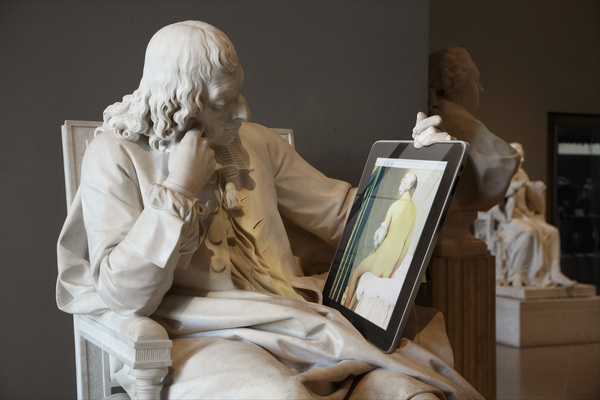
Taste in art can differ among personalities as well as social and cultural lines, but the human spirit shares the capacity for greatness and innovation. To some degree, creators trick us into watching what they have done, but at some point one needs to understand that art really is a social need.

Art is food for thought; it is a way to let our brains ‘breathe’ a little, a way to get inspired as well as an emotional loophole (catharsis). Because of this, it is essential to rethink one’s approach to art to better appreciate it. In a day and age where jobs may consume our lives, art is all the more important in that it may be one of the only refuges we have left.

However, the psychology of art has changed in a negative way. On the one hand, going out to see a movie or a play means engaging, and presumably thinking about what you are seeing, but the use of a computer to watch a movie, on the other hand, means watching it in a totally different mindset. One might stop midway and pick another film online for instance. One is likely to be multitasking, at least at some point.

The point is, we live in a culture with a growing attention deficit. Commercial movies adapt themselves to that reality, and cuts are multiplied as the attention span of the average audience has decreased.

All of this changes the way we approach art, and technology may, in that sense, have decreased the quality of our artistic experience. As Moby put it in PressPausePlay, there is a danger on the side of the production as well, much like the sci-fi scenario of grey goo: “Art and culture potentially might succumb to that same principle where if everybody is a musician, everybody is making mediocre music, eventually the world is covered with mediocrity. And people start to become comfortable with mediocrity.”

In the same film, author Andrew Keen states, “When you fall into the trap of confusing the artist and the audience; when you believe that the audience knows more than the artist, [. . .] then art ends and you have something else: cacophony. You have simply an apology for radical democratization, and it’s wrong to confuse democratization in real or political terms with the creation of art, which is, by definition, for better or worse, an elitist business.”

These days, the danger of a cacophony, and that of getting comfortable with mediocre art is greater than ever before. Especially online, it is hard to imagine virtuosi of the past being able to break through the mass of garbage that exists on Youtube for instance. In this sense, while technology has been a blessing for many artists in their creation and distribution processes, it has also changed the distance there used to be between the artist and their audience. While that isn’t a problem on an individual level, at the social level it means that as art is less revered, it is devalued.

That is why I believe it is really important to take our artistic experiences out of the virtual realm. This means taking steps to “sanctuarize” our experience of art. Whether you choose to go to exhibits more often, to a public performance of some sort, or just to shut your email and put your phone away when doing something similar at home, it’s all up to you. Just as you work more efficiently when you are in a neutral place with few sources of entertainment, your artistic experience is better when you focus on it. Paradoxically, it may help you open your eyes to what is happening around you.

Read it before you watch it

0

book-to-film web1) Outlander

Twenty-three years ago Diana Gabaldon published Outlander, a novel that was mostly historical fiction, but included some romance fantasy aspects, making it hard to place genre-wise. Now a bestselling series, the eighth novel was released this July, and Outlander was optioned for television last year. 

The story begins with Claire Randall, a British Army nurse post-WWII on a trip with her husband in Scotland. Claire is mysteriously swept back to 1743 and her world is turned upside down putting her life is at risk. A headstrong woman, Claire’s attitude makes her a fantastic foil to Jamie Fraser, a young Scottish warrior with a strong sense of chivalry and honour. 

What begins as a forced marriage quickly develops into a deep bond between the two. The television series premieres in Canada on August 24, 2014 on Starz network. 

2) Gone Girl

On the morning of Nick and Amy Dunne’s fifth wedding anniversary, after preparing her annual treasure hunt for Nick, Amy goes missing. The novel by Gillian Flynn is set up with dual narratives of Nick in the present and entries from Amy’s diary over the past five years. 

Gone Girl unravels the mystery, as opposed to solving it. With two chronically unreliable narrators, Flynn provides interesting twists, clues, and perfect planning. Directed by David Fincher, the film has a different structure from the novel and a reworked ending. 

Ben Affleck stars as Nick, Rosamund Pike is Amy, and both castings feel spot on. The film is set to premiere at the New York Film Festival in September, with theatrical release on October 3, 2014. 

3) Maze Runner

The novel begins with an incredibly intriguing, mysterious maze to be solved: mysterious deliveries of children, and evil monsters that come out at night. The reader is just as clueless as the characters, which makes for good suspense.

 The first in a young adult (YA) series by James Dashner, Maze Runner begins with a young boy waking up in a lift with no memory. Thomas is led from the elevator by a group of boys, who welcome him to the Glade. None of them have memories from before they arrived, but every morning the stone doors surrounding the Glade open to a maze, and every night they close. They receive food deliveries, and every 30 days a new boy arrives, until the day after Thomas arrives. On Thomas’ first day in the Glade, a girl is sent up the lift bearing a message with dire consequences. 

Wes Ball is directing and the still images released of the Glade match perfectly with my imagination. Theatrical release is set for September 19, 2014.

4) The Giver

An award-winning novel by Lois Lowry, The Giver was published in 1993. Jonas lives in a utopian society without pain, war, suffering, sickness, differences, or conflict. Every member has a specific role and Jonas is selected to be Receiver of Memory, who stores all the past memories of their society before Sameness. Jonas receives the memories from the Giver, and soon he understands the truth of his society’s past and realizes the power that is knowledge.

Jonas, only 16 years old, and the aging Giver must decide if they will continue the Sameness, or stand up and make a change. The movie comes out on August 15, 2014 and stars Jeff Bridges and Meryl Streep.

5) If I Stay

If I Stay by Gayle Forman follows the story of Mia who is in a coma following a catastrophic car accident. The teenager watches her friends and family visit her bedside, and she relives her memories. Ultimately, she has to decide if she wants to wake up and cope with the medical condition her life will entail, or slip away and die. 

The movie is set for release on August 22, 2014 and Chloë Grace Moretz is starring as Mia. Directed by R.J. Cutler, the screenplay was written by the author Gayle Forman, who also published a sequel in 2011 titled Where She Went. 

Bill C-36 does nothing for sex worker rights

0

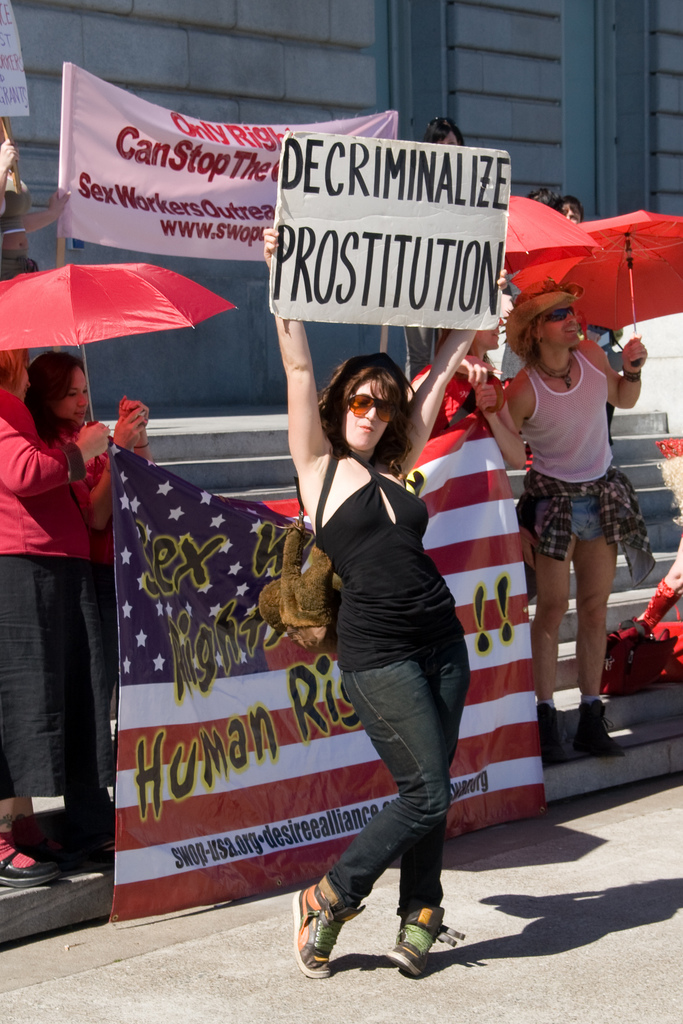
The federal government has recently taken steps to introduce a new piece of legislation regulating prostitution. After the Supreme Court deemed previous prostitution laws unconstitutional, the Conservative government proposed Bill C-36, a bill also known as, “The Protection of Communities and Exploited Persons Act.”

Unfortunately, the sex workers the bill is supposed to protect are now in greater danger because of it.

The bill follows the premise of a Nordic or Swedish model in which the pimps, johns, and clients involved in the trade are criminalized, but the actual sex workers aren’t. The aim of this course of action is to target those who fuel the demand for prostitutes so that the industry will eventually die out.

However, this is hardly the case. Rather than prostitution dying out, it will just move elsewhere — a more dangerous elsewhere. Since the bill forbids communicating and offering sexual services, street-based sex workers can be arrested for advertising. This clause will certainly force them to conduct their services in secret, spending longer hours looking for clients, and being forced to choose worse clients, thus making them more vulnerable to rape and violence.

The bill ignores the fact that there are many who work in the sex trade willingly, and enjoy what they do.

The term “sexual services,” which is used regularly throughout the bill, is broad and vague. Sexual services can define a stripper’s line of work through dancing at a bachelor party just as much as a prostitute selling sex on the street.

Bill C-36 is one-sided, targeting prostitution as a form of male sexual violence, when this is just a small portion of the type of sex work which goes on in the industry.

All in all, the bill seems to suggest that human dignity can only be realized when one is no longer working in the sex trade. This ignores the fact that there are many who work in it willingly, enjoy what they do, and take pride in their work.

A reasonable alternative to consider, which is currently enforced and working, would be the legislation in effect in New Zealand. New Zealand has decriminalized prostitution and it operates under public health laws. There is still regulation in place as prostitution that is not consensual (for instance, in terms of human trafficking) or involves a minor is still illegal. Yet sex workers under this model receive protection, support from police, and better working conditions.

This system is in line with how WorkSafe BC would protect workers in any other line of employment. It protects sex workers from exploitation while still respecting their human rights.

People can forget that sex workers are also human beings. A bill that is involved in regulating their line of work should also include their voice, and not just target the pimps who run their businesses. They deserve respect like any other person, which this bill does not provide. Nobody, regardless of their occupation, should have to live in fear.

Representing the survivors of the DTES

0

CMYK-totem pole

Taking a walk down the Downtown Eastside of Vancouver, it’s easy to see the prevalence of pain; neglect and poverty is spread across a range of fragmented communities. While these diverse communities exist in a shared space, a local grassroots art project sees them as lacking a symbol to rally behind, a physical representation of their unity through oppression. Enter the Survivors’ TotemPole project.

The project aims to raise a totem pole somewhere in the heart of the Downtown Eastside. Spearheaded by Raven Haida Carver, Skundaal, also known by her English name, Bernie Williams, the Survivors’ Totem project aims to provide the Downtown Eastside with a physical manifestation of not just the communities’ struggles, but also their bonds. Symbolizing the resistance, persistence, and inclusion of their communities, the carving aims to combat the exact opposite: oppression, neglect, and exclusion.

I sit with Skundaal in the common area of the Sacred Circle Society. The workbench nearby is a hodgepodge of machinery and art supplies. The pool table is working double time as its backup, housing crafting tools and billiard balls.

“This community has a big history,” she explains. “The Survivors’ Pole is about the history of who we are.” Her confident demeanor carries the discussion forward. “It’s going up,” she says, “just pull the community together and start fresh.” This is at the core of the project, the joining of fractured communities that share a common struggle.

“I think you know that’s my big thing, because we are so divided out here. I think that this pole is just giving [people] that hope, that hope for everyone who wants some change here.” And according to Skundaal, people want change.

The Downtown Eastside faces many problems. Basic human needs such as adequate housing still aren’t being met. “It’s very scary,” she says, “When I talk to the homeless people up here, they’re afraid. They wonder where things are going, where they’ll be in the next couple of years.”

These basic needs are still lacking in the Eastside, and their absence has spurred activism in many of its residents. “They want the simplest things, basic human rights that everyone should have, and to have proper housing for themselves. And you know at the end of the day, that the people in this community have come together to fight for this.”

Skundaal often considers the perceptions of Vancouverites; she contemplates the outsider’s view of the Downtown Eastside. “There’s such a stigma down here,” she explains. “When they talk about the Downtown Eastside, they see the drunkenness, the addictions.” She believes that it’s hard for people to look past the common tropes that are applied to the residents of the area. “I am just mindful,” Skundaal says. “There is a reason why these people ended up down here, and they [all] have their own stories.”

It’s at this point  in the conversation that I all too casually use the term “homeless.” She stops me and speaks, “They are never homeless; they are houseless. They have a home. They are just needing a house to live in.”

The Survivors’ Totem aims to disassemble these common misconceptions. “It’s just this big stereotypical mindset. What [Survivors’ Totem] is trying to do is to go and educate. It’s all about education.”

The community of activists behind the project don’t see these people through the common lense. “I don’t take things for granted, because things can happen to you so quick out here, or even in your own home, and you could end up down here. It’s the most giving and welcoming community that I’ve ever been in,” expresses Skundaal. “They are wonderful people down here, but we have to lose this mentality.”

The medium behind the art has its roots in First Nations culture, specifically Haida, but it’s intended message is not exclusive to these nationalities. The pole, as a symbol, is intended to unite a plethora of cultures in the Downtown Eastside, some of which have been oppressed throughout Canadian history. “I’m hoping [that] this pole will unify us,” says Skundaal, “I think about the land we are on, [and] I would like to acknowledge the four Coast Nations here.”

The medium itself expresses these ideas through the materials and design. The lumber, dated to be over 982 years old, originates from BC’s own Haida Gwaii. Once completed, an eagle will perch at the top. “In my culture, the eagle is the closest messenger to the creator,” explains Skundaal. “Our prayers, they go with it.”

Underneath this eagle, a raven will sit. “The raven is about transformation,” she continues, “It’s about what all of us have gone through, and how we’re transforming [ourselves] everyday.” Nestled below the raven, will be the whale: “The whale is the largest mammal of the waters. [Their size shows] how strong they are, and this also [represents] the people,” she explains. At the base of the pole, holding the other animals up, will sit the mother bear.

“I’m a female carver,” she explains — a rare occurrence in Haida tradition — “So when we [other female carvers] carve it, we always put it at the bottom, where the women hold and carry [the weight]. This animalistic imagery intends to weave together the narrative of the people who have lived, and are still living, in the Downtown Eastside.

Creating a piece to represent all these ideas is a tall order, but Skundaal is determined. “We can never right the wrongs,” she explains, “but we can sure as heck make a statement and move forwards.”

You can support the Survivors’ Totem Project through its Kickstarter page at www.kickstarter.com/projects/695807368/survivors-totem-pole. They will be accepting donations up until August 3, and the pole raising ceremony will take place in September 2014.

Undead cheerleaders are thirsty for blood

0

CMYK-all_cheerleaders cropped

Have you ever seen a movie where you were fairly entertained but you thought it could have used a bit more polish? Perhaps the pacing, characters, story, almost every aspect could’ve use a bit more cooking. Well, All Cheerleaders Die is that movie.

The movie is about undead cheerleaders who need to consume human blood. That sounds awesome, and is kind of awesome — once it gets there. It takes half an hour (out of a 90 minute runtime) to actually get to our undead cheerleaders, and it’s a slow half hour.

The movie opens up with Maddy (Caitlin Stasey), our main character, videotaping her cheerleader friend Alexis (Felisha Cooper) and her fellow cheerleaders. However, the movie gives a pretty legitimate shock as Alexis falls on her head and dies during a routine in the first five minutes.

Maddy’s boyfriend, Terry, moves on too quickly with fellow cheerleader Tracy (Brooke Butler), and this angers Maddy, so she schemes to ruin them. The scheme involves Maddy seducing Tracy to make Terry jealous. In his jealousy, he ends up running the cheerleaders off the road to their deaths in a car chase after punching Tracy.

Perhaps more fortunate for them is that Maddy’s witch ex-girlfriend Leena (Sianoa Smit-McPhee) happens to be watching them, and brings them back from the dead, as well as switching the bodies of two of the cheerleaders. However, now they have a thirst for blood.

Nearly every character is some variety of teen movie cliché. Terry is your standard psychopathic jock, the cheerleaders all fit the ‘dumb blonde’ trope, and of course there are two stoners. Even our main character, Maddy, fits that typical outsider character who isn’t really that much of an outsider. The whole Wiccan girl who has actual powers seems pretty familiar too.

The characters being walking, talking clichés is not a bad thing as it works in the context of movie — a horror comedy that makes fun of some of the typical horror movie conventions.

With that being said, the movie does falter in its characterizations. I’ll admit no one should walk into this movie expecting Oscar worthy characters, but they seem inconsistent, shifting motivations and traits from scene to scene.

Once the cheerleaders become undead, the movie starts to work and becomes quite entertaining. The scene where Tracy walks into a random guy’s house and discovers that she is hungry sets the mood for the rest of the film.

Tracy pokes the guy in the neck causing him to bleed, and all the cheerleaders show up and feed on him. It’s funny because the movie doesn’t really treat it as a big deal that the girls kill this innocent man with no apparent moral consequences or serious afterthought. The movie doesn’t go in the direction that they are evil after becoming undead. No, they just eat people sometimes. Their victim, after some initial screaming, resigns himself to his fate pretty easily, adding to the fact that this feeding is no big deal.

However, the movie takes too long to get to this point and seems a little unstructured at times — perhaps this can be chalked up to the fact that directors Lucky McKee and Chris Sivertson are remaking their student film.

As it stands, it is still a fairly entertaining Friday night movie and is worthy of a watch, but be warned that you might walk out thinking this movie could have been a whole lot better.

Film students embark on a documentary pilgrimage

0

we-three-heathens-Jacob ZinnThree adventurous SFU filmmakers will embark upon the world’s most famous spiritual pilgrimage route, the Camino de Santiago, this September.

The trek will take current SFU film student Will Ross, and SFU film alumni Devan Scott and Daniel Jeffery two months and approximately 800 kilometres to complete on foot, and it will all be recorded for their film documentary titled, We Three Heathens.

The film will focus on the essence of a universal spirituality that exists in all individuals, regardless of their religious beliefs. Ross said of the pilgrimage, “I think people go because we are all attracted to the idea of self-realization and self discovery. To an extent, I think we all want to be able to change. The pilgrimage is a physical actualization of that journey.”

The Camino de Santiago is known as The Way of Saint James in English, and is composed of a large network of pilgrim routes across Europe. These routes all come together at the tomb of St. James, who was one of Jesus’ twelve apostles and is the patron saint of Spain. The main pilgrimage route follows an early Roman trade route, which visitors first followed to the shrine in the ninth century.

The Way of Saint James was a popular pilgrimage in medieval times and is still well traveled today, drawing thousands of pilgrims from all around the world. The several stops that comprise the tour make it a perfect setting for Ross, Scott, and Jeffery to directly observe how people connect with their religion and spirituality.

“We are expecting to meet a lot of different people from different countries and different walks of life,” Ross said. “I know we will find small communities who have been supporting this pilgrimage for generations.”

“It’s frightening, but I tend to gain the most from frightening experiences.”

– Devan Scott, SFU Alumnus

Preparing for the journey is no easy feat, as all three filmmakers will be walking the equivalent of a half marathon a day. To improve their fitness, the team is currently going on long physical walks with their equipment on their backs.

They are also promoting their Indiegogo crowdsourcing campaign in order to raise funds for better filming equipment for the trip. “The community response has been very positive,” Scott told The Peak. “I was initially concerned that such an idiosyncratic and personal little project would be greeted with a chorus of confusion and general skepticism, but the opposite has been true; we’ve received great input and encouragement from the community around us.”

The three hope the film itself will be a thought provoking and interesting one, as it is being told through the unique perspective of secular individuals.

Ross also hopes that this documentary will bend the structure of a formulaic travelogue — the team will have no camera crew, and all of the filming will be grounded in first-hand personal experience, with each individual’s perspective shining through in the storytelling.

Scott said, “The whole affair of crafting a feature-length documentary out of three separate personal experiences is a task both daunting and incredibly enticing; it is [. . .] completely within my wheelhouse and totally alien to me.”

He continued, “It’s frightening, but I tend to gain the most from frightening experiences.”

As for what he hopes to gain from the journey, Ross said, “I want to come out of it with a deeper, sympathetic understanding of what attracts people to religion, and the common ground [of beliefs] that everyone shares.”

The demise of Vancouver’s single screen theatres

0

CMYK-Broken Palace

What happens when a film company takes the pain of loss as artistic inspiration? Broken Palace, the new short documentary by Next One productions answers this question. Noticing that the gorgeous single screen theatres found all over Greater Vancouver were closing, this creative team took to the streets to document their sudden demise. 

Next One productions is a company committed to BC film, creating pieces that are “exciting and relevant.” Directed by Ross Munro, Broken Palace is their most recent work. After attending film school in Toronto, Munro came to the West Coast where he acted in and directed many shows, eventually joining Next One productions.

Broken Palace is an “impressionistic journey” into the beautiful past and sad present of single screen theatres. Glorious, decadent buildings, many single screen theatres were built in the 1930’s. Architecturally beautiful, and full of the history of cinema, these theatres made the moviegoing experience truly regal.

When The Ridge theatre in Vancouver closed down, Munro and his team were inspired to “get moving on the idea of this documentary.” Munro wanted to explore “what happens when the theatre gets knocked down” and  to “preserve memories of the theatre.”

Ross got nostalgic when discussing his past with the theatres, remembering the “wow factor of single screens” when he was young. “With a little bit of a sad heart,” he described the theatres as elegant little palaces: “It’s like wandering into a fantasy world . . . exotic and magical.” 

“The documentary,” Ross says, “is a celebration, but . . . the film is a bittersweet reminder of a bygone era.” This film aspires to immortalize the theatres, Ross says “you only have one chance to preserve the past. It’s important we really maintain our heritage.” 

Filming was a haunting experience, explains Ross, describing the closed theatres empty and forgotten reminiscent of walking among ghosts. Ross tries to embody this feeling in the character of the usherette, played by local actress Kristen Brown. The usherette pulls the audience into the film, giving the audience someone with which to identify. The viewer is brought full circle through eyes of the usherette.

Munro explains that the universality of the documentary comes from its short length. It allowed the company to focus on the commonalities of the theatres, so that viewers would recall their own memories. Ross also explains that the time frame fits perfectly into that of the short documentaries that used to play before movies in the old theatres. Ross says that they tried to “create the movie going experience” once more.

The documentary, for me, had a haunting, poetic quality. I found the use of destructive footage highly effective, especially when juxtaposed beside the beauty of the theatres still standing. Gorgeous, panning shots of local single screen theatres really accented what we are losing culturally as these buildings get torn down. 

Growing up watching movies at my local single screen theatre, I certainly know the pain of losing a beloved artistic landmark. Broken Palace takes this terrible trend of loss and turns it into cinematic magic, bringing the viewer once again into the drama and glory of the single screen theatre. 

University students increasingly malnourished and underweight, according to their grandmothers

0

The number of university students who are chronically underweight and aren’t eating properly is staggering, according to a study conducted by their grandmas.

According to their research — staring at you and your “loose pants” — today’s college student is not receiving nearly enough proper nutrients and should definitely take some of these leftovers with them when they leave.

“It’s absolutely astonishing how skinny these kids are when they come home,” explained Betty Green, the grandmother of two of the test subjects, SFU students John and Carol. “It’s appalling to be honest, why aren’t they having more home-cooked meals?”

Green believes that immediate action needs to be taken to help today’s youth before they “wither away and die.” 

When asked what could be done, she answered immediately, “Have a second helping, I’ve got plenty of food.”

“Eat, eat, eat,” she continued, outlining her health plan to combat the massive malnourishment problem. “I’ve got roast beef, a casserole, vegetables — you need to eat more vegetables, how often are you eating vegetables? They’re good for you, you know.”

Green’s sentiments have been echoed by grandmothers all across the country and even the world, although there have been disagreements as to the specifics of how to combat the egregious problem.

While some claim that offering another piece of lasagna is the key, others believe that filling plates with more dumplings and spring rolls will solve everything.

Although there is a split when it comes to what foods are best to return today’s starving, sickly students to prime health, there is a consensus that they should definately “come visit more often.”  

The study is expected to continue indefinitely, with grandmothers stockpiling more and more food each time subjects are in their presence and forcing upon their plates. 

The entire research is not supported by the world’s grandfathers, however, who are reportedly too busy conducting their own study on why grandmothers “can’t just leave these kids alone” and also trying to determine precisely the reason why “things aren’t the way they were when they were young.”

Irresponsible child lets bedbugs bite

0

A child was awoken late last night with significant sores on his back after he foolishly allowed himself to be bitten by bedbugs despite being warned repeatedly not to let them bite.

Joey Foreman, who is nearly six-and-a-half and really should know better, is now having to deal with the repercussions of his actions according to his disappointed parents. 

“We tell him every night to not let the bedbugs bite and he never listens,” his mother Sheryl told The Peak. “Maybe now he’ll think twice before ignoring us and just sleeping carefree and happily.”

Sheryl explained that Joey had continually let his guard down at night, going to sleep without taking proper safety precautions and, as a result, was bitten by the bugs.

“‘I think he thought we were just kidding or something, he’d always just laugh and say ‘good night’ instead of agreeing to ward them off,” she continued. “He got lucky for the first couple years that we didn’t have much of an infestation problem, but now he’s facing reality.

“He’s got to know that part of growing up is conquering bedbugs and not just letting them crawl all over you and then take as many bites as they want to.”

While Joey might have believed that the sores were enough of a punishment, his parents say they are also banning TV for a week to teach him a strict lesson for not doing as he was told.

In response, Joey has issued the public statement that “It’s not fair.”