
Go back

Halloween movies that never made it to theatres

I’m not even sure they made it to DVD

Night Class on Elm Street

They say if you die at school you die in real life.

The Texas Chainsaw Shortage

This film didn’t test well with horror-lovers. Frankly, the movie just wasn’t as scary without the chainsaw massacre.

Pluto Attacks!

Driven mad by years of frustration caused by being forced to eat from a bowl on the floor by Goofy while he and the other dogs got to walk and talk and eat normally, the small, animated dog attacks. He brutally murders his handlers and escapes into the night to become a scourge on nearby towns. Because it was an animated film, it was advertised for children — sparking a wave of protests against Disney.       

Van Hell-Swing

The notorious vampire slayer is polyamorous. And he doesn’t slay vampires in the way you might first assume.

Meth Lab in the Woods

Even demons can’t survive a meth lab explosion. A surprisingly short film.

Aliens vs. Sexual Predators
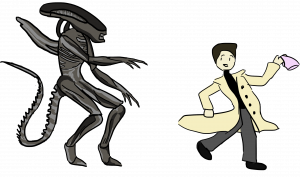
This film isn’t half as intense as the original Alien vs. Predator. I think we all know the Xenomorphs are going to win, so there’s no suspense at all. . . but on second thought, I would pay to see that.

Frank-Einstein

Albert Einstein and Frank Sinatra somehow get merged into one body. Frank-Einstein (played by Nicolas Cage and John Travolta, respectively) refuses to help with the Manhattan Project, and goes off to start a music career — something about doing it “their way.”

The Mommy Returns

Mommy safely returns from work. Literally not a horror movie.

The Room

We all know why this is here.

 

Was this article helpful?
0
0

Leave a Reply

Block title

New immunotherapy treatment provides hope for aggressive cancer

By: Lucaiah Smith-Miodownik, News Writer Surgery, chemotherapy, and radiation therapy are often recognized as the three most common forms of cancer treatment. Sometimes, the latter two approaches become no longer effective when cancers become drug resistant, allowing the cells to further spread. At the University of Calgary, however, promising developments in immunotherapy intervention seek to provide alternative treatment when common therapies are not viable.  Cells continually divide to replenish dying cells, but certain gene mutations can create cancer cells, which divide and spread in an uncontrolled manner. The human body naturally defends itself from cancerous cells, though sometimes they can “hide from the immune system and avoid being destroyed,” according to the Canadian Cancer Society. Immunotherapy seeks to help strengthen the ability to recognize and fight...

Read Next

Block title

New immunotherapy treatment provides hope for aggressive cancer

By: Lucaiah Smith-Miodownik, News Writer Surgery, chemotherapy, and radiation therapy are often recognized as the three most common forms of cancer treatment. Sometimes, the latter two approaches become no longer effective when cancers become drug resistant, allowing the cells to further spread. At the University of Calgary, however, promising developments in immunotherapy intervention seek to provide alternative treatment when common therapies are not viable.  Cells continually divide to replenish dying cells, but certain gene mutations can create cancer cells, which divide and spread in an uncontrolled manner. The human body naturally defends itself from cancerous cells, though sometimes they can “hide from the immune system and avoid being destroyed,” according to the Canadian Cancer Society. Immunotherapy seeks to help strengthen the ability to recognize and fight...

Block title

New immunotherapy treatment provides hope for aggressive cancer

By: Lucaiah Smith-Miodownik, News Writer Surgery, chemotherapy, and radiation therapy are often recognized as the three most common forms of cancer treatment. Sometimes, the latter two approaches become no longer effective when cancers become drug resistant, allowing the cells to further spread. At the University of Calgary, however, promising developments in immunotherapy intervention seek to provide alternative treatment when common therapies are not viable.  Cells continually divide to replenish dying cells, but certain gene mutations can create cancer cells, which divide and spread in an uncontrolled manner. The human body naturally defends itself from cancerous cells, though sometimes they can “hide from the immune system and avoid being destroyed,” according to the Canadian Cancer Society. Immunotherapy seeks to help strengthen the ability to recognize and fight...

