Home Blog Page 814

Five new-ish albums from Vancouver bands that demand your immediate attention

0
Mu, Devours, Supermoon, Dumb, and Mark Mills have all released must listen LPs or EPs in the first part of 2016.

The year is less than half over, and already Vancouver’s music community has given us a wealth of memorable releases. Below are five top-notch albums — one for each month of 2016 so far — ranging from five-track debut EPs to 16-track dance marathons.

II, by Mu (Boompa Records)

Immediately from the album’s opening track, “Disarmed,” listeners are dropped back into the soundscape that duo Brittney Rand and Francesca Belcourt first constructed on their 2014 self-titled release.

While the exploration of relationships — both the welcoming and parasitic ones — remains a prominent theme throughout II, the sense of changing youth also rings true, from penultimate track “16 Years” to anthemic single “Debauchery.” As Rand and Belcourt serenade on the latter, “Debauchery ain’t what it used to be.” Thankfully, Mu prove they’ve not only maintained their charm, but they’re as potent and mysterious as ever.

Late Bloomer, by Devours (Locksley Tapes)

Full disclosure: I saw Jeff Cancade a.k.a. Devours open for another band back in February, and his set didn’t really stand out to me. There’s just something about Late Bloomer that commands attention, though. Maybe it’s Cancade’s haunting-yet-omnipresent vocals, or maybe it’s the undeniable catchiness of hilariously named tracks like “Freddy Krueger Honeymoon Suite,” but the synth-laden album makes for a hell of a first full-length for Devours.

Playland, by Supermoon (Mint Records)

A staple in Vancouver’s music scene since even before their debut album, Comet Lovejoy, four-piece Supermoon are back and more melodic than ever on their sophomore release Playland.

Distributed through long-standing Vancouver label Mint Records, Playland continues the band’s trend: pairing upbeat pop numbers with lyrics that take a second for you to register their intensity. More sullen tracks like “Witching Hour” and “Fast Fashion” provide a nice juxtaposition to songs like premiere single “Bottleships,” constructing an album that’s a cosmic treat for the ears.

Also, mark your celestial calendars, because Playland’s release party is happening on May 19 at the Astoria.

Beach Church, by Dumb (Independent)

Fantastic name aside, there are plenty of reasons to embrace the hype around the boys in Dumb. For one, they’re already three releases deep in a career that only started last year. Two, their cassette from earlier this year, Beach Church, while being a chaotic assortment of genres (notes of punk, shoegaze, grunge, and surf-rock, paired with unabashed vocals), somehow makes this medley work in a surprisingly listenable fashion. Add to the mix the accolade of having opened for grunge-rock golden boys Parquet Courts back in February, and you can see how Dumb has the potential to ride this wave of success all the way to shore.

1.6.16, by Mark Mills (Independent)

An import to Vancouver by way of Calgary, Alberta — where he’s already one of the sexier names in Canada’s dance-pop scene — Mills’ third full-length is his most ambitious yet, with 12 new tracks ready to quench your earbuds. Through a lens of “electro dance beats,” Mills explores themes you’d rarely find on a pop album, from pending personal mortality on “Dancing with Death” to Canada’s often glossed-over history of cultural genocide on “Colonial.” But moody lyrical overtones aside, 1.6.16 delivers a non-stop string of affectionately dubbed bangers, from the funky pop-onslaught “MRS.” to crown jewel “Bank Account.” There’s no dance party quite like a Mark Mills dance party.
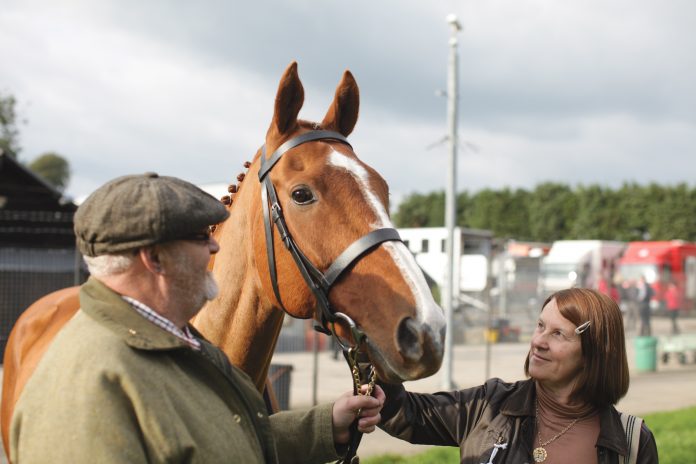

Dream Alliance’s upbringing made for a true Dark Horse

0
Dream Alliance's humble beginnings make for an exceptional true story.

It is 9 a.m., and I am passing out in the corner of a Starbucks located around Burrard and Broadway. The result of a sleepless night of dumb adolescence: I made a pact to see a documentary film called Dark Horse for The Peak, so I wanted to ensure I didn’t miss it.

I arrive at the theatre. A man in his 30s, wearing glasses, smiles at me as I ask him if he is here for the screening. He replies to me “yes,” as he adjusts his cap embroidered with a stallion in the middle of it. A conversation surrounding his past of working at the Vancouver horse racing track for 25 years ensues, before I look at my watch and make an excuse to sit alone in the left corner of the theatre.

Aside from my admiration of horse symbolism in Tarkovsky films, I’ve never found a particular interest in horse racing. I wonder why I even bothered for this in the first place. I begin to tell myself how bad of an idea this was and prep myself for a disappointing 88 minutes as the theatre darkens. Eighty-eight minutes later, I leave the theatre emotionally crushed with an admiration for the art of horse racing and a wakefulness that exceeds every expectation.

Dark Horse is a documentary film that explores the success story of Dream Alliance: a horse that gets bought and trained by a group of working class individuals and later goes on to win the Welsh National Race of 2009, reach the Grand National Race twice, and earn over ₤134,000 in winnings.

However, viewers should not be misled by the simple ‘rags-to-riches’ framework outlined here. The film does indeed follow the same narrative structure, yet within the overarch the film discusses many themes that I was shocked to witness. There’s the prominently classist hierarchy that moderates the professional sport of horse-racing; the attempt to create a legacy amongst impossible circumstances; the indescribable bond that holds a tight-knit community together; and even a self-awareness in animals that blurs theories of conscious differences between humans and other species.

Every time the film catches footage of Dream prancing in the shanty town grass fields or walking up to the start line, the horse peeks towards the camera with this sense of self-awareness of how its actions are changing the lives of others. It becomes downright frightening to look into Dream’s eyes and say, “You are leaving a legacy that is changing the lives of millions,” only to have Dream look back and say, “Yeah, I know. I’m honestly just as astounded as you are.”

Aside from the horse, the film focuses on the old breeder couple Jan and Brian Vokes, both of whom are working-class folk that run a bar in the depressed Welsh village of Cefn Fforest.

Through various interviews with the warm and light-hearted Jan, viewers explore her path establishing a syndicate of village friends to fulfill her dream of breeding a racehorse. Each member of the syndicate — all warm and working-class themselves — are interviewed throughout the film. This outlines the many sacrifices that went into Dream’s upbringing from birth, which includes many of them investing more money into the horse than they could even afford.

Then, through some incredibly emotional moments that instigate near heart attacks, the story becomes that of a horse tying a community together and creating moments of purpose and meaning within a grey world of anonymity.

This is a phenomenally good film that illuminates universal truths through the framework of a passion that sways between art and sport. I recommend this film to anyone passing out in the corner of a Starbucks — it’ll wake you up.

Naturopathic medicine isn’t total crap

4

[dropcap]R[/dropcap]efusing readily available, life-saving medicine for your child is inexcusable. But in the outrage that is rightfully directed towards idolatry of natural remedies, we need to be careful to not throw out the baby with the ginseng, gluten-free bath water.

It’s true that ‘natural remedies’ have lost a lot of credibility in the developed world, especially in Canada, from lack of regulation. Last year, CBC’s Marketplace said that they managed to get their own sham product approved by Health Canada in six months without having to provide any information on its safety or effectiveness. People are rightfully skeptical of anything with the word ‘natural’ on the box, because we really don’t know if it works.

But it’s only in the past 100 years or so that modern medicine has become the tightly regulated machine that it is now. If we look back to around the turn of the century, we can find ludicrous products like “cocaine toothache drops” marketed to teething babies, and cruel procedures like surgeons removing teeth to treat mental illness. Obviously things have become a lot better since then, but it’s worthwhile to remember that in an institution as young as modern medicine is, there are still some wrinkles to iron out.

Take, for example, the fact that there wasn’t a good understanding of how the active ingredient in Tylenol worked until 2013. That didn’t make it any less of an effective painkiller, but it’s an interesting parallel to some natural remedies; we’re just looking for something effective and safe.

Modern medicine has, in some ways, been racing to catch up with traditional medicine. Even the idea of a vaccine (modern versions of which are extremely effective and safely protect us from diseases like measles, mumps, and rubella) was first put into practice in ancient India. The simple idea was that by introducing someone to a low dose of cowpox, they would become much less likely to contract smallpox; the famous smallpox vaccine developed by Dr. Edward Jenner in 1796 relied on this same principle.

Modern medicine still has a lot to learn from ‘natural’ medicine, and there are projects between scientists and traditional healers that are shedding light on just how powerful natural remedies can be. Ian Tietjen in the faculty of health sciences at SFU is collaborating with the University of Botswana to discover the active ingredients in the extracts that traditional healers use. By providing the healers with basic training and materials to test their own medicines, the study is discovering that these medicines really are effective antiviral agents, and that some of them might be capable of helping treat HIV.

So what medical knowledge in the world boils down to is this: there are medicines that seem to work for whatever reason, regardless of where they come from. But by testing all of them rigorously, we can see which remedies are safe and effective; whether they are made in a lab, or naturally occur in a leaf, it is up to us to use them to keep ourselves and our children healthy.

Peak Comics: A Slave to Chaos

1

A slave to chaos COLOUR

Students attempt to set up makeshift pub at campus Starbucks

0

The closure of the Highland Pub at SFU’s Burnaby campus has truly been a bummer for many students. Those hoping to grab a beer right after a long and drawn-out lecture will unfortunately have to look off-campus instead.

In response, a group of plucky rebels decided to take matters into their own, inebriated hands. In an action worthy of either Occupy Wall Street or Animal House (depending on who you ask), these students hijacked the West Mall Centre Starbucks and made it their makeshift pub.

“They busted through the doors clearly already pretty loaded and just pushed us away from our machines,” recounts barista Eric Davis.

Staff engaged in a brief brawl with the rowdy students before fleeing to alert campus security. Reports suggest the students began attempting to funnel liquor into the various coffee machines, all the while loudly singing along to “Bohemian Rhapsody.”

When campus security arrived on the scene, one of the drunken student leaders tried to start a hostage situation. Using Die Hard’s Hans Gruber as a model, he drunkenly attempted a German accent stating, “Ze hostages. . . [hic]. . . stay with us. . . yippee-ki-yay, motherfucker.”

Campus security were having none of it, and stormed into the building with all the finesse of the ATF at Waco. There were bruises, burns, and a few spilt drinks, but the situation was resolved.

Ringleader Frank Beergardener said he was only trying to stand up for alcoholically dependant students’ rights. Folklore about these students’ struggle has sprung up in the aftermath. It is clear that SFU has made a martyr of these men — or at least a grievance that students will get mad about but never actually act on.

Peak Comics: Peers

0

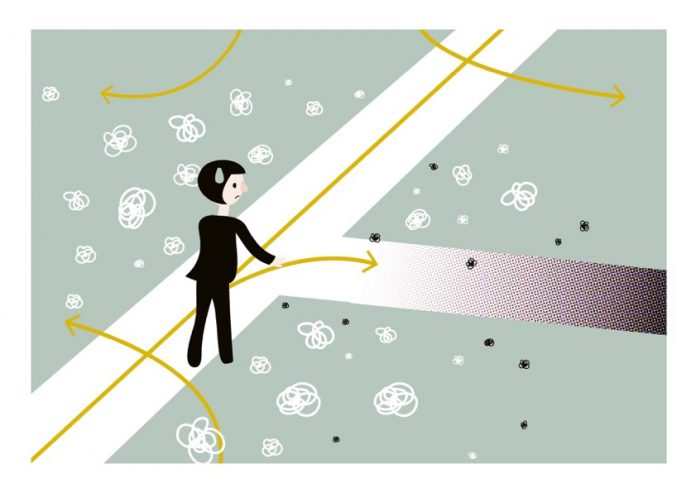
Week7(1)The Irony of Art

Taking (many) of the roads less travelled

1

[dropcap]T[/dropcap]o most of my friends, family, and others who run into me, I’m one of the few students who seems to have their shit together. I know exactly what I’m here for, how long it’ll take, which classes will take me there, and what my life after SFU will look like. It’ll look a lot like life here, actually, because I’m heading to graduate school and then into the world of archives and libraries.

But let me assure you that you don’t need to know all that while you go through SFU. You don’t even need to follow through with your studies at SFU at all. There are so many other ways to go through life; so many other careers that don’t require a degree, certificate, or other proof of education.

I left high school rosy-cheeked and eager for a different kind of life; preferably one that didn’t require me to sit in a dusty, drafty classroom (I’m talking about you, AQ 5014) for hours on end. So I went to Vancouver Community College’s culinary arts program. Even though I spent 11 months straight at school, five hours a day, five days a week, it wasn’t the same dry kind of learning — as in, not the kind we do here. I’m talking about learning something from a textbook, writing an essay about an obscure aspect of the class, and taking a final exam that’s just a regurgitation of what the professor taught.

Instead, I got to taste the fruits of my labour, gain some employable skills, and descend into the workforce after only a year of studying. . . rather than the four-year minimum commitment to a degree.

During my cooking endeavours, I also worked on several books. One, a poetry book, another a full-length adult fiction novel, and a third a collection of young adult short stories. Turns out, the writing industry is harsher than the safe, warm kitchen. I never got to the point of completing a book. I’m a huge perfectionist, and never thought anything was quite good enough to start sending around.

There is so much to learn and experience. . . we shouldn’t worry about commiting to one thing.

This was also during my rock star phase. I played open mics, wrote songs, and generally tried to be as badass as possible. The only problem was my crippling stage fright. But it is a lot of fun, and the rush of performing and people singing along is highly addictive.

I had a lot of fun writing, rocking, and cooking my time away, but decided that cooking wasn’t what I wanted to do for the rest of my life.

Cut to me filling out an application for SFU. I flip-flopped for a while between science and arts, because chemistry and I have always had a good relationship. I opted for arts and social sciences, thinking English would be a good fit considering my background in writing, and psychology would be a great compromise for sciences.

My first year was a roller-coaster. I took both science credits in my first term and fell in love with linguistics and philosophy. So I explored those departments, but philosophy turned out to be hugely depressing and a trigger for many existential crises. Linguistics was fun, but becoming a speech language pathologist didn’t sound like my cup of tea.

Then there was economics. The calculations were easy, the principles made sense, and it had real-world applicability in spades. Alas, no matter how hard I tried, I couldn’t see myself crunching numbers and running hypothetical economic simulations for the rest of my life. It just wasn’t exciting enough. So in the end, I decided on psychology and English.

There is so much to learn and so much to experience. It’s a shame we have to decide so quickly what we’re going to do for the rest of our lives. It’s a daunting undertaking and it’s unrealistic at best. Many people change their jobs more than once in their lifetimes, and a lot of people pursue an area that isn’t even related to their degrees.

So to any students out there who aren’t sure of the path they’re on, just remember you never have to conform to the societal expectations thrown on all of us as kids. Life is not about going straight from high school to university, completing university within four years, then going straight into graduate school, and finally getting a job that you will be stuck in for the next 30 years.

You’re allowed to experiment with different jobs, different educations, and different lives. So have fun with it, and maybe you’ll end up taking a road less travelled, too.

An interview with the woman behind the Veggie Lunch program, Kalarupini Koraljka Roy

4

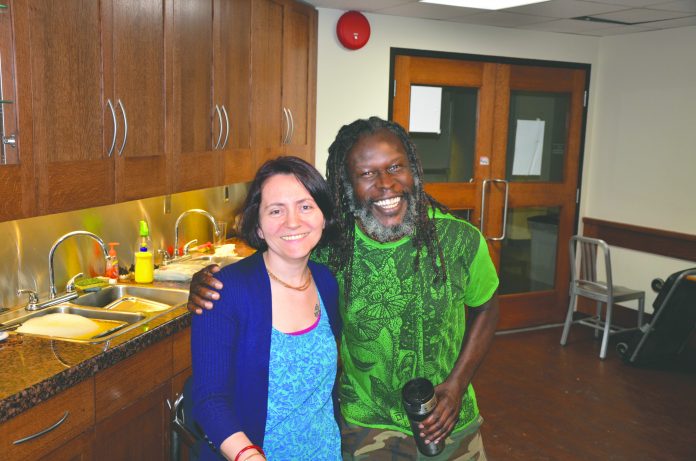
“It’s the best-hidden secret” at SFU, says owner Kalarupini Koraljka Roy, as she serves up a plate of mac ‘n’ cheese, curry, rice, and salad with calming, meditative music playing in the background.

Kala, for short, is referring to Veggie Lunch: a vegan lunch service that has been feeding hungry students at SFU Burnaby since 1992. Three times a week, Kala sets up in the Forum Chambers and dishes out heaping plates of delicious vegan food for only $6 a plate.

Kala lives her life in service of others. For her, charity is a way of life.

All the funds raised from Veggie Lunch help the less fortunate and fund services in the Downtown Eastside, such as their Women’s Shelter, the First United Church, and a soup kitchen and support centre called the Dugout. Proceeds also go to an orphanage in Udhampur, India. Kala also aims to assist Indian organizations with food distribution, as India has much greater food needs than Canada.

“It’s literally a full-time job,” says Kala, who rises early on Tuesday, Wednesday, and Thursday to prepare food for Veggie Lunch. She also holds a paying job to support her family, including a 17-year-old boy and a 13-year-old girl. When she isn’t tending to those responsibilities, she’s trying to start up a vegan catering service.

Kala took over the independent program at SFU in 2011 and her friend, Patrick, joined three years ago. Together, the program has gained a small but dedicated customer base with many “regulars,” including students, staff, and faculty.

“I always have people on my mind while I’m cooking,” says Kala. She switches up the menus to cater to allergies and preferences of people she knows attend on certain days.

VEGGIE_CYMK“It’s fresh, warm, cheap, and good for you,” touts Kala. She says eating vegan is good because it’s the “kindest possible food.” She is also concerned for the environment, given the meat industry’s considerable CO2 and greenhouse gas emissions.

The food is “karma-free.” It’s nutritious, clean, and Kala puts the food through a mantra meditation to purify while cooking.

Mantra means to “free the mind of troubles” to keep one happy and calm, explains Kala, who has been practicing yoga and mantra meditation since she was a teenager.

“That’s my life and I want to share it with others,” she says, especially at SFU where students are young, enthusiastic about life, and wanting to make a positive difference in the world.

When looking to make personal change, especially with diet, “it’s good to make steps that are consistent and not rash,” says Kala.

Personally, I am not a vegan — far from it — although I abstain from meat a few meals a week. When I eat Kala’s food, she describes me as a “flexitarian.”


There is a certain stigma associated with vegan cuisine, so many would be blown away at how tasty Kala can make mac ‘n’ cheese without using cheese at all.

“I always have people on my mind while I’m cooking” – Kalarupini Koraljka Roy

Aside from Veggie Lunch, Kala runs a community festival at Oppenheimer Park in the Downtown Eastside. The community there suffers from a lack of resources and low income, and is in need of “uplifting.” There, she serves food, leads meditation sessions, and gives haircuts and massages for the less fortunate.

This year, the festival will be held Saturday, July 9 from 11 a.m. until 4 p.m. SFU students are encouraged to volunteer if interested.

“It brings different vibrations to that area,” Kala says, adding that compassion is what the community needs to be uplifted. There is even a beauty night where Kala and her volunteers give makeovers for the women in the area. Manicures, haircuts, and makeup can really change somebody’s self-esteem, she says.

Kala is also a member of Kirtan Vancouver, a non-profit organization promoting healthy living through meditation.

“Canada is a country of possibilities” for Kala, who was born in Croatia and has lived in Germany, Switzerland, and India. Many other places are so individualistic, and people get so wrapped up in their own personal achievements that they will step on others for a leg-up, Kala tells me.

Kala estimates Veggie Lunch serves between 180–200 meals and raises around $500 weekly. Any food left unsold is brought to shelters in the DTES.

“I’m hoping to grow,” says Kala, who looks to a similar program at the University of Florida in Gainesville that serves thousands.

Most advertising is through word of mouth. Though the program is independent of SFU and the SFSS, Kala said she “would appreciate more support” from both.

“Where else can you get this quality and quantity for $6?”

BC needs a living wage already

0

[dropcap]W[/dropcap]e live in one of the most expensive cities in the country, so why is our minimum wage the lowest? British Columbia has been through this before. Unlike in many jurisdictions, our minimum wage has not been linked to inflation or the cost of living. It’s been on a roller-coaster ride from the highest in the country at $8 in 2001 to becoming the lowest in 2011, which prompted the raise to $10.25 in 2012.

We have once again been pushed to the back of the pack, as we currently sit at $10.45 per hour. The provincial government is attempting to catch up by increasing the wage to $10.85 this September, with another 40 cents promised in September 2017, to bring it to $11.25. By that time, of course, other provinces may increase their own wages further and BC may once again find itself in the same position.

The problem with our current wage and its measly increases is that those working full-time at this wage still fall well below the poverty line. An employee working 35 hours per week in this situation would only bring in $1,463 per month (before any taxes and deductions). Global News reported that the average rental rate for a two-bedroom apartment in Vancouver was $1,345 in 2015 — how is someone on minimum wage supposed to survive in this city?

Now imagine that person has a child or elderly parent as a dependent. It’s impossible to see how they would make ends meet. 

A study by the Canadian Centre for Policy Alternatives in 2015 found that the wage needed to live in Vancouver was $20.68 an hour — about double the current minimum wage. So what should the minimum wage be to ensure that nobody working full-time is living below the poverty line?

What would help Vancouver, and other BC cities with high living costs, is if municipal wage laws were passed to tailor income rates to these specific areas.

The BC Federation of Labour (BCFED) has led many wage increase campaigns over the years, and now they are leading Fight for 15, a campaign to raise the wage to $15. According to the BCFED, a $15 minimum wage would bring the average worker above the poverty line using all the regular poverty measures, including the Low Income Cut-Off, Low Income Measure, and Market Basket. Nobody working full-time should be living in poverty, and it’s time our provincial government recognized that. 

September’s wage increase is a step in the right direction to ensure that the wage is not left in the hands of politicians, and the vulnerable are not left to decade-long freezes; the problem remains, though, that the current wage is not high enough to cover the current cost of living in our province. 

In Seattle, where the City has the authority to pass a municipal minimum wage law, they brought in a $15 wage in April 2015, to be phased in completely by 2021. California and New York are now following suit.

Back in BC, we have an incredibly high cost of living and our minimum wage is not keeping pace. Instead of working to remedy this, our government is making paltry increases just so they can state that they are not economically last in the country. What would help Vancouver, and other BC cities with high living costs, is if municipal wage laws were passed to tailor income rates to these specific areas.

These 20- and 40-cent gestures are too little too late, and everyone suffers when our lowest paid workers are living in impoverished conditions.

TAs should be formally taught to teach

1

[dropcap]W[/dropcap]e’re all friends here, so we can all agree that a Teaching Assistant (TA) can make or break a course. I’m not suggesting that the university should function without TAs; they provide a crucial service to the school, and a shit-show would ensue if they stopped their work.

Classes would become exponentially smaller, particularly the lower division undergraduate courses with hundreds of students. There’s no way the professor could take on the workload alone. Thus, instead of the six years it might take to complete a degree (thanks to SFU’s shitty enrolment system), it could take several more years due to class unavailability. It’s more economically efficient to use TAs as ‘mini-profs,’ as they receive less pay and there are many grad students willing to take on the job.

But the problem is that SFU seems to let any and every interested student take the reigns on tutorials, and mark the assignments and exams that influence our success in class. Unfortunately, not giving TAs any formal education on teaching hinders everyone’s learning opportunities.

TAs run tutorials, clarify and expound upon material covered by the professor, and then they’re put in charge of our grades. Those grades impact our futures through our access to scholarships, graduate school, and employment. Having a TA who lacks proper teaching qualities, who doesn’t know how to clarify in multiple ways, or who delivers any explanation with condescension and a holier-than-thou attitude has ruined many of the first-year classes I’ve taken.

Just because a student has a high GPA and the time to take on the position, doesn’t mean they’re qualified to teach.

One of my psychology TAs would never give me a straight answer, or would just repeat back every question I’d ask, without actually helping me or furthering the discussion. An English TA I once had would expect our work to look completely different from what the professor had asked for — that class was almost the death of me.

Most faculties publish their TA applications online, and after having browsed through many of them I’m not able to find anything on these applications that asks about teaching ability. Not a single one placed specific importance on the applicants’ interpersonal abilities.

Now, as with any job, many prospective TAs are in it for the money, experience, and networking opportunities. But some of them also harbour plans to become post-secondary educators.

The school does both TAs and students a disservice by not requiring any prior teaching ability or graded professional development courses for the TA position. Of course, SFU’s TA Learning Guide states that TAs can attend free orientation and workshops every semester, but they’re optional. Maybe they need to be mandatory.

Moreover, we have a whole faculty devoted to education. Maybe SFU should find a mutually beneficial professional training program that gives education students experience in teaching people — specifically TAs — how to teach.

Just because a student has a high GPA and the time to take on the position, doesn’t mean they’re qualified. I know grad students have a lot on their plate, but if SFU invested more time and money in helping these students become better educators, it could pay off for everyone in the long run.