Home Blog Page 807

Spring TV was a rollercoaster of emotion

0
Even after its seventh season Modern Family is still going strong.

Elementary

Well, this season has been a whirlwind. Starting off with Holmes and Watson being fired from the NYPD and Morland Holmes appearing back in New York to deal with his son’s mess, we’ve been on a rollercoaster. Some nefarious things involving Morland cropped up. This resulted in Holmes and Watson being reinstated with Captain Gregson, and resurrecting the cold case on the death of Morland’s sweetheart.

A bunch of crap hit the fan: we got stories about Joan’s family, Sherlock attempted a relationship with the neuro-atypical Fiona, and Joan worked hard to spy on Morland.

The yarns spun together to form a picture of Morland’s less-than-legal business dealings. We saw the return of Moriarty’s shady organization, this time helmed by Joshua Vikner. The season finale ended with an off-screen confrontation between Vikner and Morland, leaving Vikner dead and Morland the new head of the organization. Next season should see how our duo brings down Moriarty’s crew.

Faking It

In the surprise turn of events that saw this season as the series finale, MTV’s Faking It did not disappoint. Karma and Amy were a mess for the first couple of episodes. Once they made up, the sibling bond between Amy and Lauren was set on the backburner. Shane was a mess as per usual, and Liam returned to his hook-up lifestyle after a brief turn with Judaism.

The show didn’t lose its laughter, mixing seriousness and humour together to make this dramedy unique. They introduced Noah, a trans man, into the fold. This led to a quick yet helpful tale about Noah and Shane falling for each other, that should help viewers understand the trials involved.

Amy made a great speech about how labels suck (hear, hear!) and the show ended on New Year’s Eve. Amy and Sabrina got together for real (that was a dramatic pairing), and two new couples appeared that evening: Liam and Lauren (WTF), and Karma and Felix.

Fresh off the Boat

This show makes 20 minutes fly right by because of how enjoyable it is to watch. The family dynamic between the Huangs and their constant struggle to fit in while still being themselves, are the reasons people keep coming back. They tell real stories. After all, the show is based off of the real Eddie Huang’s memoir of the same name.

There is so much to relate to in this show, and the comedy consistently hits home. It also depicts diversity and critiques the underrepresentation of Asian-Americans in media. While the show is set in 1995, this critique still rings true for media today.

This season dealt with all of these issues and more: masculinity, parents projecting their own wishes onto their kids, and Santa Claus’ identity. The third season ended with the Huangs flying back to Taiwan for a wedding.

Modern Family

Most shows by the seventh season are petering out; they only seem to be watched by those who don’t know how not to keep watching. This is not the case for this hit mockumentary comedy.

Oh, so much happened this season. Haley and Andy finally got together after a few more hiccups (including a funny reunion with Haley’s ex, Dylan), Claire took over Jay’s closet business, and Cam and Mitch rented the upstairs of their home to a Christian rock band. Cam even helped replace their drummer, performing a song about how man should not lie with man.

All in all, it was another solid season, providing many laughs and a lot of relatability with its ridiculous family dynamics. The season ended with a funny miscommunication between family members, resulting in everyone leaving town and hoping the others will cover for their absences.
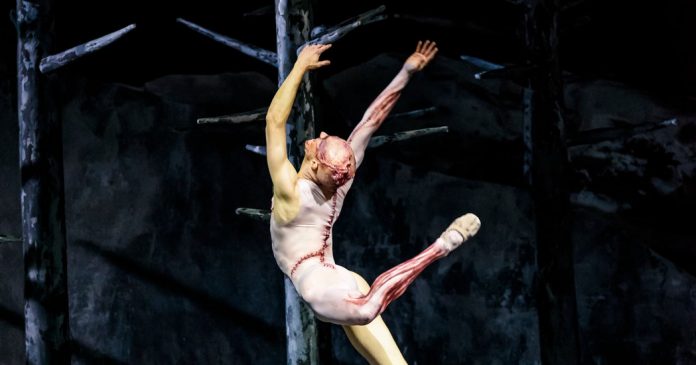

Liam Scarlett’s Frankenstein is a thrilling new work for the Royal Ballet

0
The Creature's depiction is a departure from Hollywood's green monster.

Hollywood has taken Frankenstein and turned it into a horror story featuring an iconic green monster with bolts sticking out the sides of his neck. But Mary Shelley’s original novel, as choreographer Liam Scarlett emphasizes, is more of a love story than anything else.

Broadcast live from the Royal Opera House in London to cinemas in 26 countries around the world, this new three-act ballet was co-commissioned by the San Francisco Ballet and the Royal Ballet, and will be seen in San Francisco in February 2017. At only 30 years old, Scarlett has not long transitioned from the role of dancer to choreographer, and he is the youngest artist to have a full-length work commissioned for the Royal Ballet.

Set in 18th century Geneva, the story begins in Victor Frankenstein’s youth, where he is a curious child already interested in science. His family adopts Elizabeth, an orphan, and over the years she and Victor become very close. They eventually fall in love, and realize that they have loved each other all along. Federico Bonelli and Laura Morera were both perfectly suited to these roles and share many tender moments onstage during their pas de deux scenes.

The most impressive set piece of this production is the anatomy theatre at the University of Ingolstadt where Victor is studying. Full of strange animals and body parts in glass cylinders, the room is spooky to begin with, but when Victor begins to sew together a cadaver and bring it back to life, it’s chilling. This stunning set also featured pyrotechnics and lightning projections to add to the drama.

Suddenly, the Creature (Steven McRae) begins to move on the operating table, and he flees out of the room to close the first act. In act two, the Creature is a constant threat and thoughts of him torment Victor. The Creature seeks revenge and begins to wreak bloody havoc on the Frankenstein family. Through it all, McRae’s performance was spot-on, with the perfect inquisitive yet evil stare as he slinked through the woods and spied on the family. Victor, tormented with guilt, pushes Elizabeth away, and they share a tense pas de deux full of vulnerability and restrained passion.

A work of art in the making for three years, this is a massive achievement for Scarlett and the entire creative team including composer Lowell Liebermann and all of the designers. I am sure this will become a classic production in the Royal Ballet repertoire.

If you haven’t had the chance to see a ballet or play at the cinema, I highly recommend it. Not only is it much cheaper than being at the theatre, you are treated to behind-the-scenes extras, there is no dress code, and you can snack to your heart’s content. I look forward to the next season of ballets broadcast from the Royal Opera House.  

Daniel Wesley is a stage performer through and through

0
The White Rock native is a master at keeping the crowd engaged at his shows.

If you haven’t heard of Daniel Wesley before now, let me assure you that you’re missing out.

Wesley recently performed at the Commodore Ballroom in an anniversary event to mark his 10 years in the music business. In that time he’s released seven albums, and toured with Matthew Good across Canada in 2011. The Commodore show doubled as a live recording, and featured both an acoustic warm-up set and a rockin’ plugged-in performance that went into the wee hours of the morning. It was one large, crazy, and fun party — shame if you missed it.

Wesley’s childhood friend, Jeremy Allingham, opened the floor for the new father of two. Allingham’s whiskey-soaked voice perfectly complemented his easy-to-listen-to rock. Toe-tapping beats, coupled with an almost oldies-like vibe took Allingham’s walking basslines and confident voice to a whole other level. His big sound — consisting of two guitars, a bass, drums, and keys — was a great choice to kick off Wesley’s celebratory performance.

White Rock native Daniel Wesley delivered hit after hit, the crowd never ceasing to treat every track as a campfire singalong. The only exception was a new “little ditty” the songwriter had crafted specially for the show. Wesley’s laidback, beachside alternative rock — with a hint of reggae and ska — is excellent summer music to chill to. The Commodore’s speakers had the bass drum beating deep in my chest long after I’d left the Ballroom and navigated through the drunken Granville throng.

His vocals never wavered, but the true power behind his voice was elusive through the majority of his two sets. The times where he had to dig deep for his lower notes were the best, and his falsetto was flawless. Wesley’s songs have sultry basslines and lyrics that are built for audience repetition, like “Ooo Ohh” from Sing + Dance, which features multiple spots for ooh-ing. During “You Ain’t Shit”  from Outlaw, which is all about weed, the haze was strong over the crowd. The audience was at their loudest while yelling, “You ain’t shit unless you and me are together.”

The intent of the show was pure fun — no better shown than in his rendition of Ginuwine’s “Pony.” Despite not having any guys taking off their shirts, the crowd got rowdy and dancing anyway. The crowd followed Wesley’s lead and didn’t stop, even for a minute. Grooving to the music, waving hands to the beat, the audience engagement was top-notch.

There are some people who are great performers. They’re the acts you go to where you don’t really like their music, or you aren’t sure; but you come out of that venue sweaty and exhilarated, just because they are such excellent show people. Daniel Wesley is one such act, and you don’t want to miss him.

To tide you over, his latest album, I am Your Man was released in 2015. So far his next show is in Port Alberni, June 17 at Blue Marlin.

Town halls to be held regarding sexual assault and misconduct at SFU

0
SFU will be having three concurrent town halls on May 31.

A series of town halls will be held to begin the process of developing a sexual misconduct and assault policy at SFU today.

All three will be taking place concurrently on May 31 from 2–4pm on all three campuses.

Dr. Jon Driver, VP Academic and Provost of SFU, will be overseeing the development of the policy. “We are hearing that there are questions of [how to address] sexual violence and misconduct — universities should respond to these concerns,” he said. “There should be a policy addressing that. A standalone policy signifies that the university takes these concerns seriously, and that those who are affected will know what to do and how to get help.”

Dr. Driver mentioned that university attention is being put on this subject because of the recent incidences of sexual assault that were covered in the media, some of which were on Burnaby Mountain.

Furthermore, the provincial government introduced a bill into the legislature at the end of April that would make it mandatory for post-secondary institutions to have a standalone sexual violence and misconduct policy. Because of that, according to Driver, there is “a growing discussion between students, advocacy groups, and university administrators what the right way to address sexual violence is.”

The Town Hall will be comprised of the following components: an introduction to the process, an overview of what policies SFU currently has in place, and an invitation for people to participate in a variety of ways. As drafts of the policy are made, SFU students, faculty, and staff will have the opportunity to provide input and feedback on them. Participants will also have the option to submit anonymous comments online.

An advisory group is also being formed that will provide feedback on the wording and development of the policy. The group will consist of individuals from a diverse range of backgrounds and expertise. Former Simon Fraser Student Society board member Kathleen Yang is one of the members of the advisory group. “The main purpose of the advisory group is to represent the needs of the community as a whole,” she said. “I, personally, am committed to updating students.”

Yang is hopeful about the possible outcomes of this process. “I hope we can take a survivor-centered approach, and that there’s enough presence in the Town Hall to convey to the university that we truly need this policy, as it affects the whole community. I hope we see a transformative message come out of this policy,” she said.

Flicker magnifies indigenous dance in a multimedia performance

0
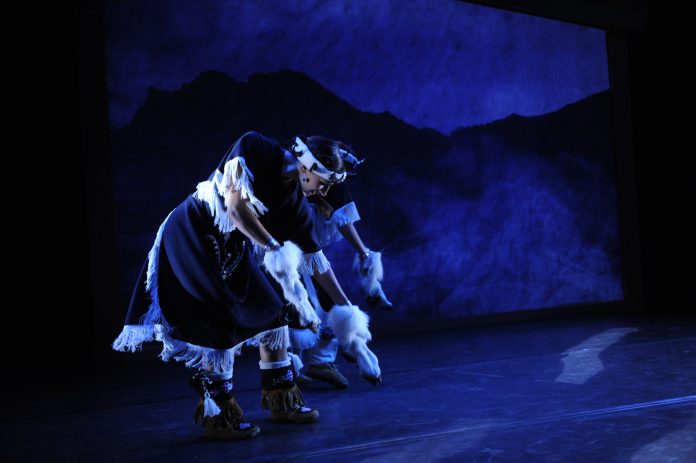
Flicker fuses the traditional with the modern.

Culture is always evolving, ‘flickering’ between what it was and what it is becoming.

Dancers of Damelahamid carefully negotiate this in-between space in their new work Flicker, which premiered at the Cultch Historic Theatre on May 25. The work is named after the flicker, a woodpecker frequently pictured in indigenous art. The show weaves a narrative through a multimedia performance, combining indigenous dance in traditional Gitxsan regalia with projected environments of light and sound.

I chatted with artistic director Margaret Grenier about the upcoming show. She explained that Flicker has been a two-year process, involving more collaborators than the company has ever worked with before. In particular, working with theatre production artist Andy Moro on videography and lighting design has opened up the work visually, strengthening the dance’s ability to communicate its stories.

The innovative choreography in Flicker fuses contemporary, indigenous dance with powwow and coastal dances. Its hybridity reflects the intersecting cultural identity of many First Nations families, including Grenier’s background of both Gixtan and Cree heritage.

Grenier noted that the collaboration with dramaturge Charles Koroneho has been influential to the dancers’ process. Koroneho’s own career as a Maori performing artist, trained in both traditional dance and Western contemporary, brought an outside voice to the piece. This allowed the Dancers of Damelahamid to reflect on their own practice and step boldly into new places.

In its essence, Flicker has not broken from the indigenous dance form. However, its use in a highly multimedia performance raises questions — how can an indigenous artist maintain the essence of a cultural dance form while creating something new? Grenier explained that the use of cultural dance must begin with a true understanding of the form itself, received from the older generations. Only from there can one begin to take artistic risks.

Flicker is a work of intersection between past and present. Ancient forms of movement magnified by videography and lighting meet onstage in performance to perhaps forge new narratives.

SFU men’s basketball names Steve Hanson new head coach

1

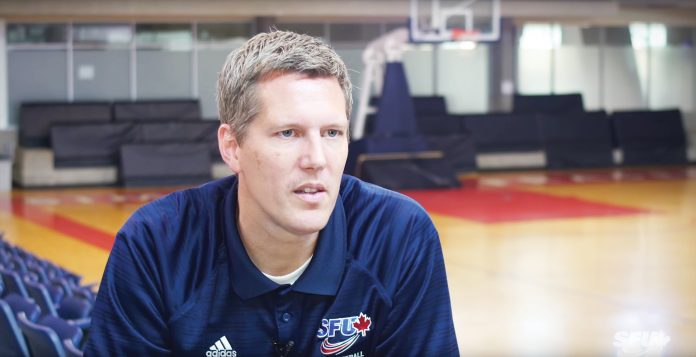
SFU Athletics announced on May 26 that Steve Hanson will be the eighth head coach of the men’s basketball team. He was the lead assistant coach last season at SFU under former head coach Virgil Hill, and previously was the coach at Terry Fox Secondary.

“We have to re-establish stability and re-establish credibility with our men’s basketball program,” said Theresa Hanson, SFU Athletics director, in a press release. “Steve has demonstrated technical expertise in his coaching and teaching abilities, and he displays the personal character that Simon Fraser values so highly.”

Steve Hanson will be tasked with rebuilding the struggling men’s basketball program. Last season, the team had a 2–24 overall record, and 1–19 within the Great Northwest Athletic Conference. Hanson said he knows that in the beginning, there will be many challenges.

“I think one of my strengths as a coach is communication.” – Steve Hanson, SFU basketball head coach

“Well, I think in the short-term I think the most important thing is getting a group of guys who are willing to stick out some tough times,” said Hanson. “I think in order to do that you need some guys with some long-term vision like I have.

“I think the number one thing is we have to build culture. That has to be around some core values. I have some core values of my own, [but] I’m going to let the players and future captains bring out what the core values of the team are going to be.”

While core values can be a good idea, nailing down what that means can be a bit of a challenge. Hanson said he believes he has a good vision of what those values might be.

“I think trust is huge between players and coaches. I think one of my strengths as a coach is communication,” he said.

“Letting players know that you care about them outside of practice is really important. This is a tough school, it’s eaten a lot of people trying to get their degree up, and when you pile on athletics and the pressures of being a varsity athlete, it’s tough.

“I understand that, and I can help the players get through it.”

A change of direction for this program will be the focus on recruiting. Former head coach Virgil Hill stated when he was hired that he was going to focus heavily on local recruiting. Hanson is planning to open up more to international recruiting, but still wants the core of the team’s talent to be BC players.

“With [the] Internet and YouTube, there’s so many devices now that recruiting is international,” he explained. “It really doesn’t matter where the players are from, as much as [it does] having a common vision of what they want.”

Hanson said he is expecting to announce two new recruits in the next 10 days, to add to Vinnie Safin and Kedar Wright, who were announced on April 7.

A big challenge for Hanson will be erasing the memories of last season for the returning players, as well as the fans. On April 1, former head coach Virgil Hill resigned amidst numerous allegations of misconduct. Hanson indicated that they are “focusing on the future,” and the fallout with coach Hill is not affecting his ability to recruit players.

“I think it’s a fresh start for everybody,” said Hanson when asked about his idea for the future of the program. “[Every] head coach brings a [different] element, different type of leadership. [. . .] I expect to bring a different type of leadership.

“With good culture, I think we can surprise people, whether it’s next season or the season after.”

Gursimar Bedi found guilty to being accessory to murder of SFU student

0
Maple Batalia, pictured above, was murdered at SFU's Surrey campus in 2011.

Gursimar Bedi has been found guilty of being an accessory after the fact in the murder of Maple Batalia, as ruled by a BC Supreme Court judge on May 27.

This decision comes months after Batalia’s ex-boyfriend Gurjinder Dhaliwal pled guilty to charges of second-degree murder, as he shot Batalia three times at Simon Fraser University’s Surrey campus on September 28, 2011. Bedi, an acquaintance of Dhaliwal’s, has now been found guilty for his connection with the murder.

Batalia was 19 years old. She was studying to become a doctor, and was also an aspiring model and actress.

According to Crown prosecutor Wendy Stephens, Dhaliwal killed her because Batalia wanted to end their relationship, as he had been unfaithful to her several times.

The Crown prosecutors in the case also charged Bedi with manslaughter, but he was acquitted of those charges. They stated in the closing arguments that they could not provide sufficient evidence to prove the allegations against Bedi.

A few days before the murder, Dhaliwal had Bedi rent a vehicle for him which allowed him to follow Batalia without her knowing. A court order had prevented Dhaliwal from renting it himself, so he enlisted Bedi’s help.

Bedi also kept tabs on Batalia, letting Dhaliwal know where she was and if she was with a new man. Witnesses placed Bedi at SFU on the day of the murder, and his cell phone signal was also picked up by the nearby cell towers.

However, the Crown could not prove that Bedi was present for the murder, leading to the acquittal of the manslaughter charge.

Bedi will be back in court on June 9, where he will be sentenced. Dhaliwal is already serving his sentence, which is life in prison with no chance of parole for 21 years. He was sentenced earlier this year.

SFU scientist studies movement of lizards

0

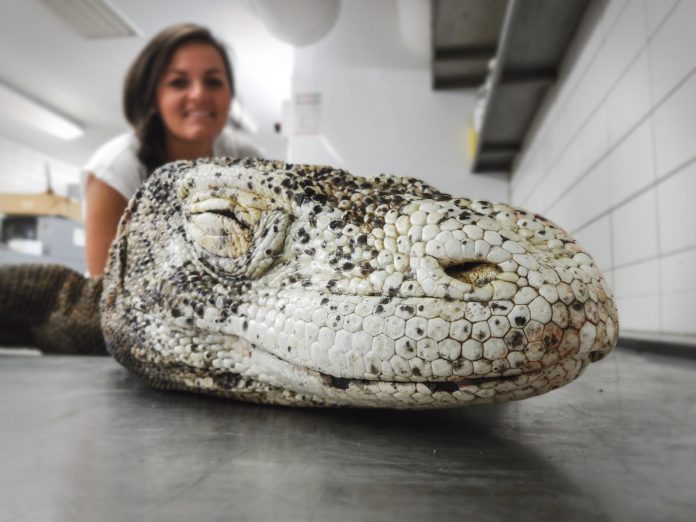
Imagine coming upon a giant lizard that’s five metres long and weighs 600 kilograms — could you escape by running away? This is a question that Australians have been asking ever since they came across the fossils of the extinct giant goanna, or Megalania. Recent insights by SFU researchers have shed light on an answer.

Giant goannas were a member of a diverse genus of lizards that include some of the smallest and largest living lizard species, such as the Komodo dragon. As the size of these lizards increases, so too does their mass. These animals have an unusual way of managing the stress of this increased mass that interested Taylor Dick, a PhD candidate in the department of Biomedical Physiology and Kinesiology at SFU.

The cross-sectional surface area and properties of muscles and bones increase at a slower rate in comparison to mass as the size of a species increases; because of this, their muscles and bones have to deal with the increased levels of stress required to support the body.

Giraffes, rhinoceroses, and elephants have all solved this problem by becoming more upright, as their legs are positioned directly under their bodies and take most of the weight. “[T]hey become upright so that their muscles and bones don’t have to deal with that extra mass and the stress of that extra mass,” explained Dick.

Dick observed that the group of lizards studied in the project did not become more upright over time as their size increased, “so you can imagine, moving around in a permanent push-up position, that’s really going to be difficult.” In order to learn more about why this is the case, Dick and her research group collected a wide range of species of lizards directly from the Australian Outback, and also worked with donated specimens.

To study the musculature of the lizards, they filmed them in front of high-speed cameras to learn more about how they run. Then they dissected the lizards to learn more about the properties of the muscle tissues themselves.

“The results were even more pronounced than [the researchers] thought they might be, suggesting that as these lizards get really really big they actually change the design or the architecture of the muscles, but that comes at a cost,” said Dick.

This cost is based on the fact that muscles can be built to specialize for two purposes: support or propulsion. If they are designed to support, then that will likely decrease the propulsion power of the muscles and slow the lizards down.

This brings us back to our original question: could you outrun a giant goanna and live to tell the tale?

Based on the models built using living lizards, Dick thinks that this is very possible, as the massive lizards would have had to trade off their propulsion abilities for increased support. Nevertheless, according to Dick, “you would not want to come across one.”

Critics pronounce Skills for Jobs Blueprint a failure

0

On April 29, 2014, the Government of British Columbia launched BC’s Skills for Jobs Blueprint, a program designed to facilitate the growth of BC’s liquefied natural gas (LNG) sector. Premier Christy Clark claimed that 100,000 LNG-related jobs would be created by the program. Two years later, skeptics are questioning the credibility of this program and where the purported jobs are.

One such skeptic is Burnaby-Lougheed MLA and NDP member, Jane Shin. She said that the BC Liberals’ promises during the election for the Skills for Jobs Blueprint were misleading.

Shin stated that “the grandiose promises were never going to be achieved in the timeframe she was promising,” claiming that if the Clark government were genuine in their assertion to help students transition from school to the workforce, they would avoid “dismantling public education, slashing supports for post-secondary, and gutting our apprenticeship and trades training system.”

Given the current circumstances in the LNG industry — dramatic price drops internationally and a glut in the market — many have criticized the Blueprint’s restriction of funding to only specialized post-secondary programs.

As president of the Federation of Post-Secondary Educators of BC George Davidson explained, this means that post-secondary institutions — which have been undergoing cuts to funding throughout the BC Liberal administration — must allocate their budget towards programs for jobs specified by the government.

“One hundred and thirty million dollars over the last couple of years has been devoted to this. Where are the jobs?” Davidson asked. “You’ve got a lot of students who are taking these programs, but there are no jobs when they come out at the end.”

“One hundred and thirty million dollars over the last couple of years has been devoted to this. Where are the jobs?” –George Davidson, President of the Federation of Post-Secondary Educators of BC

To this, Minister of Advanced Education Andrew Wilkinson stated that there will be almost a million job openings by 2024. “The Ministry of Advanced Education is aligning funding and programs to these high-demand opportunities in a variety of sectors. [. . .] Government invests an average of almost $5 million per day in the public post-secondary system,” he said.

Davidson stated that, with inflation accounted for, government funding for post-secondary operating grants has been cut by 27 percent since the BC Liberal government came into power in 2001.

He also noted that inflation for post-secondary education and healthcare is larger than it is for consumer price index industries. This reduction in funding has meant that post-secondary institutions must make cuts to programs, providing students with far fewer choices than there used to be.

When “you starve institutions of funding [. . .] there are only a few ways of making that up, and increased tuition is one of them,” said Davidson. “This year the government will take in through its institutions $1.92 billion in tuition. That’s more money than the government is putting into operating grants for institutions.” The current amount given is $1.82 billion.

International students in particular pay the price for this: “International student tuition makes up more money than the government operating grants at places like Langara and Douglas,” said Davidson.

According to Wilkinson, the total operating grants provided to post-secondary institutions has increased by 41.6 percent since 2001 — from $1.3 billion to $1.8 billion. He also noted that “Only 25 percent of operating grants to public post-secondary institutions will be specifically targeted to a broad range of in-demand programs.”

Additionally, Shin alleged that BC residents may not be the ones receiving work for the planned programs. “Most of the major LNG proposals plan to hire temporary foreign workers from overseas during the construction phase, meaning these jobs will not go to British Columbians as promised,” she said.

“One simple thing government could do is reinstate the requirement for companies working on public sector projects to have a minimum number of apprenticeship spaces.”

As for the future of BC’s LNG industry and the Skills for Jobs Blueprint, both Shin and Davidson are dubious of its potential for success. “BC’s economy is best when it is diversified. We should not put all our eggs in one basket like Clark has done,” said Shin.

Davidson stated that LNG is a short-term answer as it’s cleaner burning than coal, but that “we need to start looking at reducing greenhouse gases, and reliance on LNG in BC is now below the targets that the government has set [. . .] I don’t see how they can achieve those.”

SFU students design virtual reality game for cancer patients

15

Stuck in a hospital bed is an odd place for inspiration, but this was the case of SIAT student Henry Lo, who was diagnosed with lymphoma in grade 11.

Now cancer-free, Lo has used his past experience as well as his studies in interactive arts and technology to give back to the community. Along with fellow SIAT grad Janice Ng, who also visited the hospital quite often due to a weak immune system, the two have developed Farmooo, a virtual reality video game for cancer patients. 

Reflecting on the project, Ng said that she and Lo decided to take the course since they both wanted to make a game, but also wanted to create something for a good cause.

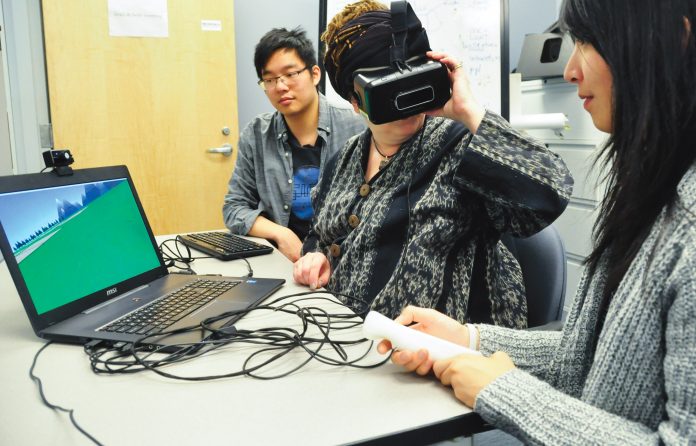
Farmooo — developed under the supervision of Dr. Diane Gromala, the director of SFU’s Pain Studies Lab — “is intended to help teen cancer patients get distracted during chemotherapy treatments. . . so [that] they will focus more on the activities inside the game, rather than the medical treatment,” Lo said in a statement to The Peak.

Inspired by popular online games such as Farmville and Gardening Mama, Lo and Ng were able to create this virtual reality game that helps cancer patients “by shifting their mindset into the game rather than their physical surroundings through immersion.

“[Farmooo] saturates patients’ minds with wonderful and cheerful sensations [so] that their mind is less prone to painful senses.”

“Simply, [Farmooo] saturates patients’ minds with wonderful and cheerful sensations [so] that their mind is less prone to painful senses,” Lo added.

Once they came up with the idea, the pair began looking for a supervisor who could assist them in the process. Opting to take a directed studies course landed them with Dr. Gromala, a professor who usually teaches at the graduate level. Dr. Gromala saw eagerness, intelligence, and motivation in both Lo and Ng. Lo recalled how “intimidating” it was to contact her to be their supervisor for the project. But for Dr. Gromala, taking them on was not a problem.

“I consider myself to have a rigorous screening process,” Dr. Gromala said with a laugh. “It was very obvious that they were talented, and had a lot of personal experience to bring to the project.”

Dr. Gromala said that Lo and Ng’s project comes at a special time, with technology continuing to advance each day. Further, she said that this is an excellent example of how SFU is able to engage students, and the community, through its research.

“This is a perfect way for them to give back to the community, to help patients benefit from what they are doing. It can also inspire patients, something like, ‘This game was made by someone who survived!’”

When asked about the future of Farmooo, Lo said he hopes that this project can help draw attention to virtual reality, beyond the scope of gaming or the entertainment industry. Ultimately, Lo would like to see VR being developed in the medical field. Ng echoed that sentiment, explaining that they hope to expand the game to adapt to different mediums and modes of interaction.

“We are currently working closely with BC Children’s Hospital to get our ethics proposal done, [and] eventually we see it being installed in the new hospital,” Ng said. If all of this goes well, Lo said that Farmooo could potentially be available for use by the end of this year.

In reflecting on his time at SFU and the excitement that has come with this project, Lo was thankful that SFU provided him and Ng with the opportunity to have their own “directed studies,” and urged other students to pursue their dreams and passions, and take risks.

“If Janice and I decided to just finish the normal courses and requirements and just graduate, we wouldn’t be having this conversation,” Lo said.

“Whether it is career choices, love choices, health choices. . . it is us who needs to work hard for it.”