Home Blog Page 801

Levitation Vancouver is set to kick off festival season

0
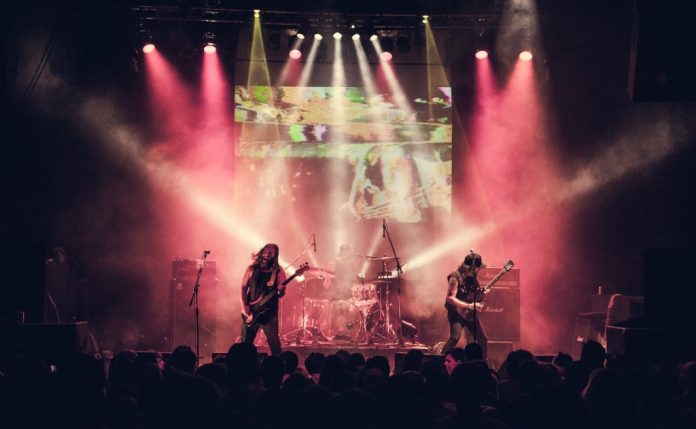
King Tuff preforming at Rickshaw during last year's festival.

Summer has arrived, which means music festival season is swinging into full gear.

Although there has been some disappointment with the cancellation of the Squamish Valley Music Festival, there are still plenty of other festivals to fill the emptiness.

Levitation Vancouver is back for its second year from June 16–19, featuring artists with an emphasis on psychedelic or experimental sounds. Having gone last year, I recommend this festival to anyone who has the means to attend.

The festival is spread out between the Commodore and select venues. Groups such as garage rock band together PANGEA start the festival off on Thursday night at the Cobalt respectively, for some shows you won’t want to miss.

Tycho’s chilled out electronic ambience will fill the Commodore on Friday, changing the atmosphere from the psychedelic glam pop/rock from of Montreal, and surf punk sounds of FIDLAR.

Beachy surf vibes mark the midway point of Friday with Allah-Las, their music steeped in a 1960s sound reminiscent of the Zombies or the Kinks. Vancouver-based punk group White Lung rounds out Friday’s schedule for Levitation.

Los Angeles experimental electronic master Flying Lotus headlines on Saturday, and is sure to have accompanying psychedelic visuals to set the tone. Californian band the Growlers are set to play beforehand, with a sound that bridges rock, country, surf, and pop into the umbrella of psychedelia.

Another highlight of Saturday will be Thee Oh Sees. John Dwyer always brings a great energetic live show, and since he’s touring with two drummers right now it’s sure to be an excellent set.

Night-time shows will take place at the Cobalt, Imperial, and Rickshaw Theatre after the headliners finish at the Commodore. You can expect to see some great acts, with bands like Montreal-based Suuns, electronic synthwave artist Com Truise, stoner-psych heavyweights Dead Meadow, and mutli-genre/jazz-fusion/electronic bassist Thundercat.

A nice aspect of this festival is that you don’t need to pay for the full weekend, or even a full day. Tickets for the different venues are sold separately, so if you’re only interested in seeing a band or two in the evening you won’t have to break the bank. Or, if you’ve been at the festival since 4 p.m., you don’t have to feel pressured to go see another handful of bands later on in the night.
Administration allegedly mishandled three sexual assault allegations

3
Three sexual assaults have allegedly taken place at SFU Residence, with the university being accused of mishandling the accusations.

In the midst of rolling out community consultations for SFU’s new standalone sexual assault policy, reports have emerged that this past year that administration may have mishandled sexual assault allegations from three students against a male student in residence. The mishandling could implicate the top levels of administration including President Andrew Petter, VP Academic Jon Driver, and Associate VP Students Tim Rahilly.

What happened?

The first individual alleges she was raped by the male student in October of 2015 while living in residence, according to The Vancouver Sun. The second alleges a sexual assault happened during the Christmas Break outside of campus.

Both students withdrew from classes shortly thereafter. It was in February of this year that the mother of one of the individuals wrote to President Petter to bring his attention to the issue. However, it was not until April that the mother met with several members of the administration.

What was the administration’s response?

It was reported by the Sun that the male student was moved to another residence — according to some reports, to an even larger room. Kurt Heinrich, a spokesperson for the university, told The Peak that the university conducted a safety assessment “in conjunction with the RCMP.”

Heinrich emphasized that the male student in question was no longer on campus, but would not say whether that was due to university action or some other reason. It is unclear whether the student is still enrolled in the institution.

He would also not get into the specifics of any other measures taken by the university, despite saying to The Peak, “We’re doing our best [to be] as transparent as we can.”

Several friends of the survivors have claimed that the university has encouraged them to keep quiet about the allegations. They also claimed that they have been physically threatened by the accused student’s friends.

What are they saying now?

As of now, Petter, Driver, and Rahilly have all declined to comment.

The Peak questioned Heinrich about why the university’s legal counsel was present at the April meeting if not to protect the university from liability. Heinrich said “that wasn’t necessarily the case,” but wouldn’t say why Li-Jeen Broshko, the lawyer, was present.

Heinrich refused to comment on many aspects of the story, including two of the female individuals withdrawing from classes, citing privacy concerns and a wish to not interfere with the ongoing RCMP investigation.

Said the Teaching Staff and Support Union (TSSU) in a statement made available to The Peak, “The SFU Senior Administration needs to take responsibility for their decades of inaction and start being part of the solution rather than silently perpetuating injustice.”

The Peak will update the story as more information becomes available.


The Peakeasy: Episode 3

0

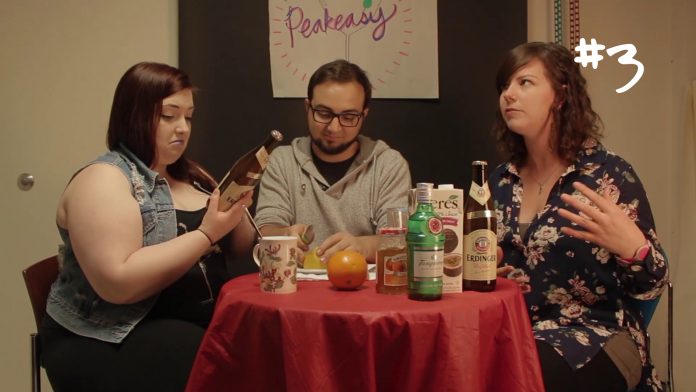
Since the Highland Pub is closed this summer, we’ve taken matters into our own hands and started The Peakeasy!
Drink of the Week: Wheat King

Stay tuned for weekly videos where we make cocktails and drink them and talk and stuff!

Shot by Adam Madojemu
Featuring Jess Whitesel, Nathan Ross, Maia Odegaard

About Time

0

We address the philosophical topic of things we’re told about time in University.

Created by Adam Madojemu

The Peakeasy: Episode 2

0

Since the Highland Pub is closed this summer, we’ve taken matters into our own hands and started The Peakeasy!

Today. we make another Cocktail!

Stay tuned for weekly videos where we make cocktails and drink them and talk and stuff!

Shot by Adam Madojemu
Featuring Jess Whitesel, Nathan Ross, Maia Odegaard

What Do SFU Students Think About Donald Trump?

0

We ask SFU students what they think about Donald Trump.

Created by Adam Madojemu & Tatum Miller

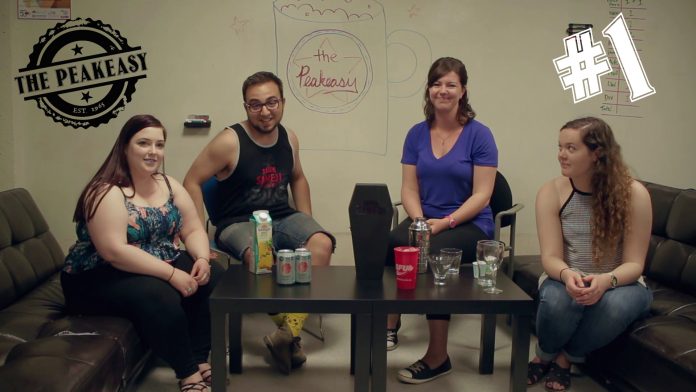
The Peakeasy: Episode 1

0

Since the Highland Pub is closed this summer, we’ve taken matters into our own hands and started The Peakeasy!

Shot by Adam Madojemu
Featuring Jess Whitesel, Nathan Ross, Tamara Connor, Maia Odegaard

Personal online photos: Why is it bad to compile an online obituary?

0

[dropcap]A[/dropcap]t the end of last month, The Guardian posted an article by Rana Dasgupta titled “Posting photos online is not living. You are producing your own obituary.” The article begins by making large sweeping statements about tourists taking pictures and using them as “material for a personal online story” in lieu of truly immersing themselves in their travel experiences.

This opening sets the stage for the rest of the article, which can be best described as a rather incoherent attempt by Dasgupta to sound profound and edgy, while actually coming off as supercilious, assumptive, and poorly thought out. The main downfall of his argument is that it considers social ‘media-ized’ experiences and actual experiences to be mutually exclusive — which has about as much of a logical following as Scientology.

Cynical criticisms of technologies are hardly new; even Plato once quoted Socrates saying that writing “will create forgetfulness in the learners’ souls, because they will not use their memories; they will trust to the external written characters and not remember of themselves.” Older generations and Luddites have likely been skeptical of the new innovations used by younger people since the invention of the wheel. This is why I cringe a little every time I see yet another article added to the already superfluous amount criticising people for using modern technology.

Even if their criticisms are true in some ways, these technologies catch on because their cost-benefit is worth it. Condemning people for using them is being overly judgemental.

Dasgupta tries to sound profound and edgy, while actually coming off as supercilious, assumptive, and poorly thought out.

Despite the article’s title, I’m still not quite sure how Dasgupta reckons that our social media accounts eventually being used for obituaries is bad; personally, I’m fine with my friends and family having an easier time finding my pictures and listed life experiences after I’m gone, as opposed to having to scavenge to find such documents like previous generations may have. Most technology is made for the purpose of making life easier, and this is another instance of it doing exactly that.

Dasgupta claims that the things people post on social media “become significant only at the moment of death,” which only takes a quick glance at Facebook’s recent “On This Day” feature to refute; people look back at their old posts to reminisce all the time. The article really doesn’t provide any substantiation for this statement at all. I can only assume that he included it to show off his prophetic powers, foretelling the destiny of content submitted by people who use social media in a way he doesn’t approve of.

Both my favourite and least favourite statement in the article is, “In an era when people still believed in their own lives, they wrote autobiographies. We, by contrast, have become auto-obituarists.” First of all, plenty of people still write autobiographies. I’m not quite sure when this supposed era of people believing in their own lives ended, but I, for one, certainly don’t think of myself as fictitious. Also, autobiographies and obituaries aren’t exactly contrasting concepts, so I’m a little perplexed over what point Dasgupta is trying to get across here.

Overall, this article feeds into an already existing notion of media-use shaming. Sure, perhaps some people could greatly benefit from taking time off from social media to smell the ‘IRL’ roses; but that’s hardly something you can assume from noticing someone snap a few photos. It’s also entirely their prerogative, and they don’t deserve to be condescendingly judged for it.

School breakfast helps kids learn: Beedie researchers

0
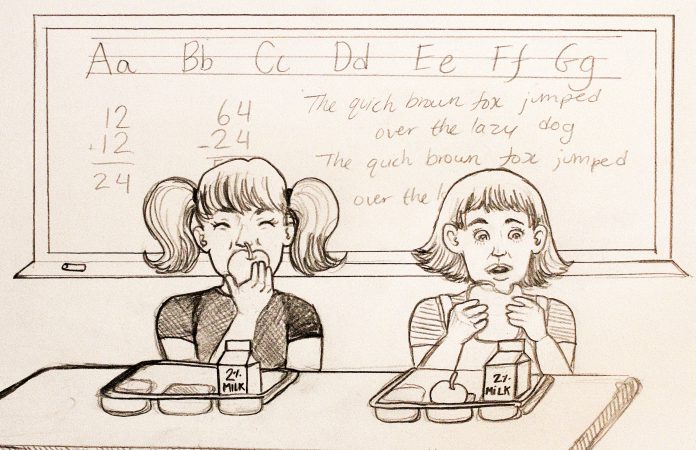
School breakfast can offer pupils opportunities for positive social interaction.

Poverty among school-aged children remains an ongoing concern in Canada. However, positive results from a breakfast program at a local Burnaby elementary school could indicate an important step towards resolving this problem.

From October 2014 until June 2015, Douglas Road Elementary in Burnaby has offered the Breakfast Club program for all students.

During this period, 83 out of 255 students were enrolled in the program, and roughly 1,820 meals were served.

Andrew Gemino, associate dean, and Ben Tan, research assistant of the SFU Beedie School, conducted a study into the cost-benefit of this program.

“Initially, a lot of folks were under the impression that everyone was well-fed,” said Gemino.

Unfortunately, even in Canada children are often coming to school hungry or without having eaten a proper breakfast. Canada is the only G8 country that doesn’t have a national school meal program. Education is managed on a provincial level. As a result, breakfast programs are typically funded by private, corporate, and public donors, Gemino and Tan explained.

The Breakfast Club program at Douglas Road Elementary was founded with the support of Mary-Ann Brown, principal of the school, and Burnaby School District 41, along with The Vancouver Sun‘s Adopt-A-School program and a private donation from Ryan Beedie and the Beedie Development Group, led by Mason Bennett.

When they conducted their survey in December 2015, there was positive feedback from both the staff and the students. With the Breakfast Club in place, there was a 22 percent increase in participating students’ attendance — likely due to students arriving early for breakfast, and as a result arriving on time for class.

About 86 percent of staff members said they would recommend the breakfast program to new students and staff who come into the school.

Many students have commented they were excited to be a part of the program, and enjoyed the fact the there was another option for food. The openness of the program for all students also meant that many students were able to bring friends to join them for breakfast.

In an interview with The Peak, Gemino and Tan mentioned that the Breakfast Club was an excellent way to bring people together, get them to talk to each other, and ultimately make them feel welcome within the community.

In their report, a summary of other research studies have indicated that breakfast programs offer positive effects on the students’ nutrition, cognition, and behaviour.

“[But] there was more to this than just nutrition,” remarked Gemino.

They found that this program has the potential of changing the way students viewed themselves and interacted socially.  Furthermore, the program could help generate a more positive attitude towards the school environment, making the school seem less intimidating, and ultimately helping the students determine what school means for them.

Gemino and Tan both agreed that people should be aware of and support programs such as the Breakfast Club.

“There’s potential for this to be greater than it is,” said Gemino. “The program is a good start and probably the best start.”

SFU prof creates guidebook for cultural appropriation

0
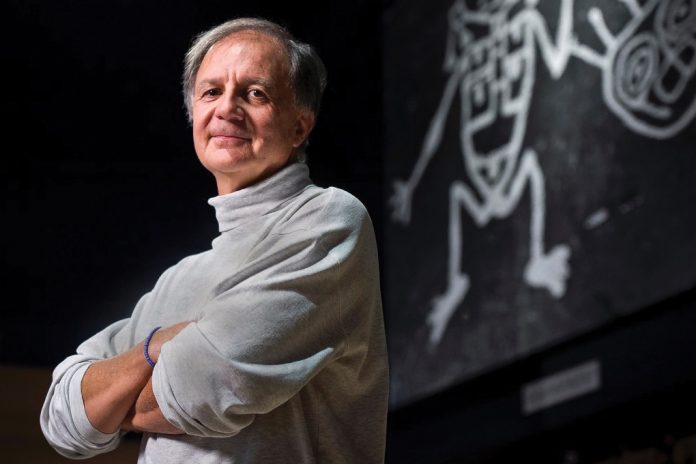
n 2015 Dr. George Nicholas gave a presentation at TEDx Yellowknife, a symposium that focused on indigenous issues.

Borrowing pieces of other cultures has become common practice in popular culture and even in literature. This leads to an important question: what is the line between cultural appreciation and cultural appropriation?

SFU professor of archaeology Dr. George Nicholas — in collaboration with academics, students, individuals in the community, government, and indigenous organizations — have been working over a period of a seven years to help answer this question.

Their initiative, the Intellectual Property Issues in Cultural Heritage (IPinCH) project, is an international project to tackle cultural appropriation and the imbalances of power that accompany it.

One of the ways Dr. Nicholas and his colleagues are tackling this issue is by creating a guidebook on the ways to avoid cultural appropriation, called “Think Before You Appropriate.”

The goals behind the guidebook and the IPinCH project are to develop ways to avoid or confront these issues, or to eradicate them and limit their impact. Another main goal for the project, according to Dr. Nicholas, is to develop resources that indigenous people, policy makers, academic researchers, and the public can use to make more informed decisions to avoid appropriation.

One of the key messages in the guide is how to differentiate between borrowing from a culture and respectfully appreciating it, or disrespectfully appropriating it in ways that are harmful. These harms can be cultural, social, or economic.

“We were not trying to curtail research or put restrictions on knowledge, but knowledge needs to be used respectfully or with permission,” said Dr. Nicholas.

The guide spells out the difference between appropriation, which “means to take something that belongs to someone else for one’s own use,” and misappropriation, which is a “one-sided process where one entity benefits from another group’s culture without permission and without giving something in return.”

“Not only do indigenous peoples have little control over their own affairs, but their ways of life and traditional knowledge have been largely viewed as public domain, free for the taking. Concerns about the exploitation and appropriation of their culture are rampant,” Dr. Nicholas said in a TEDx Talk.

Along with the cultural appropriation guidebook, according to Dr. Nicholas, IPinCH also features a multitude of other resources, including the “Appropriation (?) of the Month” blog series. This series works to illustrate that appropriation comes in many forms, and that it is not always easy to discern cultural borrowing from appropriation, which explains the “?” in the title.

For individuals looking to be aware of appropriation while shopping, Dr. Nicholas explained that “If you’re interested in buying certain objects or clothes it’s so easy to Google search and see if this design has been created with any kind of input from the native artists or indigenous community, and it’s just a matter of asking a few questions.”

For those with positive intentions, there are a few precautionary steps that should be taken: “If nothing else, a lot of people want to wear or have items that have native or First Nations designs on them [. . .] Indigenous communities do want to share their heritage [but] they want it to be done respectfully and used appropriately.”

In 2013, those involved with the project received the first Partnership Award from the Social Sciences and Humanities Research Council for their work. They continue to spark dialogue regarding intellectual property rights and cultural appropriation.