Home Blog Page 799

Album Reviews

Michael Franti & Spearhead – Soulrocker

This ninth album from Michael Franti & Spearhead is a collection of socially conscious tunes and upbeat danceable tracks that will make you want to get up and groove — and make the world a better place while you’re at it.

The first single, “Crazy for You,” is a joyful track written for Franti’s wife Sara, about love keeping us grounded amidst a crazy world. “Good to Be Alive Today” is another standout that has a more sombre tone with direct references to the tragic events we hear about in the news, climate change, and the general state of our world. Despite this, the song promotes gratitude for all the good in the world and presents a hopeful message for positive change.

“We Are All Earthlings” reminds us that we’re all in this together and we need to work together and love each other. With its dance beats and build-up to a nice breakdown, this song would be at home in a nightclub or your next house party. For a sunnier summertime track, “Summertime is in Our Hands” does the trick for backyard barbecues or lazy beach days.

Full of infectious rhythms and thought-provoking, political lyrics, Franti’s rhymes roll naturally off the tongue. When he sings about important issues, you feel compelled to listen and care. –TP


Keith Urban – Ripcord

Ripcord is Keith Urban’s latest country offering, and features his signature chill guitar licks. However, the eclectic combination of featured artists such as Carrie Underwood, Pitbull, and Nile Rodgers makes for an odd creation.

The album’s entirely formulaic — Urban’s been using the same method for years now.  At the same time though, Ripcord’s enjoyable, and even seems to branch out a bit despite Urban maintaining his style. There’s an electronic and sometimes pop-like undercurrent to the new album. I’d call it his most experimental record to date: an upbeat collection that’s got energy to spare.

“Gone Tomorrow (Here Today)” is a tribute to Urban’s late-father. Pitbull’s collaboration, “Sun Don’t Let Me Down,” has the rapper shouting “Mr. Worldwide” in the midst of the song and, well, it’s good that Urban also recorded a Pitbull-less version. If we wanted rap, we’d get some.

All in all, it’s another great addition to Urban’s discography that’ll satiate country fans until the next one arrives. –CM


Tegan and Sara – Love You to Death

It’s hard to believe that Love You to Death is Tegan and Sara’s eighth album. They’re still cranking out the electro-indie-pop we know and love, but there is a sophistication and maturation that shines through.

Like most of their work, the ups and downs of relationships past provide the fuel for their music. Though some casual listeners may complain that they always write about the same things, I think it’s important that they write about their experiences and that there’s a sense of honesty in their work.

Take “Boyfriend,” the only official single from the album thus far. Anyone — queer people especially —  who has served as the experimental relationship or “test drive” of a questioning person can identify with it. Finding that recognition is never a bad thing.

However, “That Girl” might be the best song on the album. There’s a playful tone to the keyboard, a majesty to the bridge, and an intelligent discussion lyrically. All in all, it’s a mature, nuanced pop album. –CM


SFU athlete will chase Olympic gold

0
While looking indecisive here, Cameron Proceviat is committed to chasing Olympic gold.

For Cameron Proceviat, the dilemma isn’t “Olympics vs Med School”, as other sources have reported. He intends on attending medical school once he’s “done with running”.

SFU’s track and field captain and Molecular Biology and Biochemistry (MBB) major could pursue both options.

Proceviat was an 2015-2016 NCAA All-American in the indoor 800-meter and also has a 3.90 GPA (out of 4.33), earning him the 2016 Great Northwest Athletic Conference (GNAC) Scholar-Athlete of the Year, making him the first SFU athlete, male or female, to receive the award.

The self-described “late bloomer” started as a walk-on with SFU’s track and field team five years ago. His personal drive and encouragement from his family pushed him to always aim higher. Proceviat’s season best 1:49.28 in the 800 metres is No. 2 on the GNAC all-time list and his 1,500-metre best of 3:46.47 ranks No. 4.

“Breakthroughs happen at different times for different people”, Proceviat told The Peak. “Focus on your own improvement, even if you’re a late bloomer. [Success] won’t be as sudden or as big.” This spring, Proceviat was also named by SFU as the recipient of the Bill Devries Award for all-around male athlete of the year.

Proceviat said he would encourage students to “not give up, but there was a time when I did give up.” He said after being a good runner in elementary school, he tried it again in grade 9 and he “wasn’t very good and wasn’t enjoying it.”

“I never really gave [running] a try until grade 12, mostly because my mom pushed me.” She suggested he try running again, after playing seven different sports like soccer and rugby for his high school, Moscrop Secondary.

“I never really focussed on a single sport before track,” he just played for fun. “My favourite thing to do is play sports.” Proceviat thinks his success in track was partly thanks to his focus on a single sport once he attended SFU.

“The either or [reports] were misleading”, said Proceviat . “My plan right now is to compete for one more year and try to make the World University Games next summer… and assess whether the [2020] Olympics is an achievable goal [. . .] I don’t know if ‘or’ was the right word.”

Medical school had always been Proceviat’s goal since he was little. Not only would he love the opportunity to be a doctor and help people but it’s also a personal goal. “I’ve always looked at myself and tried to achieve the highest thing possible.”

Proceviat said that with the ability and the opportunity to attend medical school SFU has given him, if he didn’t attend then he would be “letting [himself] down.”


Prof reflects on EURO 2016 using big data

0
Spain's soccer team is seen celebrating their victory at UEFA Euro 2012.

The 2016 UEFA European Championships are generating a worldwide buzz, with millions of people tuning in to watch every game. With so much at stake, it’s no surprise that analytics and big data are becoming a more important part of the decision process, according to SFU professor Dr. Peter Chow-White.

“Big data has become a really interesting touch point for people in different organizations and institutions to rethink how they create knowledge, how they create data, and how they use data to make decisions,” said Dr. Chow-White. “Sports is no different.

“Soccer was one of the earlier ones that got into it. Some of the earlier places like [AC] Milan have R&D departments that have been using data and different types of analytics in order to understand their players’ performance, recovery, all sorts of things. So it’s become an integral part of sports.”

With a high volume of information now available to these teams, the challenge is how to use it effectively.

“They want to be able to evaluate players in terms of making trades in the management point of view, but you [have] also got the coaches on the other side that want to evaluate performance either in practice and on the field, to make better decisions and have more intelligence in applying to the next game or their practices or whatever strategy they’re trying to create.”

Many teams may be using numbers in the decision-making process, but determining which teams are using them heavily and how they are using them is difficult.

“Sports is very secretive in terms of what they do and how they analyze things,” Dr. Chow-White explained. “So getting an inside look into what’s happening is very difficult. Most of what we know is on the outside except for those who have done research on these areas and have gotten inside different places.”

One of the challenges that soccer has in using numbers to make decisions is that it is a “continuity sport with low catalytic outcomes,” according to Dr. Chow-White. This means that there are not many stoppages in play such as basketball and baseball, and there are few events in it that drive play towards a winner.

“There’s lots to track, [in basketball and baseball] there’s lots of mini games, and there is lots of outcomes. Soccer and hockey are different, and I think the impact in those games is different on those sports than something like basketball or baseball.”

Dr. Chow-White also cautions teams not to invest fully in analytics and big data just yet.

“I don’t think that companies or teams should be spending a ton of money on this. Most of what happens in the game of soccer is [based on] what coaching decisions are made, player personnel, those are where the big things are. You got a Ronaldo on your team? It doesn’t matter what [you] do, he’s going to score goals.”

So what is Dr. Chow-White’s prediction for the winner of the 2016 EUROs?

“I’m going to go with whoever the superstars are playing with. You can have the best analytical team in the world, but if you don’t have the player personnel, then it’s not going to make the type of difference one would expect in terms of wins and losses.”

A love letter to those with mental illness

0

[dropcap]H[/dropcap]ey there. My name is Max, and if you’re reading this then I love you.

For years, I’ve struggled with depression and anxiety. This past month, that struggle has become the defining factor of my life. My doctor calls it a relapse. I call it a marathon.

Initially I had misgivings about writing this down for a student population of 35,000 to read, but I changed my mind based on two key realizations: 1) That I always feel better when I read about others opening up about their battles with mental illness, and I might as well return the favour; and 2) That I’m already living with this thing every day, so there’s no use lying about it, either to myself or anyone else.

My experience with mental illness has been unique, and it’s not my intention to paint with broad strokes or compare my pain with anyone else’s. Depression, for me, has been mostly centred around fear. Fear that I’ll always feel this way. Fear that I’ll never enjoy anything again. Fear that I’ll push away those whom I love the most. Fear that they never liked me much in the first place. Fear that I’ll lose everything I’ve worked so hard to accomplish, or that none of it ever really mattered anyway.

Last month, I celebrated my 23rd birthday in the back of my parent’s van, barely able to communicate through sobs. I’m not the kind of person who cries — even the ending of Toy Story 3 left me dry-eyed. But there in the backseat, being driven away from the job I love because I could barely concentrate or keep myself from panicking, I knew I was in a bad place.

I’m sure many readers will empathize. Mental illness is incredibly common: about 20 percent of Canadians will experience some form of mental illness in their lifetime, and eight percent of those will battle major depression. (These stats are likely lowball estimates, given the number of people who never report their struggles.)

There in the backseat, unable to keep myself from panicking, I knew I was in a bad place.

Young people in particular face an uphill climb, as suicide accounts for roughly a quarter of the death rate among those aged 15–24. Yet only about half of those living with anxiety or depression will ever reach out to a professional.

Though people from all walks of life can and do experience mental illness, certain groups are particularly at risk, including Aboriginal, LGBTQ, and immigrant populations. Students are also at particular risk of mental illness, given the toxic mix of high stress and low incomes that is such a big part of university life.

It’s not my intention to discourage you by sharing these numbers. In fact, here’s one statistic that might actually make you feel better: a whopping 80 percent of those who receive treatment for their depression end up seeing pronounced benefits. That so few people seek out help when they need it — especially given that this help is usually effective — is deeply saddening.

Which brings me back to you.

You may be battling stress you think you can’t handle, or fighting mental illness silently, afraid of the rejection and humiliation you might face by sharing it. You may be telling yourself that you’ll never be OK again. I’m not going to pretend that I know exactly what you’re going through, but I do know that I’ve been to those kinds of dark and scary places before.

So when it feels like no one understands you and no one cares, I want you to remember that there are others out there fighting the same battle you are. Not all of them will win, and not all of them will show you their scars. But there is hope, and there are people out there who believe in you, even if they’ve never met you. There are doctors and therapists who want to help you. There are resources and support groups and chatrooms and TV shows and video games and bike rides and recipe books and so, so much more.

You are worthy of love. You deserve to be happy. You are not alone.

The Crank Files: 2Pac and Kimbo Slice are alive in Cuba

0

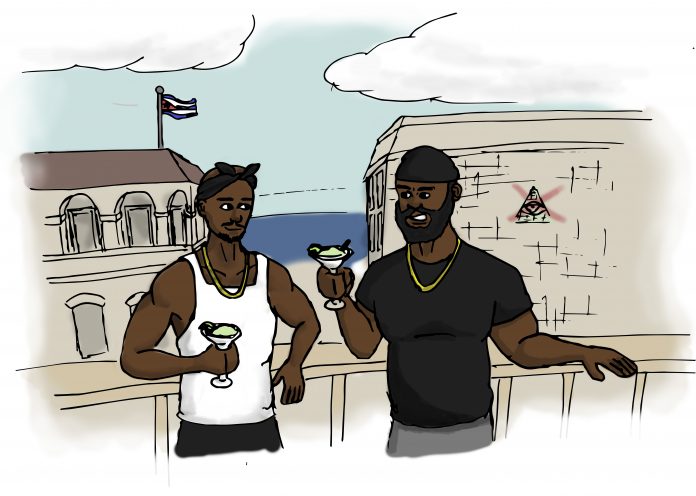
This month we lost legendary MMA fighter Kimbo Slice — or at the very least, that’s what the media wants us to think.

This former street fighter turned MMA pro reportedly died due to heart failure. To that, I say bullshit. Pictures, taken by an anonymous fellow traveller in hidden truths, show Slice drinking margaritas in Havana, Cuba with none other than long-lost rapper Tupac Shakur.

Now those of us in the uncomfortable truth-telling biz have always known ‘Pac never really died but instead faked his own demise. For years though, we were called crazy by his family and friends, the authorities, and mental health professionals alike. But with photographic proof that can 100 percent be authenticated, we now know ‘Pac is indeed alive, along with Kimbo Slice. The question is: what are they doing and why did they fake their deaths? Now, this required some digging.

For years we have known that ‘Pac’s final album Don Killuminati was a testament of his agenda to resist Illuminati control. Recent leaked satellite photos from the National Security Agency reveal that former training grounds used by the Cuban military in the 1960s are seeing new activity. Troop manoeuvres, military engineering, and active missile silos — it’s foolproof logic of an anti-Illuminati resistance army being trained, and not as some would suggest merely old photos of Cuban activity in 1962 during the Missile Crisis.

Did ‘Pac help Kimbo fake his death so as to provide combat training for the anti-Illuminati army? It seems highly likely, as every great leader needs a general. Roosevelt had Patton, Churchill had Montgomery, and now Shakur has Slice. The Illuminati should be on their toes, because the liberation is coming quick, buddy. Say your prayers, you Illuminatus shills, and Hail Mary!

Laugh Track: An interview with the hosts of Vancouverite, Amber Harper-Young and Brent Constantine

0

Get to know the folks behind the laughter, as The Peak explores the burgeoning Vancouver comedy scene with our recurring column, Laugh Track. From podcast hosts and improv royalty to monthly showrunners and people just being funny weirdos, there’s never a shortage in this comedic goldmine called Vancouver.

You don’t have to be a comedian to make jokes about living in Vancouver, but that’s the premise of Brent Constantine and Amber Harper-Young’s monthly show at Hot Art Wet City. For over two years, Vancouverite: A Comedy Show has provided comics with the platform to share their Vancouver-based experiences. From the challenges of relocating to Vancouver to the different set of challenges that come with living here, it’s a comedy show that literally hits close to home.

The Peak: One of the definitions for Vancouverite on Urban Dictionary is “somebody with the biggest superiority/inferiority complex in all of Canada.” What’s the first thing that comes to mind when you hear the term “Vancouverite”?

Amber Harper-Young: Just anyone living here. It’s funny, because I thought I’d never be a Vancouverite, but then I’ll catch myself doing weird things, like yoga at Dude Chilling Park. I think there are hipsters that embody what a lot of people, like Urban Dictionary, think a Vancouverite is, but I don’t know if that’s true. When I first moved here, I thought there’d be a lot more hippies, and people would be more green. Just a lot more things that I was sort of aiming for myself, and then you realize that everyone just puts their trash in the alley, and no one really gives a fuck about whatever anybody else is doing.

Brent Constantine: There’s this idea that people have of this city, that maybe doesn’t exist, and this shared idea of how people have to act when they’re here. And people just follow along because they’re like, “Well, I’m in Vancouver, I guess I have to love bikes now.”

AHY: And Whole Foods.

BC: Not just part of the food anymore, I have to love the whole thing.

P: What comes to mind when you hear the term Vancouverite: A Comedy Show?

AHY: Lots of fun, lots of exchanging of past experiences. We talk to the audience off the top, so we get to find out where people are from. We get to make jokes about them, jokes about ourselves — it really doesn’t matter where you’re from.

IMG_3683

P: Where did the idea for the show come from?

BC: Most of the people we meet didn’t grow up in Vancouver. People are from out of town, and so there’s that idea of just adjusting to life here from their home cities.

AHY: Brent and I were new to Vancouver and we were very desperate to do something ourselves. We wanted to carve a little niche for ourselves, to have something consistent to be doing, but also something different. Just the fact that the show has a theme sets itself apart from a lot of just typical stand-up shows. And we thought we could both really relate to the theme.

BC: People really like themes for some reason. Themes just bring people in, even this theme, which is very loose. It’s just, “People from not here.”

AHY: And then we also have people who are from here on the show, so there’s a bit of compare and contrast. And then we get some comics that just don’t even do any material regarding the theme.

P: Are the sets generally geared towards positive or negative stories about Vancouver? Why do you think that is?

AHY: It usually just depends on the comic, and their viewpoint. We don’t try to control what people have to say.

BC: It doesn’t mean people hate it, but a lot of people start from where something’s weird or dumb about this city. I’m trying to remember someone ever coming in and just being so jazzed and like, “SkyTrain! A train in the sky! Amazing!”

P: What’s the most “Vancouver” story you’ve heard at Vancouverite?

AHY: Dylan Rhymer was talking about a time when a movie was being filmed, and the locals who had to deal with the movie shooting around their home just started throwing garbage out the windows at people. I thought that was so funny, because it reminds me of the attitude, where Vancouverites just do whatever. If they’re mad, they just get mad. It’s a movie, which a lot of people would be like, “Oooh, cool Hollywood!” But Vancouverites are just like, “Get the hell out of here. This is our home.”

P: What will people who live in Vancouver enjoy most about the show?

BC: There’s a great comedy scene in Vancouver, and, a lot of the time, people who come out to some of these shows might not be a comedy crowd. So they come in, thinking they’re going to see some kind of exposé on the city, and then we trick them into just watching some great comics that happen to live here.

Also, if you don’t like our comedy, Chris, the owner of the space, put up pictures of naked people wearing luchador masks by the bathroom. So you can just stand by the bathroom for an hour and a half looking at peoples’ genitals and if anyone says anything, say you’re “studying art,” just like a real Vancouverite!
The next instalment of Vancouverite: A Comedy Show is happening on June 25 at, as always, Hot Art Wet City. If you’re looking for a double dosage of Constantine’s hosting skills, you can also see him at Weird Al Karaoke the night before on June 24 at Little Mountain Gallery.

Peak Comics: Peers

0

Why I’m not “pretty for a black girl”

0

[dropcap]N[/dropcap]o, this isn’t an article for me to vent all my outrage and disappointment at the way black women are depicted by our society — although that would be one heck of an article (maybe I’ll save it for next time). I’d simply like to raise awareness of a certain topic that takes up only a fraction of my disappointment: casual racism disguised as ‘compliments.’

There are many forms of discrimination, and some are less obvious than others. Casual racism happens to me often, like when people think that it’s acceptable to use phrases such as, “Oh, you’re pretty for a black girl.” It might be hard to believe, but I have received such comments numerous times, from men and women of different racial backgrounds — including black men.

When will people understand that this is in no way a compliment? Don’t get me wrong, I totally understand that some people genuinely believe they’re just being nice. But just because racism is accidental doesn’t make it any less harmful.

I’ve been in situations where the person is genuinely trying to compliment me, and just to be polite I’ll return a wry smile. Some people just don’t know any better. Honestly, how do you expect someone to respond when you’ve insulted them, intentionally or not?

There are other backhanded compliments that we should just entirely eliminate from our vocabulary. “You’re pretty smart for a black girl.” “You’re pretty for a dark-skinned girl.” (Let’s not get started there, it’s disgusting.) “Your English is so good.” “You speak so well.” “You’re so white!”

To sum it up, any compliment that ends in “for a black girl” is a big no. These statements are built off the negative assumption that there is something fundamentally wrong with being a black woman. I think we all know that it is most certainly not OK to go up to someone and say, “Oh, you’re good-looking for a white boy,” or “You’re nice for an asshole” — at least, I hope most of you know that this isn’t OK.

In response, I’d like to say that I’m a woman, not a girl. Just as it can be degrading to call a man a boy, I feel the same way about labelling a woman a “girl.”

By telling me that I’m pretty for a black girl, you imply that black women do not naturally possess the quality of being beautiful. These statements make me feel like an exception to some kind of rule that says black women are not seen as attractive. Was there a poll taken that I didn’t know about? When were black women classified as being unattractive? Did I not get the memo?

So, the next time you want to compliment anyone, don’t include the colour of their skin. Tell me I’m pretty, or just give me a compliment that isn’t based on my looks. Leave my racial identity out of it.

Amazing Grace N. Howl: 3,000 Miles to Graceland

0

It’s been a long and tedious few weeks of data entry. Co-op was always advertised as something fun and refreshing, and I feel like I have fallen victim to false advertising. I was more refreshed in my Hellenic Studies lectures than I am here.

So I told my supervisor just that. Either they had to step up their game and give me something more interesting to do, or I would quit. Daddy paid thousands of dollars for me to pursue an education and put it to good use. Daddy would absolutely hate the fact that the City of Surrey was wasting my incredible talent and precious time. After all, I could always wander over to Langley or Coquitlam and put my domination skills to good use there.

But clearly, I was joking. I was only kidding! I was merely practicing my acting skills. But the look in my supervisor’s eyes was just priceless. She shrank back, mouth dropping open. The woman whimpered like a little girl and started nodding vigorously. It was only later that I heard her say to one of my fellow colleagues, “Grace is a monster.”

Monster? Please. I am a graceful butterfly. But I guess my words sting worse than a bee.

My pathetic supervisor finally gave me the big break I was looking for. At first I thought it was a chance to talk to the Big Boss (a.k.a. the mayor), but I was disappointed yet again. I wore my best powersuit and showed up early to the boardroom, only to find my supervisor (who, by the way, was still shaking) and her boss, who is no more than a city councillor. Please. It was almost as if the mayor didn’t have enough time in her day for me, so she sent one of her trolls to sit in and pretend like they have the power. Yeah, right.

But I presented with great confidence and vigour. Like my days in politics, I captivated that boardroom. Instead of calling it Surrey, I told them, “let’s call it Graceland. My daddy has already written out the cheques to buy out every single city building, the transit system, the roadways — everything. Surrey is cool, but Graceland is even cooler. It’s going to be a hipper, trendier city, with Uber. And I will rule over it with an iron fist, kick TransLink to the curb, and make sure that Graceland rocks, so much so that residents of Coquitlam will be paying us money to cross over the Port Mann and visit.

“It’s going to be great,” I told them. But apparently, Graceland exists somewhere else. Who is this Elvis guy, and how dare he steal my city name?!

*All documentation has been personally received by Rachel Wong*

SFU doesn’t offer enough healthy choices for low- income students

0

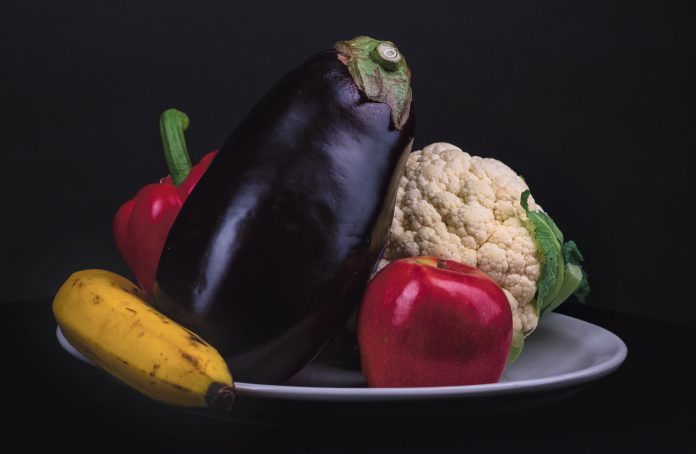
[dropcap]A[/dropcap]lthough the suggested number of daily servings for fruits and vegetables varies by sex, age, and physical activity, many dieticians and nutritionists recommend that, in general, five to nine or more servings per day is essential for good health. Eating enough produce has been linked to a lowered risk of chronic disease, a lowered risk of heart problems, improved mental health — the benefits are endless.

Unfortunately for those plagued by low budgets and food insecurity, eating a healthy diet is nearly impossible. Marguerite Nowak, the manager of a busy San Francisco food bank, told SFGate that “food is often the first to go” when money is tight. You can skip meals, but “you can’t pay half your rent or utility bills if you want a place to live.”

Fresh produce, now at exorbitant prices, is often skipped in favour of microwavable dinners, processed junk food, and meat and dairy products. Because of recent price inflations due to environmental factors, this has become even more of an issue.

In January, The New York Times described Canada’s expensive grocery predicament as the result of an oil-dependent economy. When the price of oil drops, so does the Canadian dollar, making imports such as produce seem like a luxury. Factors like droughts in California, where a lot of Canada’s produce comes from, don’t help either.

Dairy, poultry, and egg prices do not see as drastic of price inflations because they, unlike fruits and vegetables, are protected by a combination of government-sanctioned cartels and high tariffs on imports. This is to keep competition from other countries low and to keep the demand for local meat and dairy producers steady.

Nowhere on campus do we have a fresh fruit stand or a place to purchase grilled vegetables at reasonable prices.

With all of these factors combined, university students — who not only have to worry about rent and bills, but also tuition, university fees, and textbooks — are left especially vulnerable. While SFU does have a food voucher program where students in need can receive a $25-voucher to Nester’s Market, these rising food prices are reminders that it’s simply not enough. Not only is $25 hardly enough money to make a noticeable difference to one’s monthly grocery bill, but Nester’s is also notoriously pricey.

If SFU wants to help students eat healthier, they need to make a number of changes. For students on the meal plan, the Dining Hall requires a makeover. The only fruits offered that don’t come from a can are bland apples and bananas. Apart from salad bar vegetables, fresh produce is scarce.

Bringing an increased variety of produce to the Dining Hall would boost both student health and morale. Trust me — nobody living in residence is excited to go to the Dining Hall after the third week.

We also need more healthy food options on campus. At Burnaby Mountain, we have two Starbucks within walking distance of campus, a Tim Hortons, and a Renaissance Coffee, but nowhere do we have a fresh fruit stand or a place to purchase grilled vegetables at reasonable prices. We miss out on essential nutrients, such as vitamins, iron, and fibre when we don’t consume fruits and vegetables. These nutrients help to stabilize moods, increase our attention spans, and give us enough energy to carry on with our day.

According to a study conducted by the University of Alberta in 2009, children who ate healthy diets were more likely to do well on exams and succeed in school. If SFU wants to see more of their students succeed, a good starting point would be to help us help ourselves: providing cheap and healthy food alternatives to what’s currently available.