

SFSS Byelection Update
Presidents! Who they are? What are they running on? Have they been the president yet? Do they think Willie Desjardins should be fired?
Larissa Chen

The prior VP Student Services for the SFSS, as well as the interim president for the board since Deepak stepped down. She’s focusing her campaign around her experience on board as interim president, and is looking for students to choose her to continue and finish the year strong as president. She doesn’t follow hockey, so she has no stance on Willie Desjardins.
Darien Lechner

The dark horse candidate, having no experience on board before (although he joined the Advocacy Committee after losing the presidential race in the spring general election). Biggest issues are transparency on board, and taking a closer look at Build SFU and the accompanying levy. He thinks that Desjardins should be fired if the Canucks lose to the Leafs, but if they win we should have another look after Christmas.
Deepak Sharma

The last elected president, who had to resign a month in after he didn’t enroll in any classes. He wants to earn back students’ trust and respect, and repeatedly insisted he wants to fulfill the commitment he intended when he was first elected. He believes that Willie Desjardins is doing the best he can, and the fanbase should remain faithful and see the season through.
The Debates
Vancouver debate
The only candidate who showed up on time was faculty of environment rep candidate Supreet Malhi, although Lechner did show up late. However, this was a better showing than the student body — no one showed up.
Surrey debate
Attendance was much better in Surrey, as far as both students and candidates were concerned. All the aforementioned candidates were there, as well as Thadoe Wai, the other candidate for enviro. rep. The debate ran the full two hours, as the question period for presidential candidates was peppered with question after question. Topics ranged from the stadium closure to board transparency to the individual circumstances behind everyone running.
Lechner showed signs of life by taking some shots at his running mates, at one point saying, “You’re not going to get a real answer from other candidates.”
After not showing up to the previous debate and submitting his platform late, Sharma came on time this time around. He said several times that he wanted to earn back the trust of students and wanted to fulfill the commitment he made to them. This is in contrast to Sharma’s only choosing to run in the byelection at the last minute, which would explain his absences and late submissions.
Chen seemed the coolest under all the pressure, sticking to her speaking points and constantly referring to her experience on board, and telling students to trust that if they feel they are getting value for what they are paying, the Board of Directors is doing right by them. This came after several inquiries about the Board’s decisions and operations, spurred by the Build SFU project and stadium cancellation.
What’s Next?
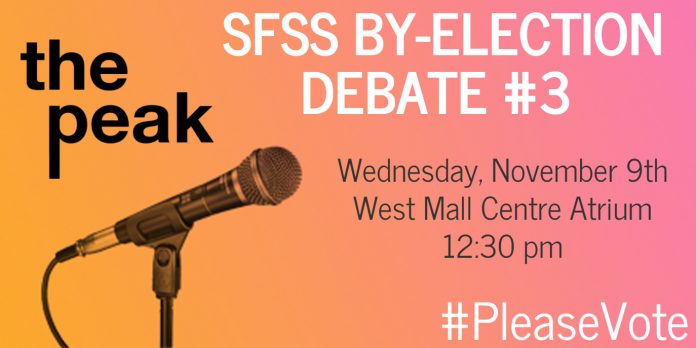
The campaigning period ends this week, with the final debate taking place Wednesday November 9 at 12:30 p.m. on Burnaby Mountain. Students should expect posters to plaster the walls by then, as Sharma’s challenge to go paperless (made a week into the campaign, after the other candidates had ordered posters) fell on deaf ears. The voting will take place the week after, from the 15th to the 17th.
FOOD FIGHT: Innovation and comfort food don’t always mix
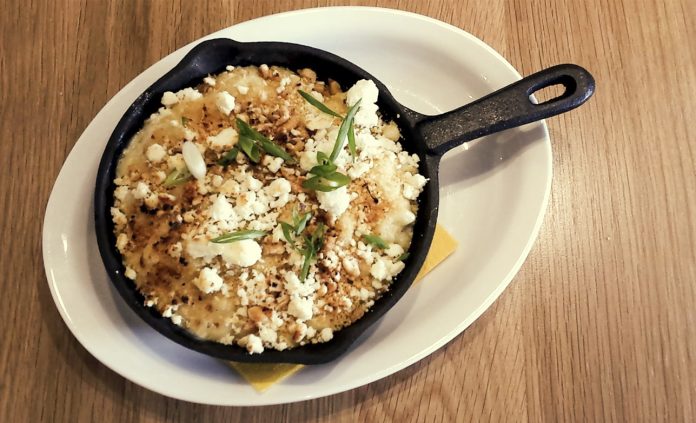
Fable Diner reimagines Main Street with a 1950s flair.
Opened in early July, Fable Diner, a spin-off of Kitsilano’s Fable Restaurant, brings an upscale diner experience while maintaining the integrity of a movie-style diner: wooden tables, forest green leather booths, modern white tile, and retro prints. The service was friendly and genuine, even throughout the busy lunch hour.
There is an extensive array of comfort food featuring interesting ingredients (kimchi, cola onions, and gochujang), but the dishes clearly show how hard Fable Diner tried to think outside of the box. There is little room for error when it comes to changing popular dishes, and while their ideas are original, some of them missed the mark.
The mac and cheese had an amazing sauce but was topped with tooth-breakingly hard corn nuts and strong goat cheese. The veggie BLT replaced the “B” with rubbery shiitake mushrooms. The FD burger took a chance with a medium-well burger patty which, despite being ground in-house and perfectly safe to eat, left us feeling kind of squeamish after we left the restaurant.
Hiding amidst these misses was the delicious tomato soup, which put Campbell’s to shame. If nothing else, have a bowl of this soup when you go. It is the perfect blend of cream and slightly tangy tomato coming together in light and delicious harmony.
As Fable Diner’s customer base continues to grow, the chefs at the restaurant continue to experiment with different ingredients and bolder flavours to stay true to their unique, upscale diner experience. The creative dishes that appear on the ever-expanding menu will have us coming back even if the dishes weren’t that great this time.
Satellite Signals

Surrey
Students can attend YVR Master Plan consultations at SFU Surrey November 8, from 11 a.m. to 2 p.m. This event allows students to discuss the future of YVR, as they develop a plan to make YVR a “world-class airport.” For more details, visit YVR’s Master Plan 2037 website.
Harbour Centre
India is the world’s fifth largest economy, but over half its population continues to live in poverty according to Multidimensional Poverty Index 2013. Professor S. Parasuraman, director and vice-chancellor of Tata Institute of Social Sciences in Mumbai, explains India’s poverty and economy, and the future of the diverse country. The Munro Lecture will be in room 1200 on November 15 at 7 p.m. at the Segal Graduate School of Business. For more information, visit SFU Public Square’s website.
Woodward’s
Filmmakers Banchi Hanuse and Elle-Máijá Tailfeathers present their films on November 9 at 7 p.m. in the Djavad Mowafaghian Cinema. Their films examine nature, colonialism, and First Nations culture throughout British Columbia. The film screening will be followed by a panel discussion with the filmmakers and other guests. For more information, visit SFU Woodward’s website.
SFU contributes to Surrey becoming Canada’s first City of Refuge
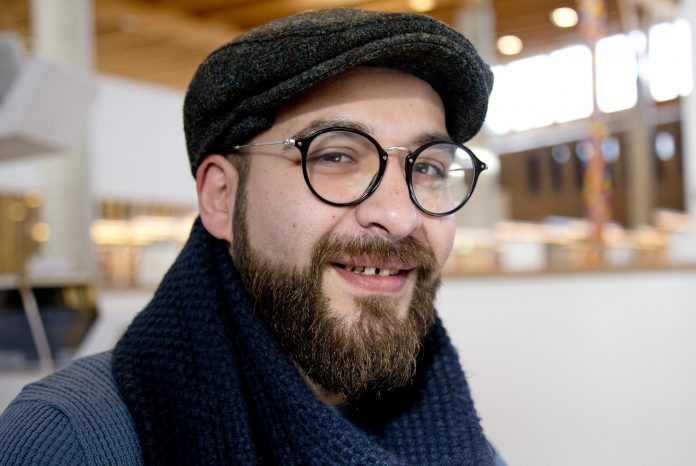
Writer and journalist Housam Al-Mosilli, who was born and raised in Syria, was arrested three times and tortured by Syrian security because he was reporting on anti-government demonstrations. He was forced to flee from his home country, in 2012 and did not find a safe place to call home until August 2013.
Al-Mosilli is one of many artists worldwide whose stories of persecution prompted SFU to partner with the City of Surrey to create a committee, resulting in Surrey becoming Canada’s first City of Refuge for persecuted artists and writers.
Surrey will join with more than 60 cities worldwide that have been accepted into the International Cities of Refuge Network (ICORN). This is an organization that aims to protect and promote writers and artists who are at risk. The program has placed over 140 artists and writers into safer homes, where their artistic abilities can be put to use without fear of persecution. ICORN not only places the artists in a host city, they also assist the writer in distributing their works. This opportunity gives the artist a strong voice in the world.
Najati Tayara, a writer from Syria, wrote in a testimony to ICORN’s effectiveness that the organization gave him “two years to organize [his] life, and to enrich and activate [his] experience.” While in his host city, Tayara continued to write for “Arabic newspapers and websites,” the difference being he was able to write without fear that he would be harmed for his work.
“SFU’s Surrey campus is thrilled to partner with the City of Surrey and KPU [Kwantlen Polytechnic University] to help designate Surrey as Canada’s first City of Refuge,” said SFU’s Surrey campus executive director Steve Dooley in a press release from the City of Surrey. “We are working to open doors that might have otherwise been closed on these important literary voices.”
Dooley explained to SFU News,that while the refuge is here, there will be opportunities for the writer to be part of the Surrey and SFU community. He continued to say it shows “that we recognize and value literary excellence, no matter what the underlying struggle.”
The process of opening Surrey’s doors to the first artist has begun. A committee comprised of the City of Surrey, SFU, KPU, and the Surrey Public Library is currently working on the next step in the process, which is selecting a candidate and fundraising for their arrival. The committee is searching for an artist or writer who will thrive in the Surrey community.
In a recent interview with The Peak, Surrey Councillor Judy Villeneuve stated that the ideal candidate will be someone who is willing to “talk about their writing, and share their experiences” with the community.
Similar to the ambitions of Dooley, Villeneuve hopes to see the artist “inspire our own students, as well as remind our citizens that we take so much for granted. In Canada, we can express freely in our arts, while writers and artists elsewhere don’t have this ability.”
World News Beat

Iceland – Pirate party falls short of poll predictions in general election
The results of Iceland’s October 29 general election reveal that the Pirate party, positioned pre-election to become the country’s biggest party, won just shy of 15 percent of the vote. The Pirate party was formed by Internet activists, who value government transparency and pure democracy. More voters opted for the Independence party, which won 29 percent of the vote and ran on a platform of lowering taxes and further economic recovery. The election was spurred by the resignation of former prime minister Sigmundur David Gunnlaugsson after the Panama papers scandal in April, which brought to light the existence of offshore accounts held by Icelandic officials.
With files from The Guardian and Reuters
Italy – Country’s worst earthquake in over 30 years leaves 15,000 homeless
On October 30, an earthquake of magnitude 6.6 hit Italy’s central region, the highest magnitude recorded in the country since 1980. The region had been experiencing tremors for the past two months. The earthquake, the epicentre of which was near Norcia, affected several towns, non-critically injuring 20 people. The civil protection agency said it was providing assistance to 15,000 people forced from their homes, and providing shelter to 10,000 of those. Norcia residents mourned the collapse of the 13th century Basilica of St. Benedict, described as the cultural and historic heart of the town.
With files from BBC News and Reuters
Morocco – Death of fishmonger sparks protest
Protests were held October 30 in several Moroccan cities in response to the death of a fishmonger. Mouhcine Fikri was crushed in a garbage truck while trying to recover the fish he had bought at a port. Following this, many took to social media to denounce “hogra” a term for injustice, while the fish were confiscated by the police. These rallies are being compared to demonstrations during the Arab unrest in 2011, which were organized by the same activist group responsible for the current protests.
Adrian VanderHelm is swimming towards the 2020 Olympics in Tokyo
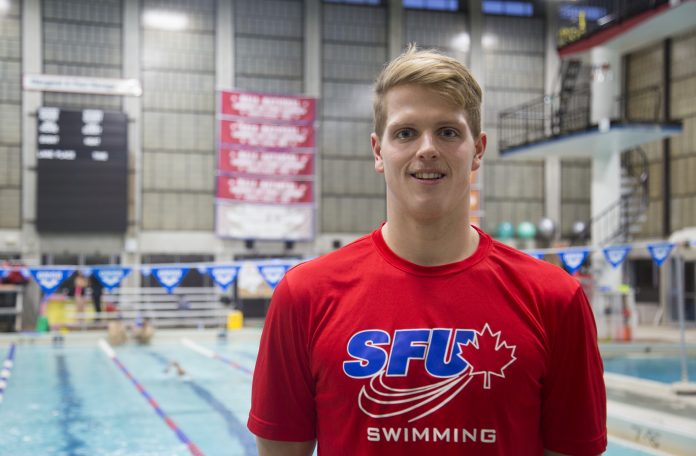
If Adrian VanderHelm’s journey had to be summarized in one sentence, the Muhammad Ali quote “Impossible is nothing” would probably be a good one. The freestyle swimmer revealed to The Peak where his passion for swimming came from.
“Swimming was never a family thing. I was the first person ever to swim in my family. I started swimming after the 2008 Olympics. I watched Michael Phelps winning gold and said to myself, ‘That’s pretty incredible. He is by far the most amazing athlete of all time.’”
Despite a tough childhood due to health-related problems, swimming has built VanderHelm’s confidence.
“I took it natural into the pool because I was overweight when I was young, so I was able to float really well,” he chuckled. “I had asthma and I was borderline diabetic. Swimming changed my life in a lot of ways. Because of it, I can attribute a multitude of positive impacts on my life. I wasn’t confident when I was younger and I was ashamed of my body. Swimming also helped me with health and social complications.”
While many student athletes deliberately choose SFU for its uniqueness in being the only Canadian institution in the National Collegiate Athletic Association (NCAA) Division II, the Ontario-native recalled what brought him all the way to the Canadian West Coast.
“SFU is chosen on three accounts. First, it is the only NCAA school outside of the States. I was born in the States and I wanted to compete in the States, but I wasn’t sure about living there. The second reason being three of my best friends go to SFU and they’re all from Barrie and they all went to SFU for swimming. I was interested to see if I could follow them out here and recombine my friendships with them.
“The third reason is that SFU is the only school in Canada that can offer full athletic scholarships, which I ended up obtaining.”
VanderHelm is the first member of the Clan swim team to qualify for the NCAA Division II Championship; he also became the first male All-American swimmer at SFU, achieving both accolades in his freshman year. But when it comes to the Olympic level, the likelihood of qualifying for the world’s most popular sports event is slim to none. For junior VanderHelm, this dream could become a reality, as he’s already been to the Olympic trials for the 2016 games.
“As a student athlete, I would say it is one of my biggest accomplishments if not my largest and most proud moment [thus] far. As college swimming goes, being able to swim at the Olympic trials in hope of representing Canada was another one of my top moments. I am still hoping to represent Canada at Tokyo 2020. That was always kind of my goal.
“2016 was kind of rushed. I haven’t been swimming for very long. I started swimming in Grade 9. Somebody like Phelps, or any other competitor, would start when they’re four or five.”
Despite his massive achievements in swimming, adjusting to the student-athlete lifestyle is an ongoing process for junior VanderHelm.
“My biggest struggle? I would have to say the choice between napping and studying. I don’t have a nap schedule, but I should really make one. It’s really hard to distinguish when it’s responsible and academically viable to take a nap versus study. You have to manage your time very well and that’s difficult because you need to sleep and eat [a] lot when you’re swimming. I’m in four courses and I have to get good grades in order to compete. Our coach set a goal for us to reach a 3.0 GPA. You have a sense of recompense when you feel like you’ve accomplished things socially, academically, and athletically. Those are the three pillars of my life.”
Apart from the benefits swimming had on his life, VanderHelm gives a lot of credit to coach Liam Donnelly for helping him grow as a person.
“We have four coaches on our team and I deal directly with Liam. He has coached athletes in the Olympics and the World Games. My relationship with him is really good and we have moments where we’re proud of each other. I plan on swimming after graduating and I would like to do that with coach Liam.”
Richmond mayor hopes to reduce Canada’s food waste by 50 percent by 2030
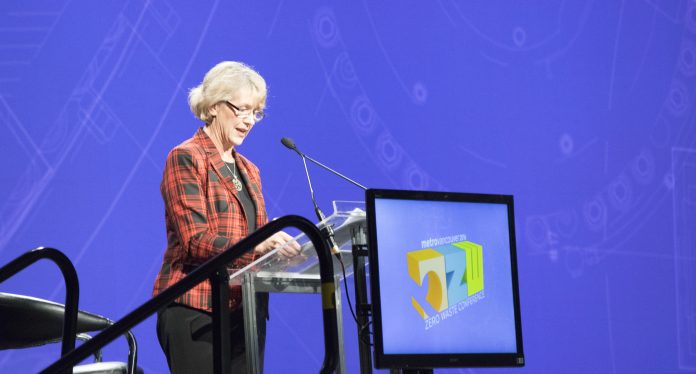
“The best way to make change in the world is to make it rather than talking about it,” said Massachusetts Institute of Technology (MIT) Media Lab professor Neri Oxman at Vancouver’s Zero Waste Conference.
The annual gathering brought together intellectuals, designers, and executives from diverse backgrounds to address the challenges of eliminating waste, while improving life for consumers in the process. The goal of the conference is to move to a “circular economy,” where everything is reused, recycled, or composted.
Oxman gave the morning keynote speech, explaining how the MIT Media Lab is drawing inspiration from nature in order to create replacements for plastics and new surfaces for buildings. In particular, she explained that “the world of design has been subjugated by the rigours of manufacturing and mass production.” She suggested designers could transition to using 3-D printing and reactive materials to build complex structures in one piece rather than assembling many different parts.
“We don’t want to work with plastics anymore in the products design realm,” she said, adding that instead we would have products that could biodegrade on demand.
Later in the conference, Stephanie Bertels, professor at SFU’s Beedie School of Business, hosted a discussion with industry leaders in redirecting waste from landfills. The audience heard from companies like Ecovative, which uses lab-grown fungus to make replacements for styrofoam packaging, and Looptworks, which has created designer luggage lines that use scraps of material collected from other industries.
The federal government joined in on the action, too. Joyce Murray, Liberal MP for Vancouver Quadra, told attendees that it was time the government “get [their] own house in order.” She explained that the government will take progressive steps to achieve a 40 percent cut to emissions by 2030, including shifting government fleets to electric and hybrid vehicles and retrofitting government buildings to make them more energy efficient.
The biggest announcement of the conference came when Richmond Mayor Malcolm Brodie spoke to the Zero Waste Committee’s desire to take a bite out of food waste.
He announced a newly created National Food Waste Reduction Strategy, which outlines different steps that will be taken with the goal of reducing food waste in Canada by 50 percent by 2030. Practical regulations to target food waste at the consumer and distributor ends by clarifying best-before labels on perishables and using tax credits to incentivize food bank donations over food disposal.
Vancouver has already been a hotbed of this kind of waste reduction and other green initiatives in recent years. Since 2008, the city has reduced its solid waste going to landfills by 23 percent, with the goal of reducing it by 50 percent by 2020. SFU has a similar program in place that has already achieved its goal of diverting 70 percent of solid waste from landfills.
For SFU students who are hungry for more opportunities to reduce their environmental footprint, they can also participate in the Food Rescue program organized by Embark, SFU’s student-led environmental organization.
The program receives donated food from the Nesters Market on Burnaby Mountain and hands it out to students in Blusson Hall.
The Peak is hiring for the spring semester!
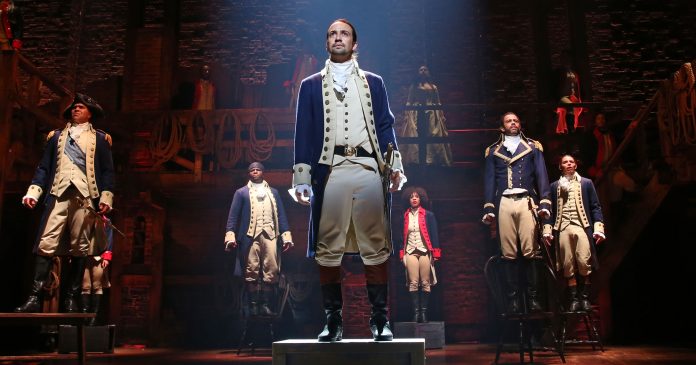
Don’t give away your shot: The Peak is hiring for the spring semester. Applicants should send in a resume as well as a brief cover letter. Sample work relevant to the position(s) applied for is highly encouraged.
The Peak‘s hiring board is looking for the best and brightest SFU students to help report on stories that are of interest to the student body. If you are passionate about campus politics, arts and culture, local and regional sports, satire, leadership and management, photography, graphic design, in-depth investigation, sex jokes, and/or free pizza, this is the job for you.
Working for The Peak is an excellent way to gain hands-on experience in the field of journalism as well as building skills in communications, public relations, illustration and design, critical thinking, leadership, photography, and more. You will meet like minds who work hard and play hard in a high-energy environment.
Applicants must be registered SFU students for the duration of the semester for which they are applying. Previous experience with our newspaper is preferred, but not required. Please address your applications to The Peak hiring board at [email protected], or drop them off at our offices in MBC 2900. Any questions about the process can also be sent to this address.
Applications close on Friday, November 18 at 11:59 p.m. Job descriptions for available positions can be found below:

