Home Blog Page 747

Women’s cross country off to nationals

0
Rebecca Bassett, Miryam Bassett, Julia Howley, and Addy Townsend all finished in the top 30 of the individual rankings.

After a year’s absence, SFU’s women’s cross country team is back at the national championship. After a year where the team was “a little complacent” according to head coach Brit Townsend, they finished second at the West Regionals this time around — good enough to qualify for the event on November 19 in St. Leo, Florida.

“Regionals were awesome, the girls really came through,” said Townsend. “They’ve had a set goal since August at our training camp that they wanted to make nationals. Last year they just missed, and I think part of it was [. . .] maybe they were a bit overconfident, but they just didn’t have that focus that was needed. But that focus was definitely there this year, and it’s shown in every single race that they’ve run so far leading up to the regionals.

“They were ready. They were ready going in, they knew what they wanted to achieve, and they went out and did it.”

However, it was a disappointing day for the men’s side. They finished ninth, which unfortunately was not good enough to qualify for nationals this year. In the year previous, they qualified and finished 12th at the national championships.

“I think they showed up at the regionals, it was at altitude, they had to run 10k, and they were so excited and determined they went out really hard. Faster than they should have, especially two or three of our runners.”

The Clan was led by Rebecca Bassett, who finished eighth in the individual rankings. Miryam Bassett and Julia Howley finished 11th and 12th respectively, while Addy Townsend finished 26th. These four runners will be expected to lead the way once again for SFU at the national championship, but coach Townsend also needs other runners to exceed expectations if the Clan is going to get a result.

“I need those four to do what they always do,” she explained. “What I need is my fifth, sixth, and seventh to do something beyond what they’ve done before. Pick off some people, get some numbers, especially our fifth spot, because that’s our last scoring spot. But sixth and seventh can still pass and make a big difference, because they can displace a fifth place runner on another team. So every part of it is really important.

“If we can close that gap from one to five, and make that really small, then we’re going to perform a lot better.”

That fifth runner is expected to be Reta Dobie, who has been “consistently in that spot all year.”

Now the focus turns to preparing for the event. The key for the women will be to refocus after putting all of their effort into qualifying for the national championship.

“The trick now is to refocus and set some new goals from the national championships. What can we achieve as a team? It’s not enough to just go there, we want to achieve something special.

“My goal and the goal we’ll discuss as a whole team is finishing in the top 10. If we can do that, then we’ve achieved something very special.”
Footloose from Main to Granville

0

Site-specific dance: it’s dance outside the studio, outside the theatre, outside of the controlled environments where you would expect to see it. Site-based dance brings dancing bodies out to engage with the world in all of its complexities.

Look around.

Where are you right now? What architecture do you see around you? What are the people around you doing? What did this site look like 10 years ago, or 100 years ago?

These are some of the questions dance artists consider when creating site-specific dance, one method of contemporary dance.

“Moving dance offstage is exciting because it allows it to cross paths with people who might not be interested in dance otherwise,” said Alana Gerecke, PhD.

As an SFU alumna, Gerecke has concentrated on site-specific dance through practice and research for over a decade. After graduating from the SFU dance program in 2004, Gerecke co-founded Behind Open Doors, an interdisciplinary dance group that makes site-based work in Vancouver. Since then, she and four other SFU alumni have explored and performed all over the city.

“The False Creek area and Olympic Village is one area we spent a lot of time in,” Gerecke told The Peak. “[In and around the Vancouver 2010 Olympics], we were trying to find ways to explore what the new social mixing was looking like and also engage all the dynamic features of the new architecture down around the waterfront.”

She and the dancers immersed themselves artistically in the area, experimenting with trying to fit their bodies along the urban architecture and dancing on a makeshift stage by the water.

Gerecke explained that site-based dance is unique because it “makes practitioners think long and hard about the places they’re using and inhabiting.” Before choreographing their routine, the artists will spend extensive time researching and observing the area and how local people already use it. Rather than just parachuting into a space and imposing dance movement onto it, the method allows the performance to be a response to the site itself.

Other artists in Vancouver have used site-specific dance to engage social and political issues, making performances in conflicted areas like Vancouver’s Downtown Eastside (DTES). In 2008, Vancouver artist Althea Thauberger’s project Carrall Street was inspired by film crews. Thauberger used film lights to illuminate an area of Cambie Street between Hastings and Cordova one evening, setting the stage for a number of different commissioned performance pieces that addressed pertinent social issues.

Artist Karen Jamieson has also made community-based dance projects in the DTES for decades. Her noteworthy 1998 work The River happened along the historic Brewery Creek, one of the major waterways in Vancouver’s development. Over four nights, hundreds of people came to see the show and trace the path of the waterway. The piece raised questions about the relationship of urban development to the natural landscape and the life that it supports.

“Any time work is sited outside, especially in areas that have really rich or complicated histories, whether the work intends to or not it’s engaging with those histories,” Gerecke adds. As well as dancing herself, Gerecke has done postgraduate studies in site-specific performance through SFU’s English department. Right now she’s working on a postdoctorate that looks at more colloquial contexts, like flash mobs.

_dsc0015

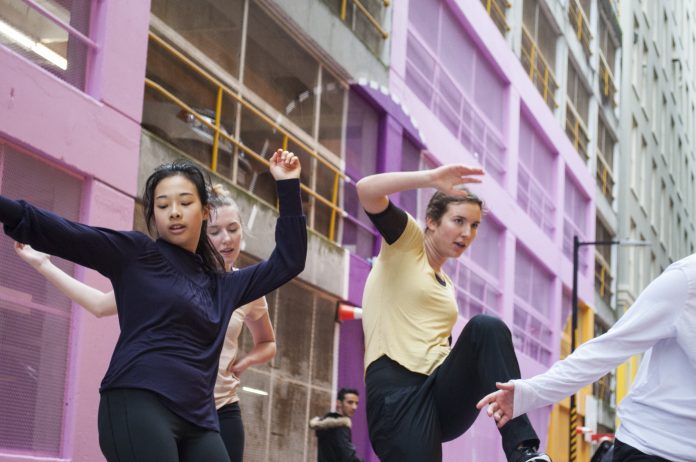
In the drizzly October weather, a group of third-year SFU dance students experimented with site-specific dance creation around Downtown Vancouver. The group danced beside the Georgia Viaduct, in a bubblegum pink painted alley off Seymour Street, at Blood Alley in Gastown, and even inside the Woodward’s complex. Much time was spent thinking about the histories of the locations and social issues there, but also trying to highlight the depth, length, and scope of urban architecture compared to human bodies.

As you can imagine, the dancing caught the attention of passers-by. By changing the “movement vocabulary” of the area, site-dance can trigger the people who see it to think differently about how we all move through everyday spaces. According to Gerecke, this can expose the “classed” and “gendered” habits of city dwellers, and bring to light the unofficial codes of the use of space.

Compared to sculpture, dance in public spaces is fleeting and can seem to disappear quickly. But to those who experience site-based dance, the site could be forever changed in their memory, leaving the “ghost” of the performance behind.

Site-based dance is exciting because even if for a brief moment, it bridges the gap between performing artists and public through the shared use of public space. It also uniquely roots us as artists to make work that is local and speaks to issues that are here and now.

_dsc0125

NFL Blitz with Jason Romisher Week 10

0
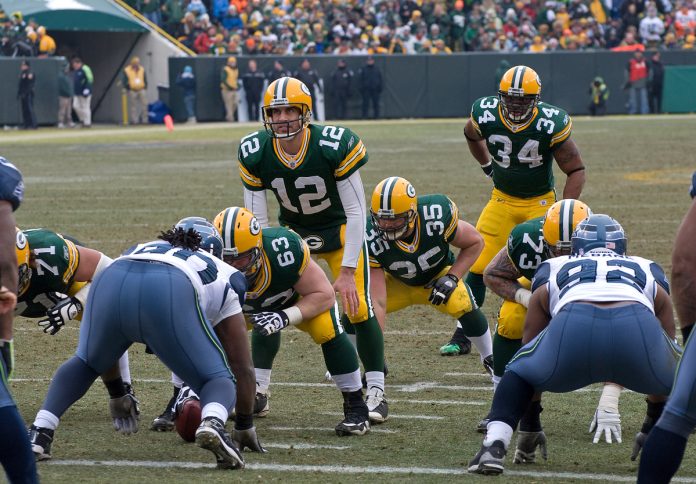
Aaron Rodgers (#12) allegedly criticized his team after a shocking loss to the Colts in week nine.

Last Week 11–2

Season 79–52–2

Byes: Buffalo, Detroit, Indianapolis, Oakland

The 11–2 last week even picking games straight up was very encouraging. My only slip-ups were the Colts surprising Green Bay and Oakland taking care of business against Denver. Speaking of the Raiders, they are now 7–2 and get a bye week to rest and plot what looks like a trip to the playoffs for the first time since the 2002 season. The only team with a longer drought is the Buffalo Bills who last made the playoffs in the 1999 season. The Bills got hosed by the referees in a close loss to the Seahawks last week and at 4–5 look like they are on their way to another losing season. This week has some very competitive matchups with several tough calls for your Peak prognosticator.

Cleveland (0–9) at Baltimore (4–4), Thursday 5:25 p.m.

Baltimore’s defence looked fantastic last week in absolutely dominating the Steelers. Look for them to punish the Browns at home and start the Browns into the 0–16 discussion.

Prediction: Ravens 24 Browns 10

Atlanta (6–3) at Philadelphia (4–4), Sunday 10 a.m.        

The Eagles started the season 3–1 but have gone 1–3 since, whereas the Falcons are riding high in first place in the NFC South. This is a homecoming for Falcons quarterback Matt Ryan who played his high school football at William Penn Charter School in Philadelphia. The play of Eagles quarterback Carson Wentz has really tailed in recent weeks as opposing coordinators have increasing game film of his tendencies. Ryan has a big game back home and the Falcons win the battle of the predatory bird species.

Prediction: Falcons 34 Eagles 27

Denver (6–3) at New Orleans (4–4), Sunday 10 a.m.

Another fascinating matchup sees the Broncos on the road for the second consecutive week against a Saints team that has won four out of five since their 0–3 start. The Broncos gave up 30 points last week and 218 rushing yards to the Raiders while the Saints racked up a whopping 248 yards on the ground against San Francisco. I’ll take the Saints at home led by their running back tandem of Mark Ingram and Tim Hightower over the Broncos’ suddenly vulnerable run defence and anemic offence.

Prediction: Saints 31 Broncos 21

Houston (5–3) at Jacksonville (2–6), Sunday 10 a.m.

It is the policy of this columnist not to provide analysis on AFC South divisional games until the division fields a member that is an actual playoff team.

Prediction: Jaguars 24 Texans 23

Minnesota (5–3) at Washington (4–3–1), Sunday 10 a.m.

The Minnesota Vikings have now lost three consecutive games after absolutely blowing their matchup last week against Detroit with poor clock management. The team is reeling and in need of a big road victory against a quality opponent. They won’t get it, as Washington is rested after their bye week and will be bolstered by the return of their playmaking tight end, Jordan Reed.

Prediction: Washington 23 Minnesota 20

Chicago (2–6) at Tampa Bay (3–5), Sunday 10 a.m.

Both teams are well-rested with the Bears coming off the bye and the Buccaneers playing last Thursday. The Bucs have major injury problems with their top four running backs injured and star receiver Mike Evans in the concussion protocol. I’ve always rooted for Jay Cutler and see his long-standing chemistry with receiver Alshon Jeffery being the difference in this one. Bears win their second straight over a game Tampa squad.

Prediction: Bears 26 Bucs 19

Kansas City (6–2) at Carolina (3–5), Sunday 10 a.m.

The Panthers have won two straight games after a terrible 1–5 start, but managed only 13 points against a stout Rams defence last week. The Chiefs also have a good defence and are quite capable of holding the Panthers under 25 points on the road. Their offence will be buoyed by the return from injury of underrated quarterback Alex Smith. Smith is a gamer who will lead his team to victory in a big road win that will also launch the Chiefs into contender status in the AFC.

Prediction: Chiefs 27 Panthers 24

Upset Special

Green Bay (4–4) at Tennessee (4–5), Sunday 10 a.m.

I do not know what to make of the Packers this year and apparently neither do their coach and quarterback. Last week both Mike McCarthy and Aaron Rodgers called out the team after their lacklustre performance against the Colts. The Titans meanwhile looked impressive, on offence at least, losing a barnburner 43–35 on the road to the Chargers. Titans quarterback Marcus Mariota put up 313 yards passing and had three touchdowns in the contest but was undone by three turnovers. The Packers are a team that prides itself on developing its own talent and eschewing free agency. It looks like their drafting and player development program has hit a wall this season because this team just isn’t very good. I am not buying that the Packers bounce back and have enough talent to win on the road against a Titans team with a good offence.

Prediction: Titans 33 Packers 30  

Los Angeles (3–5) at New York Jets (3–6), Sunday 10 a.m.

This year just about every quarterback drafted has seen action other than Rams first overall pick Jared Goff. Goff continues to sit as rumours swirl whether he just isn’t very good or whether coach Jeff Fisher doesn’t want to look bad for sitting him this long if he is indeed an upgrade over the uninspiring Case Keenum. The Jets, meanwhile, have seen a promising season undone by the abysmal play of veteran quarterback Ryan Fitzpatrick. Fitzpatrick is dealing with an injury and may or may not play this Sunday with talented second-year man, Bryce Petty, waiting in the wings. The Rams have a very stout defence and will undoubtedly force turnovers against Fitzpatrick and/or an untested Petty. The Jets are at home and boast the league’s fourth best run defence. Since the Rams cannot mount a passing attack, that should be enough to secure the victory despite the possibility of more Fitzpatrick gaffes.

Prediction: Jets 17 Rams 13

Miami (4–4) at San Diego (4–5), Sunday 1:05 p.m.

Flashback to the January 2, 1982, wildcard matchup between these opponents. The Chargers — led by future Hall of Famer, Dan Fouts — racked up a 24-point lead and looked like they would cruise to an easy victory. The Dolphins responded with a 17–0 advantage in the second quarter, which ended with a touchdown on a spectacular hook and ladder play. The comeback set the stage for one of the most dramatic games in NFL history. The see-saw second half saw both teams score improbable touchdowns with the Dolphins in position for the win with a potential game-winning field goal at the end of the game. Chargers tight end Kellen Winslow checked in on defence and extended his 6’5”  frame to deflect the kick and send the game to overtime. With both teams exhausted, the overtime seemed to last forever, as both teams agonizingly missing three more potential game-winning field goals. Finally, with over 13 minutes of overtime expired, Fouts led the Chargers deep into Dolphins territory, where kicker Rolf Benirschke finally connected  for the game-winning field goal and the win. This matchup has the potential to be the most exciting game of the week, as both teams are playing good football and are led by excellent ground attacks. I like the Chargers to have the edge here, because Miami has the 30th ranked run defence. As a result, look for a big game from the Chargers lead back Melvin Gordon and his fullback Derek Watt. Gordon has attributed his success this year to the Chargers moving to an old school running game with a fullback leading the way.

Prediction: Chargers 39 Dolphins 37

Game of the Week

Dallas (7–1) at Pittsburgh (4–4), Sunday 1:25 p.m.

These two venerable franchises have competed in three Super Bowls with the Steelers holding a 2–1 edge. The rivalry in the 1970s polarized America, with the Steelers representing a hard-nosed blue collar image while the Cowboys were the epitome of glamour, flash, and glitz. These characterizations are still present today. Led by the strong play of rookie quarterback Dak Prescott, The Cowboys have looked like the best team in the NFC, while the Steelers are reeling with three straight losses to the Dolphins, Patriots, and Ravens. Last week, the Steelers could not have played worse on offence against the Ravens but put forth a spirited defensive effort. The Steelers Triple Bs need to show up big time this week, and I think they will. Look for Big Ben Roethlisberger, Le’Veon Bell, and Antonio Brown to hand the Cowboys a road loss which may open the door for the return of long-time starter Tony Romo to the helm of the Cowboys offence.  

Prediction: Steelers 29 Cowboys 26

San Francisco (1–7) at Arizona (3–4–1), Sunday 1:25 p.m.

The Cardinals are rested coming off their bye week and are facing, with all due respect to 49ers legend Joe Montana, the NFC’s version of the Cleveland Browns. Cardinals win big and right their troubled ship.

Prediction: Cardinals 42 49ers 21

Seattle (5–2–1) at New England (7–1), Sunday 5:30 p.m.

Seattle needs to call Cleveland and offer them a high draft pick right now for the services of All-Pro left tackle Joe Thomas. Their poor offensive line play showed up once again last week where the team rushed for a total of 32 yards on 17 carries. The Seahawks also have a short week and travel across the country to take on the Tom Brady-led New England Patriots. Brady has been lights out since returning from suspension with 12 touchdowns and 1,319 passing yards in three games. To make matters worse, the Patriots are coming off their bye and have had two weeks to prepare for this Super Bowl 49 matchup.

Prediction: Patriots 38 Seahawks 16

Cincinnati (3–4–1) at New York Giants (5–3), Monday 5:30 p.m.

These two high-scoring offences meet in what should be an exciting Monday nighter. The Giants have won three straight coming into this matchup, including a big divisional victory over Philadelphia last week. The Bengals are coming off their bye week and hoping to get a big win to right what has been a disappointing season. While both teams have strong passing attacks, the Giants have been unable to run the football with much success. This lack of offensive dimension will give the rested Bengals defence an edge as they secure the win and keep pace in the narrow AFC Central race.

Prediction: Bengals 35 Giants 32

Election event at the Highland Pub begins with fun, ends with disbelief

0

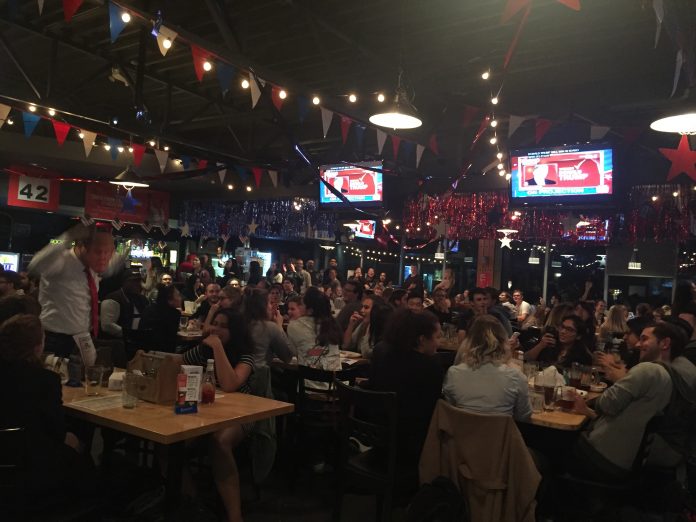
An election that was the talk of the world for over a year reached its finale on Tuesday, with SFU students clamouring about the Highland Pub. Tables were filled hours before the election results were even announced. Decorated with bright blue and red streamers and stars dangling from the ceiling, the Highland provided a space for somewhat wary students to come and witness the unpredictable fate of our neighbours downstairs.

SFU’s international US citizen population currently sits at 0.85 percent of the overall student population and this statistic does not count for domestic US students. While this is relatively less than our other Canadian university counterparts, it didn’t stop the keen curiosity and watchful eyes of the Vancouver-residing students who were at the pub.

During the Canadian election, students will remember that there was no specific event created for the big night at the Highland. The electoral results were announced to a (comparatively speaking) much quieter audience, around this time last year.

This year, for the American election, the Highland was nearly at capacity.

“There isn’t as much hype for Canadian elections as there is for American elections,” said SFU student Evangeline Kesteven, a third-year anthropology student. “I’m pretty pumped for it [. . .] I think and hope that Hillary’s going to win because she’s the obvious choice. I’m tired of the argument that it’s two bad candidates. There was definitely foul play on both ends, but it shouldn’t even be a question that Hillary is more qualified than Donald Trump is.”

Another student, Jozsef Varga, in his first year in political science, had similar thoughts. “I just think that elections in the States are far more sensationalized compared to others. But I guess that the media attention it gets is understandable, because [America] is the superpower of the world.

“Whatever happens tonight is going to affect everyone in some way. But I have faith that Americans will choose Hillary. She’s the candidate with the most experience out of the two.”

There was a positive rapport near the beginning and middle — cheers overtook the crowd whenever Clinton took a state, with a smaller number of quieter whoops here and there for Trump’s states. But as the evening (and the election) began to come to an end, a sombre and tense mood took over the atmosphere.

Numbers in the pub began to dwindle as a Donald Trump presidency came closer to reality, regardless of the predictions that Hillary Clinton was sure to take the White House. The few cheers for Trump’s state wins we almost immediately shushed and silenced by Democrat supporters. Once the night came to a premature end, many once-bustling tables were now suddenly empty.

Elliot Whitehead, a fourth-year communications student, voiced his thoughts on the result of the election. “I’m disappointed. It’s upsetting to see just how much of the American population can disregard the safety of minority groups, and there was so much obvious ignorance when it came to the stakes of voting for a certain party.

“I’m not scared about Trump so much as the people who were his diehard supporters until the end, and I really hope this doesn’t convey the message to bigots that they have a correct point of view.”

Regardless of whom readers support, one thing is clear: Trump will be the 45th president of the United States, and the only one in the history of America with no military or political background. Suffice to say, after eight years of Democratic governance under President Barack Obama, immense changes are approaching both America and the world.

There is no predicting what, exactly, will happen next. In Hillary Clinton’s concession speech, devoid of frustration or anger, she said this: “We have seen that our nation is more deeply divided than we thought. But I still believe in America — and I always will. And if you do, too, then we must accept this result — and then look to the future.”

SFU students and professors expressed their thoughts on Twitter:

https://twitter.com/tianamarc/status/796222078454099968

https://twitter.com/dnnocampo/status/796217181415624705

SFU splits UVic road trip

0
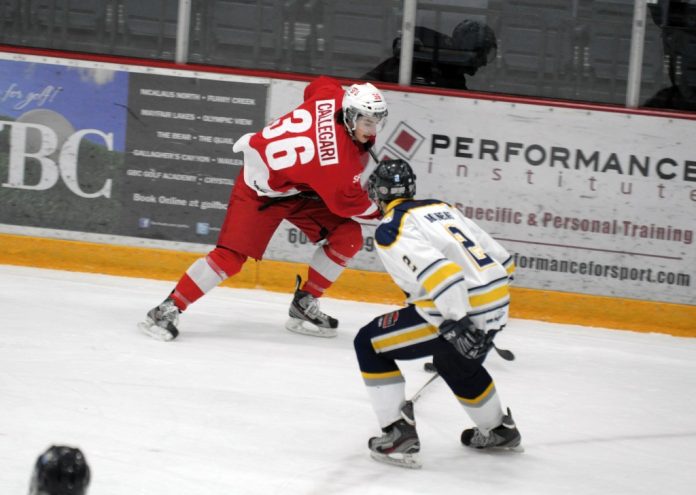
Adam Callegari (#36) returned to the lineup on Friday and had three assists over the two games played.

It may only be November, but in a five-team league, every game is important. Over the weekend, the Clan travelled to Victoria to play a back-to-back series against the Vikes. SFU lost in overtime on Friday but came back to win on Saturday, earning three out of a possible four points.

“It’s tough rink to play [in],” said head coach Mark Coletta on going away to UVic. “Everything is magnified because everything is so close. There’s always goal scoring chances off of every turnover, especially from the blue lines in. It was definitely a counter punch style of hockey, we carried a lot of the play and we took advantage of some breaks.”

In the first game, SFU forced overtime with a goal from Mathew Berry-Lamontagna with less than a minute to go. However, leading scorer Shawn Mueller scored in overtime to give the Vikes the win. The game was the first for SFU played with the new 3 on 3 overtime rules.

The game also marked the return of forward Adam Callegari to the lineup. He didn’t disappoint in his first game back, notching two assists on the first line alongside Brendan Lamont and Scott Patterson.

“You can never bank on chemistry happening with three guys or a line-up,” said Coletta. “But with him, Lamont, and Patterson, the chemistry is just there. There’s something that you try to manufacture as a coaching staff, but it’s a natural process, it just happens. Those three guys have it, and with [him] back, it’s definitely a good line.”

The second game saw SFU down 2–1 after two periods. In the third, the Clan decided to mount a comeback, scoring four unanswered goals to win the game 5–2.  

“Coach Spencer and Camazzola knew that we were definitely carrying the play, but the pucks just weren’t going in the net,” said Coletta on the difference between the first two periods and the last. “So we just wanted to come out in the second period with a win and go into the third knowing that we had a chance. That’s all we focused on, one period at a time.”

Both Jordan Liem and Lyndon Stanwood played over the weekend, with Liem in net for Friday’s game and Stanwood Saturday. It’s a rotation that Coletta says will continue in the future.

“I think knowing that we had two weeks with back-to-back games and Stanwood coming off an injury, we want to get him some action,” said Coletta on the decision to split the starts. “Liem could use a little bit of a break, but at the same time, I think them both playing and splitting some games here is a good thing.”

Brandon Tidy played both games on defence once again, and is expected to be there for the near future. Tyler Basham is “a couple weeks away” from returning, while Robson Cramer is “out until after Christmas” and Pavlo Zerebecky is still recovering from offseason surgery.

SFU’s next home game is against Selkirk College on November 26. Puck drop is at 7 p.m.

Allowed long passes blemish otherwise strong defensive game

0
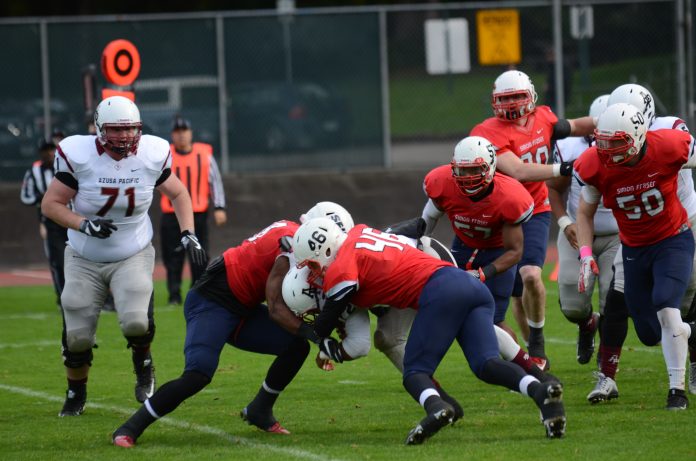
Gabe Lopes (#46) had a total of three tackles in the game. The loss leaves SFU 0–9 in the 2016 season.

In a mostly good first half, four 40-yard-plus passes against — including three that counted for a touchdown — led to SFU football’s downfall Saturday afternoon.

“There were four big plays in the first half where we had defenders in place to make a play and just were unable to make a play on the ball,” explained head coach Kelly Bates.

“I guess the good, if there’s a silver lining, is our guys were in the right spots, we just weren’t able to make a play when we needed to.”

To open the game, SFU’s offence put up a solid opening drive. Quarterback Miles Richardson threw a seven-yard pass to receiver Gavin Cobb in the first play of the game. Then two consecutive 20-yard-plus plays — running back Jalen Jana rushed it 23 yards, while Justin Buren received a 24-yard pass.

SFU had made it to Central Washington’s 17-yard line. They were unable to make up any more yardage, and had to kick a 40-yard field goal from the 23-yard line — they missed.

No points, but a solid start for an offence that has struggled all season.

But on Central Washington’s first play, Jesse Zalk received a 77-yard pass from quarterback Justin Lane. With that, they were up 7–0 — the seventh time in nine games that SFU surrendered a touchdown on the opposing team’s opening drive.

“They’re tough,” said Bates of those long passing plays allowed. “They really crush you from a psychological standpoint.”

The Clan didn’t allow another point in the first quarter — the next four drives they didn’t even allow a first down. On Central Washington’s next drive, SFU linebacker Justin Herdman forced a fumble which SFU’s Jordan Pugh recovered. In the fourth of those defensive stands, the Wildcats only needed five yards because of an SFU penalty, but were unable to crack the Clan defence.

Neither team allowed much on the ground game — there were only 99 rushing yards total, and SFU only allowed 67.

But on Central Washington’s first drive of the second half, they were once again able to exploit SFU’s defence on the passing game. A 43-yard and a 44-yard pass led to the Wildcats’ second touchdown.

By the end of the first half, SFU was down 27–0, despite a defensively solid first quarter.

In the third quarter, the Clan didn’t surrender a score, thanks to a Central Washington fumble recovered by Justin Herdman on the goal line.

The fourth quarter saw the Wildcats put up 14 more points. One touchdown came when a blocked punt put Central Washington on SFU’s 32-yard line, and they worked their way to the end zone. The other saw Central Washington again exploit the passing defence, needing only one play — a 57-yard touchdown pass.

“As always, the kids played very hard, their effort is never in question,” said Bates.

While it was another tough day on the scoreboard and the win column, a few good things were hidden by the 41-point loss.

The offence has had trouble, to say the least, but there’s been a consistency to the defence.

On seven drives, the Clan held the Wildcats without a first down.

Cobb had another good week on special teams with 141 yards on kickoff returns. Buren put up 99 receiving yards to lead the team on offence.

The Herdmans were solid as usual, with Jordan putting up seven tackles, while Justin put up eight and helped force two fumbles.

SATURDAY: The Clan has one more opportunity to get in the win column in 2016, and it’s at home this Saturday.

“[I] talk[ed] to the guys after the game and I want them to realize that there’s 14 seniors on this team that have one more opportunity to win a game this year, and every decision we make moving forward this week should keep that in mind, and these 14 seniors deserve a better outcome in their last game,” said Bates. “It really comes down to making sure we give our kids a good chance to win this last game.

“What’s impressive to me is that [the seniors] never wavered in their work effort, they’ve never wavered in their commitment to do whatever they can, even when they know we’re undersized, undermanned, underpowered, they continue to come out every day with an amazing attitude and work their butts off. That’s a testament to them and to their parents and people they’ve become.”

If there’s a team that SFU can win against, it’s Western Oregon.

The team sits fourth in the Great Northwest Athletic Conference with a 2–5 conference record and 3–6 overall. Aside from SFU, they have the worst scoring offence — putting up 20.7 points per game — and the worst scoring defence — allowing 35.1 points per game.

In their matchup earlier this season, SFU put up a good defensive performance, allowing only 13 points in the first half. SFU’s offence was stifled — the only score coming on a pick-six by the defence — and they lost 33–7.

But it goes without saying, it will be tough for SFU. The Clan has only scored in the double-digits twice, and while the defence has looked good, the team still allows on average 52 points per game. Their lowest score against is the aforementioned 33.

It’s going to be an important one for the SFU team, which Bates said feels a strong rivalry with Western Oregon.

“They’re a very physical team that come to play with their lunch buckets to play hard all day,” he said of Western Oregon.

Kickoff is at 1 p.m. at Swangard Stadium.

Why I’m voting for Larissa Chen for President

0

The byelection is a waste of money, time, and sleep for all involved. But it’s happening, which means we need an option that won’t generate even worse problems. Between born-again candidate Deepak Sharma; Darien Lechner coming in like a wrecking ball on Build SFU; and interim president Larissa Chen, the gal who’s worn authority for months now seems like the obvious choice.

Chen didn’t accept the presidency when she had the chance, and some would suggest that shows hesitancy and indecision unbefitting of a presidential figure. Whatever the case was then, it’s clear now that she’s pouring serious effort into this. She already knows the job, and yet another election approaches in four months; why waste time on acclimatizing another president, when we could give the current one time to actually accomplish things?

Chen’s shown a detailed plan including improving policies for handling sexual violence on campus, supporting clubs, and fixing the archaic laws governing the SFSS itself. What have we seen from the others?

Sharma’s sloppy. He made a spectacle of discussing his resignation on Facebook, only to submit his platform days late, because running again was a last-minute decision. If he wants influence over thousands of students, he should work double-time to prove that he won’t flake out again; instead, he’s looking increasingly unreliable.

Lechner’s passionate, but 99 percent of that goes into complaining about Build SFU levies; the other percent engenders dark and melodramatic buzzwords. His criticisms aren’t wrong, but as poorly as the project’s been handled, we need to pay for it. Anyone can complain about how the people in charge do things. That’s no reason to trust Lechner, whose political experience is minimal, above those people.

Chen’s a hard worker, considering how she’s juggled two different SFSS positions, and I can trust that more than anyone’s promises. She makes sense, and I think throwing that away to bet on people who’ve done little to convince us of their qualifications is a poor move.

Men’s basketball suffers “embarrassing” loss to Quest University

0
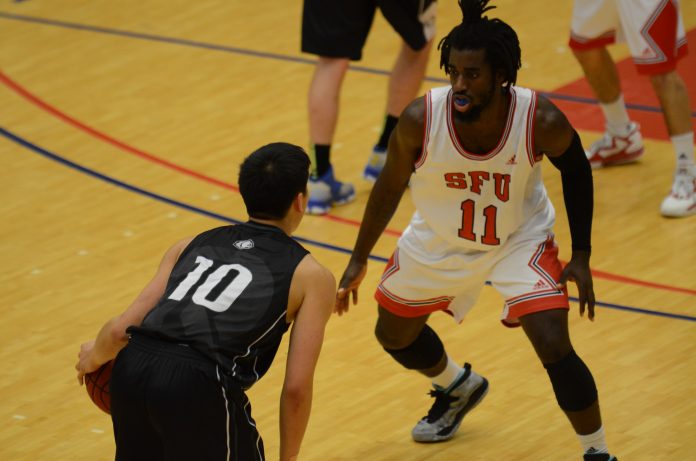
Kedar Wright (#11) led SFU with 22 points, going 9 for 17 in 25 minutes of action.

Head coach Steve Hanson was blunt after the game.

“We were terrible,” he said. “It was just an embarrassing loss.”

SFU lost by 24 points Saturday night. Other than the 27 seconds at the beginning of the game with no score, they had trailed the whole game. Worst of all, they did it against an opponent that should have been an easy win.

Quest University, where SFU lead assistant coach Sean Shook had spent the previous eight seasons as coach and athletic director, is a member of the PacWest conference of the Canadian Collegiate Athletic Association (CCAA). The two previous exhibition games against PacWest teams saw SFU dominate them 97–63 and 96–53.

That means no offence to Quest, which obviously played a very good game, and carried a lot of skilled players (Theo VandenEkart and Daniel Canzater would be good pickups, if SFU could just poach other players). But it would be like a National Collegiate Athletic Association (NCAA) Division I team losing to a Division II team, or an American Hockey League team beating a team in the National Hockey League. Not only beating but thoroughly dominating.

To add to matters, Quest only dressed seven players, and one player played three minutes — essentially, they played only six players in a sport which requires five players on the court. Five of those players were on the court for 30 minutes or more.

This was a team that SFU should have been able to beat, if only because they should have been able to exhaust them.

“We have some guys that they’re just [. . .] we thought we could walk on the court tonight and just play, and we can’t. We got our ass kicked in every component of the game,” Hanson explained. “I mean, the only positive [from] tonight is that it doesn’t count for much, but it shows a lot of our weaknesses.”

VandenEkart opened the scoring for Quest with a three-pointer. SFU didn’t score its first field goal until 3:38 into the game, when J.J. Pankratz scored a layup. By the 10-minute mark of the first half, SFU had only added six more points to the score, while Quest had cruised to a 28–10 lead.

While the last 10 minutes of the first half proved more equal — SFU put up 26 more points to Quest’s 27 to be down 55–36 at halftime — falling behind so early in the game proved deadly to the Clan, who were unable to go on any point runs of much substance.

Quest was dominant on the three-point line in the first half, going nine for 17 (52.9 percent). While they fell back down to earth in the second half, they still finished with a respectable 13 for 31 (41.9 percent). Meanwhile, SFU went an abysmal three for 27 (11.1 percent), with only one success in the first half.

The second half was closer, but even in second half scoring, SFU trailed five points.

Kedar Wright carried the offence for the Clan, with 22 points, and one of SFU’s three successful three-point attempts. Other than Wright, the only player to put up double digit points was Michael Provenzano, with 10.

“The only positive [from] tonight is that it doesn’t count for much, but it shows a lot of our weaknesses.”

Graham Miller, who stands at 6’7” and was a redshirt last season, showed flashes of what he could do with his size.

Andrew Williamson and Aleks Vranjes were “both hurt in practice,” and didn’t play Saturday, nor the game before against Columbia Bible College. By the end of last season, Williamson had become a valuable player who could chew up minutes and put up points. Vranjes is in his redshirt freshman season.

This was a tough loss for SFU. It marked the end of three games that should have been easy wins, and confidence boosters for a Clan team that only had two wins last season. From here, all of SFU’s games are against NCAA Division II opponents and will be much harder. An effort like this most other nights would probably result in a much worse deficit than 24.

“If we don’t come out ready to play next week, then we’ve got some issues, so we have to get better, and we have to get back to practice next week and learn,” said Hanson.

The focus in practice? “Competing and rebounding, that’s it.”

SFU was outrebounded by Quest 51–34. To quote an old sports cliché, it just seemed that Quest wanted it more, fighting for every ball.

If the Clan is to get a few wins this season, it will have be through outworking the competition — something that just didn’t happen Saturday night.

THIS WEEKEND: The Clan heads off to the Sodexo Classic in Seattle, WA for its first taste of NCAA Division II competition this season.

On Friday, the team takes on the University of Hawaii Hilo Vulcans. The Vulcans had an overall record of 9–15 last season, and lost in three appearances to Great Northwest Athletic Conference opponents. The Vulcans sat 13th of 14 teams in the PacWest conference — the NCAA Division II version, not the CCAA version — in scoring defence, and were fifth in scoring offence.

On Saturday, SFU faces the Humboldt State Lumberjacks, a member of the California Collegiate Athletic Association (also confusingly abbreviated to CCAA). Humboldt won its only exhibition game so far 121–56 against Future College. Last season, Humboldt placed fourth in the CCAA with a 21–9 overall record, and led the conference in scoring offence by a margin of 7.2 points per game.

Tipoff for both games is at 3 p.m.

Street performers deserve your respect and attention

0

A city isn’t merely defined by its location, or the high-rises cropping up against the sky as towering giants. Its unique identity goes beyond simple economics and infrastructure; it’s made by the mood and tone of the people who live, work, and create there.

In cities like Vancouver, street artists are a prominent force in shaping their home’s overall atmosphere and reputation — in fact, they help drive our tourist industry beyond where it would otherwise be. Yet even here, they’re far too often ignored, and this is a reality that needs to change.

The City of Vancouver and its officials understand their importance, and encourage these performers to create their art within the parameters of various bylaws and regulations set out to ensure public acquiescence. What most people don’t consider is just how much effort goes into making this coexistence possible.

Nearly every spot involves paperwork and permits to perform there, although parks, Library Square, and certain community spaces allow musicians and other forms of street entertainers to forgo this hassle. Otherwise, performing takes money, effort, knowledge of the bylaws, and a refined and moving act.

This kind of investment illustrates the tenacity and dedication inherent to the characters of such artists. At the same time, it shows how much of a tragedy it is when they’re disregarded, or become the victims of disrespect and contempt. These precious people work hard to make strangers smile. It’s commendable that even when so many walk past uncaringly, these performers continue to celebrate and share life, passion, and art.

As forward-thinking students of a school already dedicated to creating an inclusive and supportive environment, we should be able to respect and appreciate all that a street artist puts into their work. Whether your interests fall in the arts or elsewhere, we all know firsthand what it’s like to put your all into your work and just hope that it pays off.

Yet, when heading out to Vancouver, many of us still tune them out, paying no mind to what they have to offer.

Street artists make their living creating something beautiful for others, hoping it will be appreciated enough to warrant the forgotten change in a person’s pocket. All they ask is that you enjoy their music, their dance, their art — if you enjoy what they do, let them know. If you find yourself pausing to listen for a moment, or smiling as you walk past, then drop in a coin or a couple dollars as a simple show of support.

Being an artist isn’t the easiest life, but it’s a life of creation and possibility. Street artists embody this reality. Realizing this, and knowing the smile that may flit across your own face as you hear them, find a way to show them what they do matters. Twenty-five cents in that battered suitcase to say you appreciate what they’re doing. Twenty-five cents to say thank you.

Squat while you poop

0

Sir John Harrington, godson to Queen Elizabeth, brought the modern commode from the drawing board to the plush rooms of Richmond Palace. It wasn’t exactly what you have in your powder room today, but he had the idea down.

But before Sir John and Thomas Crapper, another bright toilet tinkerer (yes, his last name was Crapper), worked out the contraption we all sit on multiple times a day, we emptied our bowels the old-fashioned way: squatting in appropriate and sometimes inappropriate locations.

Our lives forever became much more convenient. No more squatting in an inconspicuous spot behind a bush out in the cold or the hot sun, or using chamber pots! By the late 19th century, most homes in the developed world had sit-down toilets.

But Mr. Crapper and his colleagues definitely flunked Dark Ages anatomy, because they forgot to account for the meddling puborectalis muscle.

What’s the puborectalis muscle, and what’s it got to do with sitting on the commode? Let me explain.

How long do you spend on the toilet? Maybe you take some time to whip out a magazine or listen to a podcast. I know some of us even make phone calls on the can. But what if I told you there’s a way to speed up the whole process of taking a number two?

Asia’s been at it for years. Maybe that’s why their GDP growth rates are so high.

Modern conventional sit-downs on toilets kink the colon via the puborectalis muscle, which prevents the easy flow of faeces. Squatting, on the other hand, unkinks the colon. This unkinking opens the door to super-fast pooping sessions that may not last long enough for you to get through Ira Glass’ introduction to This American Life.

But before you hop on that toilet seat to experience autobahn-like colon expulsions, you should know that it can be dangerous. People have fallen and hurt themselves, especially on the mounting and dismounting. It’s best that you get a stool or a few phone books to mimic the angle that a squat on the ground would produce.

Happy speed pooping!