Home Blog Page 737

Living abroad, studying abroad, thinking broadly

1

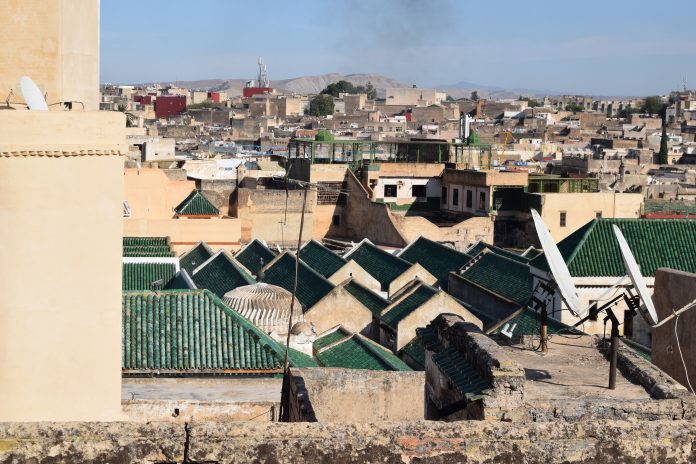
“Setting foot on campus is like entering into a different world,” were the words my roommate translated from Arabic over coffee. And in the midst of my first semester abroad, those words could not have rung more true.

From the moment I arrived in Morocco, I felt my experience was atypical. After all, I am (almost entirely) anglophone and have only ever lived in a so-called Western society. On my university campus, I do not feel that either of these factors have changed.

My classes are conducted in English. My peers and our professors come from all over the world. We fulfill our role as students by complaining about cafeteria food and readings on weekdays and heading out for drinks on weekends. The local student confessions page is often a venue for the constant debate between conservative and liberal voices. The only thing I have found inescapable is the ascribed gender identity which arises from living in sex-segregated dormitories.

However, I think it is accurate to conclude that beyond the campus grounds, Morocco is a relatively conservative country. The freedom I experience here is not shared by every woman. That said, living here has challenged many of my own views which I had thought to be progressive, in very unexpected ways.

There are many stereotypes and preconceived notions about a country like Morocco, especially if you group it in with other countries in the “Middle East.” For some, this may conjure up images of oppression, especially of women, or a susceptibility to violence. Coming here, I hoped to find these stereotypes discredited. And I did.

The personal beliefs of the people I meet are as varied as in any other society. Choice of clothing ranges from the more traditional djellaba to a look that resembles something you would find on a street in any of Canada’s major cities. I have never felt my safety was threatened walking city streets at night in my neighbourhoods. To be honest, at first things did not seem this way but, if anything, it was only my own lack of understanding that was dangerous to me.

Morocco also, interestingly, has another reputation for being a leader in the region, taking steps to uphold the rights of women and allowing young people the freedom to express themselves. But this is not something I can get behind either. These are a few of the realities: sex outside of marriage is criminalized, as is homosexuality, and alcohol is, in some ways, if not prohibited, at least taboo.

Now, I want to be clear: such restrictions are not something that I as a foreigner experience. But they are human rights concerns and adopting them as my reality has been more challenging than I expected.

Before going abroad, I figured I had solved my ongoing moral dilemma about cultural sensitivity by resolving to at minimum respect, if not push myself to see the rationale behind others’ prevalent values, particularly those which are not so easily digested by secular, liberal society. But this is not so simple.

It soon became apparent that this was easy enough for me to do. There is a huge divide between the rules set for me as a foreigner and those for locals. When you are not affected by something, it is much easier to accept it.

Applying cultural sensitivity became, for me, just as problematic as defining a society by its conservative values or making a value judgement on something you are not familiar with. I found myself asking: how do I reconcile that?

This is not a problem I can confine to Morocco. At home, I am often torn between challenging others on their beliefs or trying to accept them. If anything, I am going home with more questions than answers, and quite possibly feeling I know less about Morocco than I thought I did in the first few weeks.

My time at Simon Fraser University has taught me many things. But what it couldn’t teach me was the experience of being here.

Graduate Student Society election to take place this week

0
Graduate students will have three days to vote on three different Directors for the executive committee, as well as a referendum question.

With the undergraduate students of Simon Fraser University just recently wrapping up their byelection for their student society, the graduate students are preparing for their biannual election.

The Graduate Student Society (GSS) roles of Director of University Relations, Director of Finance, and Director of Graduate Services are all being voted on. While University Relations is running unopposed, there are some choices for the other two positions that grad students will have to make.

Director of University Relations

Chantal Turpin, a third year PhD student in criminology, is the lone candidate for University Relations. A council member for the GSS since 2015, she has also been “very involved in the currently ongoing sexual violence and misconduct policy consultation process as a strong voice for graduate student concerns,” according to her platform.

Director of Finance

There are four students who are running for the position of Director of Finance. Here are a snapshot of the candidates, based off the statements they submit for the election.

  • Heather Baroody, a PhD student in computational electrochemistry, focused her platform on financial transparency, honesty, and responsibility.  
  • Francisco Caniego, who touts serving as CIO for PUBLIESPAÑA (a media company in Spain) as his main platform point.  
  • Diana Leung, first-year student in the Graduate Liberal Studies Program, advertises that as a trained accountant, she is a designated CPA, CGA, and also holds an MBA degree.
  • Panjak Tiwari, an international student in his second year of a Masters program at the Beedie School of Business, wants to ensure all GSS students know their available resources.

Director of Graduate Services

For the position of Director of Graduate Services, there are only two candidates running: the incumbent Michelle Aslan and newcomer Dewi Tjin.

During Aslan’s term, arguably her biggest project was implementing the GSS mini school, which offers “one to two hour workshops to graduate students as a perfect energy booster for reducing anxiety, and finding much-needed relief from the general stress inherent to studying at a university,” according to its website. She is a Masters student in Education and Curriculum Planning, and wants to get re-elected to bring together all three campuses for inclusion and to make the lives of all graduate students better.

A student in the Management of Technology MBA program at SFU, Tjin promotes herself as a skilled communicator and someone who is passionate about software programming. According to her platform, she will “work diligently with the Committee to ensure the strategic direction of the Graduate Services benefit students, research and propose opportunities to improve our existing services, and liaison with as many students as possible” if elected.

Referendum Question

Finally, there is only one referendum question, and it comes from the same group who just got a referendum question approved in the SFSS election. Embark is seeking the same deal they just got from undergraduate students, as they want to up their levy to $3.50 per semester for full-time students, and $1.75 for part-time. They currently collect $2 and $1 from those groups respectively.

The vote for this question and all candidates will be open from 8 a.m. on November 29 to 11:30 p.m. on December 1. Announcements will be announced on December 2 at 5 p.m.

SFU Board of Governors approves to decrease its carbon footprint by 30 percent by 2030

0

CORRECTION: In a previous version of this article, we stated that SFU will be “divesting” from fossil fuels by 30 percent by 2030. In fact, the university plans on reducing its investments in companies that rely on carbon and fossil fuel investments, rather than divesting entirely. We regret the error.

SFU’s Board of Governors (BOG) has given the green light to reducing SFU’s carbon footprint by 30 percent by 2030. This comes after a long process of committee and advocacy meetings.

This choice is intended to match Canada’s climate commitment, where the BOG’s responsible investment committee is still working to develop a baseline report of SFU’s carbon footprint. Once this is completed in January, the committee plans to have a detailed plan of the targets to be made to reduce carbon investments by 2030.

SFU has also increased its funding towards sustainable investment holdings within the endowment portfolio by $8 million, to be added to the previous $12 million in late 2015.

SFU isn’t the first university in Canada to adopt this plan. The University of Ottawa adopted a similar plan in April.

President Andrew Petter stressed at the meeting that he hopes this impact inspires “others join with us and the University of Ottawa; universities, but perhaps other institutions as well, because what it’s really saying is that we expect companies to make progress to reducing their carbon footprint.”

Tyler Carson, graduate representative on the BOG, added “that this has been a very significant issue for a lot of students,” and explained that this approval “makes me very proud to be an SFU student.”

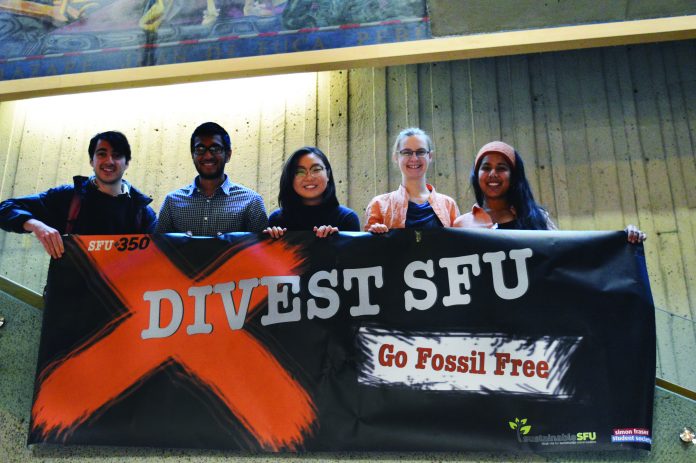
Petter also thanked the various advocacy groups at the university, including SFU350 — a SFU student climate action organization aimed to encourage SFU to divest from fossil fuels — for pushing and helping the board “to think of ways that you can develop an investment policy that will in fact contribute towards reductions in carbon investment and achieve climate change targets.”

Board chair Bill Cunningham said that “this is probably, more than anything on my time on the board, symbolizes what it means to be a part of the SFU community.” He added that groups like SFU350 and Embark have all been a part of “helping us get to this point.”

Deven Azevedo, former undergraduate representative for the BOG in 2014–15 and chair of Embark, said to The Peak following the announcement, “it’s been the culmination of about three years of work and two and a half years since SFU350 last attended [the] March 2014 BOG meeting, when the issue was first brought to the board.”

Azevedo explained that it’s been an evolutionary process from the point where the board was not previously as positive about this issue, but remained open to speaking about it. “[I]t definitely allowed us to continue our advocacy.”

Petter addressed some of the issues that complete divestment poses, which is the goal of the SFU350 organization, and explained that much of the university’s investments are located in “pooled funds”; so, “we can’t aggregate or disaggregate the carbon components of those funds [. . .]  and it would put the university at risk in terms of getting a return.” He added that the direct investments that the university does hold are not within any fossil fuel companies.

Tessa Ramburn, president of the SFU350 organization, said that “SFU350 is very happy that the motion has passed and it’s a positive first step forward in the right direction. We are also looking forward to continue to work with the board of governors in pushing for full fossil fuel divestment.”

Jessie Russel, social media coordinator for SFU350, added that “this is a huge first step, but 30 percent by 2030 is not fast enough [. . .] I think moving forward, really looking at the endowment as a whole and also looking at benchmarks that are much closer than 2030.”

Ramburn explained that research coming out of the university itself by Kirsten Zickfeld, an SFU professor and climate scientist, indicates that “30 percent by 2030 is just not enough.”

However, she explained that the president’s commitment to inspiring other universities to follow suit is “one aspect of divestment that make it such a powerful movement [. . .] All of this work is not just SFU350 or just Embark, it’s the entire support of the Divest SFU movement, and that’s huge.” This includes the “thousands of students and faculty members that have put time and energy into this [. . .] so we are really grateful that we have the support of the entire SFU community.”

Quality and quantity: New B-Line to replace 135

2

CORRECTION: In a previous version of this article, we stated that the 95 B-Line will have three-door boarding at all stops. Translink has informed The Peak that three-door boarding will only be available at SFU stops. We regret the error.

Change is in the air for SFU students. The 135 bus will soon be no more than a distant memory as it’s replaced by a successor: the new 95 B-Line.

This deeply contested lifeline between Harbour Centre and SFU Burnaby has been a hot topic for years, having come into question for replacement as far back as 2009. Due to frequent changes and pushbacks, the concept of the B-Line hasn’t come to fruition until now. It will be released on December 19 to coincide with the Millennium Line Evergreen Extension that will service Coquitlam, as the 135 is discontinued.

In an email to The Peak, TransLink explained that the 95 B-Line is intended to be a more reliable and direct service, with fewer stops along Hastings Street than the previous 135 bus route. It will also run more frequently, operating every five to eight minutes during peak hours and 12–15 minutes in off times, as stated in TransLink’s 10-Year Vision Public Consultation Summary Report, published earlier this year.

According to TransLink, the 135 was the sixth most-crowded bus route in 2015. It has among the least punctual performances in their system as well, due to high congestion on Hastings Street. As a result, it is subject to some of the worst bus bunching in the Lower Mainland, where users cite waiting tirelessly for a delayed bus, only to have two or even three show up at the same time. By moving to limited stops, TransLink hopes that customers will notice significant improvements to reliability and efficiency of the service.

Travis Cheney, a fourth-year SFU student living in Burnaby Heights, often experiences this. “As somebody who needs to be downtown at a specific time to make it to work, I definitely opt into taking the SkyTrain instead of the 135 because it offers greater consistency,” he said. “I’d be more inclined to take the 95 B-Line knowing it wasn’t going to stop every 500 metres.”

While the 95 B-Line hopes to solve a lot of the problems that student face on their commute, there will be questions of concern. “On the 135, I’ve experienced intense verbal assault,” said Shmygol.

For many SFU students, the issues that the 135 brings up about inefficiency is an important part of their everyday life. “The thing that bothers me is that it’s labelled an express bus, but as soon as it gets to Burnaby it still stops every block,” said Sarah Duggan, a third-year student who commutes from North Van.

Scout Shmygol, a student who lives in Mount Pleasant, often has classes on both campuses, and sometimes on the same day. “I think a B-Line to SFU is necessary, and about time. It can take an hour to get from Harbour Centre to Burnaby Mountain on the 135 right now,” she said.  “It’s such a popular route, and SFU is a major university in BC, which is quite frankly a hassle to access. Easing and expediting this is very exciting.”

While the 95 B-Line will ultimately improve user experience, it also means a loss of stops that are important to accessibility for residents, particularly for elderly residents or those with disabilities. “Walking that extra few blocks might not mean much to a lot of us, but it will to them,” said Duggan.

According to TransLink’s notice boards on the 135 route, busses stopping locally after December 19 will be the 14, 144, or 160, which some users have expressed they’re not aware of. However, there are a lot of other busses near that route, especially in East Vancouver where student Grace Lam lives. “There’s the 14 and 16 on Hastings, but there’s also the 4 and 7 primarily on Powell and Dundas. They run parallel to Hastings and are only two blocks down [. . .] Many people don’t know about that,” she said.

The new bus will also feature three-door boarding at SFU stops, a trademark of the other B-Lines in the city. This should make boarding more effective, particularly during peak hours at the SFU Burnaby transportation centre. The majority of SFU students have Compass cards, making the feature more feasible.

While the 95 B-Line hopes to solve a lot of the problems that student face on their commute, there will be questions of concern. “On the 135, I’ve experienced intense verbal assault,” said Shmygol. “This B-Line is fast, but does nothing to address the unsafe climate of that bus route that many women feel.” She also noted that the three-door system might not be all that it’s cracked up to be: “It removes the ‘gatekeeper’ element intended to monitor access to transit services; it takes away another element of safety.”

Only time will tell how people react to the big changes coming to the popular Hastings Street route, but for many students like Duggan, it’s an excited anticipation. “The whole purpose of a B-Line is to get you from A to B as quickly as possible, and that really benefits everyone.”

The 95 B-Line will stop at:

Burrard Station, Granville Street (Waterfront Station), Cambie Street/Abbott Street, Main Street, Commercial Drive, Nanaimo Street, Renfrew Street, Kootenay Loop, Gilmore Avenue, Willingdon Avenue, Hythe Avenue, Holdom Avenue, Kensington Avenue, Duthie Avenue, and SFU Transportation Centre.

Indigenous voices highlighted at Media Democracy Days

0

Following the election of Donald Trump in the United States, the word “democracy” has been mentioned a lot in the last few weeks. What does democracy mean to us in Canada? Is it making sure all citizens have an equal voice in society?

These were the very questions asked at Media Democracy Days (MDD) 2016 on November 15–16 and 19, hosted by SFU Vancouver and the Vancouver Public Library (VPL). The multi-day event held workshops, screenings, and public lectures around the democratization of media in Canada. It urged people to consider the ethics of media coverage, asking whose stories get told or ignored in contemporary Canadian society.

MDD was founded in 2001 by the Campaign for Press and Broadcast Freedom in Toronto and Vancouver. Now OpenMedia, the group has joined forces with VPL and the School of Communication at SFU to produce this annual event for independent and alternative media in Canada. This year, MDD covered topics like “Decolonizing the Media,” “Protecting the Right to Protest: Free Speech versus Corporate Power,” and “Amplifying Stories of Displacement.”

The keynote speaker was Ryan McMahon, an indigenous media maker and comedian who is the host of the acclaimed podcast Red Man Laughing.

McMahon began his talk by singing a traditional “trade song,” filling the room with his deep voice and the striking of his hand drum. He then chillingly told us that tribes in Northern Ontario had sung this song to welcome the first settlers, who they believed had come to help them.

His lecture, “Digital Media, Bush Tea, and Dibaajimowinan,” filled the seats of the lecture theatre at Harbour Centre. He raised important concerns regarding indigenous representation in media. Though many times during his talk, McMahon had the room laughing, at the heart of his message was a sombre appeal. He said it is the cultural stories and collective sharing that keep indigenous culture alive, and indigenous media initiatives provide that much-needed platform.

Janet Rogers had a similar message later in the afternoon in her public lecture “Native Waves Radio.” A Mohawk broadcaster and producer, Rogers has been involved in indigenous initiatives all over the country for decades, most recently co-creating the podcast series NDNs on the Airwaves. Rogers stressed that media has power, and “creating and maintaining indigenous presence on the airwaves is of utmost importance” to reclaim that power.

The MDD slogan this year is apt: “Know the media, be the media, change the media.” As Stuart Poyntz, associate professor in the SFU School of Communication, pointed out in his introduction to the event, media democratization today is a real concern as right-wing public policy gains momentum following Trump’s election.

Media Democracy Days shed light on a time when social justice and democracy are internationally under threat. This event stressed that media represents the plurality and complexity of our Canadian society, more important now than ever.

“Santa is real,” and other acceptable lies to tell children

0

I don’t have a favourite child

Those of us who have siblings remember a time when our sibling received special treatment, and out of jealousy, we accused our parents of preferential treatment. Depending on how well your parent lied, you either walked away knowing that wasn’t the case, or hardened and emotionally scarred.


We later grow up to learn that parents do, actually, prefer one child over the other, and that changes depending on circumstance. Remember that time when you yelled and screamed because you didn’t want broccoli and your brother ate his without any fuss? Yeah, you were not the preferred child in that situation.  


I do it because I love you

Ah, if it isn’t the old justification for corporal punishment.  This one is often interchangeable with “This hurts me more than it hurts you” — as if Mom pulling down your pants and giving you a spanking somehow injures the moral fabric of her soul.  

“I do it because I love you” translates more directly to “You’re being a shit and I’ve run out of ways to express it.”

They don’t sell batteries for that toy anymore

Remember that one musical toy you kept winding up and letting go while Dad was trying to get work done? You may appreciate how annoying that was now (and also find that some of your colleagues never grew out of the behaviour), but back then the lie was traumatic and heart-wrenching. You mean I may never experience the joy of Simon the Cymbal-playing Monkey again? The one that Uncle Stan got me for Christmas?


Your parents never told you at the time, but it’s very likely they never got over their hatred of Uncle Stan.

The important thing is that you participated

Remember the first time you went to a track meet, and you came dead last in the 100m dash closely following Carl, who easily managed to outrun you despite having a stunted leg? Mom or Dad may have hugged you and told you that winning doesn’t matter, but that’s only because they’re hoping that your high grade in math would somehow help you in the job market, and that the glory showered down upon the winner of the race was as short-lived as possible.

Your parents basically learned to play the long game at an early age, but that isn’t to say that winning something athletic would hurt every now and again.

You can’t have sex before marriage

Perpetrators of this lie tell their children that they can’t have sex before marriage as if it is a universal, physical maxim that all society follows innately.  

It actually holds just about as much truth as “You can’t have any dessert until you finish your vegetables.” You can, in fact, have sex before marriage just as much as you can steal the tub of ice cream from the freezer while Mom isn’t looking.  

At some point, you grow up to learn that your parents’ morals aren’t universal truths, and vegetables, like sex, can be consumed in whichever order you please.


12 Days of Finals

0

On the first day of finals
The stress brought to me:
At least one mental breakdown.

On the second day of finals
The stress brought to me:
Two-day extension
and at least one mental breakdown.

On the third day of finals
The stress brought to me:
Three hours sleep
Two-day extension
and at least one mental breakdown.

On the fourth day of finals
The stress brought to me:
Four study groups
Three hours sleep
Two-day extension
and at least one mental breakdown.

On the fifth day of finals
The stress brought to me:
Five failing grades
Four study groups
Three hours sleep
Two-day extension
and at least one mental breakdown.

On the sixth day of finals
The stress brought to me:
Six snack plates
Five failing grades
Four study groups
Three hours sleep
Two-day extension
and at least one mental breakdown.

On the seventh day of finals
The stress brought to me:
Seven cups of coffee
Six snack plates
Five failing grades
Four study groups
Three hours sleep
Two-day extension
and at least one mental breakdown.

On the eighth day of finals
The stress brought to me:
Eight more readings
Seven cups of coffee
Six snack plates
Five failing grades
Four study groups
Three hours sleep
Two-day extension
and at least one mental breakdown.

On the ninth day of finals
The stress brought to me:
Nine hours of Netflix
Eight more readings
Seven cups of coffee
Six snack plates
Five failing grades
Four study groups
Three hours sleep
Two-day extension
and at least one mental breakdown.

On the 10th day of finals
The stress brought to me:
10 weak excuses
Nine hours of Netflix
Eight more readings
Seven cups of coffee
Six snack plates
Five failing grades
Four study groups
Three hours sleep
Two-day extension
and at least one mental breakdown.

On the 11th day of finals
The stress brought to me:
11 late assignments
10 weak excuses
Nine hours of Netflix
Eight more readings
Seven cups of coffee
Six snack plates
Five failing grades
Four study groups
Three hours sleep
Two-day extension
and at least one mental breakdown.

On the 12th day of finals
The stress brought to me:
12-page papers
10 weak excuses
Nine hours of Netflix
Eight more readings
Seven cups of coffee
Six snack plates
Five failing grades
Four study groups
Three hours sleep
Two-day extension
and at least one mental breakdooooown.

Best Hanukkah traditions I just made up

0

Wintertime in North America is a fun time for goys, as you deck your halls and also everything else to the point where there is almost no room for Hanukkah, the only holiday with as many days as ways to spell it. Outside of the Rugrats, there aren’t even any family-friendly television specials! (Don’t talk to me about that schmuck Adam Sandler.)

Instead of just kvetching about it, it’s time to educate all you heathens of the best Hanukkah traditions you’ve never heard of, because the Festival of Lights is a de-light to celebrate. This goes beyond eating a latke and singing the dreidel song; this is a Hanukkah that the Hebrew Hammer can get behind.  

Are these traditions real? Honestly, who is to say? It would be rude to imply these are just bupkes, but I can’t promise these are necessarily all kosher.

(Editor’s note: Nathanial Rossman worked at a synagogue for many years, rode the chair at his Bar Mitzvah, and has never eaten bacon so he is a great source on all things Jew-ish.)

Find a Hanukkah bush and light it on fire

Hanukkah has always been forced to compete with Christmas, which is a little unfair seeing as Christians stole Jesus from the Jews. Gifts weren’t even that customary until the holidays went head to head, prompting the Jewish faith to be forced to add a little chutzpah to even things up.

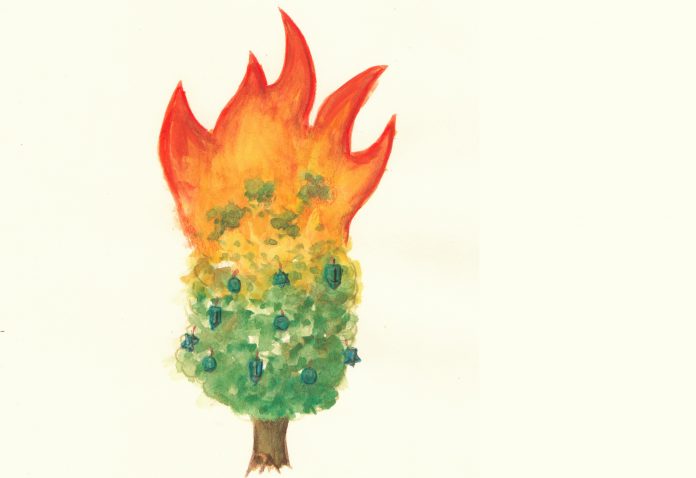
Seeing as Christmas trees have become symbolic, the Jews needed something to even the odds. The most famous shrubbery in the Torah is the burning bush, which was then chosen to be the new symbol for Hanukkah, seeing as the holiday is all about lighting things on fire. Every year, it is considered a mitzvah to bring a bush into your home, and let it burn for all eight days. Sure, it’s a fire hazard, but not celebrating with a Hanukkah bush is an even bigger hazard to Bubbe.

Start a dreidel gambling ring and and go for broke

Aaaahhh, dreidel. The one time Jews are encouraged to gamble because they did it to avoid being murdered in the story of Hanukkah. While you should teach the game to children using gelt, it is much more encouraged for adults to bet using real money. The higher the stakes, the better the game.

Historically, the Jews bet their lives that playing dreidel would fool Antiochus and all his soldiers. In honour of that, it wouldn’t be fair if you didn’t wager your life savings on this game of chance. While you watch the dreidel spin round and round and pray for a gimmel, remember that miracles are what Hanukkah is all about, and a miracle of Maccabean proportions is what you desperately need.

Attend the Matzo Ball for Jewish singles in your area

The Matzo Ball is “an annual Christmas Eve nightlife event and party held in a number of major cities in the United States and Canada targeted primarily at young Jewish singles and organized by the Society of Young Jewish Professionals.” It’s perfect for when you start feeling lonely at Hanukkah and have no one to share your Manischewitz with. Bless these nice mensches for organizing such a lovely night for you! I have it on good authority that the Molotsky boy is going to be there, I hear he’s on his way to being a great doctor!

Listen to the Curb Your Enthusiasm theme on repeat for eight days

That Larry David is such a nice boy! He used to be on the television so much, and now we have the CNN and the Modern Family and the America Sings and Dances, but sometimes you just yearn for a nice Jewish boy to be on the TV again. So what if he says he’s an atheist, we all get tempted by shikses every once in a while.

Make sure to play just the theme of Curb Your Enthusiasm, because the episodes already sound too much like the conversation you’re going to have over brisket and kugel and it will be too loud to even think with all the people talking at once. Bonus: the rhythm is the perfect tempo in case you want to get up and stretch those Israeli dancing legs.

Literally do any research on “חנוכה” before you start talking about it in public

You look like a real shmendrik when you talk about lighting the Menorah for Hanuka. That’s for Shabbat! You light a Hanukkiah for Channukkah. Try and learn something new about Chanuka this year, and show some love to your mishpocheh.

Mazel Tov.


World News Beat

0

Philippines – Marcos burial draws anger

Protests have erupted in the Philippines over the burial of the late dictator Ferdinand Marcos in the National Heroes’ Cemetery in Manila. Marcos died in exile in the United States in 1989, but his body has been on display in his home city of Batac since 1993. Marcos was the former president of the Philippines from 1965 to 1986. He was deposed by popular revolt and forced into exile. His administration is accused of kidnapping, torturing, and killing opponents, as well as stealing billions from the country. The burial was carried out in relative secrecy, with the support of current president Rodrigo Duterte — himself accused of human rights violations.

With files from Al Jazeera and BBC

Syria – Children’s hospital bombed in Aleppo

An air raid hit another hospital in rebel-held east Aleppo, causing structural damage and forcing the evacuation of patients, mostly children. According to NGOs based in neighbouring Turkey, all hospitals in east Aleppo are out of service. Civilians are reportedly too scared to use any remaining facilities, generally makeshift clinics that have been moved underground in the wake of the constant air raids. Eastern Aleppo is under near constant bombardment from Syrian government forces, which are allied with Russia. Both governments deny deliberately targeting hospitals, and Russia claims that its air force is not active in Aleppo.

With files from Al Jazeera and BBC News

Bolivia – Bolivia declares national emergency over drought

Bolivian President Evo Morales has declared a national emergency after a prolonged drought in the country has caused lakes to dry up and reservoirs to rapidly decline. The capital city of La Paz only has water for three hours every three days day, due to water rationing that local authorities have now declared to be permanent. Residents of El Alto, near La Paz, briefly held local authorities involved with water distribution hostage in response to the outages, though they have since been released. Protests have sprung up across the country, while it is reported that the main Ajuan Khota dam is currently operating at only one percent of its total capacity.

With files from Al Jazeera and BBC News