Home Blog Page 662

Annabelle: Creation is not for the faint of heart

0
(Image courtesy of Warner Bros.)

If you are looking for a movie about creepy, possessed porcelain dolls, look no further. Annabelle: Creation has you covered . . . and by covered, I mean jumping off the edge of your seat in panic. Disclaimer: if you ever want to have children, this movie may cause some second thoughts.

     This film quickly shifts from the depiction of a seemingly normal, happy family (the Mullins) to the tragedy of their daughter Annabelle dying in a car accident, which in turn leads to their haunted narrative. This could have all been avoided if the parents had taught their daughter to look both ways before crossing the road . . . basic street safety can do wonders.

     12 years later, the family welcomes a group of girls to live in the Mullins’ home as their new orphanage. A large portion of the scariness takes place in Annabelle’s former bedroom, as the protagonist Janice can’t resist entering the locked, unfamiliar room. The audience can surely gather that Janice won’t follow the rules of the orphanage, and this renders true as she discovers a doll that’s locked away. This prompts the spooky noises, demonic attacks, shape-shifting, and physical takeovers that precede gore and dismemberment. The suspense of this movie, backed by a haunting, lingering soundtrack helps lead up to many jumpy moments, which is exactly the kind of exhilaration that many scary movie fanatics long for.

     Though the storyline is somewhat predictable, the movie incorporates many unique components that help add to the suspense and thrill of it. For instance, when Janice is trying to use the accessible chair lift to escape back down the stairs, it stops working, lifts her back up towards where the doll waits, throws her into the air, and drops her back on the floor.

     The ending of the movie is very cleverly constructed in order to preserve the name of ‘Annabelle’ and act as a segue into the next predictable narrative. There is no doubt that the same demonic presence, which so successfully haunted the Mullins family, will continue to terrorize new and unsuspecting victims.

     It is not recommended that you pair two or more glasses of wine with this movie, as it increases the scare-factor by about 10. It is also not recommended that you consume any hot beverages while viewing, as they will surely end up on your lap.

World News Beat

0

USA – Tropical storm makes landfall on American coast

The storm season continues as tropical storm Nate brought strong winds and heavy rains to southeast USA. The storm made its landfall as a hurricane in the states of Louisiana and Mississippi before being downgraded to a tropical storm. Its arrival prompted Louisiana, Mississippi, Alabama, and parts of Florida to issue warnings and evacuation orders. Nate has killed at least 25 people in Central America, causing floods and landslides. The tail of the storm is still in the region, where thousands have lost their homes and hundreds of thousands are without running water. Nate comes after last month’s storms — Maria and Irma — also battered the region.

With files from BBC News.

CANADA – Regulations bring end to plan for eastern pipeline

Tough federal regulations have prompted TransCanada Corp to abandon its plans for the Energy East pipeline that would have shipped crude oil off of the east coast. The cancellation of the $15.7 billion pipeline comes as a blow for Canada’s oil industry already hurting from low crude oil prices. The decision comes after Canada’s National Energy Board announced an environmental review process that would include indirect greenhouse gas contributions. In the province of Alberta, the government has criticized this new process while environmentalist groups welcomed the pipeline’s demise. Energy East would have shipped 1.1 million barrels of oil every day to Europe and Asia and represents the second Canadian pipeline to be scrapped in less than a year.

With files from Reuters.

SUDAN – America eliminates Sudan sanctions

The United States of America has lifted most trade and economic sanctions against Sudan, citing the latter’s progress in the areas of terrorism and human rights. The process of lifting sanctions began earlier this year under then-president Barack Obama. The US State Department said in a statement that it recognized Sudan’s “sustained positive actions” but is looking to see continued progress in order to sustain peace. The lifting of the two-decade-old sanctions is expected to boost many areas of the Sudanese economy that has been affected by the restrictions such as agriculture, aviation, and technology. Human rights and peace activist groups have said that not enough progress has been made to warrant the lifting of the sanctions, which were first instituted after the country provided refuge for fugitives such as Osama bin Laden.

With files from BBC News.

SPAIN – Rallies across the country call for dialogue on Catalonia

Thousands of people dressed in white marched in cities across Spain last weekend to call for dialogue between the Catalonia and Spain. Catalan leaders say results from a recent independence referendum show that Catalonians want to split from Spain while the federal government has declared the vote illegal and claimed that secession goes against the constitution. The political crisis is also affecting the economy as companies move their central offices out of Catalonia and market confidence in Spain falls. European Union leaders are worried about spillover from the crisis, which could fuel other independent movements. Catalonia, with its unique culture, has long claimed to be distinct from Spain.

With files from Reuters.

BC affordability crisis forcing students to work longer hours

0

SFU students are finding it harder to pay their bills than their peers across the country, a recent report suggests.

The report released by Vancity found that the affordability crisis in the province is forcing BC students to work longer hours during their studies than their Canadian counterparts. The findings show that students in the province are also accumulating more debt as BC university fees climb by about 4% each year. 

Housing is a major issue facing many students who go to school in the Lower Mainland. The situation is particularly acute in Vancouver which is ranked the most expensive Canadian city to rent in, according to the accommodation website PadMapper.

“Students most often comment on affordable housing,” noted Nancy Johnston, SFU vice-provost, students and international. “We are working with the [Simon Fraser Student Society] on projects like the foodbank as another support, in addition to financial aid, for students who may find it hard to make ends meet.”

The most recent SFU undergraduate student survey reports that 55% of undergraduates were employed last year and that more than 30% of those who were employed worked more than 20 hours a week.

“Students most often comment on affordable housing.” – Nancy Johnston, SFU vice-provost students and international

SFU is not the only school in the province where students are taking on long work hours. The Vancity report found that the percentage of students enrolled in BC post-secondary institutions are who working part-time has increased from about 50% in 2003 to just under two-thirds of those in school in 2016.

Over the same time period, the hours worked by the average BC student rose to 19.3 hours per week compared to 16.4 hours just over a decade ago. Canadian students work on average approximately 18 hours per week, according to the report.  

While holding a part-time job does correlate with slightly higher grade point averages (GPAs) for students working up to 10 hours per week, the study also reports that those who work more than 31 hours each week had the lowest GPAs.

Almost half of BC students report a negative effect from working while attending university.

“Demand for mental health services is steadily climbing in most North American post-secondary institutions,” Johnston said, though she was not able to comment on if the additional stress of working while in school is contributing to the trend.

“I suspect that, depending how much work or how much school one is undertaking, there are times that doing both increases one’s stress,” she said.

“We recognize that it is expensive to live in Vancouver, and students need to think about options for funding their post-secondary education.” – Manoj Bhakthan, SFU Financial Aid and Awards

Despite the increased working hours, the report also found BC students carry more debt. Upon graduation, the average debt of students in the province has reached $30,586, compared to the national average of $26,819.

The figures are even higher for students at this university. The Canadian University Survey Consortium reports that debt upon graduation is $31,082 for SFU students.

SFU is aware that affordability issues in the region are affecting students.

“We recognize that it is expensive to live in Vancouver, and students need to think about options for funding their post-secondary education,” said Manoj Bhakthan, director of Financial Aid and Awards. “We continue to find ways to collaborate and work towards providing our students with a positive and supportive experience while they are completing their degree at SFU.”

From personal finance courses and advisors to bursaries, scholarships, partnership programs with the provincial government, and the work-study program, SFU has different programs aimed to support its student population.

“It’s always ongoing work that we do at SFU to support our students,” said Bhakthan.

Johnston added that the university tries to support its students by keeping residence fees below market rates, hiring students in Student Services, and meeting with the student societies to “ensure [they] are aware of any crises.”

SFU launches Wi-Fi network “SFUNET-INSECURE”

0
Illustration by Carolyn Yip

The studious computer science experts in the SFU Wi-Fi Dungeon have been working hard on systems that are vital to the modern student, but there’s always been a disconnect between the software and the students who use it.

The long-standing SFUNET-SECURE system has been available for use, but many students continue to push the “download later” button on their way to the login page — risking both their Internet safety, and activating the program’s disappointment subroutine. As a result of this blatant rejection, many of the developers were inspired to take action. They’ve now developed a new Wi-Fi login software by the name of  “SFUNET-INSECURE.” The software has yet to be infused with entire souls to encourage installations and provide casual friendship, but the new insecure network is far more relatable to students than ever before.

The look of the new network is fairly identical; upon connecting to the SFU Wi-Fi, you will see a very similar login page, but will receive a variety of new technical and empathetic precautions following the terms and conditions.

Along with agreeing to not take legal actions and forfeiting your entire body to the budding SFU Cyborg Student Program, various emotional responses will be expressed by your device depending on your navigation of the login page. If information is input too fast, the software will become anxious with your pace and ask if you’re really OK today, and will verify that you’re confident before hitting the submit button.

When you switch boxes slowly or input passwords incorrectly, it will apologize for its uncertainty and suggest what it thinks you meant, with a hint of passive-aggression — as it emphasizes that it’s “only trying to help.” The result is that SFU students’ devices will now have both the frailty and paranoid energy of a member in your (definitely on-track) group project.

When asked about how these new inputs are processed, current SFU Wi-Fi Dungeon Master Tsai Bourg said that it’s far from artificial intelligence.

“We’ve yet to truly infuse students with technology in the way we’re aiming for,” she ominously declared in a dimly lit interview, “but by digitally copying the anxiety centres of our volunteers, we’ve managed to condense the most fundamental of student emotions.”

In addition, she also teased that an audio update is coming soon which will enable you to hear the network loudly stuttering in fear as you travel between different routers. She also claimed that other new updates would be coming, aside from the already-leaked projects of prototype bionic eyes intended to replace iClickers, and the first-year found crying on campus last week with keyboards embedded in both of their arms.

What tortellini shouldn’t be filled with

0
Illustrations by Cora Fu

Just as pastry lovers have developed monstrosities such as watermelon-filled and maple bacon-filled Pop-Tarts, pasta lovers have recently invented some horrifyingly creative tortellini fillings. These organic alternatives to typical fillings (what is tortellini normally filled with? Mystery meat and floor scrapings?) can be found at any expensive, vegan, gluten-free, sugar-free, fat-free, nutrition-free health food store.


Jet fuel

This abomination was developed by the US Navy for the purpose of melting steel beams. It was soon decommissioned and sold to grocers such as Whole Paycheque and Costsalot. The line nearly had to be recalled, however, when people discovered the product melted through stovetops when heated.


Garlic

 Unless you’re hunting vampires with your breath or a heavily-modified marshmallow launcher, garlic tortellini should be avoided. Where garlic butter has faint undertones to whet your palate, and garlic in sauces adds a slight kick, these pouches are filled with entire cloves of garlic and nothing more — so each bite is filled with bittersweet goodness, without the sweet and without the goodness.

Ice cream

People with sensitive teeth understand the horror of biting into ice cream. There’s an unpleasant electric shock that rides up your teeth, into your gums, and throughout your skull like a strike of lightning. For people without sensitive teeth, ice cream tortellini fresh from the stove is nicely melted and even curdled — to taste. Who doesn’t like biting and slurping into a pouch of sour milk and cream?


More tortellini

Noodles are great. Everyone loves noodles. But there is such a thing as too much noodle. When you bite into two layers of noodle, whose edges are folded noodle and contain two further layers of noodle — whose edges are ALSO folded noodle — you come to realize that meals cannot be composed entirely of carbs. It doesn’t matter how much tomato sauce you throw on top of the tortellini-tortellini, and it doesn’t matter how much cheese you layer on top. The fact is, you’ve made a mistake, the creators of this noodle have made a mistake, and everyone else who’s had any part in the production of this has made a mistake.


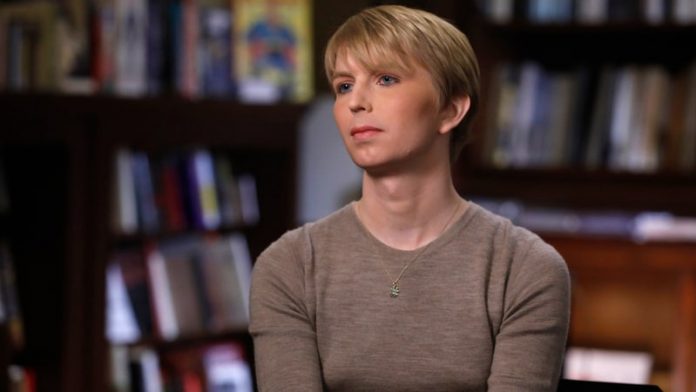
THE BAD RAP: Chelsea Manning

0

On September 22, Chelsea Manning arrived at the St-Bernard-de-Lacolle border in Quebec as a temporary visitor to Canada. However, she was denied entry by border officials on grounds of treason.

Manning Tweeted a document from Immigration, Refugees and Citizenship Canada (IRCC), which appeared to be a report under Subsection 44(1) of the Immigration and Refugee Protection Act. The document reported her to be “inadmissible” due to the charges made against her under the United States Espionage Act.

She was convicted in 2010 of leaking classified American War logs and video clips of Iraq and Afghanistan, which were subsequently uploaded to WikiLeaks by the site’s founder, Julian Assange. She was due to serve thirty-five years in military prison. In January, former president Barack Obama commuted her sentence, but he didn’t pardon her.

She wrote in two subsequent Tweets that the laws cited by IRCC Canada are “not similar at all” to the reasoning in the document, and that she’ll be “challenging [her] denial of entry” at an admissibility hearing.

I have somewhat of a neutral stance on whistleblowers and the leaking of classified documents. On one hand, if the confidential information leaked contains personal details on the general population — such as you and I — then it endangers all of us. However, when one leaks information exposing inhumane and corrupt actions of the government, I’m far less angered by it.

Manning has already apologized for her actions, saying she is sorry that “[her] actions hurt people” and that “[her] issues [were] not an excuse for [her] actions.” Her public stance has shown not only that her intentions were good, but also that she clearly regrets leaking the classified information.

But Manning is not just a controversial figure in the military world; she’s something of a hero to much, though not all, of the transgender community. Making the decision to begin her transition while imprisoned, Manning caused an immense uproar of opinions, both negative and positive, from the public. Plagued by gender dysphoria, she attempted suicide twice. She went on a hunger strike to protest her rights to gender-affirming treatment to treat her gender dysphoria. The surgery was granted to her by the US Military after the American Civil Liberties Union helped her fight.

Transitioning while she was still in prison took guts. Going on a hunger strike after being denied gender-affirming surgery proved that she wasn’t afraid to back down when faced with adversity. Manning is a hero to the transgender community because by fighting for her rights to transition, she was indirectly fighting for the rights of other trans people who are dealing with gender dysphoria while incarcerated.

In 2016, while she was still in prison, the US Defense Department removed a ban that prevented transgender men and women from serving openly in the military. One could say that it was just a happy coincidence the ban was lifted shortly after Manning won her fight for surgery, but I disagree. Manning thrust trans issues into the spotlight, thus forcing American politicians to notice and do something.

Her advocacy for the transgender community hasn’t ceased after being released. She is still a strong advocate for trans rights and a prominent figure in trans issues.

For Canada to be so proud of its stance on gender equality, they sure haven’t done a good job at letting someone this influential to the trans community into the country. She probably would be a splendid addition to the discussion on transgender issues. I wish the Canadian government would stop being so afraid of offending the United States and be defiant for once. Let Manning in, and set an example to other countries that the crime or crimes a person commits does not automatically become their legacy.

I AM ABLE: Bringing visibility to disability

0

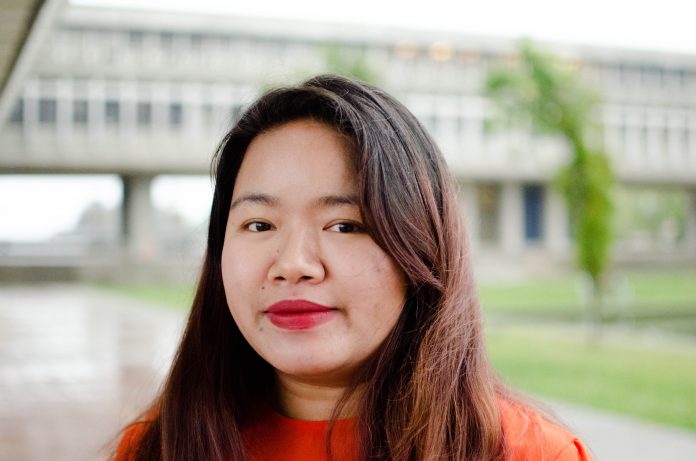
When I first meet Jien Hilario, she’s drinking Starbucks iced coffee and wearing colourful, beaded earrings. She tells me she loves to sing, dance, and write, and is close to her two younger brothers and her church. She’s not exactly the ‘stereotypical’ picture of disability.

Yet Hilario, a fourth-year SFU psychology student, lives with disability in the form of depression, anxiety, and psychosis, a condition that affects a person’s sense of reality. For the past year, she’s been working on an upcoming blog series to speak out about her experiences.

The project started as a joint initiative between the SFU Centre for Students with Disabilities and SFU Career and Volunteer Services. The two departments posted a work position seeking a student to write about and research disability. Hilario jumped on the opportunity, and since then has written over a dozen blog articles for the project. They are being rolled out at SFU’s Online Learning Community.

Hilario was only 12 when she began to realize she was experiencing things that her classmates were not. The next six years were an on-again, off-again battle with her mental health, culminating in a deep depressive period during her transition into university. At age 18, finally, she was given a diagnosis, but her battle continued. From there she began the intensely personal journey of healing her brain.

To medicate or not to medicate? To disclose or not to disclose? To self-identify or not to self-identity? Mental disability can be subject to discourse and debate that physical disability is not. “I had a lot of people telling me different things,” she says. “But I know myself, and I respect other people’s beliefs, so I just have to work with that.”

Unfortunately, Hilario’s story is not an unusual one. Navigating a sea of conflicting cultural and family beliefs about mental health is a process that many students feel like they must go through alone. According to the Centre for Addiction and Mental Health, “[y]oung people aged 15 to 24 are more likely to experience mental illness . . . than any other age group,” while the Canadian Mental Health Association reports that “[s]uicide is the second-most common cause of death among young people.”

In North America, taboos are breaking down, but stigma and misinformation still abound. “People will say medication is unnecessary, that all you need is exercise and a positive mindset,” Hilario says. “But you wouldn’t tell a diabetic person to stop taking their insulin and just think positively.”

October 10 is World Mental Health Day, an annual international movement dedicated to mobilizing and raising awareness for mental health issues. Hilario believes that this awareness can begin with one simple and personal tool: storytelling.

“I would love to hear other people’s stories,” she says. “You don’t have to get as personal as I do — I am a pretty open book — but I think that sharing stories can help other people change their mindsets. Not everyone has a mental illness . . . but everyone deals with their mental health.” Encouragingly, 24% of millennials said they’ve opened up about mental health online or on social media in the past year, according to Ipsos.

Hilario’s blog, I AM ABLE: From Art to Advocacy, an Insider’s View of Students Living with a Disability, covers a range of diverse and sometimes controversial topics from disclosure of mental illness to employers, to a discussion of non-disabled privilege, to volunteerism as an educational tool, to a review for an anxiety management phone app called Mindshift.

“That article was the most fun to write,” she laughs. “It was like writing a diary. I remember I was out clubbing one time, but I didn’t want to dance anymore because my feet hurt. So I sat down in the club and wrote about Mindshift.”

Though Mindshift and its meditation exercises didn’t necessarily work for her, talking to people did. Speaking out is especially cathartic for Hilario whether she does it at her Wednesday night youth group or a potentially unlimited blog audience.

“I know there are people who [are feeling alone] but are afraid to speak out,” she says. “I would say just talk to one person you trust. It doesn’t have to be a parent or a family member — it can just be one person that you know cares about you.”

Mental illness shows itself overwhelmingly in late adolescence, often set off by overwhelming new sets of life stressors that come with the transition to adulthood. This means post-secondary institutions are confronted with a complex question: how should they tackle what Maclean’s is calling a “[student] mental health crisis?” Optimistically, SFU departments across campus are beginning to realize that recognize health and wellness and university success as uniquely intertwined. Hilario’s blog is just one step towards a campus-wide commitment to talking, teaching, and learning about invisible disability.

But at a more personal level, what would make the blog project a success to Hilario?

“One of my lifelong dreams is to change the world,” she smiles. “So if I can change one person’s mind, I’m on my way.”


I think I may have a mental illness — where can I go for help?

If certain thoughts, behaviours, or feelings are impacting your life, it may be time for you to look into the resources and supports available to you. Remember that you can reach out at any time you are ready and comfortable.

SFU Health & Counselling provides one-on-one counselling as well as workshops and drop-in programs on topics like anxiety management, social confidence, and education on mental health.

SFU Centre for Students with Disabilities can help accommodate your visible or invisible disability-related needs with services tailored to you.

YouthInBC.com is an online hotline where you can access free, anonymous, and non-judgemental support and education from a trained volunteer.


How can I improve my mental wellness in general?

Wellness is an intersection of your physical, spiritual, mental, and emotional health. There are many on-campus ways to strengthen and balance each of these areas.

SFU Recreation can help your mind and body thrive through non-competitive sports teams, fitness services, personal trainers, free trial week, and a new ‘Mind, Body, Spirit Pass’ that allows holders to attend several different yoga classes.

SFU Career Services can help ease your anxiety around career concerns by working with you to develop a career strategy and exploration plan.

SFU Volunteer Services can help you gain new experiences and feel a closer connection to your community by providing you with volunteer opportunities.

SFU Peer Programs are student-to-student education and outreach programs where you can participate in anything from faculty-specific mentoring to healthy living education.

SFU Student Learning Commons offers academic strategies for studying, writing, and learning, as well as resources for those who speak English as an additional language.

SFU Interfaith Centre provides you with a safe space to reflect, discuss, and make positive changes through your spiritual beliefs.

SFSS Clubs has 300+ clubs for you to meet peers with common interests.


Editor’s Note: Katerina Cookson is a former employee of SFU Career and Volunteer Services.

Sugar Sammy hosts the Just for Laughs Canadian Comedy Tour

0
(Photo courtesy of sugarsammy.com)

Sugar Sammy returns for a second year to host the 17th Just for Laughs Canadian Comedy Tour. The tour begins on October 13, with stops in Surrey and Vancouver before heading to 10 more cities. This year’s edition also features Alonzo Bodden and Gina Brillon.

     Sammy is not new to hosting large comedy events — he hosted twice to sold-out shows at the 35th Montreal International Just For Laughs Comedy Festival, which he’s performed at eight times. In his home province of Quebec, Sammy is well-known and his ability to speak multiple languages has afforded him the ability to appeal to a wider audience. He starred in a popular sitcom, Ces gars-là, from 2014–16 and although it was in French, it was just as popular with Anglophones.

    You’re Gonna Rire, his bilingual Montreal show, sold out an unprecedented 421 performances and cemented his reputation as a Canadian comedy institution. In total, he has performed over 1,500 shows in 29 countries. It helps that he speaks English, French, Hindi, and Punjabi.

     Joining Sammy on this tour is the winner of season three of Last Comic Standing, New Yorker Alonzo Bodden. With his cynical brand of comedy, he was a favourite at this year’s Just for Laughs festival. Bodden has appeared in Showtime’s Who’s Paying Attention, and has hosted Speed Channel’s 101 Cars You Must Drive and America’s Worst Driver on the Travel Channel.

     On the big screen, he can be seen as a security guard protecting Steve Martin and Queen Latifah in Bringing Down the House and Leslie Nielsen in Scary Movie 4. This is his fourth appearance on the Just for Laughs Canadian Comedy Tour, and anyone Trevor Noah calls “One of the funniest people you’ll see on stage” must be funny.

     Gina Brillon adds her bold, no-holds-barred humour to the mix. Another New Yorker, she is an experienced stand-up artist who is also a published poet and writer. She’s collaborated with Gabriel Iglesias for a one-hour special, Pacifically Speaking, and was also featured in Iglesias’ The Fluffy Movie. On the small screen, she can be seen on Chelsea Lately, Gotham Comedy Live, and The View. Coming up, she will have a recurring role in Kevin James’ Kevin Can Wait.

A little taste of Just for Laughs is coming to town, and we should all take advantage of that. For those of us living south of the Fraser, we don’t even have to trek downtown! I look forward to seeing this talented trio bring their individual comic styles to the west coast.

SFU Surrey campus growth outpacing capacity

1

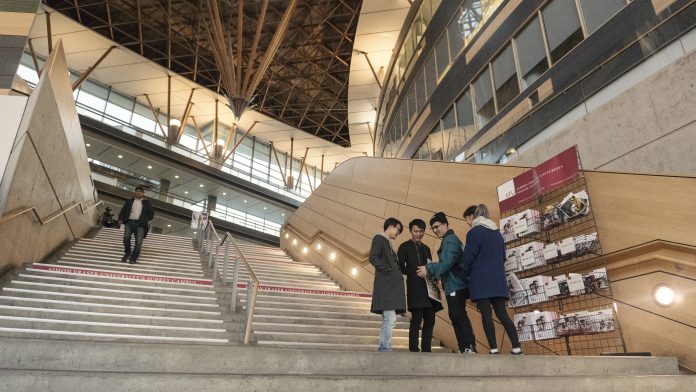
SFU Surrey has been billed the “top priority” for the university as it marks 15 years since it first opened and the swelling number of students, faculty, and programs based at the campus has fast outpaced its capacity.

“It has been a top priority for a number of years,” said Steve Dooley, executive director of SFU Surrey. “I think part of that is because we’re just literally running out of space here at the Surrey campus.”

“We’re bursting at the seams with more and more programs wanting to come here.”

The campus was only built to house around 2,500 full-time students, but it has greatly exceeded that number, according to Dooley.

When the satellite campus first opened in 2002, approximately 500 students were enrolled. However, that number has jumped to 3,100 students who attend classes there full time and a total of 8,000 students who find themselves in Surrey for their classes.

The campus has become the site of ambitious expansion plans as the university looks to increase the amount of full-time enrolment to 5,000 students. The initiative includes three new buildings, two of which have yet to secure government funding.

Last year, the university announced the construction of a new Sustainable Energy Engineering Building, a five-storey expansion to the campus that is scheduled to open in 2018. The building will require a $126-million investment from the school in collaboration with the provincial and federal governments.

The project even brought Prime Minister Justin Trudeau and former BC premier Christy Clark to the campus to make the announcement.

“We’re bursting at the seams with more and more programs wanting to come here.” – Steve Dooley, executive director of SFU Surrey

Surrey is the fastest growing city in the region and is expected to be larger than Vancouver in the coming decades, yet the area is underrepresented when it comes to the number of seats available in post-secondary institutions. It also has its challenges which opens up opportunities for the university to partner with regional organizations to make its mark in the community.

“We like to roll up our sleeves and get involved with our community partners to help come up with solutions to [these] challenges,” said Dooley.

The Simon Fraser Student Society (SFSS) has also recognized that the satellite campus is an area that is experiencing major growth and the changes are having an affect on the burgeoning number of undergraduate students.

“Expanding our investment in the Surrey campus has come up so many times in the past,” said SFSS President Hangue Kim.

According to the latest data available from the university, over 20% of the undergraduate student population takes courses at the Surrey campus. This compares to just over 10% of students who are enrolled in courses at the Vancouver satellite campus.

Earlier this year the society began searching for more student space in Surrey, citing the areas for students to gather and study are not keeping keeping pace with the expansion of the campus.

The SFSS has said it is looking to secure more space on the campus as completion nears for the Sustainable Energy Engineering Building, which will primarily be for students and faculty of a new stream of interdisciplinary engineering.

“The lack of space on the Surrey campus has been a reoccurring issue.” – Hangue Kim, SFSS President

“For years, students have expressed their concern over the lack of study and multi-purposes spaces on the Surrey campus. We have hosted multiple consultations and surveys and the lack of space on the Surrey campus has been a reoccurring issue,” explained Kim.

“We have been in a number of conversations with the [university administration] in the previous years, but have yet to come to an agreement.”

Kim said that the society is still in discussions with the university and does not have a timeline as to when students can see more space on the campus.

“We’re hopeful that we are going to get some type of project underway, but projects like this take time,” he added. “I am hoping that this year is different. This year is the time to take some action.”

Going forward, the university is also hoping to make the Surrey campus more of a hub for students.

“We want to continue to grow our presence and to create more opportunities for students, and faculty and staff,” ended Dooley.  

CLARIFICATION: An earlier version of this article stated that the Simon Fraser Student Society (SFSS) “is looking to secure space in the Sustainable Energy Engineering Building.” The SFSS has clarified with The Peak that it is seeking increased space for students in any existing or upcoming buildings on the Surrey campus, including the Sustainable Energy Engineering Building.

SFU cross country continue their winning ways in Western Washington University Classic

0
While missing Rowan Doherty, the men's side still put up an encouraging performance. (Photo courtesy of SFU Athletics)

SFU’s cross country teams had great performances in the 44th Western Washington University Cross Country Classic hosted in Bellingham in the beautiful (and hilly!) Lake Padden Park. While the women managed to keep their undefeated status, the men had a solid performance, finishing third. This was the fourth race of the season and both teams have three more races to go — Conference Championships, Regional Championships, and National Championships.

The first race of the morning was the women’s six km, and all eyes were on the battle for first that Simon Fraser and Chico State were going to have. Although SFU was ranked slightly higher than Chico State, they hadn’t raced against each other yet this season. Everyone knew that the race was open and anything could happen, especially because SFU was missing an important member in Chelsea Ribeiro.

Chico State had an aggressive start in the race, placing most of their runners ahead of SFU’s top five individuals. The Clan women responded throughout the middle and ending parts of the race, when it really matters, and took a very close win by only two points, finishing with 46–44. SFU’s scoring athletes were led once again by another great performance of Julia Howley who placed seventh overall with a time of 21:49, and was followed closely by Addy Townsend who was eighth with a time of 21:57. Olivia Willett (15th), Miryam Bassett (16th), and Sophie Dodd (28th) were SFU’s remaining scorers and also had a crucial role in bringing the win to the Clan.

On the men’s side, although always optimistic, the expectations were lowered substantially since they were lacking their top runner Rowan Doherty due to the flu. Chico State took the team win with an impressive score of 17, placing six of their athletes in the top 10 overall. SFU placed third behind Western Washington, but had a solid performance given the fact that they were missing Doherty.

The first SFU athlete to cross the finish line was Oliver Jorgensen with a time of 31:49 and 12th overall. He was directly followed by Sean Miller, 13th, with a time of 31:54, and Mateo De Dalmases, 18th with a time 32:17. Carlos Vargas (39th) and Chris Sobczak (45th) were the remaining scorers for the men.

Undoubtedly, one of the highlights of the men’s race was Jorgensen’s outstanding performance, who is showing great improvement at every race and practice. Jorgensen has been struggling with injuries that have stopped him from being at his prime for the last two years. It is no secret that the men’s chances of making nationals are heavily reliant on Jorgensen’s talent and injury status in the Regional Championships. The fact that he is doing better is a priceless confidence booster for the entire team.

Both cross country teams will be back in action on October 21 for the Great Northwest Athletic Conference Championships in Bellingham.