Home Blog Page 481
0
Illustration by Joy Tian

Illustrated by: Joy Tian

We all had that wonderful TA that saved the year for us. Remember when your lecture notes looked like gibberish to you until that TA turned it the right way around? Or how during chem lab, the TA looked the other way when you recovered 10 times more mass of the substance then what you originally started out with? 

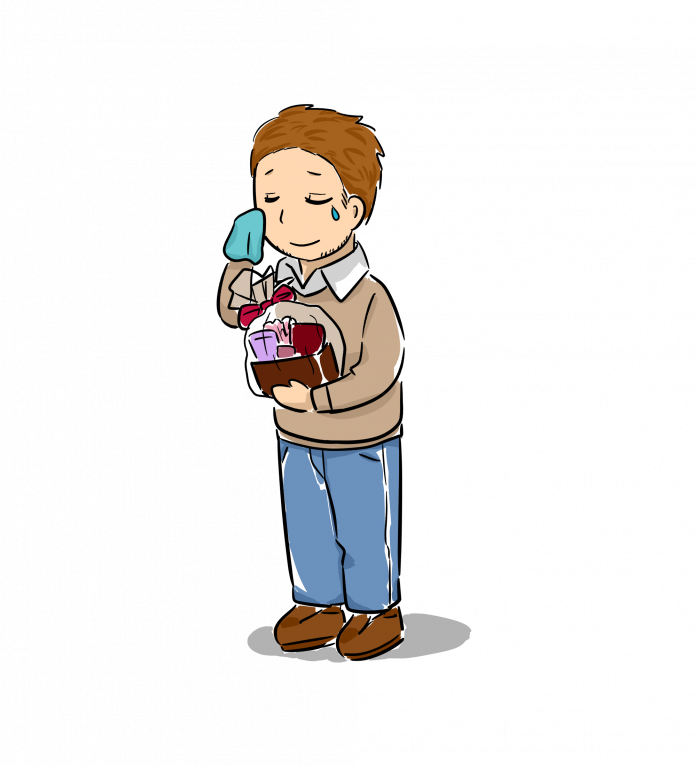
Good TAs are the heroes we lowly undergraduates do not deserve. But they’re also the heroes we need, because as anyone who’s done a “gatekeeper” class knows, sometimes the TA is the only thing standing between you and the shame you will bring to your parents. So in honour of their most valiant efforts to make sense of our half-assed 4 a.m. rambling papers, here is a meaningful gift basket you can get your TA to thank them.

It includes: 

A picture of the sun

Very handy in winter when your TA gets to campus before the sun rises and leaves after the sun sets. Have your TA hang the picture in their basement lab deep within the bowels of the AQ so they can remember what natural light looks like.

Thesis pillow

Help your grad student TA better understand their feelings about their thesis by giving them a thesis pillowcase. Filled with printed drafts of their work, they can abuse the pillow when feeling like an incompetent fraud and hug it when feeling like the most brilliant genius to have ever lived. As a bonus, they can then use that pillow to sleep in their office and/or lab so they can get more research done and make their supervisor happy. 

Generate data button

Press to generate useful, relevant, and clean research data that proves your hypothesis to make your supervisor happy.

Candy

To bribe people into participating during tutorials.

Markers

Because SFU never has enough markers that work on the whiteboards and overheads in tutorial rooms. 

Their supervisor’s child’s phone number

This is borderline stalking, but can you think of a better person for the grad student to voice their issues to? You would give your favourite TA a lobbyist towards their supervisor that cannot be ignored. Bonus if the kid is a university student as well who can better understand the pain.

Go Away shirt

You know how TAs have to answer the same question over and over to those students who don’t attend class or read stuff on Canvas? Questions like “When is the midterm?” “Which readings do we have to do?” or “How come the professor doesn’t know how to use YouTube?”

Help your TA deal with these questions by getting them a shirt that says “did you even go to lecture?” on one side and “check the syllabus” on the other side. That way, your TA can simply point to their shirt when students come in person with those type of questions. 

Actually become a good student

Ironically, the best gift you can give your TA is to actually study and to do your work properly. This way, they can do their marking faster (since it’s easier to mark things correct rather than marking them wrong and then looking for partial marks), you get better grades, and everyone is happier. The only issue? This involves you actually becoming a better student and studying harder so it’ll probably never happen.

De Adder’s termination shows that corporate interests in media are a Canadian problem too

0
The cartoon believed to have contributed to Michael de Adder's termination at BNI. Illustration: Michael de Adder/Twitter

After 17 years of drawing for Brunswick News Inc. (BNI), Michael de Adder was let go soon after sharing one of his cartoons on his personal social media. The cartoon drew mixed reactions for featuring Donald Trump golfing beside the bodies of two fallen Mexican migrants. 

Or at least that’s the cause for termination that de Adder himself has shared on Twitter and during interviews, citing BNI’s failure to provide a clear alternative reason for his termination. BNI, meanwhile,”vehemently denies” this in a published statement, claiming that they had been taking steps to replace de Adder for weeks. This is something that editorial cartoonist Greg Perry has corroborated, though Perry told CBC News he was never told that he was slotted to replace de Adder specifically. 

BNI’s official statement regarding this paints de Adder’s statements as “a reckless and careless spread of misinformation [ . . . ] in an era of fake news.” (Never mind that de Adder is an individual, not a news or media organization, but I digress).   

BNI owns all of New Brunswick’s English-language daily papers, as well as most weeklies. The company is owned by the Irving family, which is extensively tied to other business interests in the province as well as in the United States. In 2008, a Senate committee on media integrity raised concerns about the Irvings’ monopoly on New Brunswick’s media, noting a resulting pro-Irving (and pro-business) tinge from their reporters. Continuing perceptions that Brunswick News Inc.’s corporate links limit its editorial independence make it especially alarming that de Adder claims he had suspected in the past that his Trump cartoons weren’t well-received by his editors.

De Adder’s national (and now international) reputation and the attention he drew to BNI brings to light the fact that Canada’s media is not as untouchable and pristine as we might expect or like. This might seem insignificant, since de Adder’s termination is now at the “he said, she said” stage. However, I would argue that we should be attentive to the fact that one of the country’s leading and most published cartoonists might so much as be feeling the pressure of editorial censorship. 

As someone who’s been in the belly of the beast, de Adder is in a unique position to speak from within BNI. What he’s telling the rest of us is uncomfortable and worrying.

It might also become easy to ignore this blip in Canadian media because of the strenuous pressure and more blatant attacks faced by journalists elsewhere. The fact that our federal leader isn’t an honourary woodpecker on Fox and Friends like one not-to-be-named Commander-in-Chief is definitely encouraging, but let’s not pretend that Canada’s media is immune to censorship and corporate intrusions. If nothing else, de Adder’s termination draws attention to the complexities and flaws of our media in a time when it’s easy to look at our borderline dystopic Southern neighbours and take the win by default. 

Heading into a federal election, Canadians should be especially concerned with the integrity, strength, and diversity of our media. We should also recognize the importance of our smaller, local media organs that will report on local issues, and be mindful of their own limitations and origins as well. 


SFU Lifeline raises concerns about misrepresentation to SFSS Board

Photo via Facebook courtesy of SFU Lifeline

Editor’s note: Previously, this piece featured quotes attributed to Lily Moric. However, The Peak has been unable to verify these quotes and have removed them accordingly.

On July 11, SFU Lifeline members gave a presentation at the SFSS Board Of Directors meeting concerning the Board’s plans to assert its pro-choice stance.  According to SFU Lifeline vice president Lily Moric, the presentation was given to address concerns they had about the possibility of the SFSS removing their club status. They referenced a previous Peak news article reporting the SFSS’ discussion on adopting a pro-choice stance as a society.  

During that discussion, SFSS president Giovanni HoSang stated the importance of the board actively enforcing a pro-choice stance through policymaking. 

According to the SFSS’ club directory, SFU Lifeline’s mandate is “[advocating] for pre-born children whose human rights are violated by abortion.” 

At the meeting, SFU Lifeline confirmed their stance on abortion with a club representative stating that “as a club we take the mandate that abortion should be illegal [ . . . ] in every case.”

SFU Lifeline expressed concern about the SFSS asserting their pro-choice stance through further policymaking, which is currently set out by the Women’s Centre’s mandate. 

Members expressed concern that if this policy is emphasized, campus will be made a less safe environment for women, citing harassment that some of their members had faced because of their pro-life view. They highlighted one of their recent welcome meetings where signs they described as offensive and vulgar had been set up in the room as an example of why campus would be less safe.  

In the presentation, SFU Lifeline president Lois Umali clarified that they are not a religiously affiliated club. The presentation emphasized that the 2012 Genocide Awareness Project, which showcased enlarged images of aborted fetuses and had been previously brought up as a concern by board members, no longer represented how SFU Lifeline operates as a club. 

SFU Lifeline instead introduced a new project that they are working on called the Bloody Sexism Project, which features a banner with the quote, “92% of Canadians disagree with sex selective abortion; what’s your opinion?” According to SFU Lifeline, this banner is meant to incite dialogue, with members attempting to engage with the opinions of students who walk past.

During the question period after the presentation, Osob Mohamed, health sciences representative, inquired about SFU Lifeline’s views regarding the legal status of abortion. Mohamed referenced a Supreme Court decision in R. v. Morgentaler, 1988.

“A right to abortion was in the Charter. . .  [the Supreme Court Judges decided] that it is a fundamental part of the Canadian institution and [making it illegal] violates the security of the person,” Mohamed stated, basing her words off of the court decision. 

In response, Moric stated that they would question what the charter considers a human life. 

No resolution was reached as the discussion came to an end. The discussion was cut short by at-large representative and acting chair Rayhaan Khan due to shortage of time.

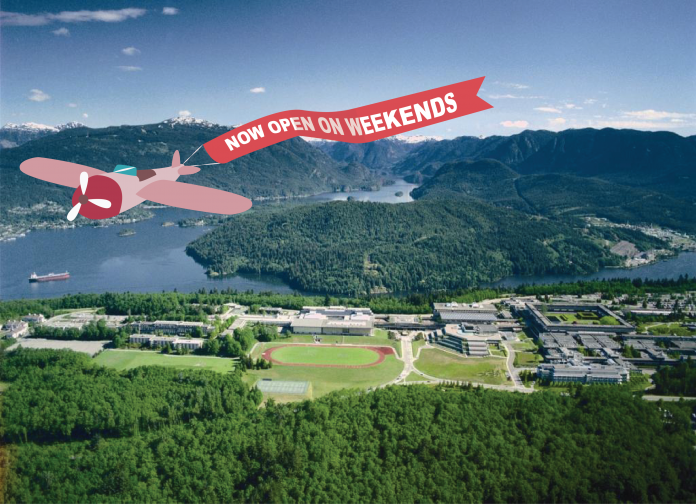
What SFU Needs: more services open on the weekends

0
This is the future SFU dorm kids want. Illustration: Marissa Ouyang/The Peak

Do you like going to SFU on the weekends? Of course you don’t — it’s empty, nothing’s open, and you didn’t ask for a ghost campus when you paid your tuition. But students on residence are at SFU 24/7. This unfortunately means that they see SFU and SFSS services like Health and Counselling closed, the Fitness Centre’s hours reduced, and half the eateries on campus completely shut down come Friday. We have a whole section of mountain called “UniverCity” — are we really asking our residence kids to bus down the mountain to avoid being shut-ins on the weekend? 

WHAT WE LACK

  • Weekend hours for the Burnaby campus Health & Counselling
  • Extended weekend and holiday hours for cafeterias like Mackenzie Cafe and MBC Food Court, so that Cornerstone and Dining Hall aren’t the only dining options left 
  • Longer Fitness Centre hours for people who don’t have time in the working week to exercise
  • An art gallery that is open for more than three days out of a week
  • A student hub that’s open at all (looking at you, SUB) 

THE VISION

Introducing the Services Every Weekend (SEW) initiative, which will stitch our campus community together with a wide array of available services, seven days a week. Of course, this will mean a higher demand for SFU’s workforce, but we will be creating jobs as well as ensuring that more SFU students are getting what they need right here on campus. That means SFU students getting treated for injuries and seeing counsellors on the weekends, because sicknesses don’t stop after Friday. More students leaving their houses and dorms to actually hang out around campus, to see an art exhibit, enjoy a broad dining experience. More incentives to be at SFU other than just school.

WHY WE NEED IT 

With all the residence buildings and condos sprouting up on Burnaby Mountain, there’s got to be hundreds of students stuck here every weekend. These students are desperate to get out of their dorm rooms. And surprisingly? They don’t want to spend every weekend of their uni years at the Dining Hall, Tim’s, or Starbucks. In addition, sickly and bored students shouldn’t need to commute off-campus to be relieved of their ailments. With more options and services right here on the mountain, SFU can finally start to have some semblance of community up here. SFU is already a commuter campus, and doesn’t have the most vibrant student life. With more services available on the weekends, students have incentives to get out of their caves once in a while, walk about, and help foster a campus life worth sticking around for.


Where are Black women in SFU politics?

0
Ebuka Okafor/The Peak

[25/07/19]: This story was corrected from an older version. Corbett Gildersleeve was identified as an SFU alumnus and a co-organizer of the event. Gildersleeve is an SFU alumnus who attended the event to show his support. 

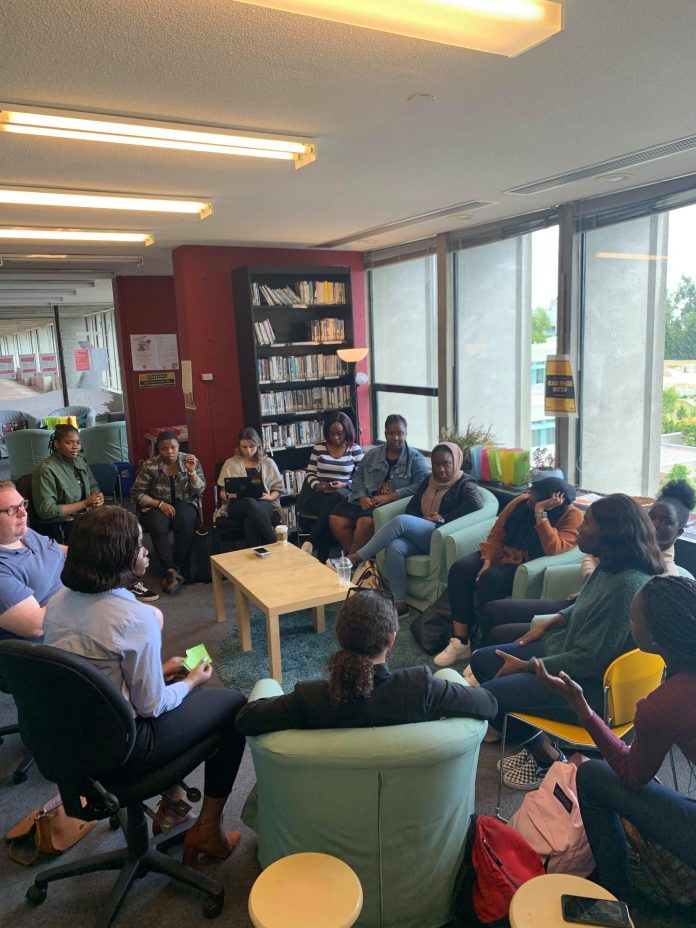
On June 20, Stephanie Chiakwelu, SFSS at-large representative 2019 candidate, brought forth a dialogue-based event that tackled the lack of representation of Black women in SFU politics. Open to the public, Chiakwelu eagerly welcomed both students and non-students to sit down and discuss the topic of young Black women leaders.

The event emphasized several issues of underrepresentation of Black students in SFU’s political sphere, with one of the main focuses being the problem of inaccessibility to political platforms. Chiakwelu and various attendees agreed that the lack of awareness was another big factor, as many young Black students aren’t often reached out to in terms of elections and the inner workings of student unions.

“Sometimes [we] feel like these spaces are not open to us,” said Chiakwelu, explaining that she felt the least involved during her run for the SFSS as she had barely any prior experience compared to other candidates.

Chiakwelu hoped to brainstorm ideas to get more Black students involved in SFU political positions, including how to find feasible media platforms to reach out to these individuals. A common agreement amongst the attendees at the event was that a big problem within the SFU political sphere was nepotism. Particular skill sets seemed to matter less when it came to public projects, as connections and social networks came first. To combat this, Chiakwelu proposed to create a stronger network of Black students, where everyone could share resources and recommend each other for opportunities. 

“You need to figure out what you want to do. . . You have to be proactive and seek stuff out, but it is hard to find these things,” said Corbett Gildersleve, an SFU alumnus in attendance.

Hoping to use his extensive experiences in various SFU positions to help prepare those wanting to get involved, Gildersleve introduced a few key points about preparing oneself for leadership roles. These included learning soft skills such as public speaking and conflict resolution, as well as building on patience.

The event concluded on an encouraging note, as Chiakwelu expressed her hope to form a group out of the meeting in order to take the first step to change.

What Grinds Our Gears: Aesthetically-pleasing seating that further wrecks my spine

0
This is not the chair I choose to die on. Illustration: Marissa Ouyang/The Peak

I don’t know how everybody else teaches themselves entire classes off of Canvas syllabi or churns out essays, but I prepare for war. 

I sit down with my coffee, my playlist, a pile of library books, and a selection of pens. When I flip to a new page in my notebook and open a fresh Word document, oh, it’s on. I will sit down for hours and hours and work obsessively until I’ve made some decent headway. The problem with this set-up is that if you’re stuck with uncomfortable seating, you will never get up again after your mental marathon. 

For whatever reason, Burnaby campus is plagued with savvy-looking but uncomfortable seating. What’s with all the trendy stools that leave my feet hanging? What are these low-sofa situations? Why are the chairs in the James Douglas Study Area just confused patio furniture? What’s with all this seating with no back support? How did this chair even get broken? And who decided on those weird furniture combos where you can’t reach the table when you sit on the chair? 

These questions keep me up at night and also come up time after time as I search for the promised land of “more student spaces” that gets whispered about every now and then . . .  only to find study areas that look cool, but don’t provide a comfortable and usable space. If study places aren’t comfortable spaces for me to sit and work, how am I supposed to use them to study? 

While lack of study space is itself a huge problem on campus, I think that a lack of comfortable and functional study spaces is just as problematic. I don’t personally have any accessibility needs, but I can see a lot of these study spots being inaccessible as well, which ultimately is an even bigger concern than this grandma’s whining. 


SFU’s vibrant cycling community rattled by death of cyclist on Burnaby Mountain

1
Chris Ho/The Peak

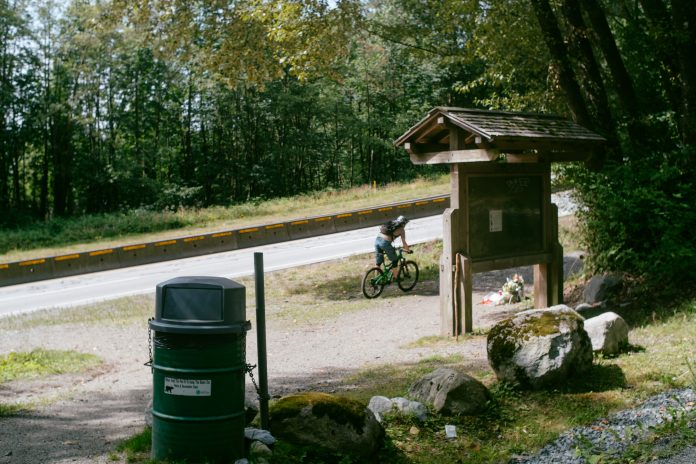
SFU’s Burnaby campus and its cycling community was shaken by the death of a cyclist last month on Burnaby Mountain. On June 29, Charles Masala, 53, passed away while riding his bicycle at Gaglardi Way and University Drive East. Masala was a well-known local engineer and father of two. In light of the unfortunate tragedy, The Peak spoke to members of the SFU community to discuss cyclist safety on Burnaby Mountain.

 “While the recent tragic cyclist accident occurred off-campus and does not seem to be linked to members of the SFU community, the safety of our community members is very important to us, and Safety & Risk Services is reviewing cyclist safety practices on Burnaby campus,” said Angela K. Wilson, SFU’s senior director of media relations and public affairs. “SRS has a role in promoting campus safety, [and] that includes traffic safety, which includes cyclists as well as pedestrians. SFU’s land area of responsibility is within and including the Burnaby campus perimeter ring roads, outside that area would fall under the City of Burnaby’s jurisdiction.” 

Under the Motor Vehicle Act, cyclists are governed by the same rules as vehicle users in terms of road usage.

“We will be reviewing the recent crash to identify the factors that led to it and any immediate changes that may be required,” said the City of Burnaby in a statement to the Burnaby Now. The city currently has no plans to add protected bike routes on Gaglardi Way or University Drive.

While both the City of Burnaby and SFU are reviewing the incident to determine if there are necessary changes to be made, SFU’s vibrant cycling community was shaken by the death of Masala. They, too, have been given reason to reflect on the safety of a cycling commute to and from campus. 

“It hasn’t been as safe as it could be,” said Melanie Hiepler, a world literature student. “[ . . . ] I’ve had a few close calls. One particular encounter with a dump truck comes to mind: it was going extremely fast, and it passed by so close that I could have touched it. Buses are also a concern sometimes.”

The Peak also spoke to various SFU professors who are part of SFU’s cycling community, such as Dr. Ben Adcock, a professor in mathematics, who noted that the accident “gave him a lot of pause.”

“That one hit quite close to home because I did cycle that way quite a lot. It’s fairly steep [and] it’s possible to go pretty fast,” Adcock said. 

“What’s meant to be the bike lane going down is nowhere near wide enough. When I cycle down Burnaby Mountain, I tend to take a whole lane by myself, especially on Gaglardi, which is faster, and there’s more traffic,” he continued. “After this person was killed, there was a call for a proper separated bike lane [in a local paper], and that absolutely needs to be there.” 

Another professor in the department of mathematics, Dr. Amarpreet Rattan, finds riding down Burnaby Mountain scary. “I don’t like to go too fast. I ride braking a lot on the way down. The place where I feel least safe is actually on [Burnaby Mountain]. There’s a few spots when you’re going up the hill, where traffic comes quite close to you.” Rattan said. 

The proximity of traffic to cyclists was a recurring concern among members of SFU’s cycling community. Mathematics professor Dr. J.F. Williams pointed out that changing car designs have actually made roads less safe for cyclists and pedestrians. 

“[There are] more SUVs, bigger vehicles, more vehicles that have limited visibility, that are designed to protect the passengers of the vehicle at all costs,” says Williams. “The number of people killed on the roads is more or less constant in the past decade in the U.S. The partition has really changed though: people in cars are safer, people outside of cars are less safe.”

Williams also suggested that although the cycling infrastructure in Metro Vancouver has improved, much of it “was clearly laid out by people looking at a map who weren’t necessarily cyclists,” adding that he found it to be “very clear [ . . . ] that whoever designed this has never ridden a bicycle.” He also noted that Gaglardi Way is very narrow and it would be expensive to get a separate bike lane. 

Despite the cost, Hiepler agreed that separate bike lanes are one way to improve safety. 

“Gaglardi Way is narrow in some places, which puts cyclists very close to vehicle traffic. Factor in wind and vehicles’ excessive speeds, and it can quickly feel scary,” she said. “Some drivers are very courteous and move into the left lane when they pass me, but many just whiz by. I often don’t hear them coming, so it’s startling. Separate protected bike lanes would make for a much safer commute.” 

Protecting cyclists is an issue beyond SFU as well. The Peak spoke to Amelia Potvin, Executive Director of the Greater Victoria Bike to Work Society, about basic cycling safety. The society is a non-profit that promotes cycling as a means of transportation, including providing courses on urban cycling skills and safety.

“The concept of sharing the roads with vehicles is quite complex,” said Potvin. “The key principles of safe cycling, we break them down to MVPC. Maneuverability, visibility, predictability, and communication.” (see below)

With regards to cycling on a mountain, such as at SFU, Potvin suggested that cadence, or the speed of a cyclist’s pedaling, is really important. “You want to keep that up to a fair pace, because as soon as you start to not pedal fast enough, you become less stable and you lose balance a little,” she said.

However, Potvin added that the responsibility should not solely rely on cyclists, who are the more vulnerable ones on the road. 

“I think it’s also important to flip this conversation onto the responsibility of motor vehicle drivers,” she argued. “After all, the cyclist does have the right to use the road [and] it’s the motorist’s responsibility to pass safely. It’s important for motor vehicle drivers to also understand their responsibilities and the risks they’re taking by driving at high speeds.”


THE 4 BASICS OF BIKING

According to Amelia Potvin, the Executive Director of the Greater Victoria Bike to Work Society, basic cycling safety can be broken down into four principles.

Maneuverability

  • Leave your options open so that you can maneuver to avoid potential hazards.

Visibility

  • See and be seen.
  • The Motor Vehicle Act requires that you have both rear and front lights.
  • Wear reflective elements to help yourself be seen.
  • Make sure you have sightlines and that you are well-positioned to see along the sightline, to navigate and negotiate traffic conditions.

Predictability

  • Follow the rules of the road.
  • As a cyclist, you have the same responsibilities as other road users–they need to be predictable.
  • Be aware of body language and avoid impulsive maneuvers.

Communication

  • There are many ways to communicate with other road users, including pedestrians.
  • Shoulder-checking, signalling, using voice, using a bell, and eye contact are all means of communication.

 

Addressing student well-being must account for the burdens of student life

0
Yoga and puppy therapy are nice . . . if you have the time to spare. Photo: Andres Chavarriaga / The Peak

It’s a common refrain, meant to be a balm on the stressed souls of university students: don’t forget to take some time for self-care. Public health campaigns urge students to make time for exercise, meditation, and puppy therapy. We’re cautioned to visit the doctor as soon as we feel something may be wrong, and told to remember to take a break every hour from our sedentary studies to stretch.

Don’t get me wrong, it’s great that the university has an active interest in the health and well-being of its students. However, with the way the university system itself is currently structured, these efforts amount to platitudes next to the systemic pressures faced by post-secondary students.

It is often hard for university students to take time out of their study schedules for self-care. The university recommends that students devote two to three hours of studying outside of class time per unit, per week. So a student taking the minimum nine credits each to qualify as full-time would usually clock nine hours of in-class time, plus an additional 18 to 27 hours of studying. This means at least 27–36 hours total — a figure that is obviously much higher for students taking more than three classes, classes with a higher unit count, or classes with more demanding coursework. 

To be fair, it isn’t always necessary to put that much effort into studying in order to graduate from SFU. However, for students who rely on scholarships or need competitive GPAs for graduate school, such a studying schedule is not just suggested; it is mandatory. 

Other hidden time sinks in university include the daily commute, which most students at our widely dispersed commuter school are familiar with. Similarly, students’ time is also crunched by the hours they need to work to meet the cost of living, which even student aid doesn’t necessarily fund adequately. Most post-secondary students in British Columbia must devote some number of hours working each week to make ends meet. This also does not include volunteer or social hours.

In short, it comes down to a choice: do you spend your time on becoming successful in university, working to pay for university, or on meditative yoga? Looking at the options, it’s easy to see why students may not feel able to prioritize their mental or physical health.

When students are forced to take time to visit a doctor for an ailment, the necessity of providing proof of illness via a doctor’s note can also be problematic. Setting aside the cost of obtaining a note from clinics and specialists off campus, there are limits to how useful this may end up being. Many students operate on tight schedules, and pushing assignments back a few days, even to recover from an illness, typically means a doubling of the subsequent week’s workload. This also assumes that the illness takes place outside of the end-of-semester exam period when professors are more restricted in how much time they can offer in extensions, given their own deadlines for submitting grades.

At this point, students have the option to withdraw under extenuating circumstances (WE), but this, like any other withdrawal, involves quitting the class entirely. WE also only applies in cases of extreme hardship, and requires WE office approval. This could potentially affect student aid and scholarships, and requires additional paperwork to apply for a tuition reimbursement. It also extends the length of time a student is in school, as it would require those classes to be retaken. 

Additionally, the need to provide proof of illness via a doctor’s note does not necessarily account for the exhaustion and anxiety created by carrying the emotional load of a personal illness. Stress has been proven to interfere with learning and memory, but these secondary characteristics of an illness or injury are harder to capture in a doctor’s note describing a single event. 

Thus, it doesn’t matter if a doctor’s note buys a student a week of recovery time. It still doesn’t address how performance may have been affected leading up to or following the recovery, especially if treatment was delayed or is protracted. Students lucky enough to have an understanding professor may have this additional burden of illness accounted for, but this is hardly codified university policy.

In short, the academic and financial burdens carried by university students make it such that they may be less willing or able to prioritize health and well-being. The efforts made by SFU to promote better mental and physical health among its students don’t adequately address these structural barriers. Thus, while well-meaning, students may ultimately end up being more stressed by trying to fit these additional elements into an inflexible system. 

This is unfortunate, as university is only a temporary state, while the experience of living in one’s body lasts a lifetime. 


Burnaby campus security heightens after student reports assault

2
Police sketch of suspect, courtesy of Burnaby RCMP

SFU’s Burnaby campus community is on high alert due to an incident on the evening of July 14. 

According to alerts issued by SFU News and by Burnaby RCMP, a 19-year-old woman was walking in the forested area on the northwest side of campus, near University Drive West and West Campus Road, when she noticed an unknown man following her. He approached, tried to engage her in conversation, then tried to grab her hand and pull her into the bushes. 

The student was able to escape and ran to the parking lot of the nearby Horizons Restaurant, where she sought help from others. She reported that the suspect followed and continued to try and engage with her, before leaving in a grey or black Acura vehicle.

Burnaby RCMP released a sketch of the alleged perpetrator, and described the suspect as a “South Asian male, approximately 19-23 years old, 5’9, brown eyes, and wearing a black turban, blue long sleeve shirt, grey sweat pants and black sandals.”

In light of the incident, signs were posted around campus and on nearby trails, alerting community members about the assault. According to a report by CTV News, SFU has also increased security presence around campus. 

Burnaby RCMP asked that anyone who might be able to identify the suspect or who may have additional information about the incident,  contact them at 604-646-9999 or Crimestoppers at either 1-800-222-TIPS or www.solvecrime.ca.

Resources for students 

In the event of an emergency situation on campus, SFU recommends calling 911, and/or the campus security emergency line at 778-782-4500. If the phone call is made from one of the direct-line security phones or blue emergency phones located around campus, security will be able to immediately know the caller’s location.

SFU also currently provides a 24/7 service called Safe Walk, where students can be accompanied by campus security to their destination anywhere on Burnaby campus, within a two-block radius of Vancouver campus, or to nearby bus stops on Surrey campus. To request a Safe Walk escort, call the Campus Security non-emergency number at 778-782-7991

Students who wish to access counselling and support services can call SFU’s Women’s Centre at 778-782-3870, SFU’s Health & Counselling Centre at 778-782-5781, or SFU’s Sexual Violence Support and Prevention Office at 778-782-7233. 

Panhandling fines in Salmon Arm make things worse for B.C. homeless population

0
Vancouver has the potential to be a great city, but not while our homeless numbers are in the thousands. Photo: Jon Hernandez/CBC

Step a few blocks outside of SFU’s Vancouver or Surrey campuses, and Metro Vancouver’s homeless crisis becomes painfully obvious. 

The uncertainty of living day to day without stable housing is stressful enough. Yet by-laws have been introduced to punish homeless people further, like the recent $50 fine in Salmon Arm (the latest region to enforce B.C.’s Safe Streets Act) for panhandling curbside, within 15 metres of a bank machine, in a car, or within a public plaza. 

Instead of squeezing money from those who might not even have it, we need to focus on finding permanent shelter and housing solutions for our city’s homeless population. The way Vancouver displaces its homeless population is a large stain on our collective conscience, and we need to demand more of our local and federal leaders to address this issue. 

Currently, no vacant housing units are renting for under $750 in Vancouver, suggesting a strong link between homelessness and the expensive housing market. While B.C. is investing in rent subsidies to offset the expensive rental rates, these programs are geared toward seniors and low-income families, and aren’t enough to permanently house the number of homeless people in the city. As of June 12, 2019, Vancouver had a homeless population of 2,223 people. 

We also need to acknowledge that Indigenous people are over-represented in the 2019 count: despite only accounting for 2% of the population in Vancouver, more than a third of people counted in the total number of homeless people identified as Indigenous. 

Kennedy Stewart, Vancouver’s mayor, praised the provincial government’s $66 million investment in creating temporary modular housing units, but urged the federal government to pitch in as well. Since October of last year, the federal government has contributed only $300,000 for low-income housing in Vancouver. But the homeless crisis is increasing so rapidly that just to keep up with the ever increasing number of homeless people, Vancouver would need 1,000 new units a year. 

What does it say about our city that year after year, Vancouver is less and less affordable for its residents to live in? That rather than ensuring safe accommodations for the people who cannot afford absurd housing rates, we allow them to slip through the cracks? It says that as a society, we have a baseline for who deserves to live comfortably, and who we are comfortable evicting and endangering. 

This is unacceptable. We must demand that federal action against our inhospitable housing market be a priority in the upcoming election. We must ask our federal leaders to pledge to secure more funding to permanently house B.C.’s homeless population so that we can finally proudly say that the West Coast is the best place to live for all people.