
Home Blog Page 435

SFYOU: Leo Dittmer, RADIUS, and Neighbourhood Resilience

0
Photo: RADIUS "We have a tagline: a home away from the neighbourhood."
Photo: RADIUS

Editor’s Note: This interview was done prior to COVID-19 quarantine measures.

Name: Leo Dittmer

Pronouns: He/him/his

Department Affiliation: Faculty of Environment: Human Geography

Hometown: Clavet, Saskatchewan

Favourite bird: “Chickadee. My grandparents had them at their farm and they had a really big window in their living room so I would just sit in the window and look at the birds.”

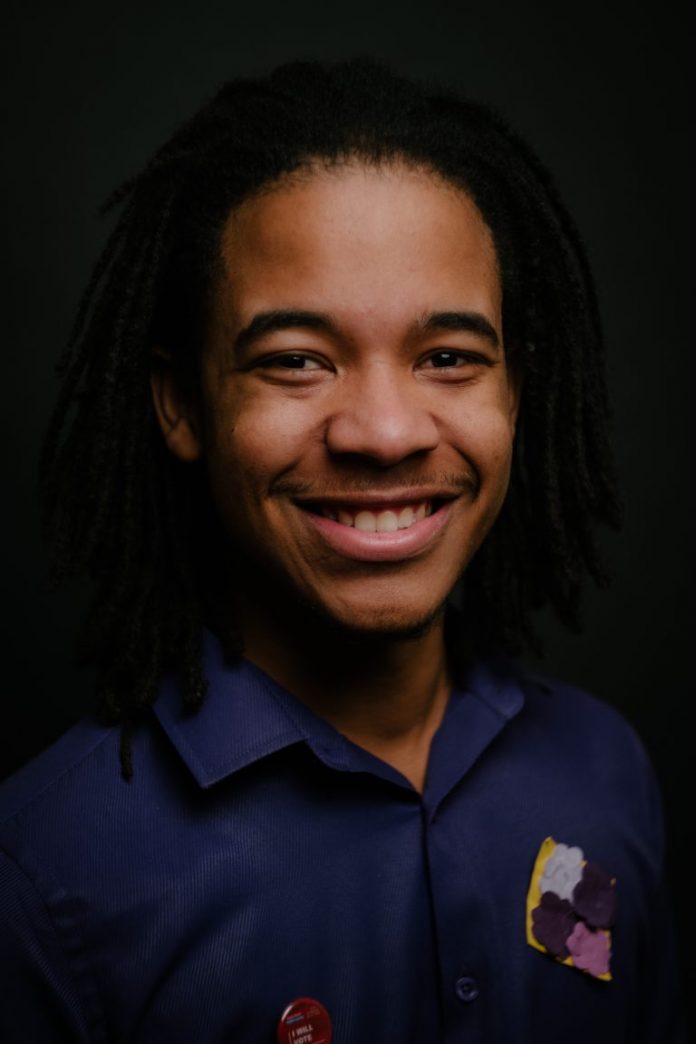
I sat down with Leo Dittmer to learn more about his experience being enrolled in the RADIUS SFU program this semester. The first thing I noticed was that he was wearing a great shirt with small printed roses all over it. He had just gotten Veggie Lunch in MBC and had come to the realization that perhaps he should have heeded the warning of the person serving him that the spicy sauce was quite hot. His laugh was exuberant, which was delightful to hear.

Dittmer is an undergrad in human geography, though he switched majors from interactive art and technology (IAT). He was at Langara College when he took an urban geography course that really set off his passion for it.

“It was really cool to understand why humans have made cities and why we live the way we do, and how sometimes the way we live doesn’t work for us but we still live like that [ . . . ] It’s also an interesting topic because more and more people are living in cities.”

I recently learned about RADIUS and got curious. According to their website, RADIUS is a “social innovation hub based out of the Beedie School of Business, SFU, and located in the heart of Vancouver at the Charles Chang Innovation Centre.” Their mission is to run “programs to collaboratively develop, test, and accelerate innovative responses to tough social problems.” 

The specific program that RADIUS runs which Dittmer is in is called the Civic Innovation Change Lab (CICL). The ideal applicants from SFU are third or fourth year students in any department. This semester they included people studying a range of subjects from health science to gender studies, and even one who wasn’t previously an SFU student. The CICL is meant to help students develop and implement real solutions to existing problems.

Every semester’s CICL has a different theme. Just last semester, that theme was Neighbourhood Resilience. Along with Dittmer, there were 13 others who were accepted into the cohort.

When asked about his experience, Dittmer states: “Coming from what is literally classified as a village, it’s really interesting to learn about cities. It’s so cool.” He adds with a laugh, “Stars in my eyes.”  

Given his passion for cities, the CICL, and specifically this semester’s topic of Neighbourhood Resilience, appealed to him. He heard about it from a friend and since he was interested in business, decided to apply.

“I thought that [experiential] learning would be cool. I’d also contemplated taking some business courses [ . . . ] It’s not super business focused but [ . . . ] you do want to create a project that could fund itself.” 

He expands, “The topic [ . . . ] is something that comes up in geography a lot. I had just taken GEOG 312 Geography of Natural Hazards and we talked a lot about resiliency and how people can recover from natural disasters [ . . . ] I thought it would be cool to do something [with] this.”

Dittmer explains what neighbourhood resilience means by explaining that the City of Vancouver’s neighbourhood resilience plan is intended to help “neighbourhoods to recover or bounce back from long-term shocks and things like that. Also [ . . . ] short-term shocks and everyday stressor type things, like affordability, racism, loneliness.”

The idea that Dittmer’s group (one of four groups in his cohort) is working on is called the Neighbourhood Clubhouse. “We have a tagline: a home away from home for the whole neighbourhood.” The idea is to have a kind of semi-open, semi-private space in a neighbourhood where people can drop by, hang out, and meet each other.

Their inspiration came from doing “a really big survey that got a lot of attention. Over 200 people filled it out. And we did a bunch of in-person interviews and research.”

Dittmer was concerned about a survey conducted on the people in Vancouver. “We found that [ . . . ] over 80% [of people in Vancouver weren’t] close with a neighbour of theirs.” 

Dittmer believes this is important because “neighbourhood resiliency is really important for disaster recovery. And also just makes your life better. That’s one of the hard things about the Lower Mainland. People are so spread out and so far that [ . . . ] if you can know people in your neighbourhood and be like, ‘This is somewhere I belong and I know these people and I can talk to them,’ — that’s something that really helps.”

And Dittmer can relate. I ask what his thoughts are on his own hometown of Clavet in light of all the geography courses he’s taken and he jokes, “I don’t know why anybody lives in a village.” 

Following this, Dittmer then gets serious and admits one of the things he misses is being physically close to the people he cares about. “There are people I care about in the Lower Mainland, but everybody lives all over.” 

On how the Neighbourhood Clubhouse would be different from a community centre or a library he explains, “We’re envisioning a space for the people and probably run by the people as well.” People would be able to bring in food, board games, books, and be as social as they like. The goal is to have it be very accessible, but Dittmer acknowledges they still have to iron out some kinks.

“Do we want people to pay some kind of membership to upkeep the space? Do we want it to be locked up at night? Those are the kinds of things we’re still trying to figure out.”

There are also other types of barriers that come from people being hesitant to take advantage of collective and communal resources. As Dittmer explains, “Something that I heard a lot when I was doing interviews with people in Vancouver is that there’s a lot of social anxiety or there’s an assumption that you’re not welcome in whatever spaces.” He says people seem to think, “Oh that space is not for me. It’s for whoever or it’s for these very cool hipster people.”

Relating this feeling to the project, “I think that’s something we’ve been thinking about from the beginning: how do we advertise the space as being for everybody, and [that] everybody is completely welcome here, and we want everybody to come in and give it a try? And that’s something we’re still figuring out a little bit.”

Dittmer, however, seems heartened by the abilities of everyone in his group to achieve this. “I love doing interdisciplinary projects. I love working with people from other disciplines.” He explains that it’s the different perspectives he appreciates the most.

In addition, he’s hopeful in the project because of the ability CICL has to be “working adjacent” to the City of Vancouver. “Every Tuesday, we’re at City Studios, which is run by the City of Vancouver, so we use their space but the employees have been very helpful [ . . . ] One of them has been working to get us in contact with the person who runs the Thingery [which are lending libraries that the community contributes to].”

“We are talking to someone from the VIVA Vancouver team; [the team] focuses on activating public space in Vancouver. He was giving us some insight as well [ . . . ] So there’s definitely been lots of City people involved.”

When I asked Dittmer what he thought was one of the most memorable parts of CICL had been so far, he didn’t have to think long. 

“Our midpoint presentations. It was all of our classmates, all of our instructors, all of the people from City Studio, and we also had four guest panelists that came. There was somebody from RADIUS, a person from Vancity who does their community projects, a planner from the City of Vancouver, and someone from Beedie. Getting to do our midpoint presentation in front of them was one of the scariest things I’ve done in my undergrad, but it was also really cool and interesting [ . . . ] At that time, we hadn’t selected an idea. We had kinda come up with three ones that we would be interested in doing. They gave us feedback on everything, and it was very scary but very cool.”

The business exposure he’s had through CICL has met his initial interest. “I was just thinking it would be interesting to explore how our economy works, and maybe some ways we can function outside of a typical capitalist paradigm. And that’s one kind of interesting thing that has come up a lot in our course: the sustainable innovation of it. And social innovation. Creating something for good. Something that can hopefully fund itself and keep operating so you don’t have to rely on money from the City or from grants.”

So does this mean Dittmer is hoping this project will actually be implemented after the program? Definitely! 

“It’s not any kind of guarantee but that’s the mindset that we’re in. We would actually like to be able to do it [ . . . ] There are quite a few grants and things [ . . . ] so we’re really hoping we can keep pushing it forward when [CICL] is done.”

As for the future, Dittmer believes, “It would be really cool to work in community planning, like planning cities. I think that’s some of why this topic and this project have been so exciting for me. I would love to run with this all the way to the end.”

He’s also entertaining the idea of doing something in the arts or with writing. Dittmer’s passion, energy, and drive shone through to me and I was left with the feeling that whatever he goes into, I’m sure we can expect some very interesting things to come out of it. 

As well, I’m struck by how innovative and socially-conscious SFU’s CICL program is and I would encourage everyone reading to take a look at their website for more information.

 

SFU ranked first in global university ranking for sustainable cities and communities

0
Photo: Pete Cline / CTV News Vancouver

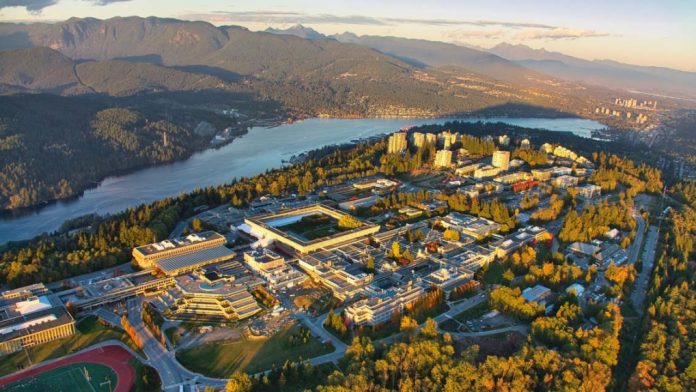
SFU was ranked first in the world by the Times Higher Education’s (THE) 2020 University Impact Rankings for its contribution to sustainable cities and communities. 

Times Higher Education is an independent data-providing organization that ranks universities globally. THE’s University Impact Rankings specifically assess universities’ efforts in maintaining the UN’s 17 Sustainable Development Goals (SDGs), all of which are found on their website.

President Andrew Petter explained in a phone interview with The Peak that this ranking is a result of both SFU’s internal sustainability initiatives as well as a number of community engagement projects. 

“This ranking is really reflective of not individual effort, but of collective effort. A lot of the research we’ve done on sustainability has been done by faculty members; a lot of the advocacy on sustainability around our investment strategy, for example, has come out of student groups like SFU 350.”

The Director of SFU’s Sustainability Office Candace Le Roy highlighted a few of SFU’s sustainability initiatives in a phone interview with The Peak. 

Amongst them was the Sustainability Mobility Advisory Committee (SMAC), a committee made up of faculty, staff, and students who collaborate on implementing environmentally sustainable practices in the university. She also highlighted the art and heritage work SFU has done, including work done by the SFU Office for Aboriginal Peoples and both SFU Woodward’s Cultural and Community Programs. Le Roy explained that such initiatives aim to focus not only on the environment as a form of sustainability, but also the focus on the social and cultural life of communities served by SFU. 

“Our work on sustainability at SFU is a University-wide initiative [ . . . ] that’s what makes our work on sustainability so effective,” Le Roy stated to The Peak. 

Le Roy also emphasized SFU’s research in sustainability. Along with receiving a gold rating for its sustainability research in 2018, SFU has recently opened a school of Sustainability Energy Engineering (SEE), which welcomed its first cohort in Fall 2019. The SEE program is housed in SFU Surrey’s new sustainable building. 

Even SFU’s choice of incorporating a multi-campus system contributes to sustainability, explained Le Roy, as the lack of commuters reduces transportation emissions and lowers the school’s carbon footprint. 

Le Roy also noted that thanks to the SFU’s energy management team, the school has been able to reduce its greenhouse gas emissions (GHG) to surpass the provincial target. “It’s not sexy work,” Le Roy said. “It’s flogging away and trying to find things like, how do we change a doorway in a building so that we can shave off a little bit more GHG.”

SFU was also ranked ninth in the world for its contribution to climate action. Recently, SFU committed to a five-year strategic Sustainability Plan which focuses on combating climate change, and consists of 16 sustainability targets. Before COVID-19, the Sustainability Office held community dialogue sessions with students and faculty about whether or not SFU should declare a climate emergency. 

“It’s really hard to introduce an emergency declaration in the middle of another emergency,” Le Roy said. “So what we’re working on now until this settles down is to develop some climate action principles for the institution for our recovery plan.”

“Climate change is an existential threat to society and to the world,” said Petter. “The fact that we’re in the top 10 in the world in leading university responses to climate change is really encouraging but it’s no reason to rest on our laurels.”

As for the future of SFU’s Sustainability Office, Le Roy reported an oncoming collaboration with SFU Embark. Le Roy hopes to integrate students into SFU’s climate action and sustainability initiatives through consultation. 

SFU also ranked highly in the Peace, Justice & Strong Institutions goal (fourth). Petter noted that programs like SFU Public Square and the Centre for Dialogue were major contributors to this goal, particularly with regard to raising public awareness on justice issues and public policy. 

Petter concluded his interview by expressing his appreciation for faculty, staff, and students for the sustainable cities and communities goal amidst the pandemic. 

“As much as COVID-19 is a dominant issue right now, there are other issues that we are contributing to that are also important and that we’re very much a leader,” he said. 

“I’m confident SFU will continue to lead in the future.”

Incoming SFSS President Osob Mohamed looks forward to a year of student activism and positive change

0

Newly elected Simon Fraser Student Society (SFSS) President Osob Mohamed may have started her term in the midst of a pandemic, but that has not dampened her excitement for the upcoming year.

The previous Health Sciences Representative spoke with The Peak about why she decided to run for president and what she hopes to see the Board achieve during her term. From advocacy endeavours to accommodations for all SFU students, Mohamed has big plans for the coming year. 

“I served on the Board this past year as the Health Sciences rep, and it was a good experience. It was very much my introduction into the student society and into student unions in general,” began Mohamed. This experience introduced her to the capabilities and responsibilities of the Board, including membership engagement and establishing solidarity with student groups. 

“But, on the flip side, I also as a Board member started to see a lot of the gaps in our governance practices [ . . . ] when you’re on the Board, you quickly realize that one year is not a lot of time. And it’s not easy to get much done in one year.” She hopes to push initiatives forward and focus on organizational restructuring during her term.

“During my time as president, I want students to feel seen and supported by the SFSS. I want to ensure that we are consulting with students on a regular basis before making decisions that impact them,” said Mohamed.

Mohamed also noted that the Board is in the process of developing a student advocacy office. 

“I anticipate that students are going to need help now more than ever, as we are not sure what’s going to be going on with grade appeals in the coming semester and course delivery.”

The incoming president hopes the Board will “ensure that the quality of the services we offer are intact, and that we’re addressing important student concerns such as finances, housing, food security, academic accommodations, and more. It will take work, but we will do everything we can to make it happen.” 

So far, the Board has moved the food bank service online and continues to lobby for the inclusion of international students in the Canadian Emergency Student Benefit (CESB). 

Furthermore, Mohamed wants to ensure that course delivery for the Summer, Intersession, and potentially Fall semesters run smoothly. 

“We learned a lot over the last couple of weeks about what to do and what not to do over the coming semesters — so for Summer and Fall — and that’s going to be us making sure that we’re pushing the university to make the right decisions.”

The issue of tuition prices for an exclusively online semester is also being discussed by the Board and staff at the university, according to Mohamed.

Mohamed explained some goals she has for the SFU community in the months to come. From both a university and government level, Mohamed wants the SFSS to be more active in supporting student movements; this includes supporting Tuition Freeze Now and pushing for a freeze on tuition increases for the 2020/21 year. Additionally, Mohamed wants to ensure that the SFSS is fighting for students’ rights and well-being with every initiative pushed forward. 

She also noted that she hopes to work on smaller projects such as Open Educational Resources and free menstrual products on campus. 

“The students have elected a strong Board, and I anticipate that the SFSS will be going through some big changes this year. Student advocacy and activism should be at the forefront of any student society or student union, and we are no different. I want to help foster this spirit into the SFSS for the upcoming year and years ahead. I’m excited to see what the future holds.”

Giovanni HoSang reflects on his year as SFSS President

0
Photo: Chris Ho / The Peak

As the Simon Fraser Student Society (SFSS) Board switches over for the upcoming school year, it is time to say goodbye to the 2019/2020 Board. Outgoing President Giovanni HoSang shared his parting thoughts with The Peak on his time with the SFSS. 

Can you list some highlights of your time with the SFSS? 

HoSang’s main goal coming into the year was to improve the relationship between the SFSS and the students, the Rotunda community, and the independent student societies. A highlight for him is seeing more of a bond between all of the groups now. 

One of the Board’s key accomplishments in bringing these groups together was the decision to grant the Rotunda groups space in the new Student Union Building (SUB). “I think that is something that shows how the Board can start listening to students,” said HoSang. 

HoSang is also proud of the student activism that occurred over the past year, stating that, “I really think the whole activism profile of the SFSS, or of the student body at large, has really been lifted due to a lot of advocacy on my part.” 

HoSang added that he is happy with how the Board has handled COVID-19. He noted that in addition to launching $150,000 in emergency funds for students, the SFSS also successfully lobbied the university regarding alternative grading options for the Spring 2020 semester. 

What were some of your biggest challenges in your time with the SFSS?

One of HoSang’s biggest challenges was leading a Board that had opposing views on a number of issues, and him being on the minority side of those views, making it difficult to pass certain motions. 

“Looking back on all of that I recognize that they were just challenges, and the fact that we overcame those challenges is very positive [ . . . ] I’m thankful for the ability to do some pushing and pulling to get stuff done.” 

What was your main accomplishment as president and what was the Board’s main accomplishment as a whole? 

As president, HoSang’s key accomplishment was “being able to inspire a lot of students to get involved within the student society.” He noted that the SFSS had a record amount of candidates in the 2020 elections. 

According to HoSang, the Board’s biggest accomplishment was “being able to push through a lot of motions and have a lot of impact on the whole of the society.” He added that the Board was able to accomplish many of the big goals that they laid out for themselves at the start of the year. 

“Even though people have different views on stuff, we were able to actually come to agreement on a lot of issues. Things that you would never have thought that we would have got through, we did.” 

Any advice that you would give to a student considering running for a position in the future?

“Never ever be afraid to speak up for what you believe in.” . 

What would you like to see the incoming Board accomplish next year?

“We brought back activism this year, and next year I think is the opportunity to build student power as a whole across the province.” 

He added that the next Board will be crucial in important topics such as climate action, solidarity, better support for international students, and lowering student fees. 

“We should definitely use this as an opportunity to make sure that students are centred across the province and across Canada. This Board will be very vital in doing that type of relationship building and movement building.”

In discussing the incoming president Osob Mohamed, HoSang said, “I am really excited to see what the society will be under her leadership. Just as I look back on presidents such as Chardaye Bueckert, I look forward to a president such as Osob Mohamed.” 

Was it all worth it? 

HoSang concluded that running for president was worth it and he would definitely do it again. 

“A lot of tears sometimes, a lot of passion, but a lot of joy and laughter [ . . . ] I have grown immensely.”

Covid relief for students doesn’t guarantee all student needs are met

0
ILLUSTRATION: Tiffany Chan / The Peak

On April 22, Prime Minister Trudeau proposed legislation that would grant post-secondary students and recent graduates access to their own pool of COVID emergency relief funding. The Canada Emergency Student Benefit (CESB) would provide students with $1,250 per month until August 2020. Students with disabilities or those caring for others would receive $2,000. A summer grant program offering up to $5,000 for student volunteers, and a $75 million pool for Indigenous students, have also been proposed.

On the surface it would seem quite generous for the federal government to invest so much (a total of $9 billion) specifically for students. And in fact, it is especially timely as many of the jobs that students rely on — typically part-time employment in the service sector — have now been shuttered due to the pandemic. Students who have completed their studies as far back as December 2019 also get a bit of relief with this fund. However, when compared to the funding that is currently being offered through the Canada Emergency Response Benefit (CERB), it’s clear that students are getting short-changed in a big way with CESB. 

The CERB was created to avoid over-taxing Employment Insurance (EI) funds. Instead of having 7.3 million Canadians apply for EI all at once, the CERB funnels applications who lost their jobs specifically because of COVID through their own stream. Those applying to CERB must have had an employment income of at least $5,000 in either the 2019 tax year or in the last 12 months — this is a major sticking point for a number of demographics and communities, students among them. Full-time students who are unemployed or work limited hours (either due to seasonal employment or irregular shifts) may not make the $5,000 cut off. The CESB is intended to close that gap.

However, some quick head-math shows that students applying for CESB will receive much less than they could otherwise get through CERB, if they qualified. If approved, CERB recipients are eligible for $500 per week for 16 weeks, or roughly $2,000 per month for four months. This difference doesn’t make a lot of sense. It’s not like students don’t also have adult expenses that need to be paid. The cost of housing alone for students who don’t live rent-free can easily reach the $750 difference between CERB and CESB, not to mention tuition isn’t cheap either. Even for students who do live at home, it is likely that they have family members who have also lost employment due to COVID, making overall household expenses tight all around. 

Additionally, the creation of the CERB and the CESB leave international students in a bit of a lurch. Student expats who chose to remain in Canada are eligible for the CERB but not the CESB — but only if they make the $5,000 cut-off. Given that international students face restrictions on how many hours a week they can work while classes are in session, reaching this cut-off may be even more difficult.

All these difficulties beg the question: why not simply make the CERB universal? By this I mean a single relief fund that can be applied to for anyone residing long-term in Canada. Given that COVID relief funding for seniors financially affected by the pandemic is going to be its own separate thing, it seems ludicrous to keep patching all the financial leaks in various populations with separate piecemeal funds. A universal relief fund would provide all people living in Canada who are without income during this crisis with enough temporary funds to see them through this first wave at least. This would also ensure that those who need help get it in a timely way, instead of waiting for new relief proposals to be approved through Parliament.

As has become a common refrain now, we’re all in this together. There’s no good reason why all of our financial concerns shouldn’t be addressed together as well.

Correction (May 12, 2020): A previous version of this article stated that students with disabilities could receive $1,750 from the CESB.


Canada announces funding to assist post-secondary students during COVID-19 pandemic

1
Photo: Sean Kilpatrick / THE CANADIAN PRESS

On April 22, Prime Minister Justin Trudeau announced the Canada Emergency Student Benefit (CESB) action plan to provide approximately $9 billion to domestic post-secondary students during the COVID-19 pandemic.

From the months of May to August, students may apply for the $1,250 monthly benefit. This value increases to $1,750 for students with codependent(s) or a permanent disability. CBC News noted that this benefit, available to those without jobs or those making less than $1,000 a month, will assist young people “falling through the cracks” of already established relief programs like the Canadian Emergency Response Benefit (CERB). 

The Simon Fraser Student Society (SFSS), along with other student societies across Canada, have been lobbying the federal government for more support for students during the pandemic. In an email to The Peak, VP External Relations Jasdeep Gill elaborated on the Board’s efforts to encourage an inclusive and sufficient benefit program for all students. 

“There have been many Board members involved in the advocacy efforts that have included directly communicating with provincial and federal representatives, media outlets, grassroots organizations, student coalitions and other student unions,” wrote Gill. She added that the SFSS has also worked with federal representatives over email and Zoom to encourage action.

According to Employment Minister Carla Qualtrough, the CESB may only be claimed by Canadian students studying in or out of the country. According to the Government of Canada’s  website, international students may apply for the CERB if they stopped working due to the pandemic and did not quit voluntarily. As of now, this is the only aid option available for international students in Canada.

“For lobbying directed at the government, a lot of our focus has been on pushing for the inclusion of international students in the various aid options,” said Gill. 

The SFSS Board has written a letter to BC Premier John Horgan as well as a letter to Trudeau in collaboration with other student organizations, emphasizing the inclusion of all students in its aid options.

“We continue to believe that the only way to ensure that no one is left behind during the COVID-19 pandemic is by making all students and recent graduates eligible for the CERB,” said the letter to Trudeau, sent April 15. The letter also discussed the millions of students, including those over 30 and international students, who may not benefit from  the current changes to the Canada Summer Jobs program, which Trudeau announced earlier in April. 

The SFSS also called for the inclusion of international students for the CESB in the letter to the Premier of BC. The letter, signed by the SFSS, explains how the pandemic impacts international students depending on summer jobs that may have been compromised in the unprecedented situation.

“International students directly contribute to our province’s economy, diversity and prosperity. Now is the time for us to take action and directly contribute to their safety and security in a time of global crisis,” said the letter to Premier Horgan.

Board Shorts: April 29, 2020

2
Image: Irene Lo

SFSS to provide up to $15,000 for SFU Surge Hackathon 

The funding will go toward SFU Surge’s first hackathon, which is to be held in the Spring 2021 semester. 

Hilal Asmat, co-president of SFU Surge, said that a hackathon gives participants the opportunity to learn new technology and meet with companies for recruitment opportunities. She explained that they are hoping to make this an annual event, and will in the future hopefully be able to rely on funding from sponsors rather than the SFSS. 

Asmat explained at the Board meeting that some changes had been made to the event since their last time speaking to the SFSS, including making budget cuts and changing the number of participants from 400 to 300. Due to COVID-19, they have also moved the date from November 2020 to the Spring 2021 semester, either in March or April. 

Vice-president of SFU Surge Praneer Shrestha noted that they are not likely to receive sufficient funding from sponsors, considering that this is their first time throwing the event. As such, this is why they require funding from the SFSS, according to Shrestha. 

“A large scale hackathon is super long overdue. Other schools are already running it in BC, in Canada, and in North America, and we would be raised to a competing level with them,” said Asmat.

Applied Sciences Representative Nick Chubb said that “I personally have been to hackathons before, and I have found that they are very helpful for myself; for meeting more people, learning more for my career.”

The motion was amended for the SFSS to provide up to $15,000 to the hackathon, down from it’s initial $20,000. 

SFSS formally endorses the SFU C19 Coalition

The SFSS passed a motion to formally endorse the SFU C19 Coalition, which was formed in response to COVID-19. 

According to their website, Coalition is “a group of grassroots organizers advocating for all students and workers at Simon Fraser University.”

Health Sciences Representative and incoming SFSS President Osob Mohamed explained that one of the groups main goals is to “make sure that international students are being included in [receiving federal funding] and making sure that students are also getting what they need.”

“I think that an endorsement from the SFSS would be particularly strong because we do represent students on campus, over 26,000 voices,” Mohamed added. 

President Giovanni HoSang stated that he was in full support of this motion, noting that “I think this is in line with our signing onto the Don’t Forget Students letter.”

Jasdeep Gill said that funding for international students is something that the SFSS is currently advocating for to the federal government, noting that, “I think as the new Board comes in it’s a really good opportunity for them [ . . . ] to stay on top of it [ . . . ] if we keep up the pressure then I think something can be done.”

The secret life of The Peak’s pets

Illustration: Victor Yin

OK, I’ll admit it — the power of being the Features editor has finally gotten to my head. When the opportunity to interview The Peak’s beautiful animals had been taken with gusto, I got the chance to publish the piece of my dreams. So here it is: up close and personal with our most precious pets.

Photo: Harvin Bathal

Today has been a good day for Malki (left) and Toby (right), but they’re tired now. “We went on such a nice walk today, all around the farm,” Malki barked to The Peak. Toby chimes in, “Yes, yes, good walk, yes!” 

Malki is a Great Dane and Bull Mastiff mix (75%-25%). She’s a little older, the alpha, if you will. Her attitude isn’t present in moments like these because she’s happy — but oh does she have an attitude.

Toby is a Pitbull and Bull Mastiff mix (75%-25%). He’s just a happy little fellow. His day begins with a big yawn and stretches, and then he immediately starts playing with his big sister.

He looks up to Malki, but sometimes, she gets annoyed by him. It happens when you live with someone.

But one thing they’ve always been appreciative of is living on a farm.

“The space!” excitedly barks Toby, “So much space!!!”

Rolling her eyes at Toby, unimpressed, “Yes, there is a lot of space. It’s a dog’s dream, the fresh air and open grass field,” she pauses, “That’s how you give a response.”

Toby, who lacks self-awareness, continues on with his day, wagging his tail, as if he didn’t just hear that. He lives in blissful innocence.

But when it’s time to sleep, they become inseparable. They’re each other’s blankets, snuggled in their sleeping area.

“Toby is Toby but at least he’s warm,” Malki barks.

“Toby is warm, Toby is happy,” Toby concludes.

– HB

Photo: Juztin Bello

On any given day at any given time, passersby of the Bello household will be greeted by the sight of two fluffy heads poking their little snouts against the window in the front room, looking curiously at the world going by. On their tiny hind legs with their fuzzy butts shaking excitedly in anticipation, and often accompanied by the sound of delighted woofs, these two lovable pups yearn for and anticipate whatever that given day has in store for them. 

The two puppies in question, Tobi (age one, right) and Hershey (age four, left) are both Pembroke Welsh Corgis with a thrill for adventure and love for the occasional banana — as a treat. 

Hershey, born on Christmas Eve, came to the Bello household at the age of one and has been a staple to the house’s napping culture ever since. With ears as large as her appetite, this little lass knows what she wants and when she wants it. As the alpha, Hershey enjoys leading the charge on begging for food while the family eats and picking fights with Tobi over petty food-related incidents; but ultimately, she loves spending time with her brother and splitting a treat with him— as long as he doesn’t come within a metre from her and attempts to steal her treat or toy. Her trademark growl and sense for knowing when someone in the house has come home solidify Hershey as the perfect guard dog, a position she takes with pride despite her short stature.  

Tobi, the baby of the household, lives life as any escapade-seeking puppy would: one destroyed tennis ball and chaotic walk at a time. What Tobi lacks in size compared to Hershey he makes up for in tail, which Hershey definitely isn’t jealous of. Totally not. When prompted to be let outside, Tobi is already there the moment the backdoor leading to the yard opens. In contrast to his sister who enjoys lounging on the patio in the sun, Tobi likes to chase just about everything from one end of the yard to the other. The only thing he loves to chase more than bugs and tennis balls being thrown in the yard is his own tail, which, again, Hershey is totally not jealous of. While forgetful in how to get down the stairs (despite being taught it over and over again) Tobi knows exactly when to cuddle up on a rough day — and, trust, this is just as much for him as it is for you. 

What’s in store for these two charming canines is truly anyone’s guess, but they can promise that whoever passes by that window or comes through that door will be greeted with a snoot, witness the cute, and be hit with that signature Corgi sploot.  

– JB


Photo: Kelly Chia

Phoenix has recently turned three years old, and adult life has not changed his enthusiasm for life and its small creatures. A Samoyed, Phoenix’s lips are often upturned into a wide smile, though whether he is actually content depends on how testy he feels that day. Today, he has attempted and once again failed to befriend neighbourhood cats Tommy and Finnigan, and he feels a little defeated, but seems to forget this quickly enough.

At first glance, Phoenix looks like the living embodiment of a noble snowball. His tail curls so it just touches his back, and the picture together with his fluffy cloudlike fur ascends him to model status. But actually, he has bigger aspirations: Phoenix dreams of becoming a singer. It is quite a sight: his mouth pressed into an “o”, hiding his wolf-like teeth as he sings soulfully. Every person who enters the Chia home, stranger or friend, is treated to his signature “woos” of joy as he is always eager to perform for an audience. 

To that effect, Phoenix always makes sure he looks like a star for any impromptu paparazzi shots, cleaning his paws fastidiously and tossing a dirty look to anyone who catches him looking so vulnerable and unkempt. At times, he releases a dignified huff – practicing a confident stride sure to win the attention in his poop-scoopers’ Zoom calls. 

In a vulnerable moment, Phoenix barks to The Peak, “I don’t understand object permanence!” When asked to clarify what he meant, he pawed at a nefarious puzzle box that hid his treats from him. Clearly he has been robbed from what he deserves, and his poop-scoopers are cruel. But he is quick to forget (or to forgive), and flashes a stunning smile.

“I want a walk,” he finishes with a low woo and a paw shake for good measure. Walks are everything to Phoenix — if he doesn’t receive at least one awed coo from the neighbours, he will sulk on the floor for hours. But as he winks, it is evident that this pretty pooch will get everything he wants, anyway. Except the attention of the cats.

– KC


Photo: Nicole Magas


Life in quarantine has been hard for one small parrot living in a Burnaby suburb.

Like many other small household pets, Cygnet, a four-year- old White-Faced Cockatiel, has been facing a mental health crisis since the beginning of lockdown in early March. The principle trigger in this struggle, according to Cygnet, are the hands.

Hands that want to hold, pet, and tickle are nothing new to Cygnet. He’s been jumping and dodging hands since he arrived in his current home in September of 2017. However, Cygnet has noticed a marked increase in the amount of cuddling and hand-holding he has been expected to endure during the crisis, and he’s pleading with pet owners everywhere now to show some restraint and understanding to their small animal companions. 

“I’m not opposed to hands, per se,” Cygnet told The Peak via a Twitter interview. “Hands do wonderful things. They fill my seed bowl. They clean my cage. They open the window blinds in the morning. The problems start when the hands want to hold me. That’s unacceptable.”

Even when the hands “hold birb gentle like hamburger” as one popular internet meme instructs, the confinement is too much for birds like Cygnet. “I’m claustrophobic,” he explains. “I feel like my mental health needs are not being accommodated during quarantine, and I’m sure I’m not the only one, either. I hear the cats are going through similar struggles. These are trying times for all of us.”

Cygnet wanted it to be made clear that despite the hands repeatedly violating his personal space, he has never resorted to biting. “I’m a good boy,” he says proudly. “And no hand is going to take that away from me.”

– NM

Remote learning doesn’t have to be doom and gloom this semester

0
Consider some of the benefits to learning at home this semester. Photo: Maxwell Gawlick/The Peak

Ever taken a distance education course? It can be annoying. Too much of the course is self taught through reading of journal articles and textbooks, there’s not enough interaction with the teaching staff, and no lecture to explain to you what on earth you’re reading. But those are just the downsides. It can also be good for students to take remote courses — as long as they keep their minds open. During this pandemic, when we’re all forced to be remote, it can be helpful to look for the silver lining in our situation so we don’t go through this entire semester under a cloud of pessimism.

Imagine this: you’re standing at the bus stop in 32 degree weather getting ready for a tutorial that’s just 50-minutes long. You’re hot and sweating and you’re probably gonna be late as you’ve just watched the third R5 pass by because it was too full. Well, this summer semester you won’t have that problem. Simply roll out of bed, attend that Zoom tutorial, maybe say one or two generalized things to show that you’ve totally done the readings, and then commute back to your bed. Done! Tutorial over and back to Animal Crossing.

This relaxed environment will also make this summer a great time to explore courses for WQB requirements. For me, as someone who tends to stress less about getting everything perfect during the summer, taking fun electives seems during a semester that I don’t have  to physically be in class seems like the perfect pairing. Because everything is now fully remote, I can enjoy learning about the things that interest me since I’m in the comfort of my own home.

Of course, remote learning is not the best way for meeting or interacting with people, but saying “I agree” when responding to a post on a Canvas discussion board is better than nothing. At least it gives you the chance to talk to someone else outside of your household, and provides a nice change of pace from the constant pandemic complaining on group chats. After weeks of social starvation, I bet seeing your classmates’ faces on BB Collaborative video presentations will be a welcome relief. Hopefully when the quarantine ends, those Canvas discussions will give you and your classmates lots to talk about in person.


Getting through pandemic stress requires moments of vulnerability

0
Now is the time to be kind to yourself. Illustration: Maple Sukontasukkul/The Peak

While for many the switch to social distancing wasn’t very difficult, for others it has been — and that’s OK. These changes were abrupt and we will all respond differently as we’re adjusting. 

People aren’t meant to live in isolation, and require social connection to remain healthy. It’s unrealistic to expect students to function at the same level as they would under regular circumstances. Many of us are faced with surges of anxiety as we watch the news and hear of the COVID-19 cases rapidly rising by the day. We’re putting on our strong faces; we shield our emotions behind quarantine memes and apocalyptic jokes. We’re all turning to different forms of coping mechanisms to help deal with the shock and stress of everything that’s happening, and that’s OK. However, one thing that is utterly necessary amid all of this is allowing vulnerability.  

Vulnerability essentially allows us to be honest about our emotions and recognize our feelings. This means experiencing our emotions fully with a sense of openness and acceptance. Constantly dealing  with all this uncertainty and invisible danger produces a lot of emotions that we may not necessarily be familiar with. As a result, we may not know how to cope with these new, dominant emotions. Being vulnerable allows us to experience our emotions sincerely, can aid in connecting with one another, or simply give us the chance to indulge in our feelings. 

As noted by the US National Library of Medicine, being in a state of heightened emotional strain can make us more prone to sickness — and we don’t need that right now. To help curb emotional turmoil, we can turn to our social supports and allow ourselves some emotional honesty with other people. But we can also practice emotional honesty by ourselves. Studies have shown that awareness of our feelings reduces stress, helps us focus, and gives us a better understanding of ourselves and one another. This can be a difficult task, since it’s easy to fill up the days with activities that don’t require internal reflection. Many of us are staying home as if the COVID-19 crisis is simply abstractly “out there,” not affecting us. 

However, the crisis is affecting us, one way or another. Some of us may be suffering from loneliness as a result of being away from loved ones. Others might be stressed out about how this pandemic is going to affect our families and friends. As our workload shifts to accommodate working at home, we may become overwhelmed. 

By acknowledging our situation — allowing ourselves to be vulnerable — and reflecting on how it makes us feel, we can recognize that it’s natural to be sad, anxious, or frustrated with these circumstances. Through this realization, we can also determine why we feel this way, what we can do to address our emotions, and how to help ourselves feel better — even if it’s just by a little bit. 

There are currently a few free online counselling resources with professional therapists available to students. These include Here2Talk (a resource for post-secondary students in BC which provides mental health support) and My SSP to assist SFU students. While there are mixed opinions on the effectiveness of these services, sometimes simply venting to another person can be helpful. 

Ultimately, allowing ourselves to both experience and work through our emotions right now is not only OK, it’s also necessary for our well-being. We shouldn’t be held to expectations of acting like everything is fine; the reality is that we’re in a global pandemic, things are a long way from “fine.” Embrace your emotions, allow vulnerability, and open up to one another. As cheesy as it sounds, we’re only human, and the only way to get through this is together.