

Three cars extinguished at SFU Burnaby
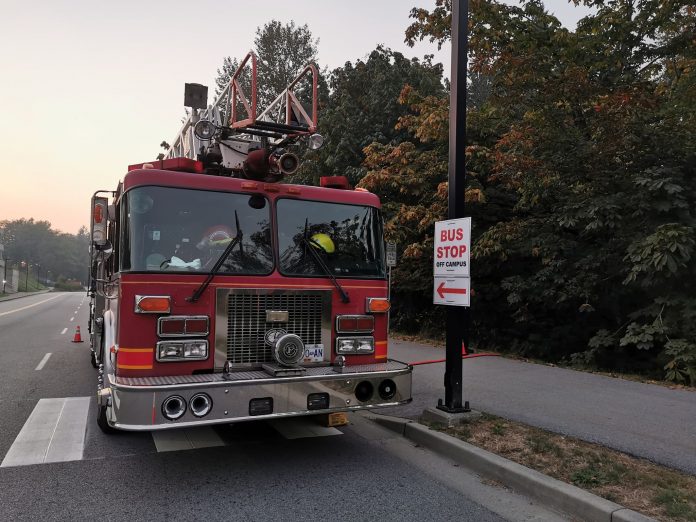
On Wednesday morning, July 7, 2021, Burnaby Fire Department arrived at SFU’s Burnaby campus for a car fire in the West Mall parkade. SFU tweeted an alert at 9 a.m. asking for people to stay clear of the West Mall complex as surrounding areas were being evacuated. In a statement to The Peak, Andrea Ringrose, the senior director of campus public safety, reported that a total of three cars had caught fire in the parkade.
Ringrose said the cause of the fire is unknown. There were no serious injuries reported.
At 10 a.m., SFU released an update that the fire had been extinguished. “We are very thankful for the quick response from Campus Public Safety and Burnaby Fire Department, as well as others nearby who helped to ensure everyone’s safety,” said Ringrose.
The surrounding roads and the West Mall parkade reopened shortly after. The 9000 level of the parkade is remaining closed to allow for damage assessment and environmental and structural work.
Ringrose reported that Safety & Risk Services and Facilities Services are working with “a third party environmental service provider to assist with cleanup and remediation, to ensure this is done in an environmentally responsible manner.”
This is a developing story that will be updated for more information as frequently as possible. If you, or someone you know, has more information regarding this story, we’d like to hear from you. You may remain anonymous. Please reach out to [email protected] with any further information you are comfortable sharing.
Improving Indigenous sovereignty could improve ocean health and conservation

SFU associate professor Anne Salomon’s research reveals differences of Indigenous small-scale fisheries compared to industrial commercial fisheries. In an interview with The Peak, Salomon found the biggest difference is the “intensity of harvest and the spatial extent of harvest.”
Salomon’s recent research was done in collaboration with the Heiltsuk Nation, based in Bella Bella. The community approached Salomon and her team to test the resiliency of their traditional practices of harvesting kelp and herring eggs.
The research team found “the intensity of their traditional practices basically mimics natural law.” They harvest the amount of “kelp that would have been lost anyhow by ocean waves and storms,” explained Salomon.
Herrings spawn eggs on kelp. The Indigenous practice is to harvest around 25% of each kelp plant to collect the herring eggs. This leaves the plant alive to sprout new branches. “It’s a perennial slow-growing kelp [ . . . ] we know that when things are slow growing that we’ve got to be really careful with how much we harvest,” said Salomon.
The level of care to how much and where they harvest from the ocean “is very unlike industrial-scale, commercial [harvests] of all sorts of things, including kelp.”
According to Salomon, industrial fisheries harvest herring eggs by killing adult fish and removing their eggs. However, when Indigenous communities collect eggs that have already been spawned, they “have a much smaller impact on the long-term population persistence because herring can come back, live, and spawn another day.
“Kelp is super important to the Heiltsuk Nation, and they care very much about the fact that they want to harvest it, but they want it to be done sustainably,” said Salomon. Her study showed the Heiltsuk Nation’s harvest of kelp and herring eggs is sustainable.
The biggest threat to their practices is currently “big changes in predator abundance.” Salomon explained sea otters eat shellfish, which Indigenous communities along the coast of BC also rely on as a food source.
“Those Indigenous communities are really limited toward the degree in which they can hunt.” There is little support for these communities to hunt the predators they traditionally hunted, resulting in an explosive population of top-level predators such as sea otters, sea lions, and seals.
Indigenous rights to harvesting — fishing, hunting, trapping, and gathering — are protected by treaties in BC. The treaties dictate who can harvest, as well as where and what can be harvested. Harvesting rights vary for First Nations, Métis, status, and non-status individuals. Generally, regulations allow Indigenous peoples to harvest for personal consumption, cultural purposes, or, in some cases, to barter, trade, and sell.
However, the Canadian government maintains the right to ban Indigenous peoples from hunting in the name of conservation of certain species at any time.
According to Salomon, Indigenous communities are forced to go to court to fight to maintain their rights and sovereignty. “The federal government should work hard to make space, institutions, and processes to foster that.
“Right now the federal government is really encouraging the inclusion of Indigenous knowledge in management plans, but what they need to do is inclusion of Indigenous decision-making authority — real co-management,” said Salomon.
Salomon called on the government of Canada to encourage “equitable management and decision-making” for Indigenous communities about ocean health and conservation.
English Language Learner should admit students based on their proficiency level alone

Immigrants are often encouraged to register in English Language Learner (ELL) programs because fluency in English supposedly promotes a smoother transition to life in Canada. However, my experience as a former ELL student exposed me to the program’s shortcomings. Greater transparency and consultation among students, parents, and educators may ensure that potential ELL students are admitted based only on proficiency rather than ethnicity or immigration status. Adjusting ELL program admission policies to protect students from discrimination would preserve students’ rights by ensuring all students receive the quality education they deserve, regardless of proficiency.
I was born in Canada, and my mother informed my elementary school that English was my first language. I spoke fluent English, but my school registered me into the ELL program. When my mother discovered this, she was adamant that I should not qualify, and my school pulled me out.
Despite the School Act stating that “A parent of a student of school age attending a school is entitled to be informed [ . . . ] of the student’s attendance, behaviour and progress in school,” my mother was not informed that I would be admitted into the ELL program until after the fact.
BC’s guidelines for ELL teachers suggest that ELL students who are Canadian citizens may require formal English education to help them adjust to school. Their case study examples express concerns that students with age-appropriate conversational skills may still struggle with reading comprehension.
As a person of colour, I have encountered many people who were shocked that English is the only language I speak fluently. However, ethnicity and immigration status are poor predictors that a student’s first language is English. According to Statistics Canada’s 2016 census data, “a higher proportion of children under the age of 15 with an immigrant background spoke only English or French at home than their parents.”
The misconception that one’s ethnicity or immigration status determines their native language also overlooks colonization’s role in many countries adopting European languages. Many former colonies, such as Fiji, the Philippines, and Singapore, have English as one of their official languages. Since ELL students come from various backgrounds, admission to the ELL program should be independent of immigration status and ethnicity.
ELL programs may use Eurocentric standardized tests, so there also needs to be greater diversity and inclusivity in these programs. By assuming students are familiar with American culture, language proficiency assessments’ answer keys may disregard students from collectivist cultures or low socioeconomic backgrounds who may have different values and experiences. ELL curriculum design and implementation should require consultation with BIPOC educators to provide students with culturally appropriate assessments and curriculum.
Unfortunately, implicit racial bias also disproportionately affects BIPOC ELL teachers. A study in Indonesia indicates that students and co-teachers perceive ELL teachers of colour as less qualified. This reflects that Indonesia’s ELL teaching requirements favour Caucasian teachers from predominantly Western countries: “While you don’t have to be white, being white is a presumption of being a native [English] speaker,” the report says. The lack of representation in education highlights the overdue need for ELL programs to recruit more BIPOC educators to promote a culturally appropriate curriculum and learning environment.
Other jurisdictions, like the United States, outline possible ways that ELL programs can be discriminatory and provide students with legal protection against discrimination. Without educational policies acknowledging ELL students’ unique experiences and ELL assessments appropriate for students of colour, more overqualified students may be admitted into the program and deprived of the quality education they deserve.
The new climate emergency parking plan is ineffective
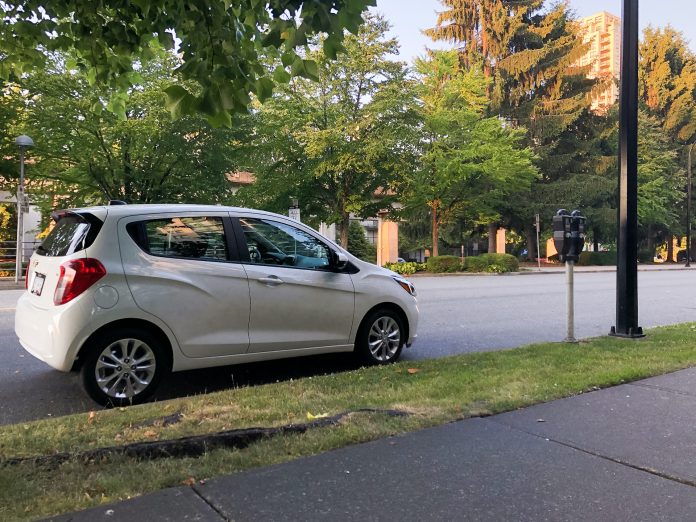
The City of Vancouver is planning on implementing additional parking barriers as part of its Climate Emergency Parking Program. The plan includes a “pollution charge” of $500 (for “moderately polluting” vehicles, like gas-powered sedans) or $1,000 (for “high-polluting vehicles, like gas-powered sports cars and SUVs) and introduces annual parking permits for residents. The implementation of financial barriers to road accessibility and parking is not a fair solution to combatting climate change, nor is it a solution that tackles the root causes of the global warming crisis such as corporations and their industrial emissions.
Instead of going for bigger, more effective strategies against large corporations, the City is leaving the burden of fighting climate change on small consumers such as renters and low-income households. This makes the new parking plan an ineffective solution and will also worsen Vancouver’s affordability.
Parking fees are a high source of revenue for the City, along with property taxes and development license fees. What sets the three apart is that, for the latter two, the primary targets are people who can afford to pay the price without much grief, such as land developers. If the plan to implement street parking fees comes into effect, residents will have to pay for $45 annual passes to park where they live. The people who will be affected most are renters and/or low-income families who live in places where there is no parking included. I was a long-time renter in East Vancouver. From my experience, there is no other way to park your car but on the streets since the owner occupies the garage.
The parking plan also suggests an additional “pollution charge” on new gas models. Instead of placing the burden on companies that produce these gas models or oil corporations, the City is punishing its residents and small consumers for not buying an electric car. Putting aside the affordability question of electric cars versus gas-powered cars, there is a glaring problem with this parking plan: people who have to park on the streets will not have access to a charging station; therefore, they will not be able to choose an electric car even if they want to. This punitive approach towards small consumers as an effort to tackle climate change is logically flawed and not effective in fighting the climate crisis.
The City promises to use the increased revenues from permit fees to fund road infrastructures such as sidewalk renovations and the building of more electric vehicle charging stations in major commercial areas. These new additions are nice to have, but they do not hold major polluters accountable. Take industrial manufacturers, for instance: BC’s wood manufacturers are responsible for the vast majority of particulate emissions (air pollution), so instead of financially punishing residents for parking and not owning an electric car, the City should shift their focus to the companies that can afford to pay the fees.
Another drawback of the climate emergency parking plan is the additional administrative involvement — from fee collectors to more parking patrol — that will also cost taxpayers and residents. By reinforcing the idea that people have to financially suffer to fight climate change, the City is further alienating its residents from choosing greener ways of living. If Vancouver is truly willing to fight the climate crisis, the City needs to stay away from small consumers and residents. Instead, it should start making industrial factories, such as cement producers and the forest industry, think twice about polluting our environment. Stricter implementation of the carbon tax and the elimination of fossil fuel subsidies would be good starting points to combat climate change with a significant impact.
The City’s increase in revenue from the carbon tax can be used as an incentive for consumers to move towards electrical or greener sources of energy. Using financial incentives will make residents much more likely to approach the climate crisis in a positive light, taking away a hurdle in Vancouver’s effort to be the greenest city.
The plan is still in the stages of debating and drafting, and the City is putting out a survey for the public to voice their concerns. If you would like to get involved, you can contact city councillors on the Vancouver city council website.
SFU students develop automated irrigation system to preserve water consumption

An automated irrigation monitoring (AIM) system to reshape the agriculture sector’s water management was made by School of Sustainable Energy Engineering students. In an interview with The Peak, project co-lead Mackenzie Calder said the team aimed to “reduce how much water is needed by trying to shift the perspective on how farmers water fields in the first place.”
Calder explained crops are currently watered on a timer-based system, often not considering climate or daily rain patterns. The AIM system helps to water crops with only the volume of water they require. It does so by monitoring soil moisture levels with a sensor that controls watering systems.
The team reported some countries use as much as 85–90% of their extracted freshwater for their agriculture, with most of that becoming runoff and contaminating the environment.
Over-watering crops leads to massive amounts of water runoff that returns to natural water systems such as streams, rivers, and lakes. The water runoff is “carrying a whole lot of nitrogen, and pesticides, and things that harm the ecosystem beyond the agricultural sector,” said Calder. By using a sensor-based system, farmers can limit the amount of excess water and the amount of runoff contaminating the surrounding area.
Pesticides are potentially harmful to humans and can cause chronic and acute health effects. They can also be toxic for other organisms in the environment. The Safe Drinking Water Foundation reported that pesticides can remain in soil and water networks for years.
BC’s agricultural water management website states that 3% of water consumed in BC is used for drinking water, the industrial sector, commercial sector, or agricultural sector. Calder estimates that this 3% does not include the large volume of extracted water that becomes runoff.
The team includes co-project lead Rajat Agrawal, Harleen Dhillon, Jacob Erickson, Erfan Ferdosian, and Paula Themmen.
“The way we approached it was, what if we made the agricultural watering process smarter?” said Calder.
The AIM system “would allow farmers to track their water usage over seasons and compare current watering requirements to previous years,” according to the team’s report. This would mean changes to soil’s ability to hold water or factors such as climate change fluctuations could be tracked and recorded.
Calder said the exact data for how much water could be saved with this method of watering is unknown as more research would be needed.
It’s time to treat the climate crisis for what it is: a crisis
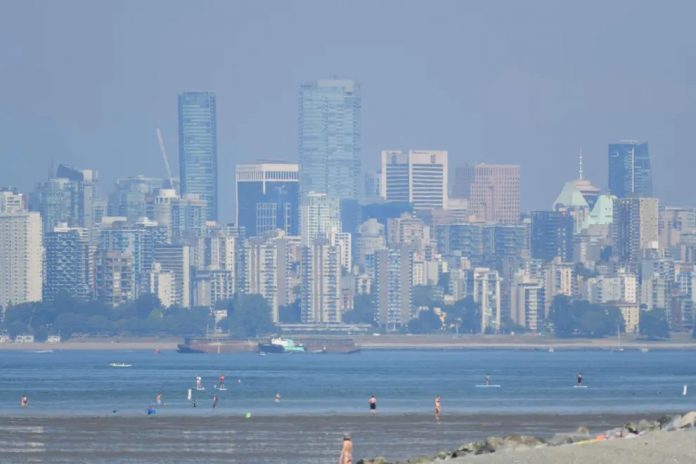
I was disappointed this weekend after watching multiple news outlets talk about the heatwave without a single mention of the climate crisis. Additionally, conversations about how unhoused folks are dealing with extreme temperatures seem to be non-existent. Addressing ways to keep (middle class) citizens safe and reporting on record-breaking temperatures is important; however, it seems we are ignoring naming the climate crisis as the cause of these record-breaking temperatures and refusing to acknowledge it as a serious issue we need to take action on.
From June 25 to 29, there were over 100 reported deaths linked to the heatwave. Additionally, there were 486 unexplained deaths during this time period. According to BC’s Chief Coroner Lisa LaPointe, this is a 195% increase over the number of deaths that would usually occur during the same timeline.
In addition to the amount of deaths, there was an overwhelming amount of 911 calls — 55% more than a normal weekend in June, E-Comm’s Jasmine Bradley told News 1130. E-Comm is the company in charge of handling BC’s 911 calls. On Saturday alone, there were over 8,000 calls and 1,850 dispatches. To put it in perspective, there are only 1,440 minutes in a day, meaning there was a dispatch every 45 seconds.
These are record-breaking numbers for BC, alongside record-breaking temperatures. And it’s only expected to get worse from here on out. During an interview with News 1130, UBC Professor Dr. Steven Sheppard said, “It’s pretty clear that this is part of the trend. It’s been projected and expected, and quite frankly we’re seeing around us — this decade especially — heatwaves, droughts, things like that are becoming more frequent. It’s very consistent with the climate change projections.”
Lytton, BC also was decimated by a wildfire in “minutes” after the heatwave, according to a town councillor. MP Brad Vis stated on Facebook that 90% of the village had burned down, including the town centre. BC’s Wildfire Service Fire Information Officer Erica Berg said high winds in combination with scorching heat gave the fire the opportunity for this explosive growth. But again, there was no mention of the climate crisis.
While some people have been prioritizing the fight against climate change, a lot of work still needs to be done, especially with others dismissing the impact of climate change. This includes BC Premier John Horgan, who recently said that “fatalities are part of life.” He then essentially victim-blamed those who died, saying, “it was apparent to anyone who walked outdoors that we were in an unprecedented heatwave and again, there’s a level of personal responsibility.” This completely overlooks unhoused people and lower-income folks who cannot afford air conditioning or those who do not live close to a cooling centre. I live in Newton, BC and saw no advertising for these cooling centres.
What’s worse, the record of deaths Horgan talked about is expected to increase as coroners receive more information. Any amount of death is tragic, but over 100 in one weekend is not something we can dismiss as coincidental. If we continue to avoid talking about the climate crisis, it will continue to get hotter, and the number of deaths will increase each year. How many more people do we need to let die before we take the climate crisis seriously?
Horgan’s response also overlooks the reality that 100 companies are responsible for 71% of all of the world’s greenhouse gas emissions. Instead of holding these polluters accountable, governments are unfairly putting the onus on the individual. Additionally, cutting down our old-growth forests is not helping Canada reach its Paris Climate Agreement carbon reduction goals. At the forefront of these companies and decisions is our Canadian governments who, instead of forcing companies to reduce their carbon footprint or deciding not to cut down old-growth forests, are pinning the blame on us.
These 100 companies should be mandated to reduce their carbon footprints, but time and time again we see governments pointing fingers at their citizens instead. This is seen by the recent toll implementations for driving downtown or increased paid street parking around the city.
While it’s important to look at ourselves and integrate green solutions into our lives, it is even more important to hold our local politicians and government officials accountable for their actions. If they don’t take action against the climate crisis, it’s just going to get worse. People are dying. It’s time to wake up.
United Way’s Period Promise Campaign reveals the extent of period poverty in BC

Period poverty is “the lack of access to menstrual products and facilities to use them safely.” It is a “symptom of poverty” due to the cost of menstrual products and their classification as a “consumer good” versus an essential item.
The Period Promise Research Project report from United Way reveals that 26% of people who menstruate in BC have experienced a period without access to menstrual products.
According to United Way, the data collected in this campaign provides the “most comprehensive image of period poverty in BC.” The data on the challenges people in BC face when attempting to access menstrual products comes from a public survey and information from 12 community organizations.
The Peak spoke with Neal Adolph, the campaign’s staff lead, to discuss the issue.
Adolph said period poverty requires “a more nuanced bundle of solutions,” which doesn’t stop after gaining universal access to free products in washrooms. Approximately 51% of survey respondents indicated they had struggled to purchase products for themselves.
United Way found disposable products were important, as they’re accessible for people without “access to [the] secure housing or clean water” needed to clean reusable products.
However, the survey revealed when some people received reusable products, such as a menstrual cup or menstrual underwear, “they were able to substantially reduce their anxiety around when they would menstruate and be able to support themselves.”
Adolph explained universal access to menstrual products would be “a huge leap forward” and an “incredible achievement,” but “there’s a real risk that we set that as the end goal.”
Instead, he said it should be to reduce the prevalence of period poverty in the province, “so that people don’t have to make choices between what they’re going to do with menstrual products and what they’ll do without menstrual products.”
Period poverty is systemic and impacts a person’s lifestyle. Survey findings revealed 36% of respondents had left school and 22% had missed work due to the inaccessibility of sanitary products.
The impacts of period poverty are not equally dispersed, and inaccessibility is heightened for many marginalized groups. For instance, compared to the 26% average, 47.14% of Indigenous respondents reported going through a period without menstrual products.
Adolph highlighted around “80% of people with disabilities in our province are struggling to purchase menstrual products for themselves, [which] isolates people.”
He explained gendered awareness for people who have transitioned or are non-binary must be considered because “if we’re actually building solutions that are trans-focused, you’re sometimes building solutions that will work for supporting everyone.”
For post-secondary institutions, period poverty also “becomes a barrier for access to education.”
There are several institutions providing free menstrual products, including University of Victoria and the University of Northern BC. Thompson Rivers University plans to provide them starting in the fall.
It doesn’t have to be so hard for students to access menstrual products on campus, Adolph explained. Change can occur to allow people to “continue to focus on the work that they’re paying for the opportunity to focus on.
“Change is possible, and change is happening. We just oftentimes need to convince people to go through that change with us.”
Read the full report here.

