Home Blog Page 337

Get Your Drugs Tested helps drug users reduce risk of overdose

0
Get Your drug Tested storefront
PHOTO: Amirul Anirban / The Peak

Two years ago, activist and local business owner Dana Larsen opened the Get Your Drugs Tested program to combat the opioid crisis in Vancouver. Since then, Larsen’s company has done over 20,000 drug tests, making it one of Vancouver’s busiest drug testing services. The Peak interviewed Larsen about the program. 

Get Your Drugs Tested is an anonymous and free service located on Hastings Street, where drug users and dealers can have their supplies tested. They use a fourier-transform infrared spectroscopy (FTIR) machine and test strips to analyze various drug substances such as psychedelics, methamphetamines, opioids, and pharmaceuticals. The FTIR machine shines an infrared light through a sample and analyzes its makeup. 

Larsen said they can test for the presence of fentanyl, which is “a big issue” for drug users. The City of Vancouver attributes the growing amount of overdoses to drugs being contaminated with fentanyl, a toxic substance estimated to be “20 to 40 times more potent than heroin and 100 times more potent than morphine.” Get Your Drugs Tested does over three quarters of all drug testing in BC, said Larsen. “The province of British Columbia offers drug testing as well. I think they have over a dozen machines around the province [ . . . ] whereas we only have two, but they don’t really seem to use theirs at all.”

In February 2019, the BC Centre on Substance Use reported 647 FTIR tests were performed from samples through the province. This year, Get Your Drugs Tested reported “1375 tests performed in October.”

“It seems to me that the testing the province does is more sort of spot checking to give information for academics and analysts to kind of look at trends and things like that. But in terms of helping a drug user make an informed choice at that moment, they’re not doing very well at all,” he said. 

FTIR machines can also test for many other substances. “We often find things where maybe it’s not going to kill the person but it’s not what they thought they were buying.” 

The testing process takes 5–10 minutes and individuals can receive their results instantly. “Then we have a little talk with the person and tell them what the results were. And also tell them what that means. Even if it is what they thought it was going to be, we give them some guidance on how to use that substance safely and some awareness on how to be a responsible user,” said Larsen.

While about 85% of their business comes from in-person visits, the rest comes from people sending in their samples for testing from across Canada. 

Larsen would like to see testing machines available in every city across Canada. “I think it’s an investment that would save a lot of money because sending out paramedics to an overdose is very expensive, and harmful to public health as well. So I think, not only can we save a lot of lives and have a lot of benefits, but we can save a lot of money too.”

The affordability and accessibility of the tests is a primary concern for Larsen and why the service offers tests for free. “When we first launched, we thought about charging $5 a test,” he explained. “Some drug users certainly can afford it, but others cannot. And we didn’t want to put any barriers [up]. I wouldn’t want to feel that, for the lack of a $5 bill, someone had an overdose and died.”

According to the Ministry of Health, a drug test for opiates in June 2020 costs around $7.16 in provincial laboratories.  

Larsen noted the term “opioid epidemic” is a misleading one. He explains during prohibition, people weren’t dying from alcohol, they were dying from the “alcohol poisoning crisis caused by prohibition.” This is because with added restrictions, people don’t know which subtances are added to their drugs as there is a lack of reliable sources. Similarly, he said, “Calling it an opioid epidemic blames opioids. And so I prefer to call it a drug poisoning crisis.

“Our laws and prohibitions make it extremely difficult for drug users to be responsible to know what they’re taking [ . . . ] Prohibition itself is the problem, not really the drugs themselves,” said Larsen. “Drugs always become stronger, more potent, and more dangerous when prohibited.” 

Larsen said since the beginning of the global war on opium at the beginning of the 21st century, overdose rates have continued to skyrocket and have steadily increased each decade. 

The program’s record of past samples gives them the biggest known database of drug tests, according to Larsen. This can help analysts recognize the current trends of drug contamination and potential for the presence of substances like fentanyl in Vancouver. 

The Get Your Drugs Tested program is entirely funded by The Medical Cannabis Dispensary, one of Larsen’s other businesses. Along with this, he owns Pothead Books and Coca Lead Cafe. 

Readers interested in learning more about Larsen and his programs can visit his website. 
Senate Report — November 1, 2021

0
AQ building
PHOTO: Allyson Klassen / The Peak

Senate discuss contract cheating agencies 

Senator Shafik Bhalloo brought up the longstanding issue of contract cheating agencies at SFU which “incessantly targeted vulnerable students, and particularly students from the Chinese community.” 

Senator Bhalloo explained the posters, which have been widely distributed in Mandarin on Burnaby campus, guarantee good grades in 141 courses. 

He said he’s caught at least 11 students using their services to cheat. These students allegedly revealed these agencies sell past exams, audio recordings of lecture materials, and other proprietary information. 

Senator Bhalloo reprimanded contract cheating agencies for targeting vulnerable students.

“They are the antithesis of what we do here and they interfere with the work that we do with our students here,” said Bhalloo. “I feel despondent when I’m walking to my class to teach and I take down these [posters].”

He noted although the BC Academic Integrity Network is petitioning for the government to take legal action on contract cheating agencies, SFU needs to proactively address this issue as well. 

Senator Bhalloo asked if SFU would help professors in obtaining legal resources to sue these agencies and take legal action against them. 

“They’re trespassing; if you send them a cease and desist letter, and they still carry on doing it, you can get injunctive relief [or] you can use the trespass act. Let’s do something,” urged Bhalloo. 

Academic vice-president Catherine Dauvergne responded, “This is a really serious and pernicious problem and it’s one that SFU has been engaged with quite seriously over a number of years.” Dauvergne said while pursuing various legal action, they were met with threats to sue for defamation as the posters advertise a service. 

Dauvergne emphasized SFU’s work to educate students on the severe consequences of academic dishonesty and contract cheating. She acknowledged this challenge has been worsening since the pandemic, and stated SFU’s commitment to continue “exploring all legal avenues.” 

Senator Dauvergne clarified “individual professors are represented by their union,” should they wish to take action on their own.

This response was met with several senators stating SFU is not being proactive enough. They point to the lack of  legal actions against these agencies, the monitoring of these agencies on social media, and academic help for English as an Additional Language (EAL) students. 

“I worked at the Student Learning Commons for nearly a year and I would see students all the time who are desperate, near tears, coming to me because they had no idea how to do well in their classes these are, the majority of them, EAL students,” said student senator Judit Nagy. “SFU is not doing a good job at providing adequate help that fulfills academic integrity.”

President Joy Johnson referred this to the Senate committee on university teaching and learning, where they are to consider these comments and report back in a timely manner. 

Elective grading system extended to Summer 2023

Academics associate vice-president Wade Parkhouse moved a motion to “approve the extension of the pilot elective grading system through the summer 2023 term.” Senator Parmar seconded the motion. 

SFSS president Gabe Liosis spoke in favor of this motion. 

“I continue to hear from students that this elective grading scheme is incredibly transformative and helpful for students’ academic experience at SFU,” said Liosis. “This elective grading scheme really allows students the flexibility to explore and take chances without the risk of negative repercussions on their GPA.” 

Senators discussed future possibilities for the elective grading system to be incorporated as a permanent option, with a higher max number of courses, and a wider variety of courses allowed. Further discussion will be held on this expansion.

The motion to extend the elective grading system to Summer 2023 was carried.

SFU commits to full divestment from fossil fuels by 2025

0
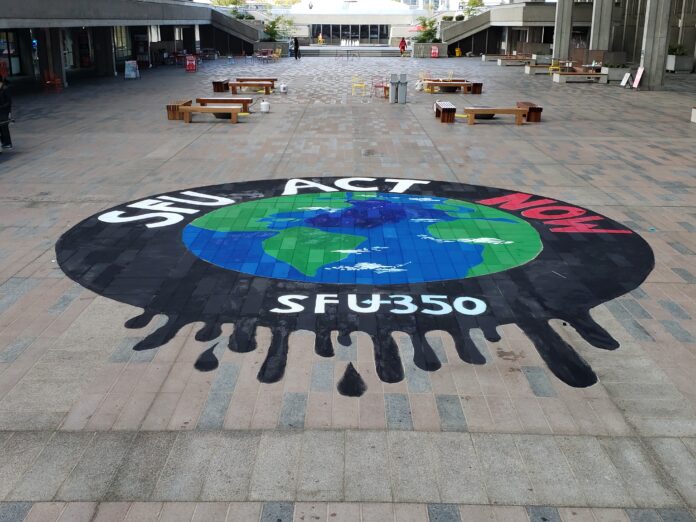
SFU mural
PHOTO: Nancy La / The Peak

On November 1, 2021, SFU announced their full divestment from fossil fuels by 2025. Divestment has been a topic of controversy on campus and has led to student protests in the form of a mural, rallies, and a planned hunger strike.   

In a statement from the Simon Fraser Student Society (SFSS), SFU350 co-president Abigail Herd stated, “We are thrilled to see SFU committing to full divestment from fossil fuels by 2025. This announcement would not have occurred without the tireless organizing of activists, including current and past SFU350 members who organized for 8 years, and student hunger strikers, and many organizations at SFU and beyond.”

SFU’s initial announcement did not mention student activists’ contributions. SFU350, hunger strike organizers, and student responses on Twitter all expressed disappointment at the lack of acknowledgements.

“Great win but what @drjoyjohnson failed to mention is the labour @sfu350 put into advocating for a full divestment. Upsetting to see since we’ve had conversations about the importance of crediting student labour with SFU Admin previously — stop taking wins with no credit,” tweeted Marie Hadded, SFSS vice-president equity and sustainability. “Don’t forget how @SFU tried to weaponize student conduct proceedings that were dropped because of community outrage.”

SFU’s statement has been revised to include grateful accreditations to the Board of Governors (BoG), its investment committees, SFU350 and other groups and students “who continue to raise awareness about the importance of the impact that we can make.” 

The full divestment announcement was made on the day independent activists including Zain Haq and math department professor Nilima Nigam planned to begin their hunger strike. They presented an ultimatum to SFU in October stating if SFU doesn’t meet their demands, which included full divestment, students will hold an overnight hunger strike in the AQ.

According to their media statement, the hunger strikers have decided to temporarily stand down after having their top demand met. They anticipate campaigning again for their other two demands regarding SFU’s opposition to the Trans Mountain Expansion Project (TMX) and the fire safety risk of its tank farm. 

“Although this is a great victory, the university still has to strongly address the threat of the Trans Mountain pipeline on the mountain, which puts the students and staff at lethal risk and threatens the planet,” noted Tim Takaro, health science professor and anti-TMX activist.

SFU350 sent out a statement attributing many involved groups over the past eight years and said the hunger strike “pushed this win over the finish line.” 

SFU350 has presented at the BoG meeting multiple times, most recently in October 2021, and has advocated for carbon footprint reduction, the United Nations’ Principles for Responsible Investment signature, and divestment from fossil fuels.

SFSS’ statement outlined their future collaboration with SFU350. “​​The SFSS looks forward to continuing to work with SFU350 and climate justice organizers to push SFU to implement the framework outlined in the Climate Declaration letter’s 7 demands, including decarbonize, divest, raise awareness and amplify, climate hub, climate justice, education, and next steps.” 

A comprehensive list of groups involved can be found in the media statements by SFSS and SFU350.

What Grinds Our Gears: Being unnecessarily rude when playing online games

0
Stop hating on me for playing as one of my favourite characters. Tima Miroshnichenko / pexels

I’m not much of a gamer, but in the games I have played, there never fails to be an entitled asshole who thinks they can dictate what I do and how I play. 

Some people tell me to increase the difficulty (while they’re already struggling), and others complain that certain characters are “useless.” Most recently, I had a team of people bash one of Genshin Impact’s latest characters, Kokomi, when I chose to play her as the healer for our team. While she had been criticized before release, I never thought I would meet people who had the audacity to complain to someone who plays her. 

I’m not someone who enjoys playing with characters just because they’re strong or powerful. I love Kokomi’s character design, personality, and she’s a great healer. While I could go on about why Kokomi is fantastic, the fact is, regardless of strength, games should be a source of fun and connection. I play them because I want to explore fantasy worlds — not argue with infuriated strangers who die after one hit. 

Gaming as a whole should create community, not division and petty arguments. I’ve met plenty of nice people in games, and we should be encouraging one another, not putting others down. I’m grateful to all the people who were excited to see me play with Kokomi, but I also know other players have also had difficult experiences. I should be able to play how I want, with who I want, and not be criticized for it. I ask anyone who plays alongside others to be kind and stop hating on Kokomi, because she’s definitely cuter than you are. 


Senate Report — November 1, 2021

0
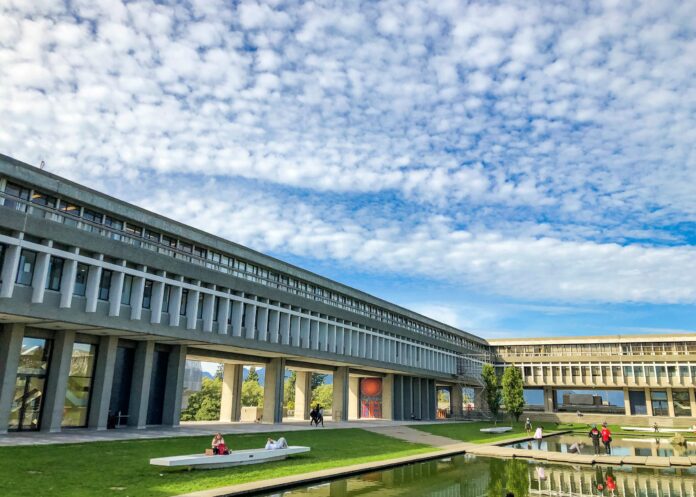
AQ with blue skies
PHOTO: Allyson Klassen / The Peak

Senate discuss contract cheating agencies 

Senator Shafik Bhalloo brought up the longstanding issue of contract cheating agencies at SFU which “incessantly targeted vulnerable students, and particularly students from the Chinese community.” 

Senator Bhalloo explained the posters, which have been widely distributed in Mandarin on Burnaby campus, guarantee good grades in 141 courses. 

He said he’s caught at least 11 students using their services to cheat. These students allegedly revealed these agencies sell past exams, audio recordings of lecture materials, and other proprietary information. 

Senator Bhalloo reprimanded contract cheating agencies for targeting vulnerable students.

“They are the antithesis of what we do here and they interfere with the work that we do with our students here,” said Bhalloo. “I feel despondent when I’m walking to my class to teach and I take down these [posters].”

He noted although the BC Academic Integrity Network is petitioning for the government to take legal action on contract cheating agencies, SFU needs to proactively address this issue as well. 

Senator Bhalloo asked if SFU would help professors in obtaining legal resources to sue these agencies and take legal action against them. 

“They’re trespassing; if you send them a cease and desist letter, and they still carry on doing it, you can get injunctive relief [or] you can use the trespass act. Let’s do something,” urged Bhalloo. 

Academic vice-president Catherine Dauvergne responded, “This is a really serious and pernicious problem and it’s one that SFU has been engaged with quite seriously over a number of years.” Dauvergne said while pursuing various legal action, they were met with threats to sue for defamation as the posters advertise a service. 

Dauvergne emphasized SFU’s work to educate students on the severe consequences of academic dishonesty and contract cheating. She acknowledged this challenge has been worsening since the pandemic, and stated SFU’s commitment to continue “exploring all legal avenues.” 

Senator Dauvergne clarified “individual professors are represented by their union,” should they wish to take action on their own.

This response was met with several senators stating SFU is not being proactive enough. They point to the lack of  legal actions against these agencies, the monitoring of these agencies on social media, and academic help for English as an Additional Language (EAL) students. 

“I worked at the Student Learning Commons for nearly a year and I would see students all the time who are desperate, near tears, coming to me because they had no idea how to do well in their classes these are, the majority of them, EAL students,” said student senator Judit Nagy. “SFU is not doing a good job at providing adequate help that fulfills academic integrity.”

President Joy Johnson referred this to the Senate committee on university teaching and learning, where they are to consider these comments and report back in a timely manner. 

Elective grading system extended to Summer 2023

Academics associate vice-president Wade Parkhouse moved a motion to “approve the extension of the pilot elective grading system through the summer 2023 term.” Senator Parmar seconded the motion. 

SFSS president Gabe Liosis spoke in favor of this motion. 

“I continue to hear from students that this elective grading scheme is incredibly transformative and helpful for students’ academic experience at SFU,” said Liosis. “This elective grading scheme really allows students the flexibility to explore and take chances without the risk of negative repercussions on their GPA.” 

Senators discussed future possibilities for the elective grading system to be incorporated as a permanent option, with a higher max number of courses, and a wider variety of courses allowed. Further discussion will be held on this expansion.

The motion to extend the elective grading system to Summer 2023 was carried.

Students should know about COVID-19 exposures at SFU

0
Having access to COVID-19 data will make me feel more at ease returning to campus. PHOTO: Kriti Monga / The Peak

We are more than halfway through the semester and there is still no way for students to know how many COVID-19 cases there are on campus. According to SFU, when Public Health confirms there is a positive case on campus, they use contact tracing to reach out to anyone who was in close contact with the carrier. However, this does not account for people they might not know, such as the strangers they sit beside in lectures. Otherwise, the information is confidential. While I understand medical information is private, it would make me feel safer on campus to know if there are any exposures in classrooms. SFU should share exposure information with students to be more transparent with how COVID-19 is being managed on campus. 

COVID-19 safety is already tenuous at SFU: masks are mandatory, but class occupancy has returned to 80–100% this term, which makes classrooms crowded. 

Returning to nearly full capacity with a vaccination declaration that only encourages partially vaccinated and unvaccinated students to be rapidly tested makes me uneasy. A university is a place where sickness can travel quickly. It only makes sense for universities to be more transparent about exposure rates to students. Knowing whether cases are happening is only one part of the picture, but it feels significant when COVID-19 measures seem to barely be reinforced. 

While I do see sanitizing stations on campus, and reminders of public health notices, I would feel safer knowing the COVID-19 cases happening around me. I’m not asked to verify my vaccine status when I eat in the cafeteria in the Maggie Benston Centre, despite SFU needing proof of vaccination at all dining facilities. Instructors should also be encouraged to record their lectures so students have more autonomy in making decisions for their health and education. Students deserve more transparency about their health. 

In response to the similar lack of exposure information at UBC, a UBC student created a tracker to sort COVID-19 exposure cases by date, time, and place. While Vancouver Coastal Health will not verify these cases, UBC’s media relations director of university affairs, Matthew Ramsey, said in an article for The Ubyssey “exposures and cases are not unexpected” among the community. 

This isn’t something students should have to do themselves. And surely, across three campuses with the number of students transiting to them, exposures should be expected. Ideally, we’d have access to public health notices when cases happen in classrooms immediately, and public health will direct us on further instructions. If possible, SFU could publish COVID-19 case reports across their campuses intermittently so students have a direct understanding of how it’s being managed. 

Currently, the SFU Return to Campus website states SFU will be conducting an audit in November to verify the accuracy of the submissions on the vaccine declaration website. They are asking for proof of vaccination by November 5. 


Don’t put all your faith in RateMyProfessor

0
There is nothing stopping me from posting literally anything on the internet. PHOTO: Gudrun Wai-Gunnarsson / The Peak

RateMyProfessor is a website long-time students may be familiar with. But for anyone unfamiliar, it’s a site where students can leave reviews on professors they’ve had a class with. It asks students to fill in what class they took with the professor, discuss technical aspects of the course, and if they would take the class again. Each review is accompanied by two scores out of five. One for the professor and one for the overall difficulty of the class. Generally, it’s a great resource if you’re struggling to figure out which classes to take. But while these ratings are a good starting point, it is important to remember they are not the most accurate and should not be your only deciding factor on which classes to take. 

For starters, I’ve personally taken classes where the reviews online do not reflect the professor at all. One of my all-time favourite professors in the English program only has a measly 3.3 rating while other professors with higher ratings (who I will not name so I don’t get in trouble) have taught classes I absolutely hated. 

Actually, many professors in the English department have ratings in the 3.0 range. If you scan through the comments, the biggest complaint is usually that there are too many readings. As an English student, I did not think any of these professors assigned an absurd amount of readings which leads me to believe most of these reviews are students outside of the English department. A business student is obviously going to rate an English course differently than another student in the English program. The same way that I would absolutely trash STAT 100 which I took as a quantitative course and still have stress dreams about. 

Unfortunately, RateMyProfessor has no way for users to input what program they belong to. Furthermore, there is no actual verification process to ensure you have taken the class you’re reviewing or if you even are an SFU student. Meaning any random person living anywhere in the world can go online and leave a negative review. Now you’re probably thinking “who would do this?” But as someone who has worked in customer service and received numerous phone calls about people pretending to be “stuck in the washroom,” I would not be surprised.

This is all to say, people all have their own opinions and beliefs which will influence their reviews. Someone who sides with more right-wing politics might find a specific professor too progressive and give them a lower rating. Also, different professors have been teaching for different amounts of time and reviews cannot always accurately reflect this. A professor has the opportunity to look through this feedback and change their teaching methods accordingly, but I found reviews dating back to 2002. If there aren’t many students reviewing a professor, these old negative reviews may be reducing their score for years to come even if they have improved. 

While RateMyProfessor is a good place to see what people think of professors, it should not be your only determining factor. I would suggest asking people you know in your department for their opinions on professors. These people will have a better understanding of what taking a class in your department is like and will most likely give you a more honest review.

We need to be patient with each other as we transition to in-person classes

0
Returning to in-person learning is more stressful than we give it credit for. PHOTO: javier trueba / Unsplash

As we transition back to in-person classes after more than 18 months of online classes, we need to be patient with each other. We are all facing the challenges COVID-19 created, such as increased mental health problems, concerns about getting sick, and learning how to interact socially again after distance and isolation. In short, the versions of ourselves returning to campus this semester may be a little more nervous, overwhelmed, and awkward than the versions pre-March 2020. This is why it’s important students and instructors be patient with each other through this adjustment. 

The Centre for Addiction and Mental Health reports COVID-19 has had “a negative impact on Canadians’ mental health,” with higher levels of stress, anxiety, substance use, and alcohol consumption reported since the beginning of the pandemic. Students are particularly vulnerable to these negative mental health impacts. A 2020 study reported 71% of the students sampled “indicated increased stress and anxiety due to the COVID-19 outbreak.” Even more students reported “negative impacts of the pandemic” and noted they were worried about their “academic performance.” 

Students are not the only ones feeling stressed. Professors are feeling the negative mental health impacts of COVID-19, too. Nearly half of the professors in a survey conducted by Course Hero considered leaving their jobs due to the challenges and stress presented by COVID-19. Instructors at various BC universities have spoken out about concerns surrounding COVID-19 transmission in universities, suggesting university policies could be improved. 

After months of social distancing and isolation, some of us may be feeling a little unsure of how to socially interact. Humans are social creatures and not socializing for periods of time can leave us feeling awkward, stressed, irritable, and sad. If you haven’t been socializing a lot lately, you may find yourself making excuses not to socialize, oversharing during conversations, or feeling self-conscious or hypervigilant in social situations. 

So, what can we do for each other? Empathize. 

Students: be kind to your classmates and promote honest conversations about these challenges so no one feels alone. Additionally, give yourself the space and time to adapt to all the changes in your life. This may look like balancing academics and social interactions with breaks and days off. As students, we must also be aware our professors and instructors have been feeling the negative impacts of the COVID-19 pandemic. Many have been experiencing high stress and increased workloads. Try your best to be a patient, kind, and engaged student. 

Professors: imagine how difficult it is to be a university student during a pandemic, transitioning from in-person class to online class and then back to in-person within two years. You’re in a position to ease some of the stress and worry your students may be experiencing. This may include giving students more or longer breaks during lectures, recording your lectures for those who are unable to or uncomfortable with coming to campus, and being flexible with your participation points, attendance, deadlines, and grading. Many professors made these adjustments during the peak of the pandemic, but these adjustments are still needed as we make yet another difficult transition. 

As we go back to in-person classes, we’re also grappling with mental health challenges, worries about getting sick, re-learning how to interact with each other, and more. Fortunately, as cliché as it sounds, we are all in this together and can try our best to make it a little easier for each other. It is necessary we empathize and be patient — with our students, with our professors, and with ourselves.

Highlights of the SFSS 2021 Annual General Meeting

0
The SUB building
PHOTO: Kriti Monga / The Peak

The Simon Fraser Student Society (SFSS) hosted their Annual General Meeting virtually on October 27, 2021. The meeting’s motions included SFSS’ divestment from fossil fuels and support for the Accessible Course Practices campaign. 

Divestment Bylaw

The SFSS Divestment Bylaw restricts the SFSS from investing in fossil fuel directly. For indirect investments, the SFSS can only choose companies with “5% of their gross revenue from fossil fuel investments,” at most. 

The Divestment Bylaw stems from an older referendum on fossil fuel divestment. Previously, 79% of SFSS members’ votes were in favour of the motion, but it did not become an official SFSS bylaw as there weren’t enough attendees to meet quorum. 

SFU350 co-president Abigail Herd and divestment organizer Brennan Strandberg-Salmon attended the meeting to discuss the bylaw proposal. SFU350 hopes the bylaw’s impact will extend beyond the SFSS by pressuring other student societies and SFU to also divest — on November 1, 2021, SFU announced a full divestment from fossil fuel by 2025. Herd said the SFSS could also explore different green energy sources, such as thermal energy.

Currently, the SFSS Investment Policy prevents the society from investing in fossil fuels. Vice-president equity and sustainability Marie Haddad pointed out future boards could override the current policy. According to Haddad, while the policy is easier to amend than a bylaw, bylaws can still be changed by future AGM motions or referendums.

“As we call on SFU to divest, we also need to ensure that we continue to divest for the future and continue to be leaders to ensure that our generation and future generations to come have a future,” said Haddad.

Vice-president internal and organizational development Corbett Gildersleve clarified the SFSS has no current or former direct investments in fossil fuels. However, he acknowledged the SFSS’ previous investments could have indirectly invested in fossil fuels.

During the discussion, a member, Hnat Cheung, disagreed with the motion.

“I feel like there’s a way we can do this without hurting students’ choice and the students’ opportunities, because many of these companies are the biggest in the world, and some people want to have a career in the fossil fuel industry,” said Cheung.

Herd clarified SFU350’s stance on energy transition in response. 

“This motion is about divestment, and that means it’s about revoking the social license of fossil fuels to operate. It’s not about bankrupting the fossil fuel industry. And second, I think it’s good to point out that SFU350 [ . . . ] advocates strongly for a just transition for workers who are in the energy sector right now and into the future.

“Consumers right now don’t have a choice in our energy source. We don’t have a choice until the fossil fuel industry is not the only option. We need institutional decarbonization before individual decarbonization,” said Herd.

The Divestment Bylaw passed with 204 votes in favour and 26 opposed.

Accessible Course Practices campaign Support

Biomedical physiology and kinesiology representative Kashish Mehta put forth a motion to support the Accessible Course Practices campaign (ACP). The campaign calls for all lectures to be recorded for students.

Mehta recognized students may be unable to attend class due to responsibilities as student athletes, working students, and parents. 

According to Mehta, “In the summer 2020 semester, our accessible course practices student survey revealed that about 79% of the students who took the survey were anxious about their return to campus. Yet, despite their concerns, students had to be back in-person, where currently some students have to be stuck in overcrowded environments, because they’re worried about their academic standing.”

A member who favoured the motion said this campaign would address accessibility concerns of students with disabilities. They noted the challenges when advocating for a professor to record lectures, such as professors wanting to protect their intellectual property and privacy.

A member disagreed with the motion and was concerned with recorded lectures decreasing course attendance.

“The prof is recording the lectures, but that means about maybe 10 people are coming to class. And when it’s a discussion class like this, it’s completely hollowed out the entire experience of the course,” they said.

“Recordings are a great vehicle for captioning to improve communication assets. This is needed for disabled students, because we are often denied access accommodations and have to fight each term for basic communication assets and access to learning content,” a member, Vivian Ly, said.

Gildersleve amended the motion to include “closed captioning with [large] accessible font” in all lecture recordings. Gildersleve’s amendment to the ACP campaign motion passed with 221 votes in favour and 10 opposed.

The ACP campaign motion passed with 213 votes in favour and 10 opposed.

To review the meeting highlights, visit the SFSS website. 

SFU researcher discusses impact of microplastics on marine life

0
Three knitted article of clothing stacked on top of each other
PHOTO: Dan Gold / Unsplash

SFU researcher Rhiannon Moore and her team published their research on microplastics in the beluga whale food chain. The study found microplastics not only in beluga whale stomachs, but also in the stomachs of their prey. 

Her research group examined five different arctic fish species beluga whales are known to consume, and found microplastic particles in 21% out of 116 fish stomachs investigated.

“The plastic that we found within the fish that we investigated —  78% of those particles were microfibres, so that’s [ . . . ] from textiles like rugs and furniture but probably most from our clothing because we wash it frequently and it is not able to be filtered out through waste water treatment,” Moore told The Peak. “The main takeaway from this is that plastic has infiltrated many corners of the world including arctic food webs that are in remote areas and not just at the top of the food web, but also at the bottom as well.” 

Moore currently works as a zero waste outreach coordinator for the City of Victoria to relay waste reduction policies to the public. 

She explained the solution to this problem should not fall solely on one person or one company. “The onus should be on both the consumer and corporations,” she said.

Corporations are a major contributor to greenhouse gases and plastic waste. In a research article by Greenpeace, 10 international companies are responsible for a majority of the world’s plastic waste.  

“We live in a very throwaway society and we are always looking for the next best deal, the sale, the newest iPhone, the newest clothing for the next season. All of those things are made of materials that takes a lot of energy to produce and if they are not made with quality, then we end up throwing them away,” said Moore. “We need to really reduce the amount of items that we are manufacturing, purchasing, and disposing of.” She further explained how consumer waste often ends up polluting other parts of the environment. 

However, Moore emphasized the importance of individual choices as consumers and the impacts of their choices on corporate decisions. She believes the initial flood of public interest towards a zero waste lifestyle was the reason many corporations started adopting “sustainable alternatives” or zero waste practices.

“We are the ones that businesses and corporations are catering to,” said Moore. “I think that we have kind of been told this lie, or this story, that our actions don’t matter and I think that that’s really harmful because I think our actions do really matter and every time we purchase something we’re voting with our dollars.”

According to SFU, the research team involved with this study included scientists from Ocean Wise Conservation Association, Fisheries and Oceans Canada. 

Moore’s research is available to read in Science of The Total Environment Journal.