Home Blog Page 333

What Grinds Our Gears: Outdoor pianos being ruined by the weather

0
The pianos are a nice reminder that life exists outside of studying. Photo: Flickr

Coming back to in-person school filled me with excitement. Finally, my eyes could have a rest from the glaring blue-hued hell of Zoom. Yet what was the first thing that entered my sight when I stepped foot on campus? Ridiculous fucking pianos sitting outdoors and exposed to the elements instead of inside a cozy room where they belong.

Look, I get it. The dark academia vibes are important for Tumblr and Instagram street creds, but we do not need to destroy these otherwise perfectly fine musical instruments. Aren’t the golden autumn trees #aesthetic enough already? 

Musical instruments are extremely delicate and require careful maintenance. Being left out in the cold, damp, foggy environment of the Burnaby campus is the worst possible fate for a piano made out of wood and metal strings. The moisture in the air warps the wood and rusts the metal inside the piano, creating irreversible damage to the instrument. Such damage also permanently modifies the sound of the piano. A piano that cannot sound like a piano is no longer classified as a piano.

It’s time to leave the pianos alone and let them stay in a dry, warm, and most importantly, indoor space. Isn’t it enough that we have to suffer in the bitter cold and damp mountain? Why do we have to drag in poor innocent pianos to suffer with us?

How to ease anxiety during finals season

0
ILLUSTRATION: Sabrina Kedzior / The Peak

As someone with anxiety, this is the absolute worst time of the semester for me. I’m hot off the heels of finishing a bunch of essays and now have to start worrying about final exams. It’s very easy to start feeling overwhelmed. But after five years (or 15 final exam seasons) of doing this, I’ve gathered a list of tips that help me feel like I have some sort of control over my life. 


Clean your living space

The first thing that happens to me when I start to feel overwhelmed during finals season is my room becomes a disaster zone. I like to think my brain goes into survival mode and I try to allocate the limited amount of energy I have to specific tasks like studying. But then I get anxious that my room is a mess and I procrastinate cleaning it. Then I get anxious that I’m procrastinating, and the vicious cycle starts. 

The important part of this tip is to just do a little bit of cleaning every day. Instead of throwing your clothes on the floor while trying to pick an outfit, put them back after you try them on. Start cleaning before it becomes a problem. By doing a small amount every day, the amount of mess becomes manageable and never gets to the point where you’re spending an entire hour hanging up clothes because you destroyed your closet trying to plan an outfit for a date (not a true story I promise . . . probably). 

If your living space has already become an overwhelming mess, I find breaking up tasks into small chunks makes tackling it more manageable. I typically start by cleaning my desk so I have a clean studying space, and then the next day I do something like my laundry, for example. The important part is to give yourself small attainable goals so you’re not getting too overwhelmed.


Exercise

Okay, I know this is literally on every list for solving every single problem, but it works! When I get anxious, I feel like I have a bunch of pent-up nervous energy that I can’t figure out how to get rid of. But exercising is the perfect opportunity to use it all up. 

I like to go on runs (yes, I’m literally running away from my problems), but any form of exercise will do. This doesn’t even need to be super sweaty and gross exercising either. Things like walking around your neighbourhood are a great way to not only get some fresh air but get your blood pumping. 

Getting outside isn’t always possible, so I also suggest doing some workout videos online. I specifically recommend low-impact workouts like the ones from Body Project for those with bad knees or who live in an apartment and have to be considerate of downstairs neighbours. Remember: this doesn’t have to be a difficult workout. Any type of movement will help. 


Taking a breather

I’m relatively new to this tip, but I have been amazed by how much it has helped me. Doing some deep, controlled breathing exercises will have you feeling less anxious and more grounded in as little as a few minutes. There are multiple ways for you to do this so feel free to experiment and find what works best for you. 

Personally, I close my eyes, plant my feet firmly on the ground, make sure my back is straight, and then breathe in and out deeply. The trick here is your exhale should be much longer (4–6 seconds) than your inhale (2–4 seconds). If not, breathing too quickly will increase your heart rate which will make you more anxious (and you’ll potentially hyperventilate). When doing this technique, I can actually feel the anxiety leaving my body with each exhale, and as cheesy as it sounds, I like to pretend I’m physically pushing it out of my body. 

I have also dabbled in doing some mindfulness exercises in the morning and while they may not be my thing, they might work for you. There are plenty of mindfulness podcasts available online and most only take five minutes to complete. Someone on the other end will guide you through different breathing exercises and have you focus on a different part of your body for each day. They are, however, more difficult to do in public if you’re feeling especially anxious.


Actually studying

I know this tip is a little bit shitty, but it needs to be said. The hardest part for me when I’m feeling anxious is actually getting started with studying. So then I just end up laying in bed with this ball of anxiety in my stomach, unable to start studying, and then getting even more anxious that I’m not studying. The hardest part is to just get started. 

This may look different to other people, but what works for me is actually going somewhere to study like at a café. Not only do I get to drink a yummy coffee but I feel more obligated to at least have my notes open on my computer. If I’m at home, I’ll just end up crawling into bed and scrolling through TikTok until I eventually pass out. 

If you can’t leave your house, at least try and establish a specific spot to sit in to get work done. Don’t try and do your work from in bed but instead sit at a specific table. And then sit at that same table every time you study. That’s right, you’re hacking your mind because your brain will start to associate that same spot with getting work done. 


Take care of your body

You’re going to be no help to anyone, especially yourself, if you’re not well-rested and eating enough. Just because it’s final exam season does not mean you get to skip out on meals for the sake of studying. 

More importantly, try to eat healthy meals with fruits and vegetables. The quality of food you are eating will give you more energy and you won’t crash as easily afterwards. There are many easy recipes you can make at home such as roasted vegetables or a quick salad (I find adding one of those rotisserie chickens from the grocery store to your meals to be an inexpensive and easy way to spice up a meal). While it’s not always possible to make something at home, there are plenty of options on campus like Sally the Salad robot or Steve’s Poké Bar. 

Additionally, get eight hours of sleep (and getting more is okay too). You’re not going to learn anything useful by staying up all night before your exam. And ideally, you will have been doing all the other tips I just taught you and not procrastinating to a point where you need to pull an all-nighter. 


Don’t ignore a serious problem

If your anxiety starts to drastically affect your life it might be a good idea to talk to a medical professional. You can go to your family doctor, a walk-in clinic, or even SFU Health & Counselling. They will be able to help organize the next steps to dealing with your anxiety and may even recommend anxiety medication. There is nothing wrong with recognizing you need extra help and I promise talking to someone about it will help tremendously.


 

SFU Vancouver holds event to commemorate National Day of Truth and Reconciliation

0
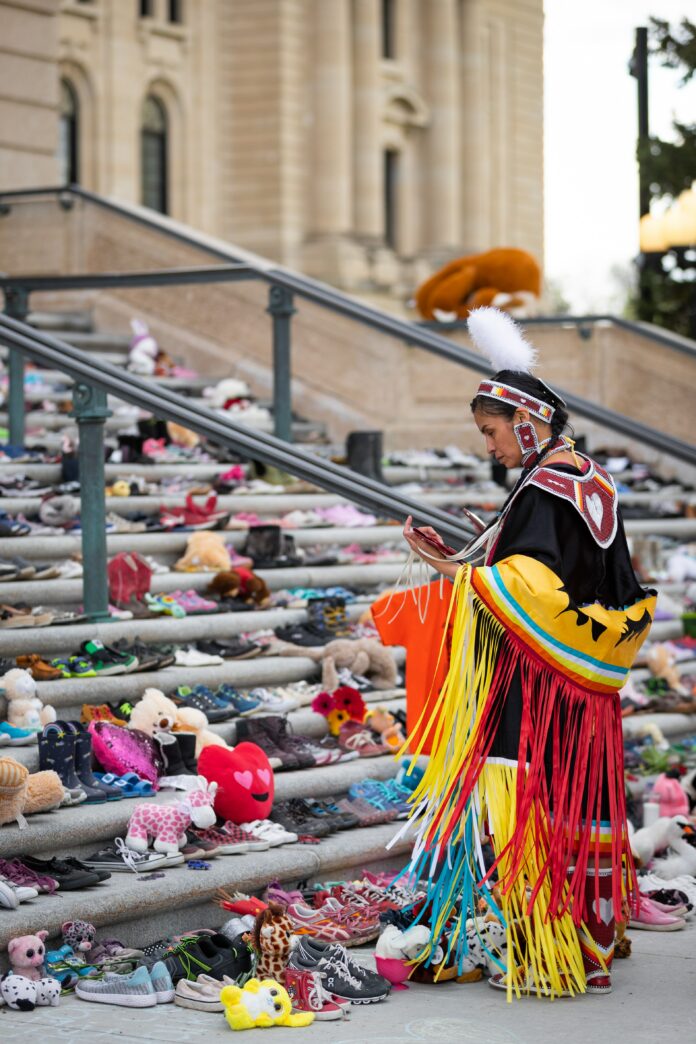
Person in Indigenous garment looking at items laid on staircase
PHOTO: Tandem X Visuals / Unsplash

Content warning: mentions of residential schools. 

On September 28, 2021, SFU Vancouver hosted the National Day of Truth and Reconciliation (NTRC) event to “raise awareness of the dark legacy of the residential school system in Canada, and to honour the children affected and their families.” In attendance were Elders Margaret, Seislom, and Syexwaliya, along with president Joy Johnson and staff from the office of Aboriginal Peoples and Indigenous student recruitment and admissions. 

In a public statement on NTRC, Johnson said, “SFU has obligations to recognize, not just the land on which our campuses reside but also the legacy of colonization. We need to move forward in a positive way to restore relationships with Indigenous communities through meaningful action.”

Attendees were encouraged to wear orange shirts to “honour those impacted by the residential school system.” Orange shirts were also available for sale by donation, with all proceeds going to Residential School Survivors’ Society. 

The event opened with speeches from Elder Margaret and president Johnson. This was followed by testimonies from Ron Johnston, director of office for Aboriginal Peoples, Jessica La Rochelle, director of Indigenous student recruitment and admissions, and Gary George, officer for community relations of office for Aboriginal Peoples. 

The event concluded with Elder Syexwaliya leading a drumming and dancing circle. SFU Burnaby and Surrey held their own ceremonies for NTRC on September 27 and 30, respectively.

The Truth and Reconciliation Commission included introducing a national holiday for truth and reconciliation in its 94 Calls to Action, published in December 2015. In 2017, Saskatchewan Member of Parliament, Georgina Jolibois, led a motion for National Day of Truth and Reconciliation to be made a holiday. NTRC was made a federal statutory holiday on June 5, 2021, in the wake of the findings of burial sites in former residential school locations across Canada.

The orange shirt, symbolic of NTRC, stemmed from Phyllis Webstad’s (Shuswap) story and experience with the residential school system. In 1973, Webstad’s orange shirt was taken away when she entered St. Joseph’s Residential School in Williams Lake, BC. On September 30, 2013, Webstad spoke publicly for the first time about her connection with the orange shirt. From then on, the colour orange has been associated with Truth and Reconciliation. 

The 94 Calls to Action and resources for education on the history and effects of residential schools are available on the National Centre for Truth and Reconciliation website. For those wishing to contribute financially, the Indian Residential School Survivors’ Society is accepting donations on their website. For those who require it, the Residential School Crisis Line at 1-866-925-4419 is available 24/7. 

SFU researcher finds 50% decline in coral reefs capacity since 1950s

0
Coral reef under water
PHOTO: Quentin Hanich / SFU

Andrés Cisneros-Montemayor, assistant professor in the School of Resource and Environmental Management, recently published a new study on coral reef capacity. He and a team of multi-institutional researchers found coral reef capacity and coral cover have decreased up to 50% globally since the 1950s. This has reduced the ability of coral reefs to provide essential habitats for aquatic animals. The research also noted the impact felt by many Indigenous communities in coastal regions. 

The study emphasizes the effect of this decline on the food consumption of Indigenous communities as they have “a high dependence on coral reef fisheries, for both traditions and food sovereignty,” said Cisneros-Montemayor.

“Food security is a big part of it, but just as importantly, food sovereignty — choosing what species you want to eat and which one is culturally desirable is a really important part of their daily lives and traditions.”

Coral reefs, like the Great Australian Barrier Reef, are aquatic structures in which corals, a type of cnidarian animal, reside. Coral cover refers to the amount of surface area the structures can cover. 

The lack of living coral reef capacity causes a decline in the fish species around the area. “Living reefs have way more biodiversity and way more abundance of species associated with them.” This reduction in living coral reefs can be caused by multiple factors such as pollution, climate change, and human activity.  

Cisneros-Montemayor compared the significance of the reduced coral reef capacity in Indigenous and frontline communities to its commercial importance, and stated the former are affected more than just financially. “It’s very difficult to convey to people that some of these impacts that are happening through climate change [ . . . ] have a much deeper implication than just losing income,” said Cisneros-Montemayor. 

While some have proposed solutions such as relocation or changing practices, “in places where Indigeneity is intimately tied to the practice of fishing, to physically being and living your life in these reefs, those solutions don’t work.”     

The impact of climate change on the coral reefs is related to the warming of the oceans. Cisneros-Montemayor said, “Corals live in a symbiosis with the animal and algae. When water gets too warm, the symbiosis is broken and over time, that coral will just die.” 

Dead coral reefs are still effective and “useful for a lot of fish,” he explained , but “living coral [reefs] are associated with more species.” 25% of fish species depend on coral reefs, signifying their importance.

Cisneros-Montemayor reveals another effect of climate change on coral reefs: ocean acidification. “Corals, to build these structures that create the reef itself, they need to precipitate calcium carbonates. So what happens with acidification is the ocean chemistry actually changes in ways that make it a lot more difficult for corals to make a reef.”

He pointed out a challenging aspect of his research involves convincing the general public the issues affecting Indigenous communities deserve attention and resources.    

Cisneros-Montemayor hoped to convey the importance of capacity of coral reefs is directly proportional to the plight of surrounding frontline communities. “It really comes down to educating people [ . . . ] and bringing to light these really current Indigenous relationships; these aren’t things of the past.”  

She Connects launches mentorship program for girls

0
Founders of She Connects, left from right: Leena, Meghan, Emily, and Avneet
PHOTO: Courtesy of Meghan Dunn

On September 12, 2021, SFU student Meghan Dunn and alumni Avneet Sandhu launched She Connects, alongside Leena Parhar and Emily Haugen. She Connects is a non-profit organization, funded by grants, that runs programs supporting grade 10–12 girls in their preparations for university. 

They provide online mentorship services to young women through their volunteer base of students. Their website states, “As a grassroots movement, our main goal is to connect young women in high school with women who have graduated, to foster thought-exchange, dialogues, and mentorship synergies.” The program is open to all female-identifying or non-binary people for both mentor and mentee positions.

The Peak interviewed Meghan Dunn, health sciences student, She Connects co-founder, and outreach director. 

According to Dunn, She Connects started when the four founders met while attending an event in Ottawa in April 2019. The event, Daughters of the Vote, aimed to empower women’s involvement in politics and leadership. All attending delegates were eligible to apply for the Rosemary Speirs Leadership grant which would give them seed funding for a women-led, community-based leadership project. Dunn, Sandhu, Parhar, and Haugen, upon receiving grants, pooled the funds into their vision for She Connects which they started in late 2019. 

“The program was created because all four founders felt that mentorship is a beneficial part of life, in particular during the transition out of high school where navigating so many different opportunities and pathways in and around you can be challenging,” said Dunn. “As a team, we hope to empower young women and foster strong relationships between young women.”

Dunn stated all mentors are trained under Mentor Canada, screened by the She Connects founders, and have passed criminal record checks. While there are no specific questions for mentees about what type of mentors they would like, Dunn mentioned She Connects can accommodate specific mentor arrangements for those who require it. Once matched with a mentor, mentees can direct the conversation to specific topics they are seeking guidance in. Modes of contact are decided between the mentor and mentee, with virtual meetings being recommended due to COVID-19. 

“She Connects is heavily focused on mental health. Our mentors can offer support in the areas of mental health, body image, academics, career paths, gap years, and general ‘post-high school’ confusion,” said Dunn. 

Dunn explained they target young women with their programs because they face many shared barriers, such as entrance to the workforce. Dunn pointed to how high school offers many mental health challenges unique to women. 

According to Dunn, the biggest obstacle within their launch has been recruiting enough mentees for their many qualified mentors. Their current ratio is one mentee to every two mentors, with COVID-19 limiting access to this age-specific audience. Despite challenges, COVID-19 has allowed them “to focus on developing [their] online platform” and their launch has been well received by the public so far with over 40 attendees at their launch event on September 12.

“We are open to creating more comprehensive programs down the road, but for now we are just ensuring that our mentors/mentees are receiving the support that they need and generally just solidifying our program,” said Dunn. “We are so excited about whatever the future has in store!”

You can find out more and keep up to date about She Connects through their website, Facebook page, and Instagram account. 

SFU350 presents their climate action demands to Board of Governors

0
SFU Rotundra
PHOTO: Gudrun Wai-Gunnarsson / The Peak

The Board of Governors (BoG) meeting on September 28, 2021 began with a presentation by SFU350 on their Climate Emergency Open Letter and its demands. Since its release on August 11, 2021, the letter has gained over 900 signatures from students, faculty, staff, and community members. 

The Board voiced their support for SFU350’s proposal after the student group presented and left the call, but SFU350’s demands were delayed and referred to management in two separate motions. Serena Bains, the only undergraduate BoG representative, was the only one to vote against these delays. 

Following the presentation, board member Angie Hall moved a motion to respond to SFU350’s demands. 

The motion includes progress reports from management on SFU’s Race 2 Zero goals and for the Board to “recognize the unequivocal evidence of climate change,” amongst other demands. Bains moved to add the following amendments to Hall’s motion: to declare a climate emergency and commit to divesting from fossil fuels among other demands. She also asked for the Board of Governors to be updated on this progress by November 2021.

Bains’ amendment was not seconded, with Hall’s original motion passing successfully. 

In response to SFU350’s presentation, Johnson moved to consider SFU350’s demands at a later date. The Board said this was to gain time to carefully reflect and gather data before agreeing to SFU350’s demands. The Board voted in favour of Johnson’s motion, with one objection from Bains. 

“It was clear that the Board of Governors preferred to delay a vote on the 350 motion and avoid any accountability that comes along with voting against such a motion,” said Bains to The Peak. “I’ve never seen an amendment fail to receive a seconder and die on the floor like that.”

SFU released a statement following the BoG meeting. This statement outlined some of their work against climate change, announced their commitment to UN’s Race 2 Zero pledge, and stated they will be releasing more aggressive action items soon. They reported the Board requested regular updates on SFU’s progress with the pledge and for “management to respond to the proposal of SFU350 more quickly than the timeline requested by the student group.” 

The Peak spoke to WeiChun Kua, SFU350 executive and one of the presenters in the meeting. “Our intention from the very start of our climate emergency declaration campaign was to have SFU commit to declaring a climate emergency, commit to our 7 demands in principle, and [ . . . ] formulate a plan to execute those demands and report back by April 2022,” said Kua. 

“SFU is committing climate injustice with their delay tactics and by not acting on what students, faculty and staff are asking for, but we will keep pushing and we won’t stop until there is climate justice.”

Climate Justice Mural removed from Convocation Mall

0
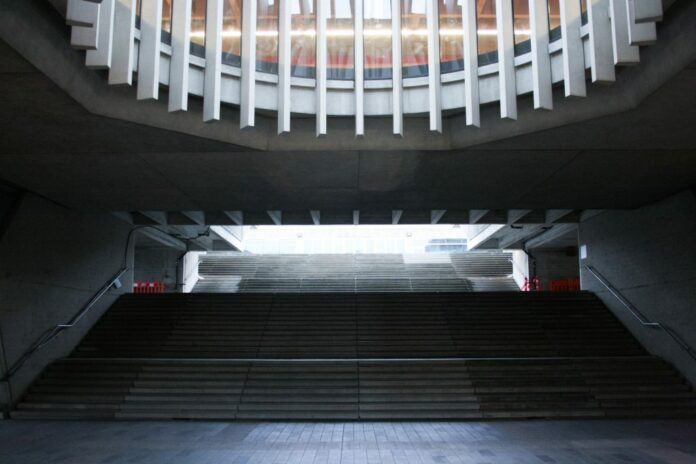
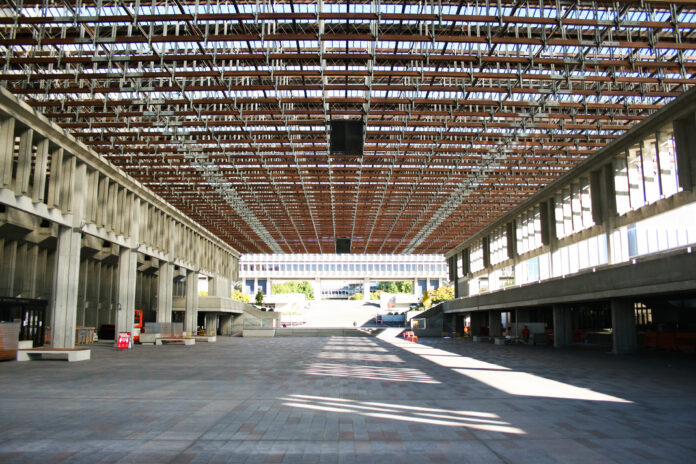
Convocation Mall, empty
PHOTO: Gudrun Wai-Gunnarsson / The Peak

A group of SFU students from SFU350, along with supporters, painted a mural at the Burnaby Campus in Convocation Mall on September 12, 2021. The mural has now been removed from the space by SFU.

SFU vice-provost students and international Rummana Khan Hemani sent a letter on September 23, 2021 to those involved in the organization and creation of the mural, notifying them that disciplinary action for those involved will be pursued. The letter noted that SFU is ”disappointed that student members of SFU350 took this action and defaced our premises.”

Marie Haddad, SFSS vice-president equity and sustainability, told The Peak a few days after they received the letter, that president Joy Johnson had a discussion with SFSS president Gabe Liosis and dropped the student conduct proceedings. 

The Peak reached out to SFU350 but did not receive a response by the publication deadline due to technical errors.

Haddad said SFU350 has been developing their campaign for eight months to craft a list of demands for the university. Among those demands are divesting from fossil fuels and declaring a state of climate emergency. The climate justice mural was painted to bring awareness to SFU350’s campaign.

After the mural was painted, members of the SFSS and SFU met with Hemani to discuss their activism. Haddad reported the meeting went well and “it seemed like there was a way forward” to work with SFU. Haddad said the SFSS offered to pay for any potential damages that may be caused in the process, such as the paint staining the floor in Convocation Mall. They also noted the SFSS and SFU350 would remove the mural, at no cost to the university, on September 28, 2021.

Their second meeting with administration was on September 23, 2021. “We got the notification that we needed a second meeting. And probably a minute before that meeting, we received that letter from admin [where] they told us they were ready to go forward with Student Conduct proceedings, which is terrifying,” said Haddad.

The letter to the SFSS and SFU350 cited a Student Conduct Policy that restricts defacing of property. Haddad noted the policy also states, “Nothing in this policy shall be interpreted to prohibit peaceful assemblies or demonstrations.”

“We knew, we foresaw this being weaponized specifically against peaceful protests [ . . . ] It was really inappropriate and dangerous for the university to be weaponizing a policy like this against students who want change,” said Haddad.

The SFSS released a statement after receiving the letter from SFU administration which read, “Climate justice murals such as the one in Convocation Mall are wonderful cultural and protest demonstration methods that raise awareness about climate justice, the climate crisis, and in this case the conversation about divestment in fossil fuels.”

A public statement from SFU, released on September 27, 2021, states, “We differ in interpretation of peaceful protest as it applies to university property. Due to these differing interpretations, student misconduct will not be pursued. After discussion, we have agreed that the mural will stay in place until the conclusion of the Board of Governors meeting. This provides time for the student group to ensure their voices and message have been heard.”

As per the original agreement with SFU350, the mural’s removal began on September 28, 2021 after the Board of Governors meeting. “The mural served a purpose bigger than we assumed would come forward: the community was brought together,” said Haddad. 

“We have also agreed that further discussion will be had regarding the importance of protecting the right to protest at SFU,” said the statement from SFU.

SFU350’s campaign is ongoing. The list of demands outlined in their Climate Emergency Declaration Letter was intended to be discussed at the Board of Governors meeting on September 28, 2021 but Haddad reported their motion was delayed by the Board of Governors. They plan to discuss it again at the next board meeting in October. 

Haddad noted the Board of Governors put forward their own motion which was passed at the September meeting. “Ultimately, the motion that they brought forward was to say that they would support a climate emergency, but not that they would declare it [ . . . ] For the university to push that aside and say that a commitment is not even needed and more research is needed is unfortunate, because the science and the evidence is [clear],” said Haddad. 

At the time of publication the mural was in the process of being removed. Haddad noted, at this point, they had not received news of damage to Convocation Mall.

Council Meeting — September 29, 2021

0
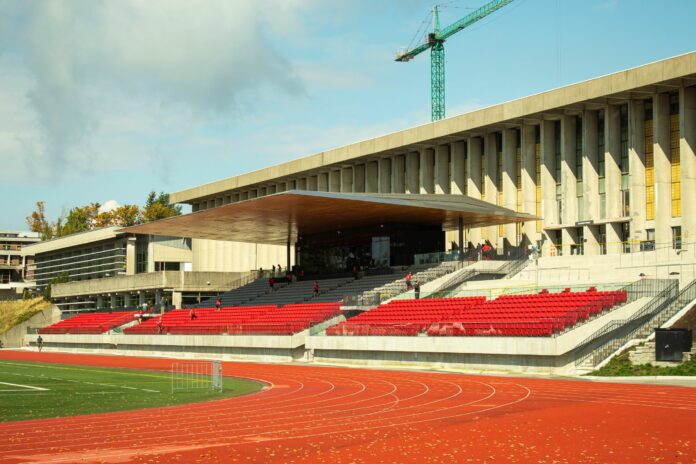
SFU Stadium with red seating
PHOTO: Krystal Chan / The Peak

Council votes on furnishing the SUB for student groups

The SFSS Council discussed the current state of the SUB since its grand opening in August. Vice-president finance and services Corbett Gildersleve introduced a motion to spend the remaining funds from the construction of the SUB to furnish the rooms dedicated to the First Nations Student Association (FNSA), Students of Caribbean and African Ancestry (SOCA), and the Disability and Neurodiversity Alliance (DNA). The remaining budget dedicated to furnishing these rooms is $125,000. 

Gildersleve reported this “has long been delayed.”

Treasurer of FNSA Kali Stierle noted, “Almost the entire building is furnished except for our rooms. We’ve been waiting for months for the furniture to make our room usable. We need this so we can serve our membership and provide support.”

SOCA president Balqees Jama noted part of the SUB Opening Plan and legal agreement with the SFSS is that the SFSS furnish these spaces. 

Marie Haddad, vice-president equity and sustainability, said, “Institutions can be very full of microaggressions, racism, and things that are culturally not equipped for folks that are Black or Indigenous. In the same way, they cannot not be accessible for disabled folks. Ensuring that these folks have cultural and accessible funding and furnishing ensures that people feel more at home.” 

Computing science representative Ryan Vansickle voiced his “surprise at the price tag on this.” According to Vansickle, much larger student groups on campus find furniture from second-hand suppliers such as Craigslist. Gildersleve noted the price is the standard as they are supplying furniture built to last. 

Philosophy representative Tony Yu also had reservations about the motion. His concerns lay in the lack of specificity in the motion: details of what was being purchased such as model and brand were unclear. He also questioned the reserved $9,000 for cultural expenditures. “In my experience, I’ve never seen the SFSS give out a blank check.” 

Gildersleve clarified this section is intended for decorations such as sculptures and other items, giving these groups the flexibility to purchase what they see fit. 

“Folks from this community should have the autonomy to ensure their culturally relevant and accessible furnishing [are] actually in place,” said Haddad. She noted these items are typically expensive.

Matthew Provost, vice-president external and community affairs, said, “I’ve seen the barriers that the SFSS continually made [ . . . ] if these groups were consulted in a good way prior to the SUB being open we wouldn’t be having this conversation because their furniture would already be in here.” 

Abhishek Parmar, political science representative, suggested the motion be amended and separated into three separate motions since he was not supportive of the motion as a whole. Gildersleve noted that “it might be harmful to separate it out.”

“It’s really nice to have folks back into the space they belong in, especially when it comes to Black, Indigenous, and disabled folks. These folks have continuously been excluded out of spaces [ . . . ] We need to ensure they have the funds to make their spaces safe and accessible to marginalized folks within the community,” said Haddad. 

The motion was made but did not reach unanimous consent. The final motion was passed and carried with 27 votes in approval, 3 votes in objection, and 7 abstention votes. 

Council discusses student engagement levels

Science undergraduate society representative Zaid Lari introduced a discussion around the lack of student engagement at Council meetings. “I think it’s really important that we get students to be attending and voicing their opinions.”

The SFSS uploads their meeting recordings to their YouTube channel but Lari noted views are consistently low. 

He suggested the communication department look into advertising on social media to attract students. “A big part of our duty here is to get [students] to come to our meetings,” said Lari. 

Councillors agreed this was an important initiative. Hadded noted the SFSS “should strengthen and amplify” the student engagement working group that has already been established.

Lari, as a part of the working group, noted they will begin advertising meetings within departmental student unions.

Bright-er Side: Public Pianos

0
The pianos are a nice reminder that life exists outside of studying. Photo: Flickr

Three months of in-person classes has been enough to remind us that while asynchronous learning was pretty bad, the asynchronous portion might have been the lesser of the evils. It’s nice to see actual people again, but amidst the stress of neverending deadlines, we might as well be stuck at home. Fortunately, a number of donated pianos now scatter the SFU Burnaby campus. What’s even better is people are actually using them. 

Whether people are playing something beautiful or stumbling through a rendition of “Chopsticks” with a friend, the act of playing piano shows the choice of doing an activity that’s not immediately productive. Sure, half the keys don’t work, and many of the pianos are warped out of tune by the changing weather, but that hasn’t stopped our collections of musicians. 

Music — or its practice — can now be heard when walking between classes, catching a nap in the rotunda, or even filtering through your classroom window as you write your second midterm of the day. The sounds of the public pianos serve as a delightful reminder that life exists outside of academia, and people have all sorts of diverse talents which extend beyond what is strictly necessary for university. People playing these pianos add joy into others’ lives and a nice ambience for an otherwise grey and gloomy campus. 

It’s been great to have the pianos as methods of socialization. Amidst complaints of the lack of a social scene on a commuter campus, the pianos have filled the air with sounds that show this is not the case. The pianos bring a constructive way to vent our creative energies, without the pressures of excelling (one could even argue that this is helped by the broken keys). The accessibility of music encourages something that’s long been missing in the university lifestyle — fun. 


SFU researchers create virtual reality experience to help astronauts manage loneliness in space

0
Shot of Earth from space
PHOTO: Courtesy of iSpace Lab

SFU School of Interactive Arts and Technology (SIAT) professor Dr. Bernhard Riecke and his team of researchers created an earthgazing virtual reality (VR) experience to combat loneliness felt by astronauts on long journeys in space. The Peak interviewed Katerina Stepanova, a PhD student at SIAT and research team member to find out more.

Stepanova discussed the effect of space travel on mental health. “Missions to Mars will take eight months [ . . . ] and that’s obviously a very long time to live in a confined space with a small group of other people,” explained Stepanova. “Our experiment is trying to see whether we can use virtual reality in order to counteract some of those negative psychological effects.” 

She said this research builds off previous work which focused on “how virtual reality can provide different positive transformative experiences for people, how it can support their mental well-being.”

According to Stepanova, the project aimed to recreate feelings similar to the overview effect, a phenomenon astronauts experience when they’re observing Earth from outer space. Astronauts experience a powerful emotional shift in awareness when they look at Earth from the outside. 

“They realize how incredibly beautiful it is, but at the same time, how fragile it is, and how we’re all united as living beings on this planet.” 

This experiment and 70 others from research labs around the world are currently underway in a Scientific International Research in Unique Terrestrial Station (SIRIUS) study. SIRIUS simulates the conditions of a spacecraft — including isolation from Earth — for eight months. Scenes of scenery of Earth are shown to those participating in the study to test whether this can help with feelings of isolation in space.

Earthgazing VR experience in the SIRIUS study takes inspiration from other self-transcendent phenomena besides the overview effect such as “meditation, witnessing vast nature, awe-inspiring aurora, and solar eclipse.” 

She explained this experience could also be useful in helping people through isolation and limited travel due to COVID-19. Stepanova believes VR transcendent experiences can make world famous naturescapes like the Grand Canyon more accessible to all.

“The study that we’re doing in Moscow is designed for supporting space exploration [ . . . ] but generally, we’re hoping to be helpful to anyone who may be experiencing some isolation,” said Stepanova. “With COVID-19 happening in the last two years [ . . . ] those transcendent experiences have not been as accessible to us. Overall, this would clearly be the most useful for people who don’t have regular access to experiencing something quite inspiring.” 

Stepanova travelled to Moscow with the iSpace lab in September 2021 to set up the system and train the crew to perform the experiment on themselves. At the end of the study in Summer 2022, the research lab will travel to Moscow again to collect results and learn about the crew’s experience of Earthgazing VR. This project is funded by the European Space Agency and the German Space Agency.

Those interested in updates to this SIRIUS study and iSpace’s other projects can visit their website.