Home Blog Page 1109

The Last of the Unjust adds to an impressive body of work

0

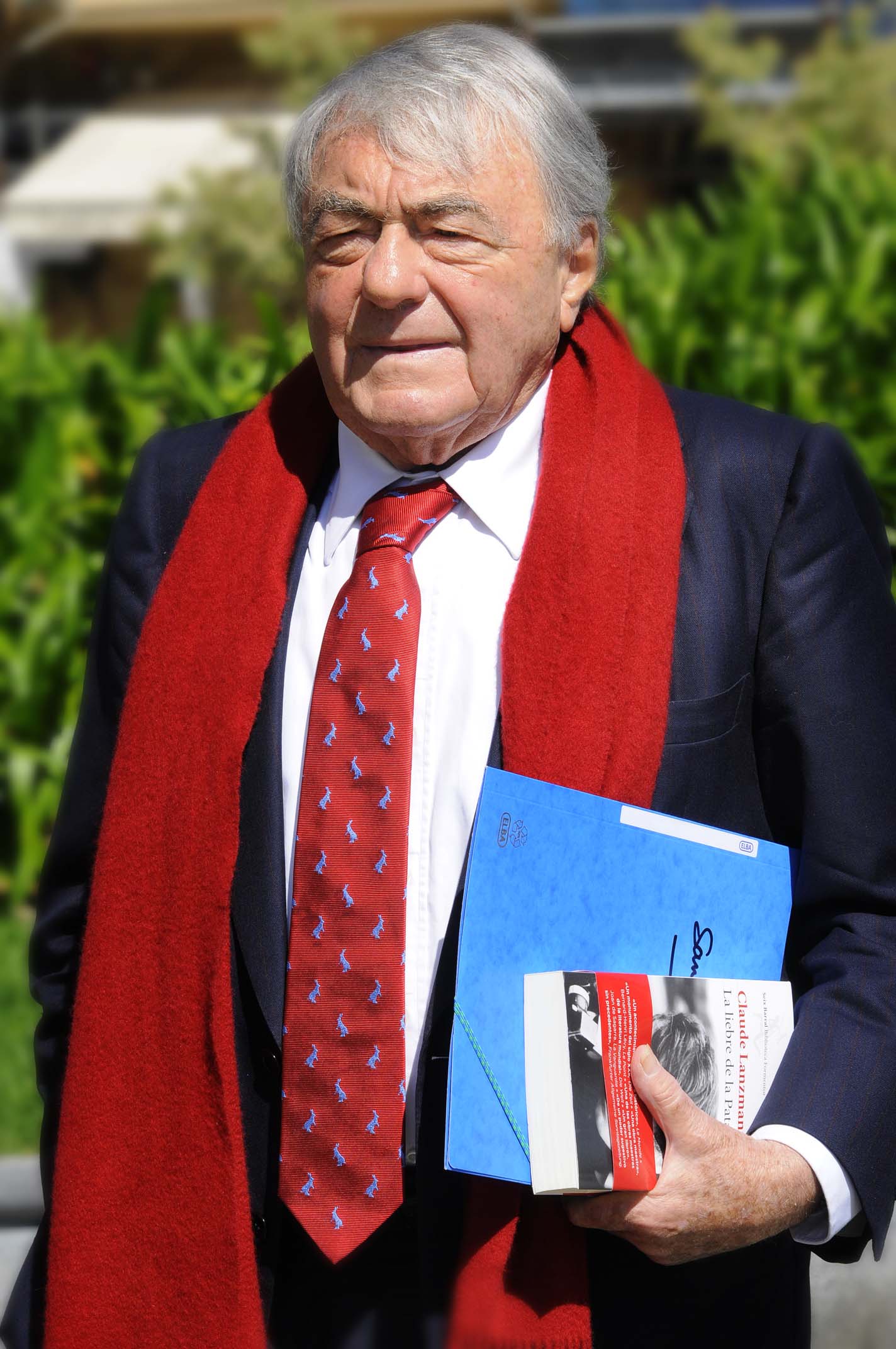
Claude Lanzmann

Few filmmakers’ careers are defined by one film as Claude Lanzmann’s has been. His 1985 sophomore documentary Shoah, a nine-hour film on the extermination of the Jews in the 1930s and 40s, is perhaps the most acclaimed documentary ever made. His latest film, The Last of the Unjust, takes a self-contravening step out of its shadow.

Shoah was a monumental film, and justifiably so: comprised entirely of interviews with the bystanders, perpetrators, and above all victims of the Holocaust, the film confronts the way that the obscenities of the past reverberate forward in time. To watch Shoah is to go in thinking it will be too much, and leave realizing that it is not and can never be enough.

No one knows that better than Lanzmann, who accumulated enormous amounts of footage while filming for the project from 1976-1981. He has since used that footage to make four further documentary features; easily the bulk of his remaining filmography. Unlike Shoah’s diverse tapestry of witnesses, each of these films has focused on a single interview subject, and have not broken from Lanzmann’s refusal to depict the atrocities committed, even in archive footage.

In an article dismissing Steven Spielberg’s Schindler’s List, Lanzmann laid out the objections that led to this approach, particularly condemning the obscenity of the relatable image. “Fiction is a transgression, I am deeply convinced that there is a ban on depiction,” he wrote, adding further that if he found footage of a gas chamber execution secretly filmed by Nazis, he would not only not show it, he would destroy it.

Which makes Last of the Unjust, his new (perhaps final) film, a shocking and problematic departure from the Shoah project. A great, deeply moving, and intelligent transgression.

Yes, Unjust centers around 1976 footage from an interview (shot over several days) with Benjamin Murmelstein, the wartime president of the Jewish Council of Theresienstadt, a Czechoslovakian “model ghetto.” That footage reveals the moral incomprehensibility of the Holocaust, as Murmelstein convincingly argues that his actions — which were controversial enough that he was exiled from Israel after the war — were not perfect, but conducted with good intentions under pressures that literally no one can empathize with or understand. He was, after all, the only “Elder of the Jews” who survived the war.

Lanzmann does two things he has never done before. First, he includes newly shot material of himself reading from notes at the pertinent locations; digital footage that shows him 40 years older than the Lanzmann conducting the interview, and long after his subject’s death.

Second, more briefly but more shockingly, he includes in one sequence excerpts from a Nazi propaganda film, made to depict Theresienstadt as a pleasant haven of day-to-day living for Jews. In the upper right of the screen, text disclaims it as such throughout the scene, but there it is, nonetheless: a depiction of the Holocaust, more fictional than anything Spielberg would have dreamed of attempting.

What Lanzmann attempts here is to depict his own relationship to the material, as a chronicler, a witness of witnesses. It’s him coming to terms with the things from his own past that haunt him in his own singular, controversial place in history, reinforced by the bond that visibly forms between him and Murmelstein in the ‘76 footage. In this respect, he succeeds.

He also attempts to examine the difficulty of judging a man like Murmelstein, who is honest: by his own admission, he was not always a perfect or magnanimous leader; he did his best but prioritized his own survival. Murmelstein suggests that his most unacceptable act was survival. “But not all martyrs are saints,” he argues. In this respect, Lanzmann also succeeds.

What’s troubling is that Lanzmann seems to have taken two individually successful but somewhat contradictory ideological approaches. By inserting his modern self, reading from prepared notes and, by implication, reflecting on the interviews, Lanzmann erects a historical distance between us and Murmelstein, permitting exactly what the filmmaker said he opposed: “a consoling identification.”

It’s a problem, but not one Lanzmann is entirely ignorant of, and perhaps there is merit in its inclusion here; perhaps this is the twilight hour when he should bracket his whole career’s methodology by questioning it. It wouldn’t be the first time: Shoah openly shows him lying to subjects for interviews, or cruelly insisting that weeping survivors finish unbearable stories. Perhaps the only way to correctly approach the Holocaust is to at once acknowledge that one cannot correctly approach the Holocaust, and then try anyway.


Some people write for the hell of it

0

C. R. Avery


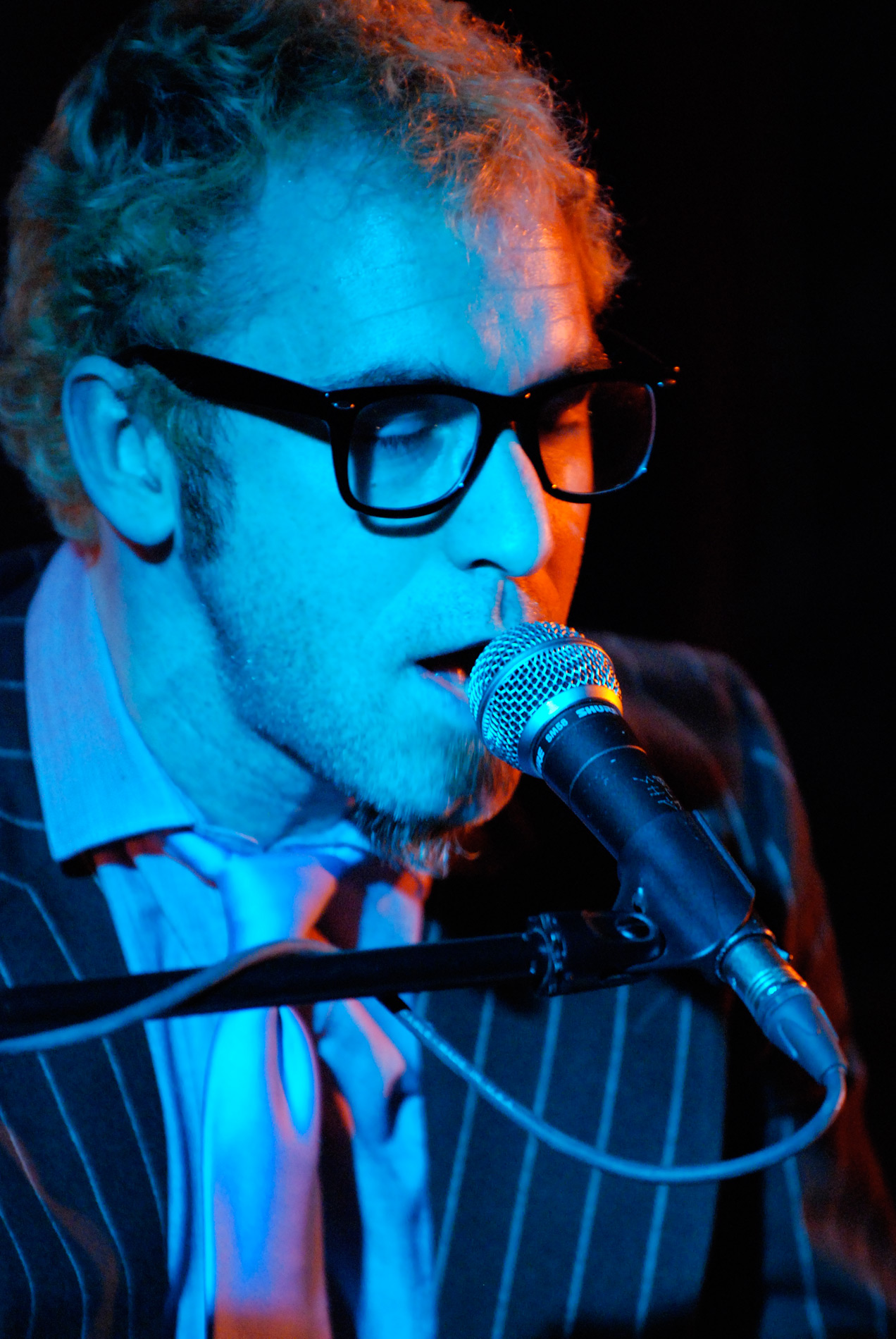
Admittedly I’m not the most qualified person to be reviewing a book of poetry. (For souring me on the literary form, I blame years of being forced to unpack/dissect poems in the name of academic purposes.) But maybe that makes me even better suited for it. Instead of falling over myself for every stanza I read, my critic senses have been hardened — thankfully, any person who’s not a fan of flowery, over-the-top poems can look to C.R. Avery.

Best known for his work as a rock musician over the last several decades, Avery returns to the game of poetry with his third book, Some Birds Walk For The Hell Of It, 61 pages of unabashed, curt storytelling. Divided into four colourfully named chapters, Avery’s experiences from over the years undoubtedly helped create this myriad of anecdotes, covering everything from apathetic romance and hooking up, to feelings of inadequacy throughout life, along with the overarching tone of not really giving a shit.

There are a ton of poems that deserve mentioning but a few personal favourites are as follows: “Lunch Pick-up Poem,” in all its Velvet Underground referencing glory; “Thin Walls 95.3 FM,” a cup-half-full quip about your neighbours having particularly loud coitus; “Ghost Car & Ragged Glory,” a perfect and brief insight into a sketchy nightclub and its even sketchier patrons; and “Another West Side Girl,” if only for the opening lines of “She gave me a blow job on her sofa / Now my job is to blow in the direction of the black-vestry night.” With 35 different poems included, it’s hard to pick just a few to highlight.

While most of the memorable poems come with at least a tinge of sexual innuendo, they never feel like a shtick or even remotely juvenile. Instead Avery uses sex as a device and a way to make his writing personal and honest, regardless of how unpoetic the sexual encounters might be.

Some Birds also boasts a healthy number of music-related puns that most likely couldn’t have been put together by someone who wasn’t a musician themselves. Take the closing lines from “Do they play Zombie Zoo,” for instance: “You’re not going to believe this, but they joined a Tom Petty cover band, it kinda broke my heart,” and “Well, they’re heartbreakers now.” 

While the shorter poems — most of which are 10 lines or less — offer most of the comedic relief and quick jokes, Some Birds really shines with the poems that run between one and two pages. Avery’s strength comes from his ability to build a whole narrative instead of a brief snapshot into a character’s life and that’s where the payoff lies. The words might not flow particularly nicely, but Avery tells a story and he tells it well. 

Like I mentioned before, I’m not a poetry guy and most likely never will be, but if you’re looking for something light to take with you to the beach or while you’re trapped waiting at the laundromat, C.R. Avery will do just fine. While some readers may be turned off by his non-decorative language and generally sex-centred topics, it’s easy to appreciate Avery’s work for what it is: an entertaining read.

Ts’msyen Transforming shapes the past into high art

0

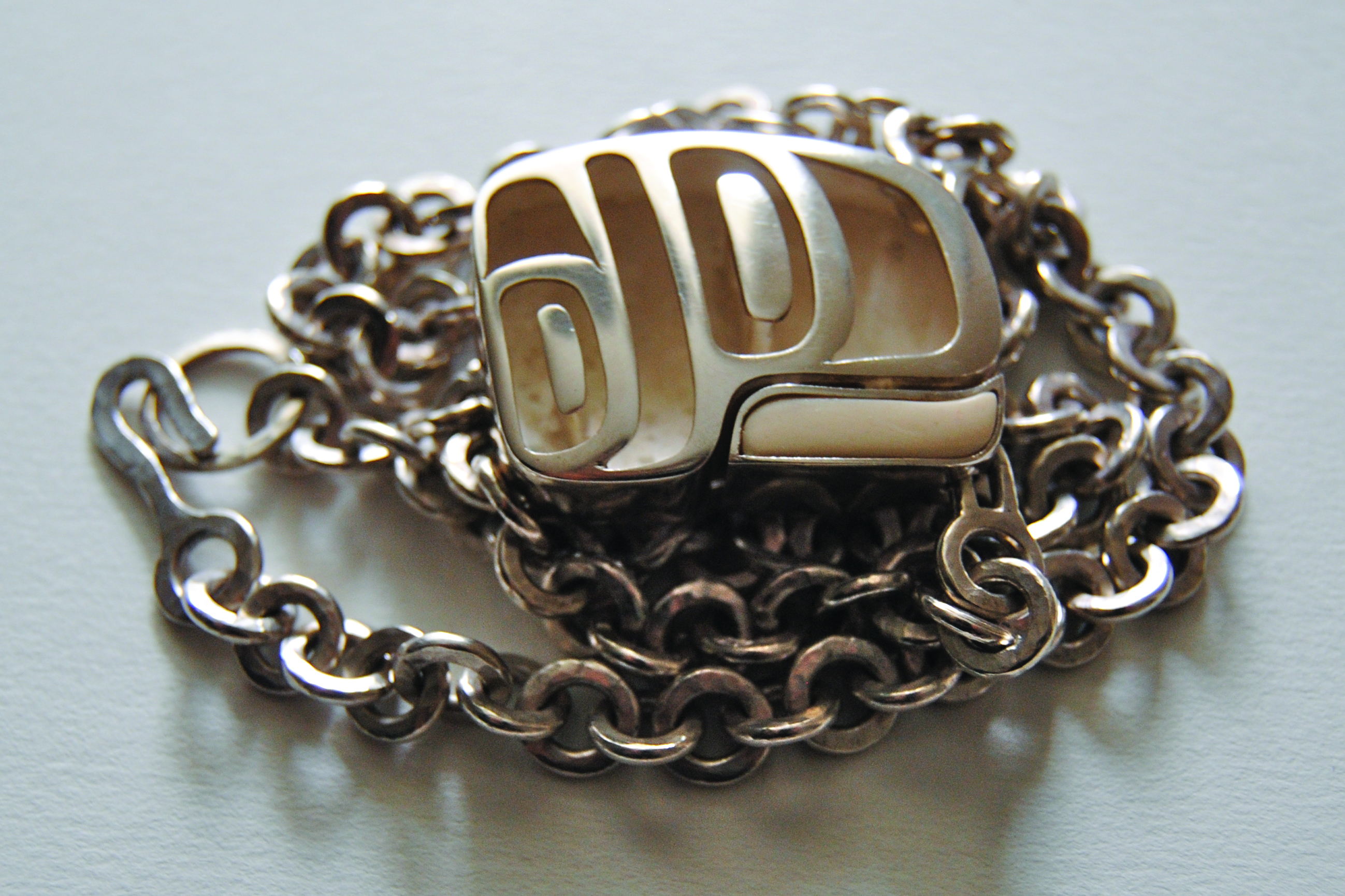
CMYK-Goomsm Xsgyiik Necklace


Morgan Green shows me a fierce tattoo of an eagle with its wings spread along the length of her right arm. It’s crafted in the distinct formline of Northwest Coast Art. “I’m the eagle,” she says, meaning the crest passed down through her mother’s clan. “This is my cousin’s work. She uses elements that I don’t, such as this” — Morgan points to a red U-shape in the design — “Ts’msyen are strict,” she says. 

We stop in front of a piece in her jewelry exhibit, Ts’msyen Transforming, at the Bill Reid Gallery. A formline butterfly constructed out of delicate layers of oxidized silver rests on branches that wind together into a circle. Their flow of line is so rhythmic that they seem to dance in the space holding them.

“Yes, I’m also interested in Art Nouveau and Egyptian art,” Green says. “You can see that here. But I have to be careful. Our culture is at the source of Northwest Coast art, so when Ts’msyen come to look at it,” she leans in my direction and nods, “they can be quite strict.”

Born on Ts’msyen lands near Prince Rupert, Green developed her art as a way of bringing her past into the present. It serves as a bridge in the history of her people. “Art was integrated in our life,” she says. “Just by looking at someone’s crest you could tell where he came from and who his people were. Everything people owned was proper according to our law and history.” 

Green is known for her time spent developing both her artistry and her knowledge of her culture. She works in painting, clothing, leatherwork, wood sculpture and jewelry, and yes, she makes her own tools. “I think any artist worth their salt should,” she says. She also teaches and plans to develop a culture centre back home. “All Northwest Coast artists work in the Lower Mainland,” she says, “but our culture comes from our land. It would be nice to return our cultural base there.” 

Kwiaahwah Jones, director of content at the Bill Reid Gallery says, “Morgan works at a very high level. She only started in jewelry three years ago, but when people see her work they ask how old she is. She’s only 30.” Like Reid, Green preserves the art’s legacy, but transforms it in novel ways. 

Reid advanced the use of repoussé in jewelry making; this is a type of sculpture where patterns in relief are shaped into the metal by hammering on the reverse side. Morgan’s techniques extend the sculpture of jewelry into hollow-form construction. “Her work is a perfect example of the high art found here,” says Jones.

Green lets the materials suggest themselves to her. Then she sculpts, solders, and polishes many times to shape the silver, gold, and copper that she works in. “I believe art has power,” she says. “It brings deep structure to the surface, whether it’s an idea or the lost knowledge of a society. It transforms people.” 

Going through the creative process is an emotional experience for Green. “I feel tension before finishing a work,” she says. “It’s because being inside the creative process is important to me.” Most of her pieces stay with her for a long time as she works to perfect them. Then they pass into her community through personal networks, often purchased for use in ceremony. “I like that, though,” she says. “I like that they are danced in the community, have fun and take on a life of their own that has nothing to do with me.”

Ts’msyen Transforming is at the Bill Reid Gallery until September 14. For more information, visit billreidgallery.ca.

History’s Greatest Friendly Political Wagers

0

The “Friendly Political Wager” is one of the great traditions of both sports and politics. Symbolic bets between two rival city’s political leaders is one of the most fun and creative practices in existence and they often eclipse the main event itself. You probably don’t remember who won Game 7 of the Canucks-Bruins series in 2011 but I know you definitely didn’t forget when mayor Gregor Robinson had to go in public wearing a yellow and black jersey! What a fun-loving, down-to-earth and cool guy! Who wouldn’t want to get a beer with him and then vote for him in the next election?

Anyway, here’s a list of some of the wackiest, most outrageous and, of course, greatest friendly political wagers of ALL TIME!

Julius-Caesar-Eleanor-Qu

Event: Ultimate Gladiator Championship 147

Participants: Julius Caesar and Arisnoe IV of Egypt

The Bet: If Caesar’s championed Roman gladiator, Maximus, were to win the big fight Arisnoe agreed to deliver him a jar of Alexandria’s Egyptian Pale Ale, her favourite beer, while wearing a Caesar-style leaf crown. If Arisnoe’s pick, a nameless Egyptian slave and man-eating tiger tag-team, were to win, Caesar promised to erect a Sphinx statue in the middle of Rome and leave it there until the start of the next gladiating season.

Outcome: I think it goes without saying, but Maximus was victorious at UGC 147 and Arisnoe had to deliver Caesar the jar of beer, although Caesar lessened her embarrassment by gracefully choosing not to use this opportunity to have her publicly executed.

british-mayor-Eleanor Qu

Event: 1888 FA Cup Final

Participants: West Bromwich Mayor, Tom Gilroy and Preston Mayor, Earl Tinney

The Bet: If Gilroy’s home club West Bromwich Albion F.C. were to take home the coveted FA Cup, Tinney agreed to wear a throstle’s nest on his head for the remainder of his mayoral term. If Preston North End F.C. won however, Gilroy would have to appoint a sheep as his vice-mayor.

Outcome: West Bromwich triumphed over North End in a 2-1 victory and since that day every mayor of Preston, Lancashire has spent the entirety of their mayoral career wearing a bird’s nest on their head, one of the town’s proudest traditions.

Charles-De-Gaulle-Eleanor Qu

Event: The Battle of France (September 1939)

Participants: Charles De Gaulle and Adolph Hitler

The Bet: If the Allies could prevent the German Army from capturing France, Hitler agreed to wear a french beret for the remainder of WW2. If the Nazis won, De Gaulle promised to wear and be photographed in the opposing side’s uniform.

Outcome: Despite outnumbering their opponents, the Allies just couldn’t handle the German Army’s strategy and were quickly defeated. France was divided into German occupation zones and an embarrassed De Gaulle was forced to wear one of Hitler’s old uniforms for which he received a lot of ribbing from his fellow political leaders.

JFK-Eleanor-Qu

Event: USA/Cuba Exhibition Baseball Game (1961)

Participants: John F. Kennedy and Fidel Castro

The Bet: If the US were to win the game against Cuba, Castro agreed to send JFK a box of authentic Cuban cigars. If Cuba were to win though, Kennedy promised to wear a T-shirt that featured the Cuban Revolution hero of Castro’s choice.

Outcome: Cuba won the game by a score of 7 to 4 and JFK agreed to wear a shirt depicting Ernesto “Che” Guevara. Despite the ironic intentions, the look was so popular that the shirt was mass produced and remains a staple of American mall T-shirt shops to this very day.


Event: 1972 United States Presidential Election

Participants: Spiro Agnew and Sargent Shriver

The Bet: In order to entertain themselves as they waited to see if their bosses would be elected, Richard Nixon and George McGovern’s running mates held a side bet on the results of the election. If Nixon won, Shriver would have to wear a Nixon-mask to the next Kennedy family function while in the case of a McGovern victory, Agnew would have to wear a Republican party baseball cap while serving a month’s service in the Vietnam War.

The Outcome: Nixon won the election and Shriver, who was a member of the Kennedy family wore the mask to their next event which happened to be a soiree dedicated to the 4th anniversary of the passing of Bobby Kennedy. It was the last party Shriver was ever invited to.


Event: 2007 Nathan’s Hot Dog Eating Competition

Participants: George W. Bush and Yasua Fukuda

The Bet: Japanese prime minister, Yasua Fukudu agreed that if world-champion Japanese competitive-eater Takeru Kobayashi lost to any of his American competitors, he would shave the US flag into the back of his head. For his part, Bush promised that if Kobayashi did win, he would have a map of Japan tattooed on his chest.

The Outcome: After six straight victories at Nathan’s, Kobayashi was finally defeated by American, Joey Chestnut. Fukudu would honour his commitment, although some have called foul on the cut which only had 30 stars instead of the traditional 50.

obama-Eleanor Qu

Event: Canada-US Olympic Hockey Semi-final Match (Sochi 2014)

Participants: Stephen Harper and Barack Obama

The Bet: While publically the bet was a simple exchange of beers from each other’s nation, behind closed doors the bet was a little more involved. If Canada won, it was agreed Obama would have to shotgun the 6-pack of beer Harper got him right before speaking to Russian president Vladimir Putin about the Crimea situation. If the US won, Harper was to officially change the Canadian national anthem to Loverboy’s “Working for the Weekend”.

Outcome: Canada came through with a huge win against the US and Obama had to kill six Molsons before getting on the phone with Putin. While he did have a good plan for resolving the situation, he decided instead to let Putin know how he really felt about him for three hours before crying and hanging up.

Tippy Top Ten: BlackShades Malware

0

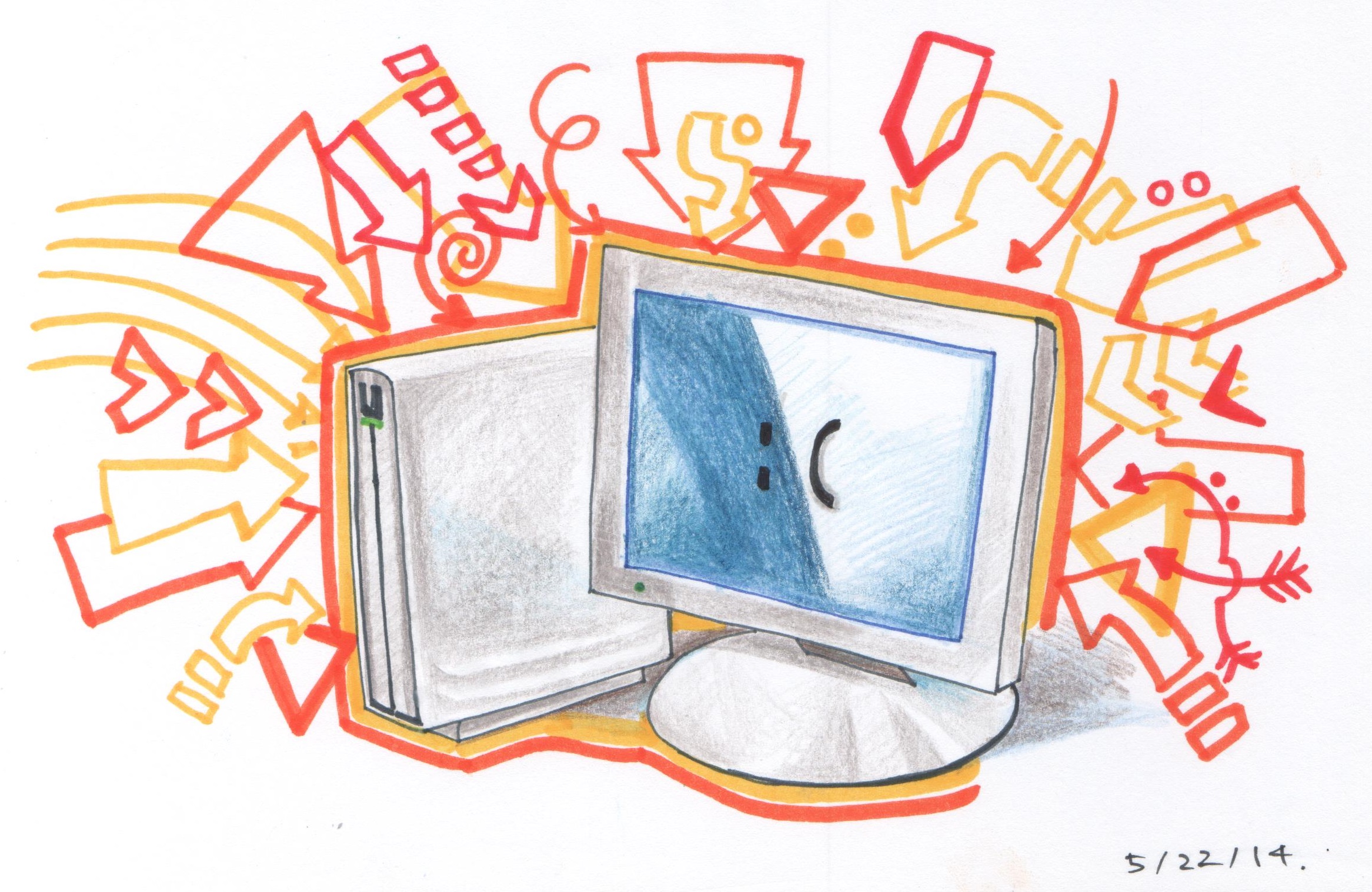
Here are the Tippy Top Ten Signs Your Computer is Infected with BlackShades Malware…


10. Search history includes several variations of “blackshades cool guys”

9. Gut feeling it’s more than just a 24 hour computer virus

8. Every website you visit is reporting on Ellen Degeneres’ secrets

7. Facebook page says you like Nickelback

6. Webcam taking pictures without cool sepia filter

5. You use Internet Explorer

4. “Trojan Horse Simulator” you downloaded won’t open properly

3. Password reminder is now “what was your first social insurance number?”

2. Today’s Google doodle is just a blue screen

1. Over-heating and a sore disc-drive

University Briefs

0

WEB-briefs-Joseph Morris-Flickr
UBC dental program suspected of fraud

One of the University of British Columbia’s residency programs is under scrutiny for the possibility of fraud involving approximately $5 million. UBC administration was alerted of inconsistencies in the finances of UBC’s Faculty of Dentistry’s General Practice Residency.

Following this discovery, the university’s internal auditing system began an immediate investigation. Upon completion of the investigation, a report was submitted to the RCMP for further examination. As of yet, the police have not announced any updates to the further investigation.

With files from The Ubyssey


Controversy leads to resignation of
U of S provost

University of Saskatchewan provost Brett Fairbairn has resigned his position, following controversy over the dismissal of a professor speaking out against budget cuts. Professor and executive director of the School of Public Health, Robert Buckingham, was removed from his position and from the university campus after reaching out to government officials about financial restructuring at the school.

Fairburn mentioned in his resignation letter that he acted in the, “genuine interest in the well-being of the University of Saskatchewan.” Buckingham was subsequently offered back his tenure position, excluding his standing as executive director.

With files from The Star


Board Shorts

0

WEB-shorts-Jirka Matousek-Flickr

Residence Orientation and Dance

Stephanie Munez, SFU residence and orientation mentorship coordinator, approached the SFSS Board last week to explore a partnership around residence orientation in the fall. Munez suggested the SFSS sponsor an orientation dance, to be held on August 30. The dance would use SFSS speakers and equipment and would replace previous MuchMusic video dances.

VP Student Life Kayode Fatoba and residence liaison Katie Bell were tasked to meet with Munez and look into further options for collaboration.


Apology for GSS Space Usage

The SFSS Board of Directors is sending a letter of apology to the GSS after being banned from using GSS space until the end of August. The ban was issued after the GSS lounge was left in “extremely poor condition” on April 4.

SFSS board members had booked the space to use for volunteer storage during the Spring Sendoff Concert. When graduate students entered the room the next morning — where they had planned to host a family-friendly event — they found the room littered with leftover food, trays, plates, and empty cans. Among the empty beverages were alcoholic drinks, despite the GSS lounge being a non-liquor licensed space.

The apology letter read, “This type of behaviour is inexcusable and similar conduct will not happen again.”


Consolidation of IRO position

As a result of the division of the Internal Relations Officer position into VP Student Life and VP Student Services, the SFSS Board has had to replace the IRO position on society committees previously defined by the bylaws.

After discussion with executive members, the decision was made to eliminate the IRO seat on the Commercial Services Committee and replace the seat on the others.

As a result, business representative Shadnam Khan was appointed to Constitution and Policy Review Committee; VP Student Life Kayode Fatoba was appointed to Financial and Administrative Services Committee; and University Relations Officer Moe Kopahi was appointed to Labour Committee.

CFL drafts five Clan players

0

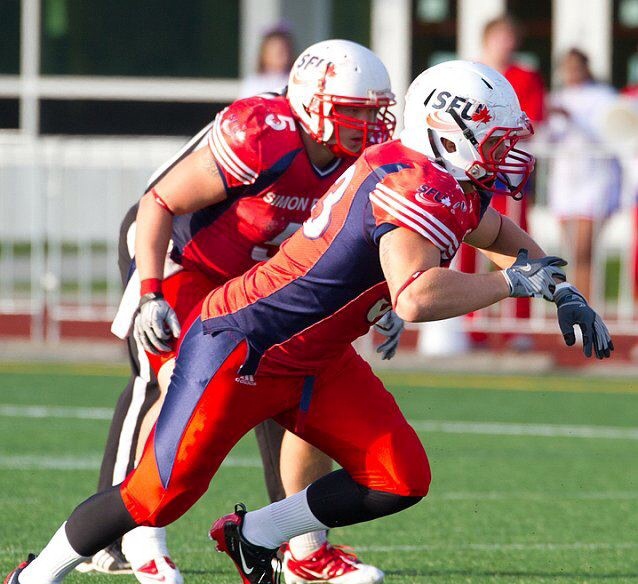
In 2013, there were no CFL draft picks out of SFU — this year, five SFU graduates will be taking the field for CFL teams in the fall.

Offensive lineman Matthias Goossen led the charge, drafted second overall by the Winnipeg Blue Bombers. He was followed by Casey Chin and Dylan Roper to the BC Lions in the third and sixth rounds. Accompanying Goossen to Winnipeg is defensive back Derek Jones. Rounding out the draft, was Tore Corrado, selected by the Toronto Argonauts in the sixth round; Corrado was the sole SFU draftee to be chosen in the Eastern Conference.

Only Laval and Montreal, two elite teams in terms of Canadian university football, produced more picks than SFU.

“It just speaks to how good our athletes are in this program,” stated SFU head coach and one-time fifth overall pick Jacques Chapdelaine. “SFU does have the ability to attract very, very skilled football players.”

Goossen is the first first-round draft pick to come out of SFU since Dean Valli in 2006. He is also SFU’s highest pick ever, since Obby Khan also went second overall in the 2004 draft to the now defunct Ottawa Renegades. Both Chin and Goossen were projected to be in the top 15 prospects in this year’s draft.

Chapdelaine also gave SFU’s NCAA status credit saying that “there’s benefits to being seen” and that the status puts SFU players in “a very favorable light in terms of competition, in terms of level of competition” with CFL scouts.

He pointed out that although a CIS team had the first overall pick, the player was on a championship team, Laval University, as compared to SFU, a team that has not yet had a winning record during its time in the NCAA.

“SFU does have the ability to attract very, very skilled football players.”

– Jacques Chapdelaine, SFU head football coach

Roper, who will be playing defensive linebacker for the Lions this fall, agreed, saying, “It proves that we play at a higher level here. SFU football is different than CIS and I think that CFL scouts see that as well and see that a lot of players are coming out well developed and ready to play in the pros.”

In addition to what the draft says about SFU’s current program, it also provides inspiration for new SFU players coming into the system, Roper said. He added, “It’s motivating for sure. When I came in as a freshman, I was sitting behind [Justin] Capicciotti and [Andrew] Marshall, they’re both with the Ottawa Redblacks now. It’s motivation for the younger guys, [it shows] they can do it as well.”

Future Lions teammate Chin stated, “I’d like to think it gives them a little more motivation, makes them want to work that much harder, maybe even get more guys drafted next year.”

With respect to being drafted by the BC Lions, the home team for the Greater Vancouver area, “It’s a dream come true [. . .] I would rather go in the third round — where I got picked — than in the first round to a different team,” said Chin, who was drafted 27th overall.

Roper added, “[When] it popped up on the TV that BC took me, words don’t describe [how I felt]. I’ve been a BC fan since I was born.”

The other three players will be travelling further: Jones and Goossen are off to Winnipeg, and Corrado to Toronto. Corrado mentioned that any “childhood allegiances” disappear after being drafted, as the Lions became just another team that decided not to pick him. Jones, on the other hand, is from Edmonton and was never a Lions fan.

Although Goossen was chosen second overall, others like Roper, had to play the “waiting game,” not being drafted until the sixth round, 50th overall. However, he sees this as more motivation. “I’ve always played with a chip on my shoulder, and I think waiting around and teams passing on me, I think it’s going to give me more of a chip on the shoulder and prove some people wrong,” said Roper.

Chapdelaine, who was both a player and coach in the CFL, believes his guys will adapt well to the CFL: “They’ve been prepared extremely well [. . .] I think they’ll be just great.”

He advises the draftees “to go into work, let the good days build and let the bad days be learning experiences.” He said, “There’s going to be some challenging days for these kids, it’s going to be extremely competitive, it’s going to be physically demanding [but] persevere through that. If you can do that, that’s all you can ask for.”

The Good, the Bad and the Mouldy

1

WEB-Cover

Every week, thousands of SFU students go to classes, office hours, and lectures in the Education Building, one of SFU’s oldest structures and the headquarters of several of its faculties. Beyond its reputation as one of the school’s more run down areas, the Education Building may be posing a significant health risk to students, as well as to faculty members and staff — many of whom remain unaware that any such issue even exists.

Last June, a building envelope assessment prepared by James Neill & Associates was issued to SFU which confirmed the presence of mould in multiple sites within the Education Building. These sites include, among other areas, the location of the Education and Archaeology faculty offices.

However, a copy of this report, which was obtained by The Peak, was not delivered to the Central  University and Local Joint Health and Safety Committees until almost a full year after its completion, nor was it forwarded to any of the on-campus unions and formal committees representing faculty, staff and students who use the building on a daily basis.

The report, dated June 19, 2013, identified mould in a number of offices on the 8000 level of the north zone of the Education Building, in addition to elevated mould spore counts in regions throughout the south zone on the 8000 and 7000 levels. Eight of the 50 rooms examined (from April 30 to May 7, 2013) were identified by SFU’s Environmental Health & Research Safety (EHRS) as requiring “immediate action.”

Furthermore, several locations within the Education Building were classified as having elevated moisture contents (over seven per cent), which is conducive to further mould growth and indicative of leakage in the building.

An informal survey indicated that undergraduates were mostly unaware that a mould problem existed.

The report pegged the total cost of repairs — exterior, interior, and roof work — at $1,241,540, allowing for engineering, contingency, and GST. Despite the significant potential for adverse health effects identified, large swaths of the building were not analyzed; the report identifies these areas as “wall obstructed or area inaccessible.” A number of these unexamined regions include offices and common areas, i.e. hallways, stairwells, and foyers.

It is unclear as to when SFU commissioned the assessment, as James Neill, the individual who prepared the report, was unavailable for comment.

In a sit-down interview with The Peak, Dr. Terry Waterhouse, SFU’s chief safety officer, indicated that the building envelope assessment was the first report in a series commissioned by SFU to determine the extent of mould infiltration. He noted that the successive analyses are to be compiled into a single report slated for release at the end of either May or June of this year, at which point, he said, they will become available for public viewing. 

Dr. Waterhouse further indicated that the Environmental Health and Research Safety Department is in the finishing stages of building a website designed to address frequently asked questions regarding indoor air quality and mould, on which the reports will be made available soon.

Despite the report’s findings, very little information was initially communicated to staff or supporting unions and committees; this omission included the Health and Safety Committees, which officially received the report in March and April (Central and Local, respectively) of this year, at least six months after the documents began to be unofficially circulated through union offices.

John Bannister, a representative of the Canadian Union of Public Employees (CUPE) Local 3338, first became aware of the report during a monthly human resources meeting between employee groups, the faculty association, Administrative and Professional Staff Association (APSA) and Poly Party in September of 2013. “It was raised there that this report was available, so I requested [it] and [EHRS] sent it to me.”

Concerned by the report’s contents, Bannister forwarded a copy to the Teaching and Support Staff Union (TSSU), which was, at that point, unaware of its existence. The TSSU also requested a copy of the report from EHRS, but as of yet have not received one.

Dr. Waterhouse addressed concerns regarding the lack of communication, attributing it to an evolution of his office’s distributive protocol “which quite frankly,” he said, “didn’t exist at the time.” He clarified: “We did not distribute it [the report] because it was not part of the process we had in place at the time. It is now.”

Waterhouse said that in the past, SFU had no distribution protocol in place for technical reports involving indoor air quality — reports were simply distributed to technical staff who acted upon them. He further stressed that SFU was spurred to act immediately, which included initiation of building renovations and relocation of the entire graduate studies wing in the Education Building to Discovery Park last year.

“Through this, we’re developing a process that ensures all those groups get the reports,” he said.

Melissa Roth, a spokesperson for the TSSU and a student in the Faculty of Archaeology, indicated that the union raised concerns regarding the building envelope assessment in November of 2013 during the Employee Council Meeting with the VP Administration, a group including President Andrew Petter and VPs Judith Osborne, Pat Hibbitts and Jon Driver and others who engage with resentatives from all unions and associations once a semester. “We brought [the document] up, in that we were not consulted about a serious hazard regarding the health of our members, and we were assured that we would be put into the loop from then on, but we have still not,” Roth claimed.

However, in an interview with Wanda Chow of the Burnaby NewsLeader, Dr. Waterhouse explained that [SFU] has “communicated broadly” with users of the Education Building, culminating in a town hall meeting conducted on March 17, the goal of which was “to be extremely proactive and transparent within the university community about these issues.”

As a TSSU representative and SFU student, Roth attended the town hall meeting, and said that it “quickly got away from [SFU].” The discussions rapidly devolved into an acrimonious standoff, she said, as a number of attendees alleged that the university failed to aptly communicate the true nature of building renovations that began last summer in the wake of the report from James Neill & Associates. 

“In my opinion, there were a lot of upset people in the audience,” Roth said. According to her, the attendees in question became aggravated when the university’s presentation focused on dust remediation, and repeatedly interrupted proceedings in protest. When concerns were raised regarding the presence of mould in the building, Roth said “[SFU’s] general consensus was ‘Don’t worry, it’s not a problem.’”

A number of attendees reportedly denounced the board’s claims of transparency, announcing that they had lost faith in the university. According to Roth, one individual charged that “our trust level is at zero,” continuing, “how do we believe you that it’s safe to return to the [Education Building]?” Another attendee reportedly stated that they could “taste gasoline on their tongue” upon entering their office.

Apart from Waterhouse, the powerpoint presentation featured at the town hall named several other individuals who comprised the EHRS body responsible for the initial report including Bohdan Kosteckyj (director of maintenance and operations), Ian Abercrombie (director of campus planning and development), Melinda Skura (advisor for occupational health and trades safety), and TJ Aujla (coordinator for occupational health and trades safety). The Peak has not yet reached these individuals for comment.

Long-time staffers working in the Education Building have raised concerns regarding symptoms associated with chronic mould exposure.

Roth, who also sits on the TSSU Local Joint Health and Safety Committee, stated that normal WorkSafeBC protocols dictate that SFU must work in conjunction with the Health and Safety Committee regarding matters of environmental hazards that may affect the health of employees and/or students. As aforementioned, the latter failed to receive any information whatsoever from the university regarding the presence, extent, or nature of the mould infestation until well after SFU’s own discovery. She voiced this concern at the town hall meeting.

“Terry [Waterhouse] answered that there was a specialized [. . .] committee that is dealing with the issue as the ‘local was for day to day things’,” Roth communicated in an email to The Peak on May 11, 2014.

“As a follow up,” she said, “I sent him an email a few days ago asking who was on that committee as all health and safety reps should be listed publicly so people know who to contact if they have concerns, but there is no word on SFU’s website about such a committee even existing. It is important to know who is on this committee, as all health and safety decisions in BC must have at least half workers and half administrators according to WorkSafeBC [guidelines].”

“[We] absolutely understand the feelings of those individuals [who spoke up at the town hall],” said Dr. Waterhouse. He stated that he subsequently spoke to all of those individuals in a more one-on-one manner to directly address their concerns. “We understand that this is a health issue, and it is our concern [regarding this] issue that is driving our efforts to address them.” He also stated that there was a working group, including members of the Faculty of Education, who dealt directly with the issue of the report when it was delivered. 

The perceived lack of notification provided by SFU regarding the town hall provoked further concern from some, despite Dr. Waterhouse’s publicized statement in the Burnaby NewsLeader. The Peak conducted an informal survey including over 20 instructors, graduates and undergraduates in the Education Building which indicated that, while some of the former groups were directly informed about the town hall, undergraduates were mostly unaware that a mould problem existed, much less that a meeting had been organized to address concerns.

Despite occupying a space in the Education Building, the Archaeology faculty was reportedly not invited to attend the town hall meeting, a fact Dr. Waterhouse described as an unintentional oversight.

This apparent exclusion was odd given that the university is currently conducting an additional assessment of the entire building, expanding beyond the Education Faculty to include the Teaching and Learning Commons and Archaeology areas. That report is scheduled for release at the end of May or June.

Dr. Waterhouse assured The Peak that this was not the result of any focused discounting of the faculty. He stated that SFU broadly advertised the town hall, with the support of the Faculty of Education, resulting in Dean Magnusson’s appearance on the panel. 

However, he stressed that future meetings held in response to the future reports delivered would specifically target those who were unaware of the previous meeting. 

So, how significant is mould exposure? A number of long-time staffers working in the Education Building have previously raised concerns regarding symptoms — such as headaches, nausea, and shortness of breath — which have been associated with chronic mould exposure. Despite logging their concerns over the years, staffers were repeatedly assured that there was no issue.

With mounting evidence regarding the presence of mould and the university’s existing knowledge, the same employees now feel betrayed.

Dr. Waterhouse, in his interview with the Burnaby NewsLeader, addressed concerns regarding mould exposure. “What we do know,” he said, “is that some people are more susceptible to indoor air quality problems [. . .] But the science is not at a stage where a direct correlation can be made to the presence of mould, for example, and a health impact for an individual.” He went on to note that direct correlation was not required for the university to take action. 

Waterhouse’s statement is not, however, entirely supported by information provided by Health Canada, which states on its website that it considers indoor mould to be a “potential health hazard” — with all moulds posing a potential risk to respiratory health — and advocates for immediate removal. According to Health Canada there is, however, insufficient evidence to ascertain whether black moulds (which are commonly referred to as toxic moulds, given their production of mycotoxins) have greater health effects than other moulds.

A study performed by the Center of Integrative Toxicology at Michigan State University relates the presence of black mould to the onset of ‘damp building related illness,’ and allergic sensitization, inflammation and cell toxicity in animal models. Other studies have linked high dose short-term exposure to lung hemorrhaging in humans.

When reached for comment Dr. Ryan Allen, an associate professor in the Faculty of Health Sciences who specializes in the effects of outdoor pollution on individuals, cautioned against alarm. “Dr. Waterhouse is correct [in] that it is very difficult to link an environmental exposure with the presence of illness or disease in an individual,” he wrote in an email to The Peak. “In other words, except in rare cases, it’s difficult to say that a specific person’s illness was definitely caused by a specific exposure.

“Mould has been linked with asthma irritation and respiratory problems, especially in children.” – Dr. Ryan Allen, Associate professor of Health Sciences

“Some exposures make it more likely that we’ll develop an illness, [but] not everyone who is exposed will develop the illness…[which] usually has many causes,” he continued. “Having said that, mould has been linked with asthma irritation and respiratory symptoms, especially in children. It may also be a risk factor for the development of asthma in those who don’t already have it.”

This is corroborated by WorkSafeBC’s Occupational Health and Safety Guidelines, which also warn that “For those individuals with compromised or sensitized immune systems, exposure to pathogenic moulds [. . .] may be associated with a variety of adverse health effects.”  

It should be noted that the position of senior director for Environmental Health & Research Safety — a position that provides Dr. Waterhouse with specialized information regarding potential mould related toxicity — has remained vacant for some time since the retirement of Apollonia Cifarelli in November 2013.

When asked for clarification, Dr. Waterhouse stated that he had assumed the office’s responsibilities in the interim, but that his office had compiled a shortlist of candidates for interview and that SFU hopes to hire someone to fill the position by the end of the summer semester.

Dr. Waterhouse stressed again that SFU’s response to the initial report and its findings was proactive, up to date, and attempted to minimize exposure to mould and air-borne allergens for users in the Education Building, but the lack of initial communications for several months has left a sour aftertaste for a number of individuals who continue to participate in regular classes, and have laboratories and office space there.

When asked to respond to the perceived lack of communication forthcoming from SFU, Roth expressed more frustration than anger. “As a student here who has taught multiple classes in the Faculty of Education, it upsets me greatly,” she said. “Not only are my friends and colleagues who are in there not [aware of] what hazards they were put through, but I didn’t know. And I can tell you that I’m very upset.”

Astronomy event considers our place in space

0

CMYK-SFU_Observatory

Staff, students, faculty, and community members considered our place in space last week when SFU and the Royal Astronomical Society of Canada (RASC) hosted two events — Science Rendezvous and International Astronomy Day — on May 10 at the Burnaby Campus.  

According to professor Howard Trottier from SFU’s Department of Physics, the event “had representation from all science departments and applied science, as well as the local astronomy group.”

The merged events occurred on the same day as 300 to 400 other space-related events across Canada. “The overall event today [. . .] is organized around something like the National Science Day, called Science Rendezvous,” explained Trottier. The event also offered SFU its first opportunity to partner with RASC, which was planning to host a similar event. “Coincidentally, we were going to do it on the same day and [at] the same place. So, we decided to team up! It’s packed!” Trottier commented.

The dual-hosted event had a wide range of activities, discussions, lectures, and displays of science. In one area of the event, attendees could look through telescopes of 30x to 100x magnification to see the moss growing on the edge of a campus building. In another section, they could peer down the hexagonal honeycomb patterns of material used in the siding of rockets. Visitors even learned about the dairy industry by milking a dummy-cow.  

Participants who wanted to come back down to Earth and public policy could talk to Mark Eburne, a man with a passion for the prevention and reduction of light pollution. Eburne works, along with organizations such as Lite Bright, to campaign on behalf of citizens concerned about light pollution. Attendees could also listen to a free lecture on a various science topics including Apollo space missions and the Aurora Borealis.

Trottier considers these events of high importance in two respects: community and outreach. The event occurred at the location of SFU’s new observatory called the Trottier Observatory and Courtyard, named for and funded by Trottier’s brother, which will be built later this year. According to Trottier, this observatory is meant to build both a passion for science and a greater community spirit; it is meant for students as a gathering place and as a place to learn about astronomy.

Concerning outreach, he stated, “The RASC is a national organization [. . .] They strongly support outreach at SFU. They bring their telescopes out here to show to the public. They also provide volunteers.” Trottier believes the RASC will help build outreach and community by encouraging families and their children to learn, ask questions, and build genuine interest in the operations and productions of science.

Many of these kinds of events come from an internal drive to educate the public on the importance of science through communication and community. Trottier concluded, “We’re living in a golden age of astronomy. And almost nobody knows about it.”