Home Blog Page 1100

SFU photographer hosts wildlife workshop

0

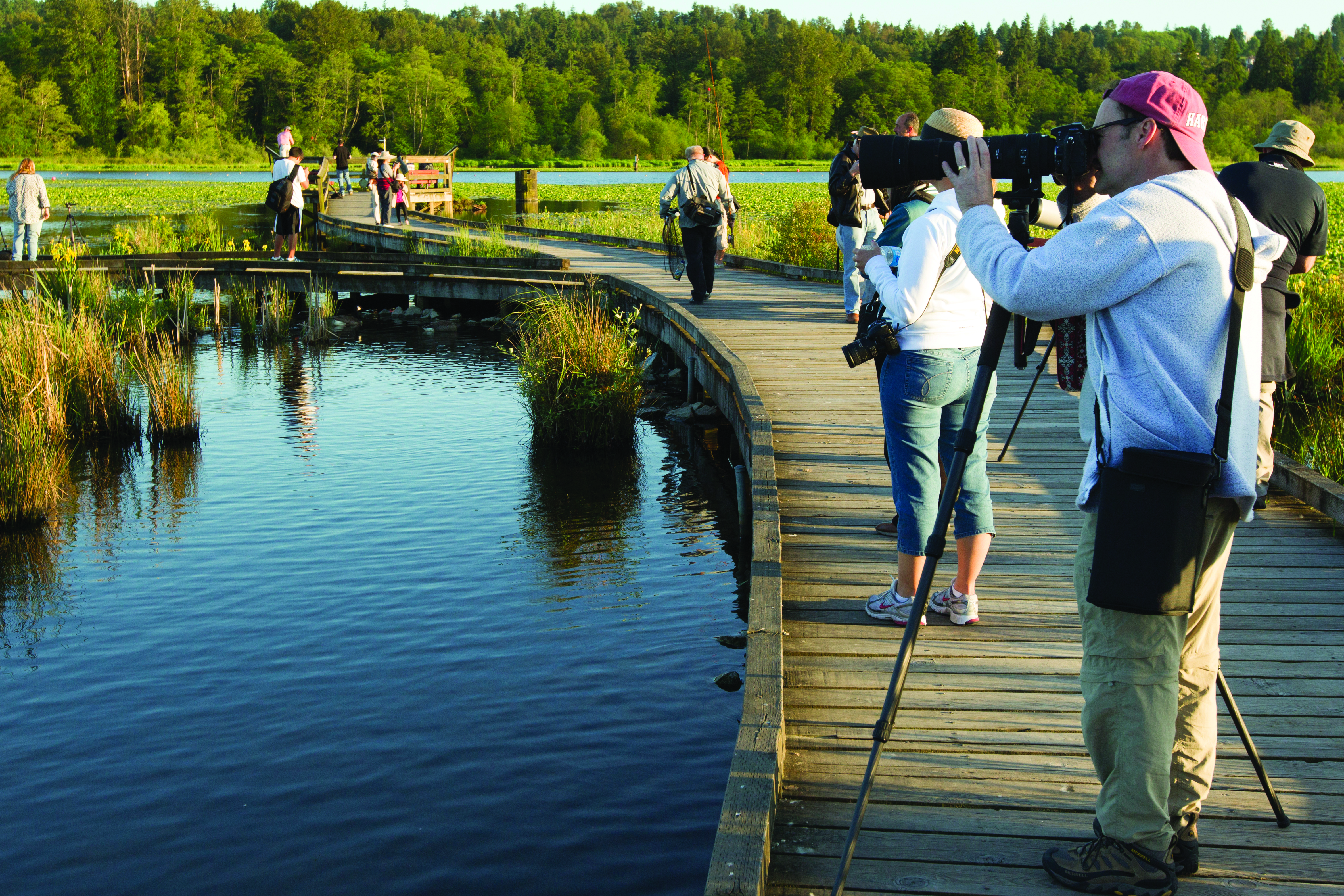
CMYK-ConnorStefanison_BbyLakeWorkshopRecent SFU graduate and international award-winning photographer, Connor Stefanison, gave a free workshop on wildlife photography as part of the City of Burnaby’s Environment Week earlier this month. 

The workshop was held on June 5 at the Piper Spit boardwalk at Burnaby Lake Regional Park, a location that the BBC wildlife photography award winner often visits for photo shoots. The workshop ran from 6:30 p.m. until around 10:00 p.m.

Stefanison told The Peak that the City of Burnaby contacted him and asked if he wanted to do a talk or presentation as part of the week’s activities. He opted for a workshop because he felt hands-on learning would be most valuable for aspiring wildlife photographers. 

Participants were asked to bring their own cameras, a long and short lens — if they had both — and were encouraged to also bring a flash, a tripod, bird seed, and weather-appropriate clothing. 

“A lot of people showed up,” Stefanison recalled. “Between 30 and 40, [. . .] which was more than ideal for one person [. . .] I was only expecting like 10 people.”

He also noted that the age group was mostly adults. “Well, I’m an adult,” he said, laughing. “But 40s, 50s, probably.”

Due to the large number of attendees, Stefanison had to change his original plans of a more hands-on tutorial; however, he felt he was still able to communicate the basic techniques of wildlife photography.

He began by introducing himself, and then explained to the group how to use specific settings on their cameras, how each setting affects an image, how to approach an image with natural and artificial lighting, and how to use wireless remote photography.

“Most of the people were beginners,” Stefanison said of the attendees. “[But] there were also intermediates, so everyone learned stuff.”

He also talked to the group about the various bird species in the park and the spots where they were active and could be found during different times of the year.

Stefanison was relieved by the positive feedback, telling The Peak: “Everyone seemed to like it, which was good, because I was worried with all the people that I would leave people out.”

However, he was encouraged by the attitudes of those in attendance, “Everyone was very enthusiastic about it, like everyone really wanted to learn. Everyone had a lot of good questions.”

Stefanison felt the event was an overall success, even though he personally was unable to take many photos.

“At the end we tried looking for an owl, but we didn’t get one,” Stefanison recalled. He admitted that during the entire evening, he only had time to take “five shots, just quick ones of people.”

The Concessions gets a Flying Start

0

Concessions139A7585e

For 38 years, Touchstone Theatre has been quintessential in showcasing West Coast playwrights. Their Flying Start program has been giving voice to Canadians who have never been professionally produced since its launch in 2008. The program’s latest production is of Briana Brown’s The Concessions.

Brown’s play, a drama set in a small rural Canadian community, revolves around a precognitive woman named Fay (Emma Slipp) and the murder of someone close to her. This triggers her to question her abilities and consequently, the purpose of her life up until the tragic event. It’s a journey of exploring identity and relationships, as well as one’s duty not just to others, but to oneself.

Taking firmly established, rounded characters portrayed by talented cast members and weaving them into a plot involving tarot card readings and chasing lightning, the play uses supernatural elements to explore follies that result from unexplainable events amongst good people.

Slipp draws audiences in with nothing but tarot cards, two candles, and a bottle of alcohol as she begins her opening monologue seated at a table across from an “empty” seat on a dark stage. The foreboding demeanor with which Slipp opens the play is an intimidating presence as she flips through her tarot cards.

Once they start dropping one-liners, you can’t help but laugh, even though it is no laughing matter.

At the same time it is entertainingly intriguing, as she is able to get some laughs out of the audience. Her versatility is further displayed once she begins interacting with other characters who are actually visible to us.

Whether it is conflict with her husband John (Sebastien Kroon), or Sarah (Jillian Fargey), the town’s radio host, Slipp manages to hold her personas, while complimenting and even accentuating others’. Fargey’s character is a lovely addition to the story as you struggle with whether or not you should take her side. Despite this, she is able to provoke some laughter from the audience.

That’s what The Concessions does well. It puts you in a state of limbo before arriving at concrete impressions. A drama, it nonetheless leaves room for some on-point humour. The story revolves around a murder that has affected close relatives and friends of the victim, but once they start dropping one-liners, you can’t help but laugh, even though it is no laughing matter.

Some of this surprisingly comes from emotional turmoil in the victim’s mother, Julie (Marilyn Norry). Norry perfectly embodies the character of a mother unwilling to move on; the maternal presence on stage probably even outshines roles such as Slipp’s, and the comic relief adds another dynamic to the character. Whether intentional or not, the laughter is a good and surprising juxtaposition against the heavy drama, as it speaks to Brown’s ability to intertwine tones in her play writing.

The characters are well developed, their dialogue is strong, but The Concessions falls flat on the murder plot and resolution. It’s certainly a hook to get people interested in the story, but it eventually lands a bit stale.

It may seem a huge issue to call the plot out as unsatisfying, but when there are such strongly written characters backed with great talent, the need for an event as drastic as a murder isn’t necessary. It’s not an essential catalyst for what the characters experience and find out about themselves and each other.

With the creative liberty one could take with a character that can supposedly see the future, something like death isn’t a very unique problem for them to fail to foresee and prevent (it’s kind of a cliché, actually). Despite this, The Concessions is a wonderful production by the Flying Start program.

The Concessions runs until June 14 at The Firehall Arts Centre. For more information, visit firehallartscentre.ca.

The Concrete Acropolis

3

derp

“You know, Mr. Bennett, I want to have something really outstanding in the way of architecture, and I’d like to have a competition for the design of the university.”

Dr. Gordon Shrum, a 65-year old former physics professor and recently retired Dean of Graduate Studies at the University of British Columbia, was sitting down with W.A.C. Bennett, the then-premier of British Columbia, at the parliament buildings in the heart of Victoria. The year was 1962. Shrum had made the trip out to Vancouver Island to discuss his plans to build a new university — where he would serve as Chancellor — atop Burnaby Mountain. He had a team of staff, faculty, and financial backers at the ready. He had the support of the government, namely the board of education.

All he needed was an architect.

Shrum’s plan was to take submissions from up-and-coming architects across British Columbia and the rest of Canada. Along with a panel of judges, he would choose the five best designs — one winner and four runners-up. The university would be a combination of all five winning designs, and the number one choice would be allowed to supervise and guide the work of the other four. Bennett, as was his nature, took some convincing. “Fine,” he finally replied, “If it doesn’t cost anything, go ahead.”

SFU’s wide open spaces, bold use of concrete and glass, and interdisciplinary structure brought Erickson international acclaim.

The catch? Bennett asked that the university open in September 1965. Shrum had just over two years.

Meanwhile, across the Georgia Strait, a young professor and architect named Arthur Erickson and his business partner Geoffrey Massey had just opened their first firm together, Erickson/Massey Architects, in the heart of Vancouver. After designing several houses and garnering national attention, they prepared for their biggest project yet: an entry into a competition held by Dr. Shrum to design the recently announced Simon Fraser University.

Nearly 50 years later, Erickson’s architecture — Robson Square, the Law Courts, the Museum of Anthropology at UBC — is an enduring symbol of Vancouver. SFU remains a testament to both his innovative genius and the beginning of his rise to, and fall from, international acclaim. Though Erickson’s genius, extravagance, and immutable personality quickly became the stuff of legend, it was his boundary-pushing design of SFU that started it all.

The Architect

Erickson was born in 1924 in the burgeoning Shaughnessy neighbourhood of a then-young Vancouver. His parents were members of the first generation of Vancouverites — self-described pioneers whose interests lay in the promotion of art and culture in the community. With the support of both his mother and father, Erickson took an early interest in painting and illustration, eventually having his work featured at the Vancouver Art Gallery at the age of 14.

He served in World War II as a member of Canada’s Intelligence Corps, a position which sent him to India, Malaysia, and other areas in Southeast Asia. During his travels, he fell in love with Asian philosophy and art, a fascination which would go on to define much of his architecture.

Upon returning to Canada, he quickly developed a keen interest in architecture. According to a 2006 profile in Vancouver Magazine, “the story goes that Arthur Erickson’s love of architecture was born when he thumbed through a 1946 copy of Fortune and saw photos of Frank Lloyd Wright’s desert house.” Wright’s famous summer home, now the main campus of Frank Lloyd Wright School of Architecture, is not unlike many of Erickson’s buildings — its wide open spaces and right angles evoke the expanse of our own Academic Quadrangle.

Erickson enrolled in McGill’s architecture program, where he graduated in 1950 with honours. Considered a prodigy, he turned down a chance to work with Frank Lloyd Wright, his idol, in order to continue traveling. In the years following his schooling, he explored the Middle East and Europe, tracing the history of architecture from its beginnings in Mesopotamia to the lavish castles, aqueducts, and cathedrals of Italy, Spain and France. He returned in 1954 to teach architecture at the University of Oregon, and went on to earn a professorship at UBC at age of 33. During his tenure, he continued his travels sporadically, exploring numerous countries in Africa, South America, and Asia.

His fascination with international styles of art and architecture would inspire his own style, which was unlike anything that had come before, or since. By translating the organic design concepts of Asian architecture to the expansive green landscapes of British Columbia, Erickson would change Vancouver’s image forever.

After nearly a decade teaching in UBC’s architecture department, Erickson teamed up with his roommate Geoffrey Massey, a talented businessman and the nephew of Vincent Massey, former Governor General. Together, they formed Erickson/Massey Architects, a tiny firm based out of downtown Vancouver. Their first commission to garner national attention was the Graham House, a now-demolished residence on a rockbed in West Vancouver made entirely of wood and glass. Its open spaces, use of glass, and environmentally conscious design mirrors that of SFU — like our university, it simply became a part of the landscape.

Erickson and Massey were the perfect duo: the former had the creative genius and innovative spirit to design awe-inspiring structures, and the latter had the business sense and practicality to bring projects to fruition. “It was a wonderful working relationship,” says David Stouck, SFU professor emeritus and author of the award winning 2013 biography Arthur Erickson: An Architect’s Life. “They really impressed their clients, because all bases were covered.”

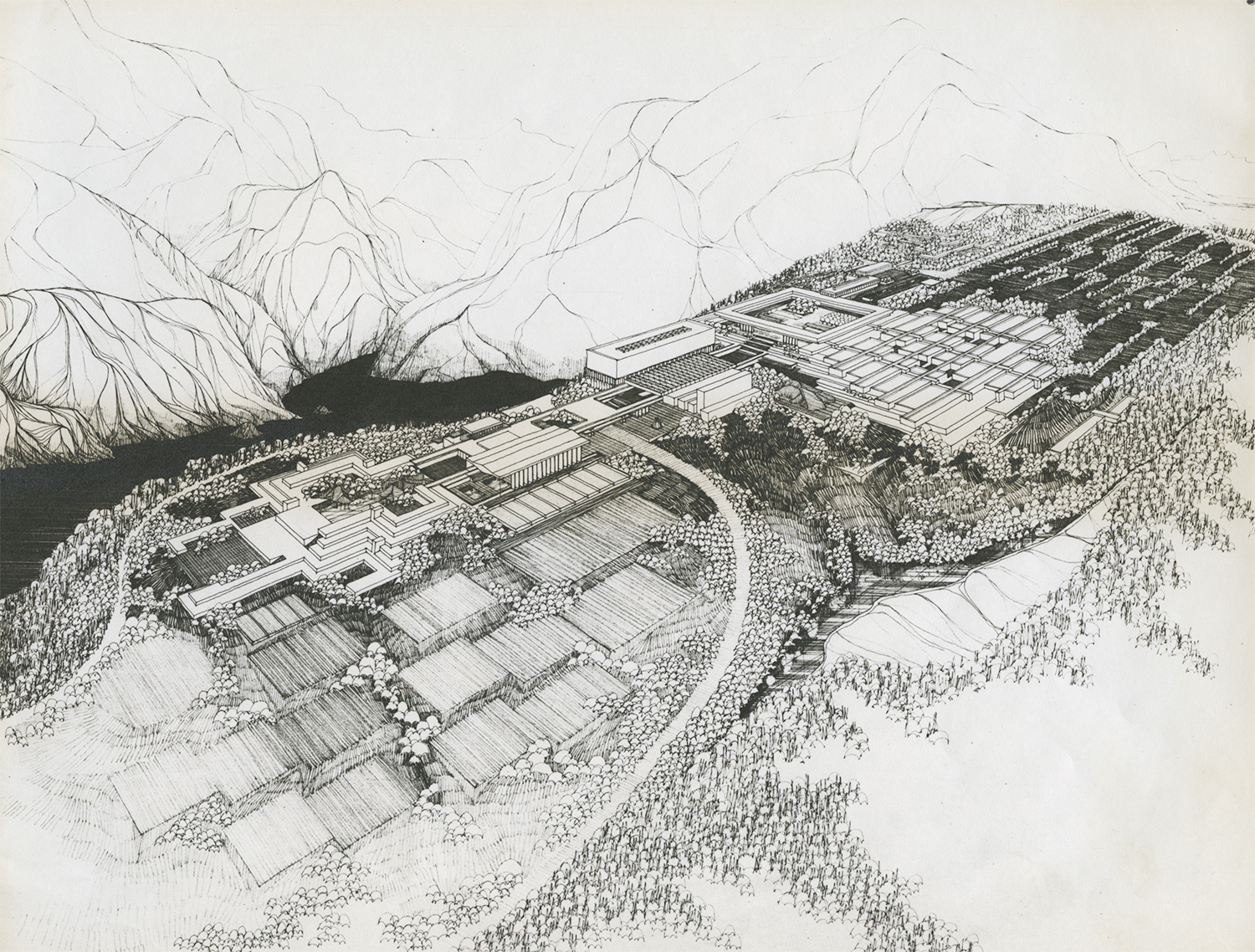
Massey’s insight would prove instrumental in Erickson’s winning design for SFU. According to Stouck, one of the judges is reported to have said the design “sits like a well-tailored cloak on the top of a mountain.”

“What was unique about the design that he [Erickson] and Geoffrey Massey offered in the competition was that he didn’t create a bunch of high rises on top of a mountain,” Stouck says. “Instead, he saw the mountain as designing the shape of the campus.”

He mentions Erickson’s travels to Bali in Indonesia as a young man as a key influence: “What impressed him there was the way everything was conformed to the landscape itself. It was nature that determined the shape of things, not the human presence. So in his design for Simon Fraser, it’s terraced, just like the rice fields of Bali.” Erickson also looked to the Acropolis in Athens — an impressive structure, as much a part of the mountain as the grass below. Years later, Erickson would say that “the dialogue between building and setting is the essence of architecture.”

erickson

The Instant University

According to Shrum, Erickson and Massey’s design was chosen unanimously by the judges because it met all of his requirements. “I had always felt sorry for UBC students who had to walk from building to building in the rain,” he said; Erickson’s design allowed students to travel from any one building to another without exposure to the elements. Shrum also requested that there be ample space for parking, and that all the school’s large lecture theatres be together and not, as Shrum described it, “scattered all over the campus as they were at UBC.”

But Shrum’s final and most crucial stipulation — one that his advisors cautioned him would be too difficult for any applicant — was that “the university should appear in 1965 essentially as it would in 1995.” Shrum wanted a school which seemed complete on the day it opened, and could be expanded upon without fundamentally changing its appearance. In his 1986 autobiography, he deemed Erickson’s design, ultimately, a success: “Simon Fraser University looks almost the same now as it did the day we opened it, despite the great expansion that has taken place.”

As winner of Shrum’s design competition, Erickson and Massey were given two jobs: they were to implement their own design of Simon Fraser University, while also factoring in the design concepts of their four runners-up. Zoltan Kiss was put in charge of the Academic Quadrangle; Robert Harrison, the library; Rhone and Iredale, the science wing; Duncan McNab, the gym, pool, and theatre complex. Given first choice, Erickson and Massey chose Convocation Mall — in their minds, this would be the centre of the university, the meeting place for academic minds to exchange ideas and engage in discussion.

Years later, when the Mall became the centre of the radical political protests that came to define SFU’s first decade, Erickson came under fire for his design. Despite an unwillingness to publicly comment on the matter, by all accounts, he was pleased: this, of course, meant that his idea had worked.

“Erickson saw the mountain as designing the shape of the campus.” – David Stouck, author of Arthur Erickson: An Architect’s Life

As construction began in March 1964, a journalist for the national magazine Saturday Night dubbed the work in progress the “instant university.” The name stuck — during the gruelling construction phase, Erickson would joke that a project of its scale would usually require two years just to prepare the drawings, let alone the construction process.

Typical of their partnership, Erickson and Massey split the work to suit their talents. Stouck’s biography tells of one particular morning when Massey and Erickson learned that a shipment of concrete slabs had proved too thin to hold up the weight required of them, halting construction and pushing hard against their impending deadline. Massey spent the entire day telephoning suppliers and contractors, trying to fix the problem; meanwhile, Erickson spent the day researching to find the perfect species of reflecting koi fish for the Academic Quadrangle pond.

Despite minor setbacks, Erickson and Massey, along with their ragtag team of fellow architects, finished construction in time for the university to open in September of 1965, right on schedule.

Its first semester had over 2,500 students in attendance, and SFU’s groundbreaking design — its wide open spaces, bold use of concrete and glass, and interdisciplinary structure — brought Erickson international acclaim. He and Massey won multiple awards for their work, and in the years following, Erickson would go on to open offices in Montreal, Toronto, Los Angeles, Kuwait, and Saudi Arabia — at one point, running all five at the same time.

“From the outset, Simon Fraser — from an architectural point of view — was radical,” Stouck says. “In the old days, university campuses consisted of buildings that were separated from each other, and these separations represented a competitive spirit between departments. To put all these departments together and, in a sense, jumble them up to make sure that there was no sense of competition among the faculties was a completely new idea.”

Stouck also cites SFU’s interdisciplinary design as a reason for its political radicalism early on. “When you bring everybody together, they’re going to start talking to each other about their disciplines in relationship to each other. Pretty soon, you have an entirely new and different idea of how education can develop [. . .] and of course, it attracted radical students, it attracted radical faculty, and that became part of its reputation.”

SFU, known to many at the time as “the Berkeley of the North,” quickly gained notoriety as a school for outcasts, political dissidents, activists, and starving artists. Its unique design played a big role in enticing potential students. “SFU attracted students who were not inclined to follow a crowd,” writes Hugh Johnston, a professor emeritus at SFU, in his book Radical Campus. 

Though Erickson’s popularity would continue to grow after his work on the university, Shrum’s gradually sank — his old world approach to business and scholarship clashed with the radicalism of the SFU student body, and his chancellorship from 1963 to 1968 was an unpopular one.

Still, in his final years, Shrum remained proud of his accomplishment with Simon Fraser University. In his final years, he would remark, “I am certain that nobody, in any part of the world, ever built a university in two years and six months that accommodated 2,500 students at the opening.”

The Aftermath

Five years after the construction of Simon Fraser University was completed, Arthur Erickson received a letter from the Prime Minister’s office. A newly elected Pierre Trudeau was hosting an artists’ dinner: prominent creatives from across Canada were invited to share their views on Canadian nationalism and identity, as well as a Parliament cooked meal. Erickson, as it turns out, was the only architect to earn an invitation.

Erickson’s resulting friendship with Trudeau — which grew so close that the latter’s advisors, fearing rumours of homosexuality, urged him to marry immediately — proved the architect’s introduction to the world of fame and extravagance that came to dominate much of the rest of his life.

His parties at his Vancouver and Los Angeles homes became legend. His friendships with Prince Charles, Princess Diana, Katherine Hepburn and Shirley MacLaine catapulted him to celebrity status. Erickson’s homosexuality, an open secret among friends, would remain a source of tension in his professional career in the decades to come.

Although his status as one of Canada’s star architects continued to grow with projects such as UBC’s Museum of Anthropology, Robson Square, and the Canadian Embassy in Washington, DC, Erickson’s personal life was fraught with drama. His longtime life partner, Francisco Kripacz, a businessman and designer who helped decorate the interior of many Erickson projects, encouraged the couple’s increasingly decadent lifestyle, which kept them in near-constant financial strain.

“[Kripacz] was a very extravagant man,” says Stouck. “[Erickson] was under the spell of that man for years and years. The Arthur Erickson story is somewhat of a Greek tragedy, and this was his fatal flaw, in terms of his career as an architect; on the one hand, his instinct was to live very modestly, but he was surrounded by people, especially Francisco, who wanted everything to be as lavish and exciting as possible.”

Erickson’s tragedy reached its climax in 1992, when he was forced to declare bankruptcy in Vancouver’s Law Courts — the same ones he had designed only a decade before.

However, the final years of Erickson’s life saw his career and reputation restored. After more than a decade of separation from the architect, Kripacz died of respiratory failure. Erickson’s international offices had closed, leaving just his Vancouver office — the same place where he and Massey started it all. 

There is nothing more architecturally representative of Vancouver than Erickson’s green roofs, glass windows, and angular concrete.

Erickson’s split with Massey in the mid 1970s damaged both men professionally and personally, a blow from which, one might argue, the former never recovered. “Even though he tried to surround himself with other people working for him that could manage the business,” Stouck notes, “it was never the same.”

In 2006, just three years before his death on May 20, 2009, the Vancouver Art Gallery held a retrospective on Erickson’s life and work. Sketches of Simon Fraser University and paintings from Erickson’s childhood decorated the walls as the architect fielded questions from interviewers beneath the Robson Square dome he’d designed 20 years previous. The exhibit’s curator, architect Nicholas Olsberg, reflected on Erickson’s legacy: “I don’t think the world knows what he means, and I don’t think Vancouver knows.”

Erickson remains one of just two Canadian architects to win the American Institute of Architects Gold Medal, among countless other awards. According to friends, he was known to wear the medal proudly around his neck at parties and other social occasions.

Walking down the streets of Vancouver, it’s impossible to ignore Erickson’s impact on the city. Almost 50 years after his design of SFU brought him fame and fortune, there is nothing more architecturally representative of Vancouver than Erickson’s green roofs, glass windows, and angular concrete. His final work, Vancouver’s Trump Hotel — known to many as Vancouver’s Turn, a fitting double entendre — is set to be completed in 2016, almost a full decade after his passing.

Still, it’s hard not to think of Erickson’s life — part Greek tragedy, part rags-to-riches-to-rags parable, part epic journey — as being defined by the school he helped create. Atop Burnaby Mountain, in the midst of Erickson’s own concrete Acropolis, he lives on.

Erickson design images courtesy SFU Archives, Gordon Shrum fonds (F-32-1-0-0-6).

Zero Waste campaign relaunch tackles “separation anxiety”

2

CMYK-Recycling-Anderson Wang

Palms are sweaty, knees weak, arms are heavy — with all that recyclable waste you’re carrying.

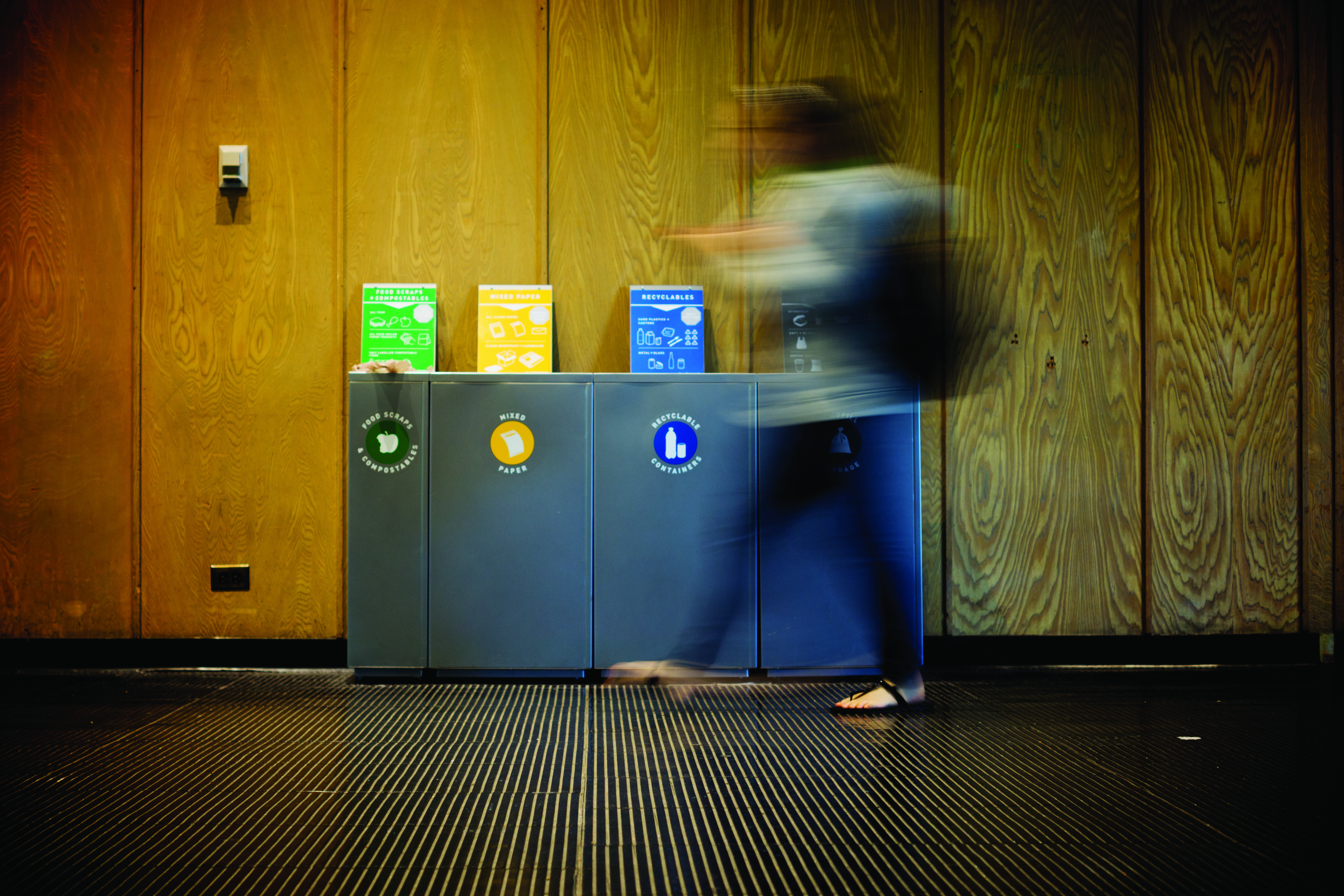
Don’t be afraid if you don’t know where to toss your mom’s spaghetti — a new campaign is hoping to help students get over the “separation anxiety” felt when having to decide how to separate their waste at SFU’s recently installed Zero Waste stations.

Originally launched in January, the Zero Waste Initiative aims to double the amount of waste SFU recycles or composts by 2015, while diverting 70 per cent of SFU’s waste from landfills.

“It’s one of the key goals of the Sustainability Strategic Plan for the university,” Rachel Telling, Zero Waste coordinator, told The Peak. “We’ve kind of taken the initiative to implement all of this stuff first, and we’re sharing it with other universities, so the idea is to become an industry leader in zero waste.”

On March 19, janitorial staff carried out a “waste audit,” collecting waste from the AQ 3000 level as well as Mackenzie Café. After sorting the waste into its four streams — paper, recyclables, compostable, and landfill — the team found that 47 per cent of materials were not being placed in the correct streams.

It seemed students and staff were mainly having difficulties disposing of coffee cups, compostable containers and food-soiled paper, and much of the contamination came from mixing up the paper and compostables streams. These findings spurred the team to relaunch their Zero Waste campaign, on a new theme of “separation anxiety.”

Telling explained, “We were noticing the same items in the same bins again and again and again. Coffee cups, for example. So we wanted to make it even easier for people.”

The relaunch will feature updated signs based on feedback from focus groups. “It was funny because some people said, ‘There’s too much information on the signs! Too cluttered!’ and then the same amount of people said, ‘There’s not enough information on the signs!’” exclaimed Telling. “We tried to find a middle ground that would please the majority of people.”

In addition to providing clearer instructions, the relaunch involves a Zero Waste selfie competition — or, “Zelfie” competition. For the remainder of the semester, students are invited to take a picture of themselves recycling correctly and send it to the Zero Waste campaign to be entered into a weekly competition for a $50 voucher to the on-campus vendor of their choice.

The team has also installed two stream bins — landfill and compost — in many of the washrooms on campus, hoping to divert a significant amount of paper towels to compost. With the help of Zero Waste educators, who will be available at stations on all three campuses for rest of the semester, the initiative hopes to transition to a greater focus on waste prevention in the fall.

With the relaunch in full swing, Telling hopes that students will take the time to consider what they are doing with their waste. “We see people sometimes just like, chucking things in them from afar,” said Telling; “Just take a second to read and make sure it goes in the right bin.”

Undergrad accepts high-level international position

0

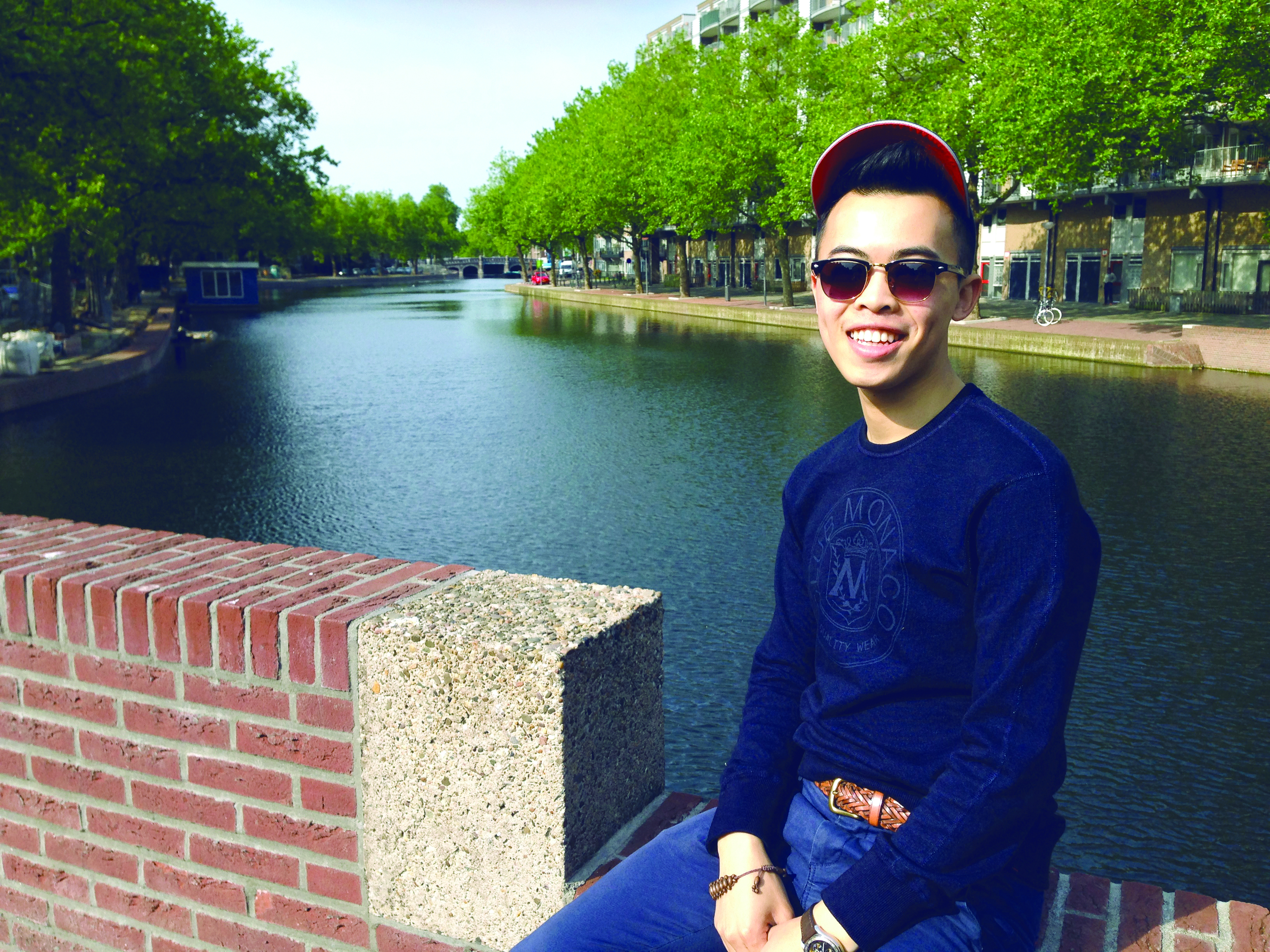
CMYK-Gordon in RotterdamNot many undergraduate students get the chance to hold an executive position at one of the world’s largest global organizations, but SFU’s Gordon Ching just landed such a position with AIESEC, a prominent not-for-profit organization dealing with youth leadership and positive social change.

Ching accepted a position as AIESEC’s chief digital officer and global vice-president of digital marketing. The year-long contract has taken him overseas to the Netherlands, where he is posted in the city of Rotterdam.

What began with a visit to AIESEC SFU’s clubs day table in 2010 has turned into a progressive career with the company for the 21-year old student. Ching made his way from being a lowly online media coordinator, to the Canadian national vice-president of marketing and communications, to now working on a global scale.

In his previous position, Ching worked with a network of 2000 people across Canada within a leadership team of 7 based in Toronto, Canada. He was responsible for country-wide marketing and communications for the organization, as well as the organization of 15 global conferences, including the Canada Youth to Business Forum, also leading AIESEC’s Canadian Youth Voice Survey.

This new position has him working with a team of 24 people, from 18 countries across the world. For him, the main difference from his previous position is the global aspect — something he believes aligns very well with SFU’s campaign to “engage the world.” “I’m not thinking about ‘how do I create change in Vancouver or in Toronto?’ now I’m thinking, ‘how do I create change across our 124 country network?’” said Ching.

Another challenge he faces in this new role is “[understanding] the intricate cultural differences, different communication styles, and how [he] can lead people across different areas.”

Despite being in a state of transition, Ching enjoys his new work. “I feel that with every new experience comes a brand new way to see the world and understand myself at the same time,” he said.

At the beginning of his undergraduate degree in human geography, Ching couldn’t have imagined the present turn of events. He had a passion for climate change, so he focused his energies on the environmental science aspects of the degree.

He explained that he later realized that if he wanted to effect real change, he would need a broader understanding of other things, such as economics, business, and politics: “I not only wanted to be an environmental scientist anymore but an entrepreneur or politician that can be a catalyst for massive and impactful change.”

This, in part, prompted him to get involved with AIESEC in the first place. He also said that, as a young person, he didn’t have much to lose in trying out something new. Ching emphasized that, “university is the best time to really develop yourself.”

Ching has been out of school for just over a year now, but he intends to pick up where he left off after his contract is up.

He stressed the importance of breaking out of one’s comfort zone, encouraging SFU students to “think beyond their local horizons, [. . .] reach out to an international audience,” and also to find deeper meaning in their degrees and “how they can bridge [them] into a greater social context to make a meaningful impact.”

“You need to understand the picture beyond your own discipline,” he concluded.

Don’t call me inspirational

0

You don’t get to be called “inspirational” for living your everyday life. Inspirational is climbing Mount Everest, building a school in Africa, writing a novel, earning a degree — not completing everyday tasks such as going to school, brushing your teeth, hanging out with friends, or taking the bus.

Unless, of course, you happen to be disabled.

People with physical and mental disabilities get called inspirational on an almost daily basis, by strangers and friends alike. It’s happened to me countless times. It’s not as though most of these people have done anything remarkable to deserve such high praise — most of the time, they’re just living their lives, doing things that no one would think of calling inspirational were they done by anyone else. The word inspirational, and other words like it, are handed down to people like me in an attempt to congratulate us on how supposedly difficult our lives are on a daily basis. 

What people don’t know when they use terms like this is that they aren’t compliments. People with disabilities don’t need to be congratulated for waking up in the morning or going to university. In fact, more often than not, these comments end up being more insulting than appreciative, because they imply that the disability is the defining factor in these people’s lives. It isn’t.

These comments are insulting, because they imply that the disability is the defining factor in these people’s lives.

Those in wheelchairs, or with other physical or mental disabilities, receive these sorts of “compliments” all the time. People will often pat you on the head and tell you what a wonderful job you’re doing, just for living your life. One time, a teary-eyed woman approached me saying that she “also knows someone in a wheelchair,” and asking, “do you know them too?” Like there’s some secret club we all belong to.

I’m used to being singled out in a crowd — seeing people’s eyes linger, feeling like an anomaly. Despite whatever good intentions people might have, it’s not okay to come up to someone with a disability and tell them how inspiring or courageous they are, especially if you don’t even know them. Though you may not realize it, doing this is just further objectifying people with disabilities, in order to make yourself feel better, not them.

One of the most prominent examples of this is a trend that comedian and disability activist Stella Young has termed “inspiration porn.” I’m referring to the countless photos across the Internet of so-called “inspiring” people with disabilities which end up garnering thousands of likes, comments, and shares. The captions are usually along the lines of: “What’s your excuse?” or my personal favourite: “The only disability in life is a bad attitude.” 

The subtext at play here is that a disability — someone in a wheelchair, with an amputated limb, with a mental illness — is something to overcome, and a means of inspiring people who simply don’t have to deal with these issues. Disabilities here are portrayed as negative, and used by able bodied people to make them feel better about their own lives.

When viewing these images, the message seems to be that, no matter how bad you may feel your life is, at least you aren’t that person. At least you don’t have that form of a disability. At least you’re not one of them.

These images objectify disabled people because they assume that a disability is such a bad thing that anyone living with one is deserving of praise, just for existing and continuing on. But, more often than not, the people in these photos lead regular, fully functional lives. Whether you like it or not, they don’t exist just to inspire you.

It’s almost an expectation at this point that a disabled person’s job is to inspire the people around them. It’s still uncommon for someone in a wheelchair to teach a university class or hold a high position in an office environment — instead, it’s become a stereotype that anyone in the spotlight or the media who’s in a wheelchair is there to inspire. As soon as we see their picture or hear them speak, we expect them to impart their own brand of powerful wisdom upon us.

I’m not saying you can’t admire someone in a wheelchair. Of course you can. Many of them go on to lead lives that impact others, and pave the way for those following in their footsteps, and they deserve all the praise they get. But we need to view these achievements like we would anyone else’s. Disabled people are just as likely to be inspiring as able bodied people; it’s the distinction we draw that shows just how tokenized those with disabilities have become.

You should never let this line of thinking define how you see the people in your life with disabilities. Disabled people are the same as anyone else in terms of our ability to accomplish daily tasks, make an impact, or inspire change; their disability is only one aspect of who they are.

After all, you wouldn’t approach a stranger, pat them on the head, and tell them that seeing them shop in the dollar store inspires you — so what’s the difference if that stranger happens to be on a pair of wheels?

SFU student humanizes translation troubles

0

translation-VickyYi

SFU alumna Rebecca Wolfe is calling for human assistance in machine-translation, among other improvements, after conducting research at both the United Nations and SFU regarding multilingualism at international institutions.

Wolfe suggests that, in addition to promoting multilingualism, international institutions such as the UN need to effectively use emerging technological tools while better incorporating the human aspect of translation.

During her undergraduate years, Wolfe took an interest in linguistics, which eventually led her to an internship in the UN editorial department during her Master’s of Publishing degree at SFU.

She explained, “For me, it was interesting see how they handle multilingualism in a multinational, multilingual organization. So I had some first-hand research I was able to do to actually observe what they do for publishing practices multilingually and then to gather information about the state of multilingual publishing today.”

Although the UN is committed to publishing materials in multiple languages, due to obstacles such as historical precedent and a lack of resources, they are not always able to do so. Wolfe argues that, while we do need to translate under-read works from other languages into English and bring them to an English-speaking audience, “English as an only option, or as a default, or as a source for most publication around the world, is problematic.

“The UN has an opportunity to promote multilingualism, and [. . .] they have a responsibility to protect linguistic diversity around the world,” said Wolfe.

In addition to discussing the issues of anglocentrism, her thesis contains insights on the modern fascination and mass-use of machine translation as well as its error rates and efficiency.

Wolfe explains that machine translation has improved drastically over time, and organizations such as the UN should take advantage of these advances to more readily incorporate multilingualism into their publishing practices.

Although Wolfe believes that improvement will likely continue to occur, she feels that human intervention is required alongside machine processing to enhance clarity of the translations.

“As anybody who’s tried to use google translate or any other online translators, there’s going to be mistakes. You will get some crazy results. It is good to get the right translator and have some human translating at the other end of it,” Wolfe explained.

Wolfe concluded: “I hope [my work] will be used by big organizations, universities, by academic publishers, because my main point is that multilingualism should not be an afterthought, and we shouldn’t lose linguistic diversity because it is a pain in the butt to translate things.

“A lot of languages are dying today,” she continued. “My main point is that I hope people will not be afraid to take the time to do translating and to pay attention to other languages besides English.”

Hollywood can’t handle feminism

4

Forewarning: the “F-word” is about to be used numerous times throughout this article. The one rhyming with duck? Not so much. We’re talking about the other “F-word,” feminism. It’s about time people stopped making the usual mistake of assuming feminism means putting women above men.

Recently, actress Shailene Woodley of the film Divergent was asked whether or not she considered herself a feminist. Her response was, “No, because I love men, and I think the idea of ‘raise women to power, take the men away from the power’ is never going to work out because you need balance.”

Oh good, yet another confused Hollywood star. Feminism at its core is about striving to ensure that women and men have equal rights and opportunities. Since when did it become such a dirty word that became synonymous with “man-hating” and “power-hungry”? Perhaps since people like Shailene Woodley continue to use and unintentionally spread this false definition of feminism.

With documentaries such as Miss Representation and movements by organizations such as the Geena Davis Institute on Gender in Media showcasing the lack of equality between men and women in the very industry that she is a part of, Woodley is far too ignorant. Her comments about taking “men away from the power” only continue to play into the Hollywood trap of vilifying feminism, and pushing aside the achievements of women.

Woodley’s character has helped transform her into Hollywood’s next “it girl.”

A two-minute montage played at this year’s Oscars ceremony depicting popular heroes in film showcased this vilification. The clip featured dozens of heroes, but most of them were male. Within the clip, women were featured for less than 20 seconds, putting the male to female ratio of representation at 6:1.

Why weren’t more female heroes included? One can’t say that more don’t exist. The clip could’ve featured famed “Tomb Raider” Lara Croft, our favourite witch, Hermione, or Terminator’s Sara Conner, among others.

Hollywood’s aversion to celebrating strong female characters is clear. Yet, with her role in Divergent, Woodley herself plays a character that is being hailed as one of the next great female heroes.

Tris Prior, her character, has been called a new hero for younger generations to look up to, and has subsequently helped transform Woodley into Hollywood’s next “it girl.” Woodley is being painted by the media as a role model for this younger generation.

It is thus even more critical that she understand the basis of feminism. Her dim-witted answer to whether or not she considers herself a feminist is now spreading a false notion of what feminism is to this younger generation.

You may argue that her publicist should have prepared her better for questions such as this, but this is on her. Misunderstanding the main principles of feminism in this day and age is just sad and unacceptable.

Crack open a dictionary, Shailene.

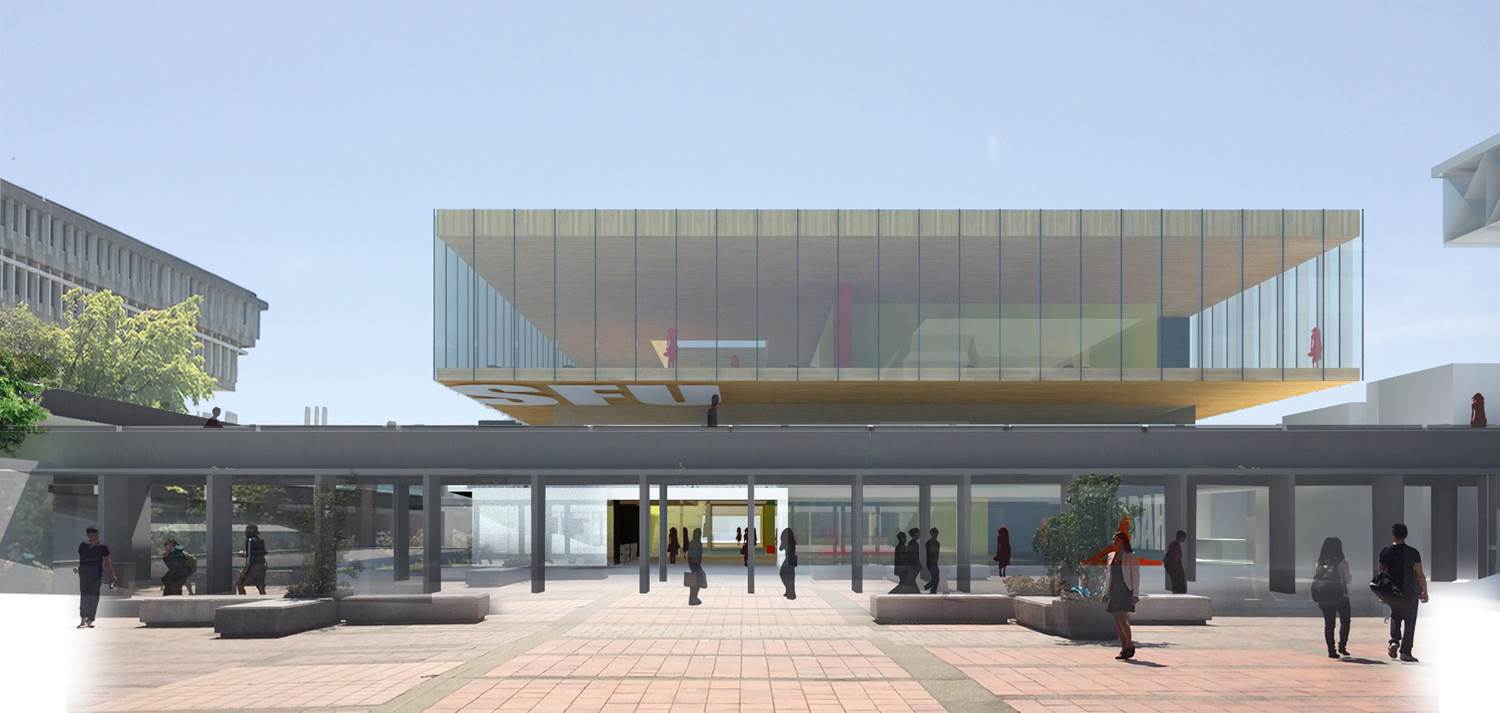
SUB architects discuss sustainable design features

0

Build SFU hosted its second sustainability workshop last Thursday, during which project architects for the Student Union Building (SUB) discussed how they will incorporate feedback from students and staff concerning sustainability in the building’s design.

Architects from Perkins+Will presented feedback received during a previous consultation before outlining their goals for meeting students’ desires for an environmentally-friendly SUB.

After tallying the responses, Build SFU found that students were mainly concerned with energy reduction, followed by efforts at social and community engagement, and the inclusion of local and natural materials.

Jana Foit, lead architect on the project, spoke to the various goals outlined for the new building. These included promotion of social sustainability and a culture of environmental stewardship, the incorporation of sustainably sourced materials, and the reduction of greenhouse gas emissions — all while balancing cost, sustainability, and quality.

In order to maximize energy efficiency, the architects discussed various options, including LED lighting, occupancy sensors, and reduced plug loads for power bars. Foit acknowledged that although “some of these strategies [. . .] are contradictory to some of the desires to have electrical plugs everywhere to plug in your laptop,” the architects feel that these features are vital to conserving energy in the space.

The architects also stressed the need for occupant engagement with the SUB to minimize energy use. When discussing how opening and closing windows can be useful in reducing heating costs, Geoff McDonell, the project’s lead mechanical engineer, asked students to, “treat [the SUB] like your own house.” He continued, “Would you leave your own windows open on a cold winter night? Probably not.”

The exterior of the building is likely to be 40 per cent windows, with the rest constructed using natural and recycled materials. Another feature that excited students in attendance was the possible inclusion of a community kitchen.

Despite student interest in the installation of solar (pv) panels, the architects replied that Burnaby Mountain is a “solar-challenged neighbourhood,” which makes it difficult to install solar panels that would generate consistent energy.

In an exercise at the end of the meeting, those in attendance showed interest in features such as metering dashboards. Such meters would allow students to see the energy use of a space in real-time — for example, a bathroom’s water usage.

Although other large-scale ideas like an intensive green roof did not seem likely, McDonell told those in attendance that, “None of this is off the table. This is all stuff that we’re looking at in terms of what can fit and what can work.”

China proposes railroad to Vancouver

1

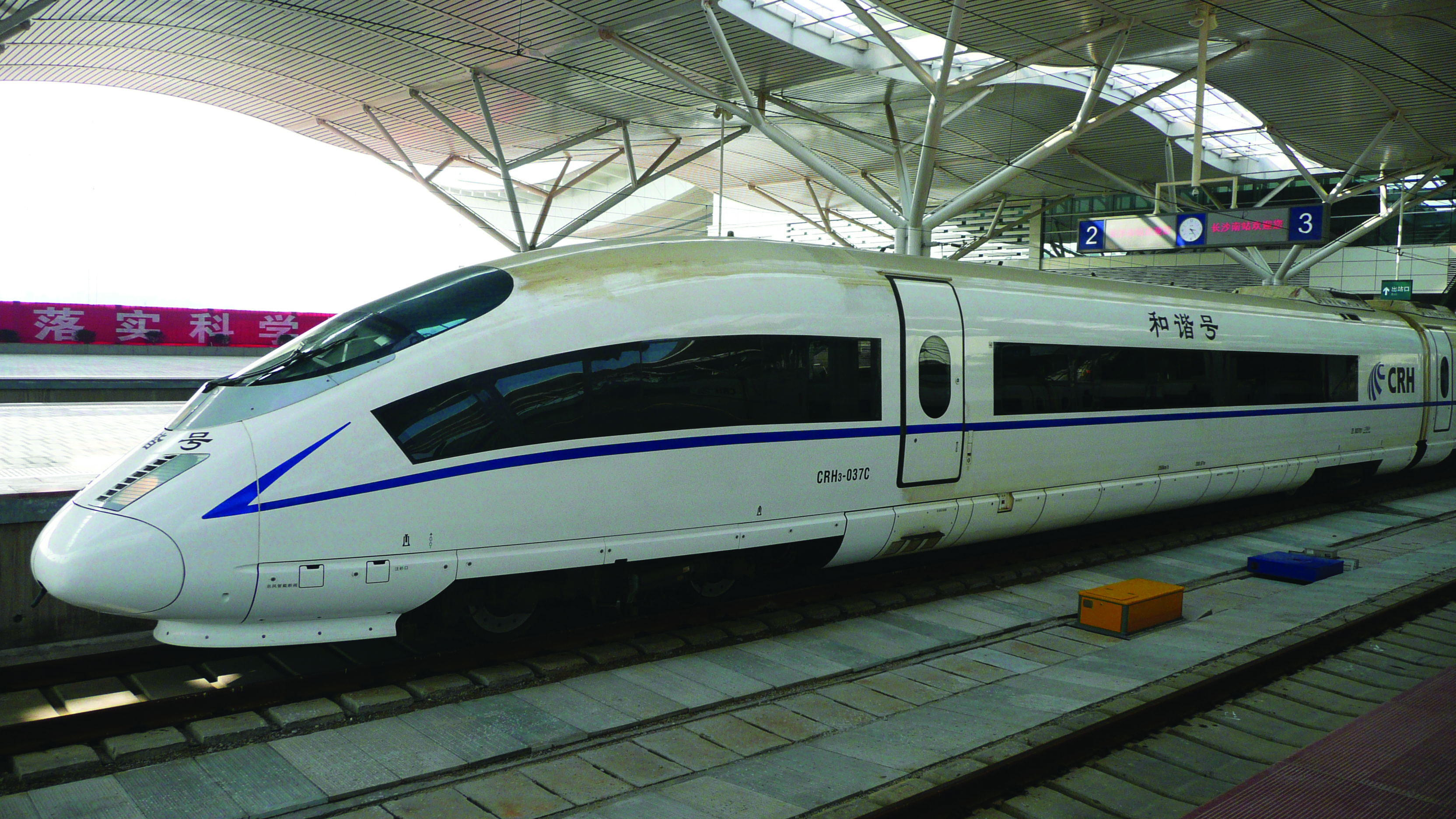
CMYK-CRH3_in_Changsha-Wikimedia CommonsAccording to Russian and Chinese state news, there may be plans to build a high-speed railway from China to Canada — a train ride of approximately two days when travelled at 350 kilometres an hour.

The route, which would stretch from Beijing to Vancouver, would foster trade and travel across several nations. It would span 13,000 kilometres, crossing Siberia before entering a tunnel to Alaska, through a 200 kilometre underwater tunnel in the Bering Strait. This area is considered one of the most dangerous bodies of water in the world.

According to China Daily, the project is being pushed by an Alaskan company called InterBering LLC. They predict the total cost of the endeavor would be upwards of $35 billion.

Aside from the concerns surrounding the cost, some are skeptical that Canada, the United States, Russia and China will be able to agree on the project in order to put it into motion. Even if the proposal were accepted, experts say it could take up to 25 years to complete.

Peter Hall, SFU urban studies professor, is doubtful of the plan’s immediate feasibility. “This is surely a long way in the future, more of a speculation about possibilities,” he told The Peak. “But there is a long history of humans proposing grand infrastructure, often going bankrupt on the first attempt — [think of the] Channel Tunnel, [the] Panama Canal — and once built it becomes a fact that does change travel and settlement patterns.”

Beyond fiscal and cooperative issues, Hall added that there could be a number of questions raised about the environmental aspect of the Beijing-Vancouver plan, were it to go through. “The environmental calculus would be quite complex,” he explained. “How is it actually constructed, what stops are en route, does it displace or reinforce carbon-intensive air travel, what fuel is used on the rail, and if electricity is used, what is the source, etcetera?”

Canada isn’t the only country China has its eye on — the Chinese have three other railroad proposals on the table, including one from London through Paris, Berlin, Warsaw and Kiev to Moscow; this route would split to end in either Kazakhstan or Siberia.

Another railroad, to start in China, would run through Kazakhstan, Uzbekistan, Turkmenistan, Iran, Turkey, and Germany. A third would start in southern China, running through Thailand, Cambodia, and Malaysia before ending in Singapore.

All of these plans would involve heavy infrastructure and international co-operation between the governments planning the railroads. China has already made statements saying that they would fund the projects internally.

In fact, recent agreements may mean China’s plans are not as far in the future as Hall might think. Laos has already signed on to borrow $7 billion from China to fund the railroad that will run through Southeast Asia, and China is building a railroad in Nigeria as a form of aid to Africa, providing jobs and infrastructure.

This railway will link Kenya’s Indian Ocean port of Mombasa and capital, Nairobi, and eventually link Uganda, Rwanda, Burundi, and South Sudan, and will cost $3.8 billion.

Aside from Laos and Nigeria, no other countries have made formal commitments to the new Chinese railways.