

By: Jin Song, Peak Associate
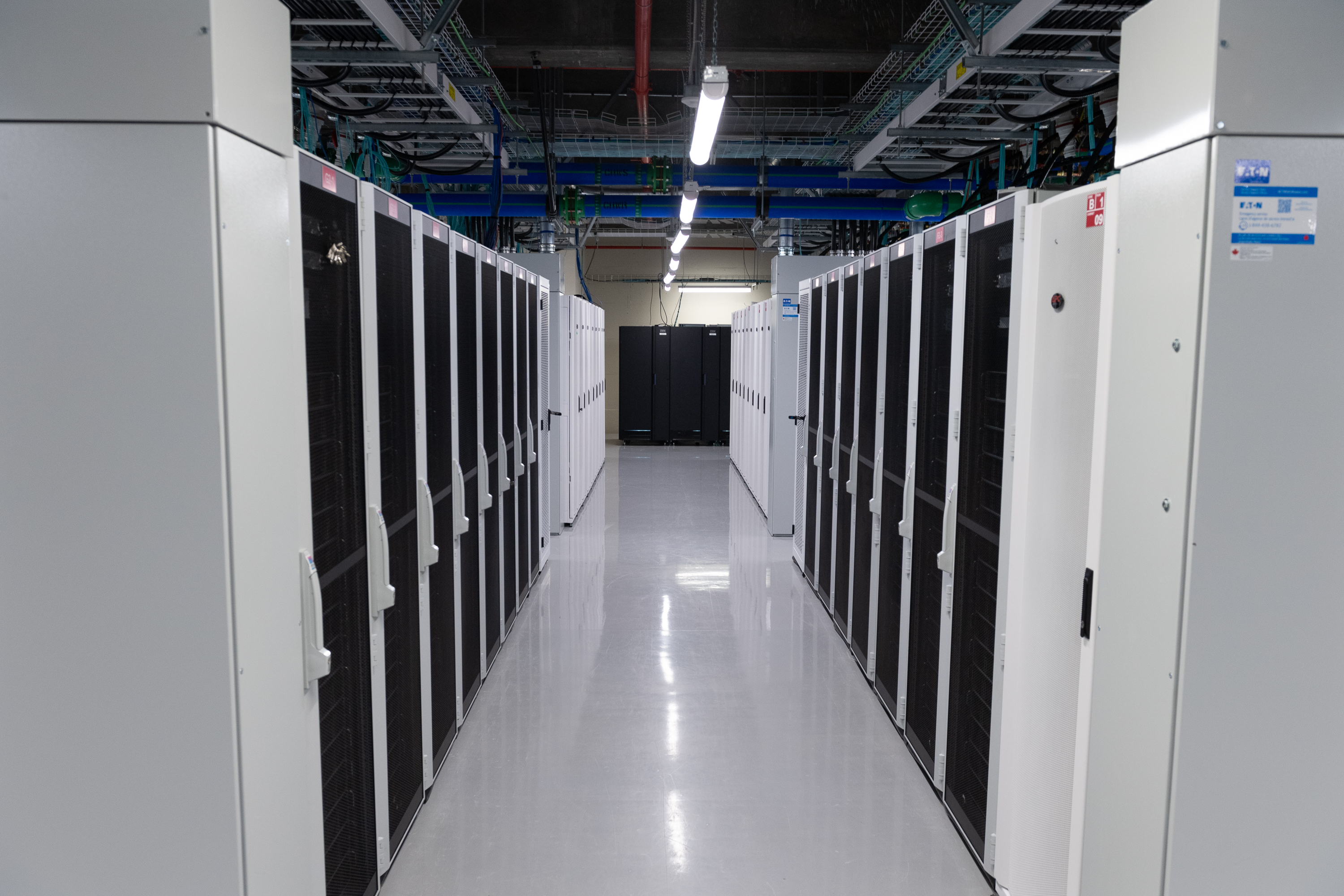
SFU now hosts Canada’s fastest supercomputer, Fir. Designed for data and compute-intensive research such as artificial intelligence (AI), Fir came online in September and is the only Canadian machine in the global top 100 supercomputers.
Fir replaced its predecessor, Cedar, which was “an eight-year-old system at the time that it was decommissioned,” said James Peltier, director of research computing at SFU. Peltier is “also the site lead for SFU with respect to the supercomputing systems that are part of the national platform.” From a technology perspective, eight years is a significant number. Peltier said Fir is “significantly more powerful, significantly more efficient and environmentally friendly, and much more compact.”
“Necessity is the mother of invention,” he said. Fir, as an upgrade to Cedar, was needed to keep up with the demands of cutting-edge research, according to Peltier. The improvement in performance from Cedar is “anywhere from a twofold to twentyfold improvement” in terms of hardware, “given the similar amount of floor space.” In terms of efficiency, Fir has “moved away from air-cooled technology, which is 30–40% efficient, to direct liquid cooling technology, which raises the efficiency to 90–95%.”
Peltier emphasized that the team “looked at every aspect of the system that we possibly could, within the pricing capabilities that we had, within the physical infrastructure that we have available to us, and made a concerted effort to ensure that we had the most performance with the least environmental impact possible.
“SFU has a very strong commitment to being as green as possible, and one of the things that we’re looking at for any future purchases is how we can further improve upon those clean technology choices: moving from a diesel generator, for example, to a hydrogen-powered generator [ . . . ] or being able to better leverage recycled car batteries,” Peltier continued.
What excites Peltier about Fir is that “it is a national platform piece of equipment.” He said, “Only 30% of the research that’s done on the cluster itself is from researchers that are located in this region. That means 70% of the research that’s being done on the cluster is being done by a researcher that’s outside of BC.” Cluster computing is a “type of computing where multiple computers are connected so they work together as a single system.” Fir is a cluster itself, meaning it is a collection of computers part of a larger national network of Digital Research Alliance of Canada research computing infrastructure.
“It shows the true nature and collaboration of SFU, the province, and all of the highly qualified people that make up the national platform in providing this type of access to the researchers,” he continued. Fir is free for Canadian researchers to use.
Peltier emphasized the importance of Canada investing in infrastructure to stay competitive in the market in areas like AI and quantum to support cutting-edge research: Canada is “very much at the cutting edge of what’s happening in the edge of AI. We have some of the best researchers in the world that work right here in Canada on AI,” he said. “We have researchers who are working on the latest and greatest in terms of quantum networking, priography, and algorithms.”
“Being part of the national ecosystem is incredibly important to ensuring that we’re able to move the research community and world forward.” — James Peltier, director of research computing at SFU
Something Peltier noted about supporting research is, despite the competitiveness of the environment, “everybody’s really trying to move not just themselves forward, but [ . . . ] the world as a whole towards something that is greater than the individual. And that I get to be a part of that is amazing to me.”