

By: Ashi, senior writer for imaginary infrastructure
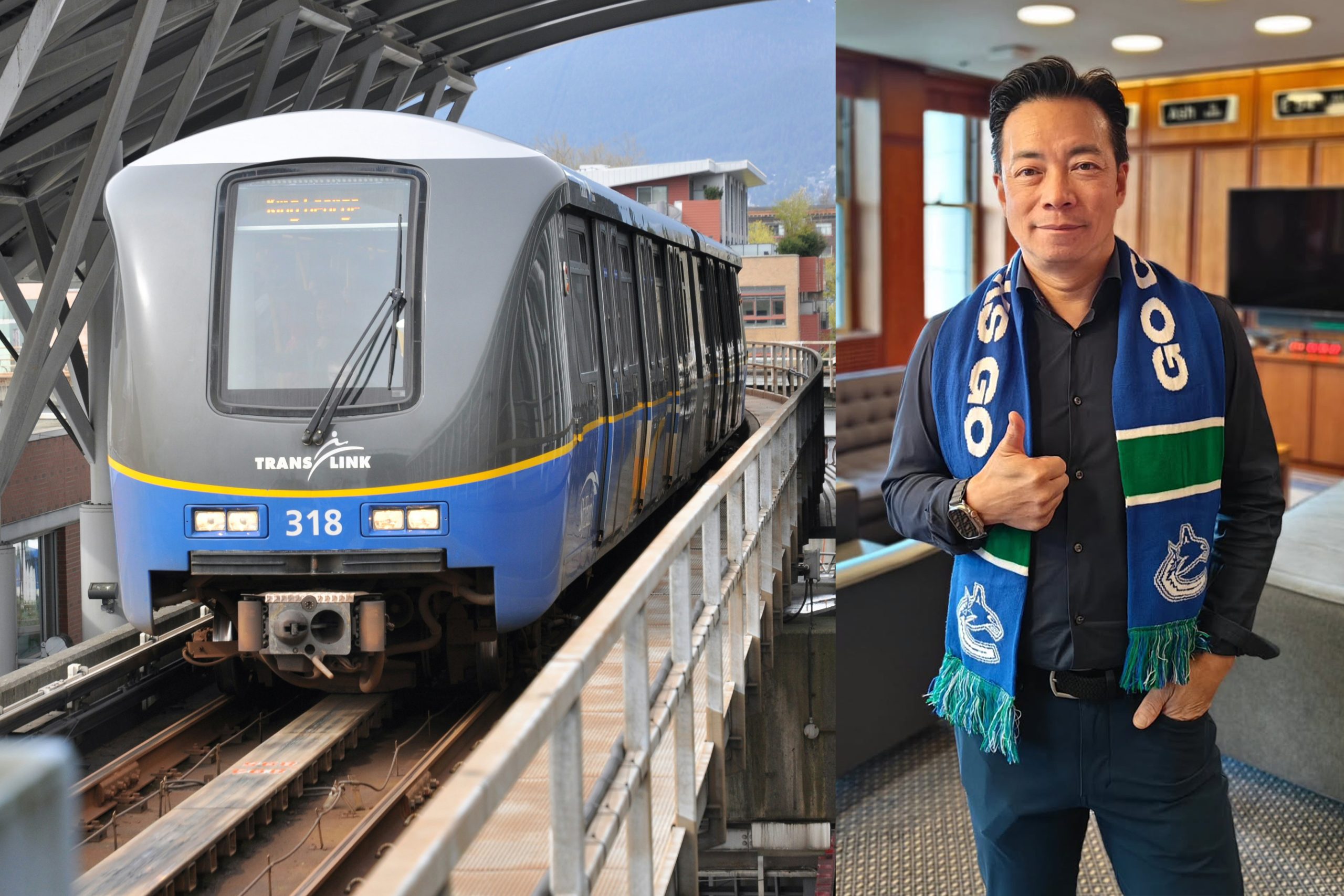
In a move described by aides as “inevitable, visionary, and definitely not a parody of governance,” mayor Ken Sim announced Thursday that Vancouver’s SkyTrain system is soon to be powered entirely by Bitcoin. Not metaphorically. Not financially, even. The trains, he says, will now run on pure belief.
Sim, a self-described financial expert, takes his job as the city’s unofficial Bitcoin mascot rather seriously. In fact, this long-time evangelist for crypto solutions to non-crypto problems has previously appeared on at least seven YouTube channels dedicated to Bitcoin, spoken at the Virgo Crypto Summit, and repeated (patiently and faithfully) that Bitcoin is the greatest invention in human history.
“A 20th-century mindset of electricity that comes from somewhere has trapped transportation for far too long,” Sim told The Peak. According to city documents (Sim’s doodles) obtained by a Freedom of Information Act request from The Peak, each SkyTrain car will now be tethered to the blockchain, drawing energy from the collective faith of earth’s billionaires and the raw metaphysical force of scarcity. Commuters may notice minor changes, including a new announcement in Sim’s voice reminding riders that any delays due to market volatility are only temporary. Compass Cards are now gone. Riders must scan a QR code and wait for the blockchain to validate their existence. Flares fluctuate minute to minute. And in the event of a sudden, unscheduled stop, passengers are advised to stay inside and loudly insist nothing is wrong.
Funding for the project will come from Sim’s personal donation of Bitcoin worth $10,000 and strategic budget cuts. The arts, culture, community services, planning, urban design, sustainability, and various city jobs have been trimmed or frozen, freeing up resources to expand the Vancouver Police Department’s crypto enforcement department and ensuring trains run on “trust me, bro” vibes.
Conventional currency systems, Sim continued, are “basically a Ponzi scheme,” unlike Bitcoin, which is . . . different . . . somehow. For those with a profound distrust of institutions, Sim insists that Bitcoin is backed by math and the City Council. “Trust me, bro,” he explains.
None of this, Sim insists, has anything to do with his personal investments, his friendships with billionaires, or recent political endorsements of Bitcoin elsewhere. Clearly, this project is for the people. After all, a whopping 29% of them approve of his performance as mayor. Which, when counted by blockchain, actually equals 100%.
The environmental rationale for the SkyTrain overhaul is, according to Sim, “rock solid.” Using “inverted sustainability,” he argues, the massive energy demands of Bitcoin mining are actually good for the planet because they encourage the construction of renewable energy projects. Somewhere. Eventually. By someone. Just not by him.
“Demand creates innovation,” he said, “And if a few glaciers melt along the way . . . well, that’s what the bros call liquidity.”
Crypto YouTuber Julian Figueroa applauded the decision. “Everyone who spends time in Vancouver will inevitably hear someone on the SkyTrain talking about the lack of affordable housing . . . This doesn’t fix that, obviously. But Bitcoin, eh?” he told The Peak.
“I have hope,” Sim concluded. “Not just for Vancouver, but for the world.” That hope now hums quietly, encrypted and immutable, always just one technological breakthrough away from solving housing, climate change, and the meaning of life itself.