

By: Sarah Venkatesh, SFU Student
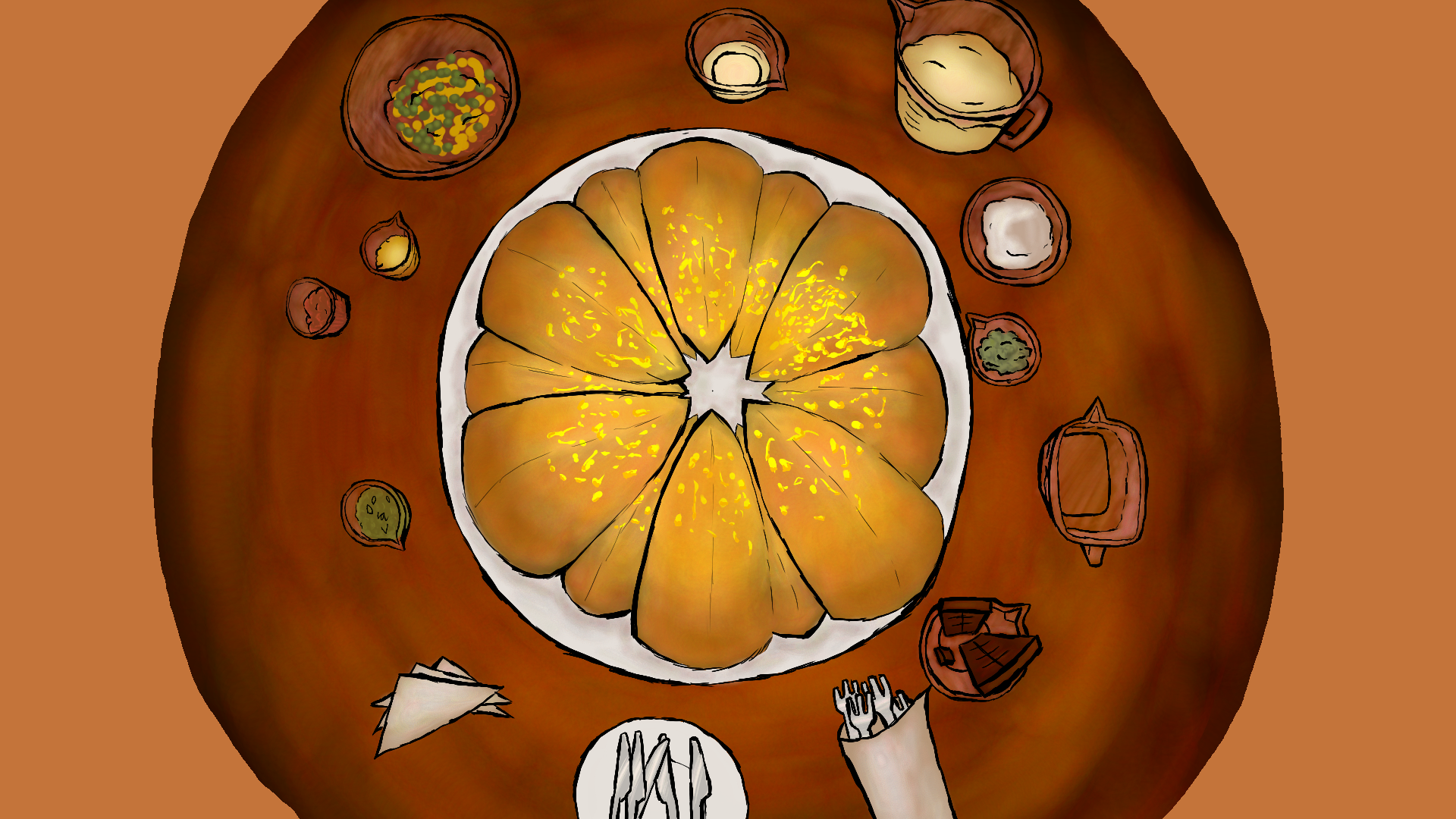
I had finished my dinner when my father brought home a dessert I had never tried before. It looked like caramel bars and tasted like fudge. I asked my father what was placed before me, to which he simply replied, “halva.” It was then that I discovered halva is a confectionery dish, most popular in East and Central Asia, Africa, Eastern Europe, and the Middle East. The dish can be made in many different ways depending on how each culture makes it, but it mainly consists of tahini paste or semolina flour, sweetener, as well as cardamom. During a visit to my grandmother’s place, she prepared a Greek version of halva using only a handful of ingredients:
- ½ cups of Cream of Wheat
- ¾ cups of sugar
- 2 cups of water
- 4 tablespoons of clarified butter (or just butter)
- Additional toppings like almonds, raisins, pistachios, even ice cream or chocolate! (optional, but recommended)
Instructions:
- Start by boiling your sugar and water together and whisking until the sugar dissolves. White sugar is considered the standard for making halva, but brown sugar also works if you want a richer caramel-like flavor.
- While the water and sugar are boiling together, melt your butter/clarified butter and add the Cream of Wheat.
- You want to make sure you cook the Cream of Wheat at very low heat until you can see it browning and separating (this could take around seven to ten minutes).
- When you see the separation, add your sugar-water mixture to the Cream of Wheat and continue to keep cooking until you see that it is no longer sticking to the pan.
- Turn off the stove and gently stir in your additional toppings (any nuts or raisins).
You can choose to wait until the halva cools completely, but I enjoy it when it’s still slightly hot. If you choose to completely cool the halva before eating, you can put it in a square pan and refrigerate it for six to eight hours, or overnight so it comes out as separate bars.
This is a perfect, super easy dish to satisfy late night sweet cravings, and I hope you’ll enjoy it as much as I do! It’s quick to prepare and is rooted in several different cultures showing how this simple dish can offer both comfort and cultural history.