

By: Maya Barillas Mohan, Staff Writer
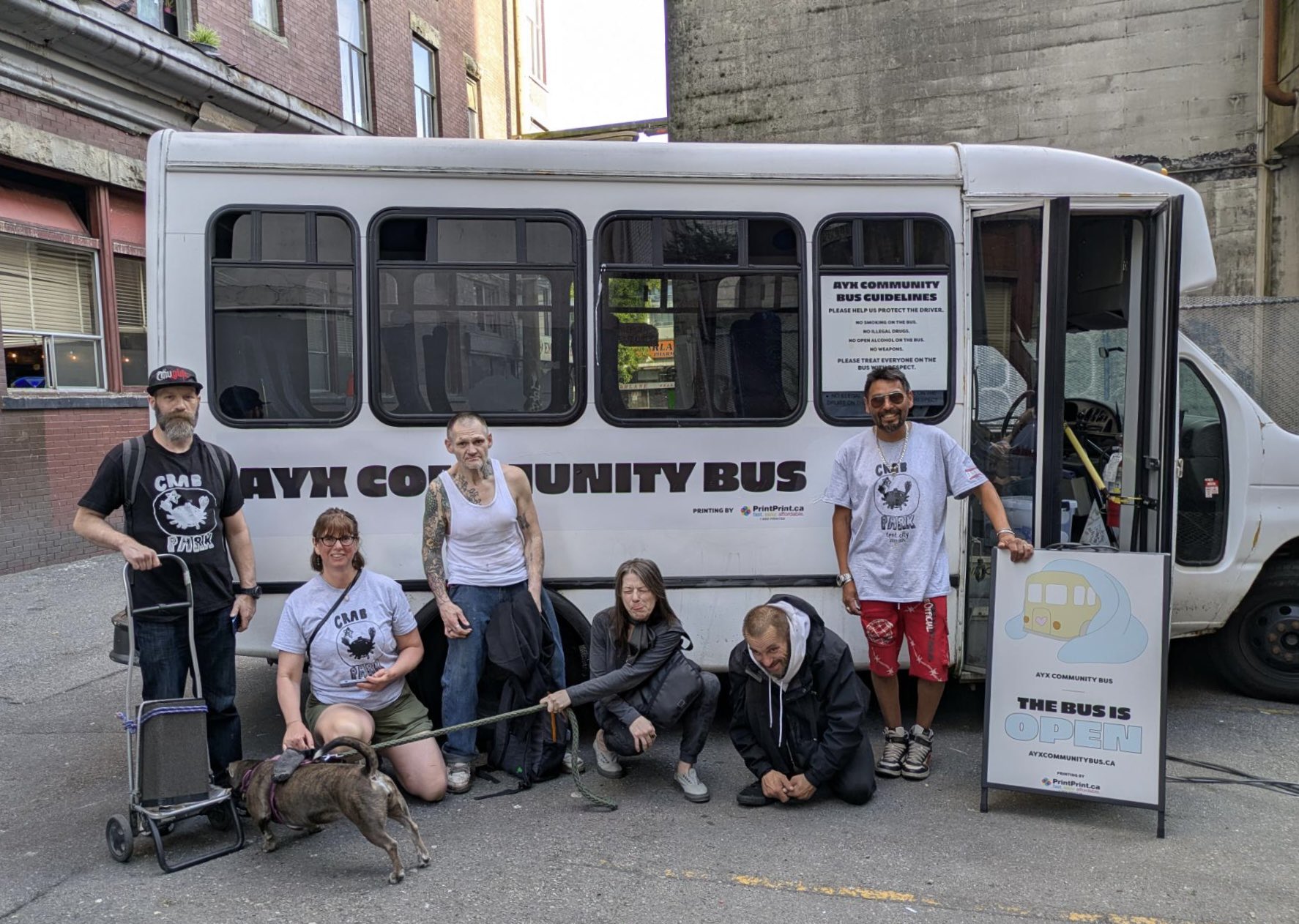
For some living in the Downtown Eastside (DTES), the warmth associated with the holidays is not a reality. The Ayx Community Bus, a grassroots initiative spearheaded by advocate Fiona York, attempts to lessen the loneliness and aid those who are unhoused and precariously housed. Encompassing the range of seasons and needs, the Ayx Bus serves as a cooling centre in the summer, and later in the year, provides warm clothing and hot drinks. This past December 24 and 25, care packages were delivered in the DTES from 9:00 p.m. to 2:00 a.m. The Ayx Bus operates three days a week in the summer, and at the hottest and coldest times of the day seasonally.
“Aýx̠” is the Sḵwx̱wú7mesh (Squamish) word for “crab.” CRAB Park is an acronym for “Create a Real Available Beach,” with the area having been one of Canada’s only technically legal tent cities. According to York, “former residents of CRAB Park (and other encampments like Oppenheimer) are the outreach workers on the bus and also help coordinate and prepare the supplies for the bus. They distribute food and supplies, answer questions, and provide a supportive presence for other people on the street or in tents.” In an interview with The Peak, York described how the former residents “provide a supportive presence for other people on the street or in tents,” giving back to those who are still struggling. She said they “feel good about being able to help others in their situation.”
York noted that, in the face of a gentrification plan, the unhoused community is on the precipice of serious changes. Specifically, the City of Vancouver recently passed amendments to their 2024 development plan for the Oppenheimer District to enforce a limit of 20% social housing priced at shelter rates. In the 2014 plan, the limit was at 60%. Buildings that could not previously exceed 8–12 storeys can now be built more than 19 storeys.
On their website, the City wrote, “The policy updates will make it easier and more financially viable for governments, non-profits, and the private sector to deliver new social housing and accelerate the replacement of aging [single room occupancies]. Together, they advance the DTES plan’s vision for a mixed-income community with diverse housing options, local-serving shops, social services, and cultural activities that support a welcoming and inclusive neighbourhood for all residents.” The City stated this plan will “ensure existing renters in the DTES are not displaced and have access to housing that remains permanently affordable.”
However, York suggested the rezoning plan “aims to gentrify the entire neighbourhood and in fact make it less friendly and more precarious for people who are unhoused or low income.” She said, “It doesn’t address homelessness or provide any new shelter-rate housing,” making “shelter-rate and actually affordable housing will be more scarce than ever.
“More security, more policing, more high-end businesses and services. Unhoused people will be more erased and less supported,” said York.
York also called the language in developer statements “insidious double speak,” where words like “uplifting” are used. “The city is really just trying to support developers and development but acting like they’re helping the DTES,” she said. In a press release, W, a former CRAB Park resident and incoming Ayx Bus worker, said:
“The DTES doesn’t need gentrification, it needs more people who actually care about other people.”
— W, former CRAB Park resident, incoming Ayx Bus worker
York noted that readers can support the cause by following @ayxcommunitybuss on Instagram to see posted donation wishlists and contribute to the fundraiser goals. Donations go towards operation stipends, bus maintenance and fuel, and ongoing training.