

By: Noeka Nimmervoll, Staff Writer
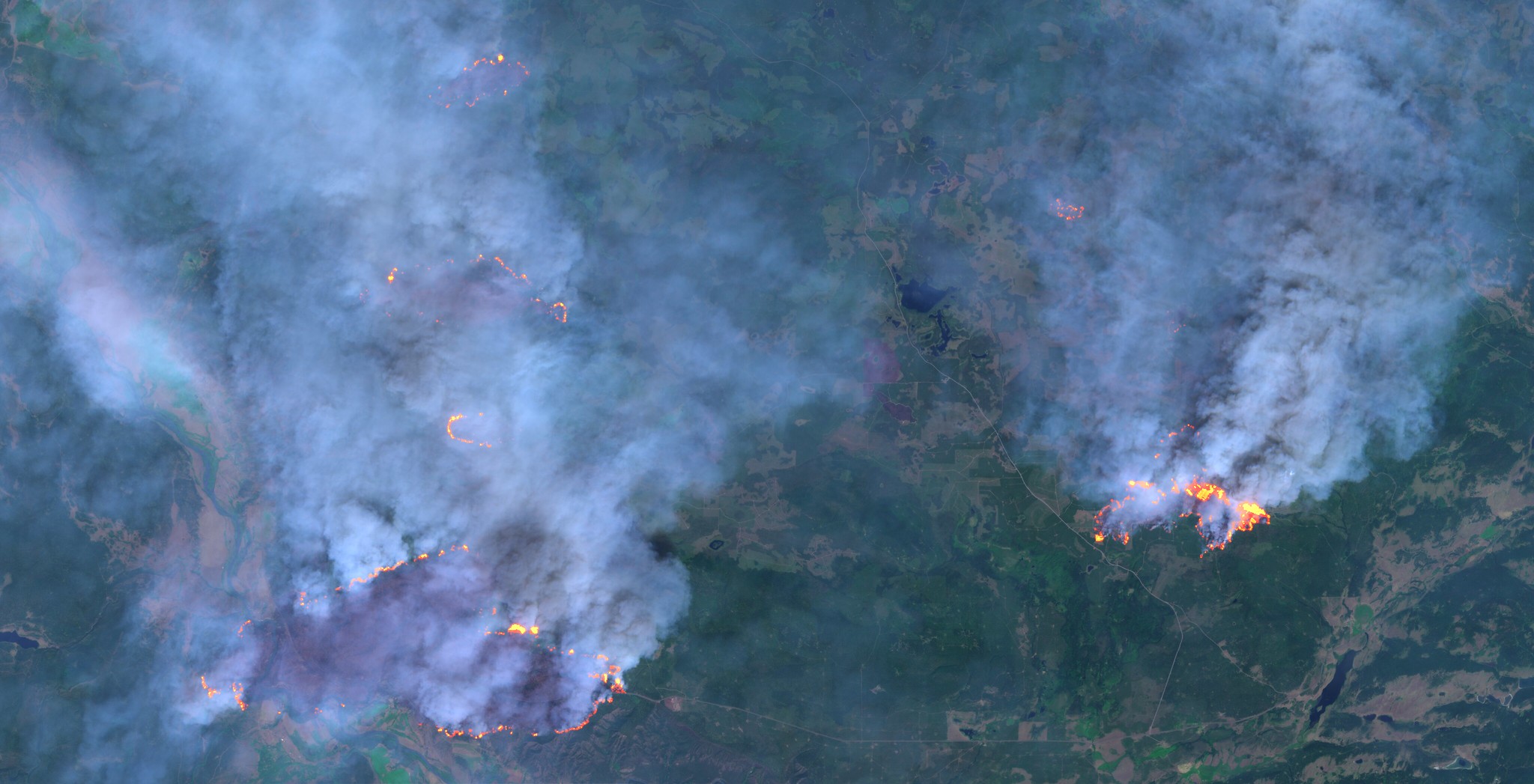
For BC residents, the end of this summer brings the highest risk of fires of the entire wildfire season, and the health effects of its smoke are becoming clearer. On September 3, Vancouver hosted the worst air quality from all the major cities in the world, due to the smoke from fires near Hope, Whistler, and Cariboo blowing into the city’s air.
Wildfire smoke is a collection of gases, evaporated water, and a wide range of particles, including particles invisible to the naked eye. Of all smoke content, fine particulate matter (PM2.5) causes the most risk to one’s health, and is the material that is measured on smoke forecasts. However, PM2.5 changes as it ages, and its subsequent effects on health seem to change, with research indicating higher toxicity from aged PM2.5.
Although Health Canada notes that all smoke damages health, CBC recently reported on how smoke that lingers in the atmosphere undergoes oxidation in reaction to its environment, creating unstable particles called free radicals. More time in the atmosphere means the smoke will travel through the wind, and the further from the source of the fire, the longer this smoke has time to oxidize. Due to its altered chemical composition, this aged smoke may pose an increased health risk for those inhaling it after it has travelled significant distances. The Peak spoke with Dr. Stephanie Cleland, assistant professor of health sciences at SFU and population epidemiologist, to learn more.
“We have what we call fresh smoke versus aged smoke. Fresh smoke is the smoke that is happening really proximate to the fire,” whereas aged smoke has travelled farther, said Cleland. She also mentioned that the possible increased health risk of aged smoke relates to how “the longer [smoke is] in the atmosphere, the more time it has for [chemical] processes to occur.”
The resulting toxicity of these chemical processes depends on many factors, including the initial components of smoke, which vary from the source of each fire and the atmospheric conditions.
“The emerging research indicates that [aged smoke] is likely potentially more toxic to our health compared to that fresher smoke. I would say the evidence is still early. We’re still learning a lot about smoke,”
— Dr. Stephanie Cleland, population epidemiologist for environmental exposures
Cleland categorized the groups more vulnerable to its effects: “who is exposed to the highest levels of smoke, and who is more biologically susceptible to the effects.” Health Canada identifies the former as people who work outdoors, live in rural areas, or live without housing. For the latter, Cleland explained that young children, those over 65 years old, pregnant people, and people with health conditions — especially connected to lung and heart disease — are more likely to be negatively affected by smoke.
“We also have these compound risks that occur when somebody has a pre-existing condition and is in a group that’s really highly exposed,” she noted.
Cleland shared tips on protecting your health, including checking air quality frequently and reducing your time outdoors based on the results. “I would love people to check their air quality like they check their weather.
“If you have to walk your dog or run errands, wear an N95 mask. It won’t reduce your exposure to the gases in smoke, but it will reduce your exposure to the particles in smoke. And that’s going to go a long way in protecting your health.”
As a general guideline, Cleland highlighted the importance of staying inside, whether at home or in a public venue, preferably with an air cleaner running. Since PM2.5 is invisible, the smell or sight of smoke outside is not a good indicator of low air quality.
Check aqmap.ca for up-to-date air quality data.