

By: Noeka Nimmervoll, Staff Writer
With files from Hannah Fraser, News Editor
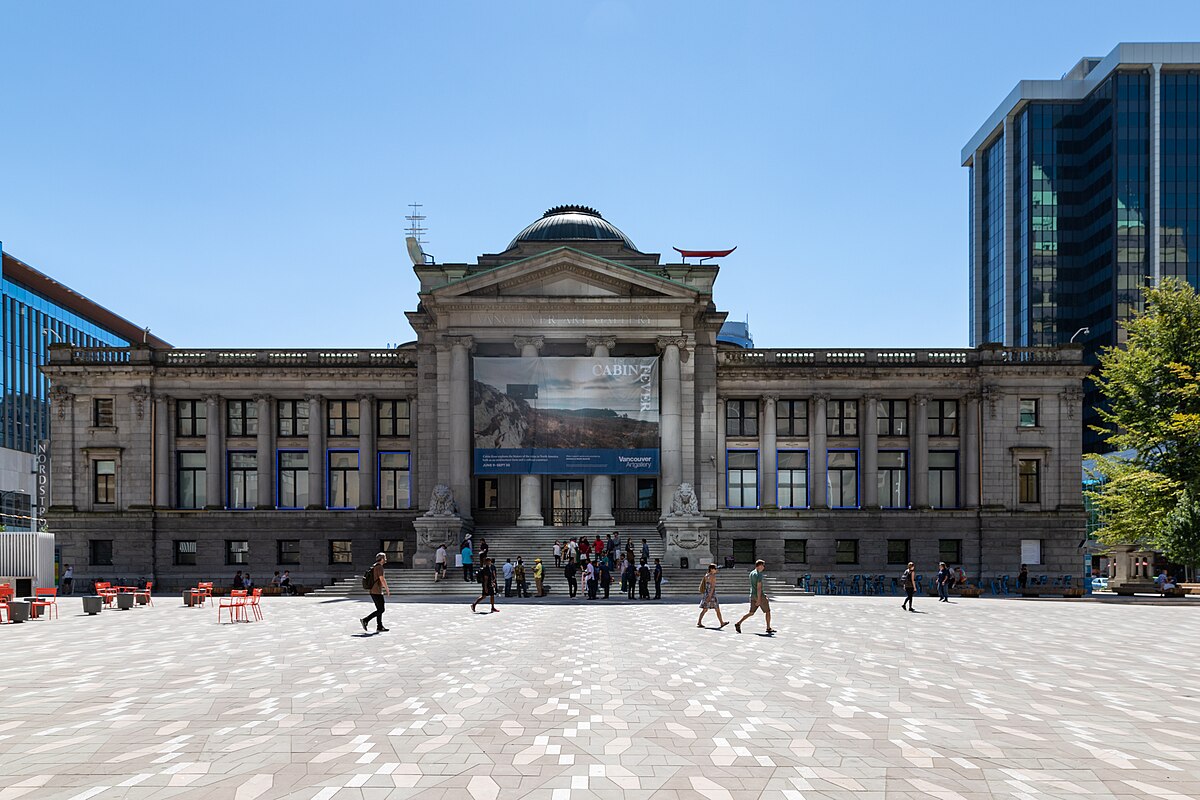
The Vancouver Art Gallery recently appointed Dr. Camille Georgeson-Usher as Audain Senior Curatorial Advisor on Indigenous Art. Of Scottish, Coast Salish, and Sahtu Dene heritage, Georgeson-Usher is the previous executive director of the Indigenous Curatorial Collective and is co-chair at the Toronto Biennial of Art. Additionally, she is an assistant professor of Modern and Contemporary Indigenous Art in the Department of Art History, Visual Art, and Theory at UBC. On top of contributing her expertise to upcoming exhibitions and acquisitions, she will unveil her inaugural exhibition, We who have known tides, in November this year.
The exhibition is “a poetic inquiry that seeks to understand what it means to exist at the edges of the Pacific Ocean.” Featuring around 40 works of Indigenous artists, the connections between the ocean and the Indigenous Peoples who live by it will be poetically visualized. In a separate interview with The Peak, Georgeson-Usher said, “I want people to feel as though I am here to listen and that I am committed to presenting Indigenous voices in the Gallery.” She is set to present a space of deep respect to the ocean, where her personal and familial relationship that is bound to the ocean is sought to be contextualized. The Peak spoke to Georgeson-Usher to hear more.
The interview has been edited for length and clarity.
How did the idea for this exhibition come about?
I was living in Montreal and Toronto. As somebody that’s from a tiny island in the Pacific Ocean, I found myself longing for water bodies and using writing and running long distances as a way of remembering what it feels like to be next to the ocean. What’s something that I’ve been developing that I could work in relation to other artists that I know were thinking in this way? And so I kind of use this poetic inquiry as a way of building my own relationship to the pieces in the collection and use that as a way to create the scope of this exhibition.
What is a common thread in the pieces in this exhibition?
One thing that I’ve noticed in all of the artworks, is that there’s this very distinct appreciation and respect of the ocean as this being that we have to live in relationship with that is very forceful and very powerful. And so I really respect that all of the works that I’m thinking alongside contain this deep respect of the ocean, which I’ve always felt. It’s nice to see it visualized.
How will the exhibit be contextualized?
There’s going to be longer texts that contextualize some of the pieces when it’s important to present the work in a good way. I’m also guiding each collection of artworks with a poetic prompt. I want people to come in and not feel like they need to know everything. Because I think one thing that Indigenous folks can teach people is that it’s not about knowing everything. It’s about just being there, witnessing and taking what we need, and taking what we are given. And so the poetic prompts are a gesture towards that.
Where are the art pieces from?
I wanted to make sure it was a bit broader so that we could kind of really show the scope of the territory, looking out of the Pacific. The scope of geography that I’m looking at is California to Alaska. But it is really communities and people who have worked at the edge of the Pacific and are showing this relationship to the Pacific.
“I like to emphasize contemporary Indigenous art in my work so that we recognize that we’re still here and we’re still making it and we’re still living here, too. I guess my mission in this regard is just to make that present and to bring our voices back in that way.”
— Dr. Camille Georgeson-Usher
See We who have known tides at the Vancouver Art Gallery from November 7, 2025 to April 12, 2026