

By: Lucaiah Smith-Miodownik, News Writer
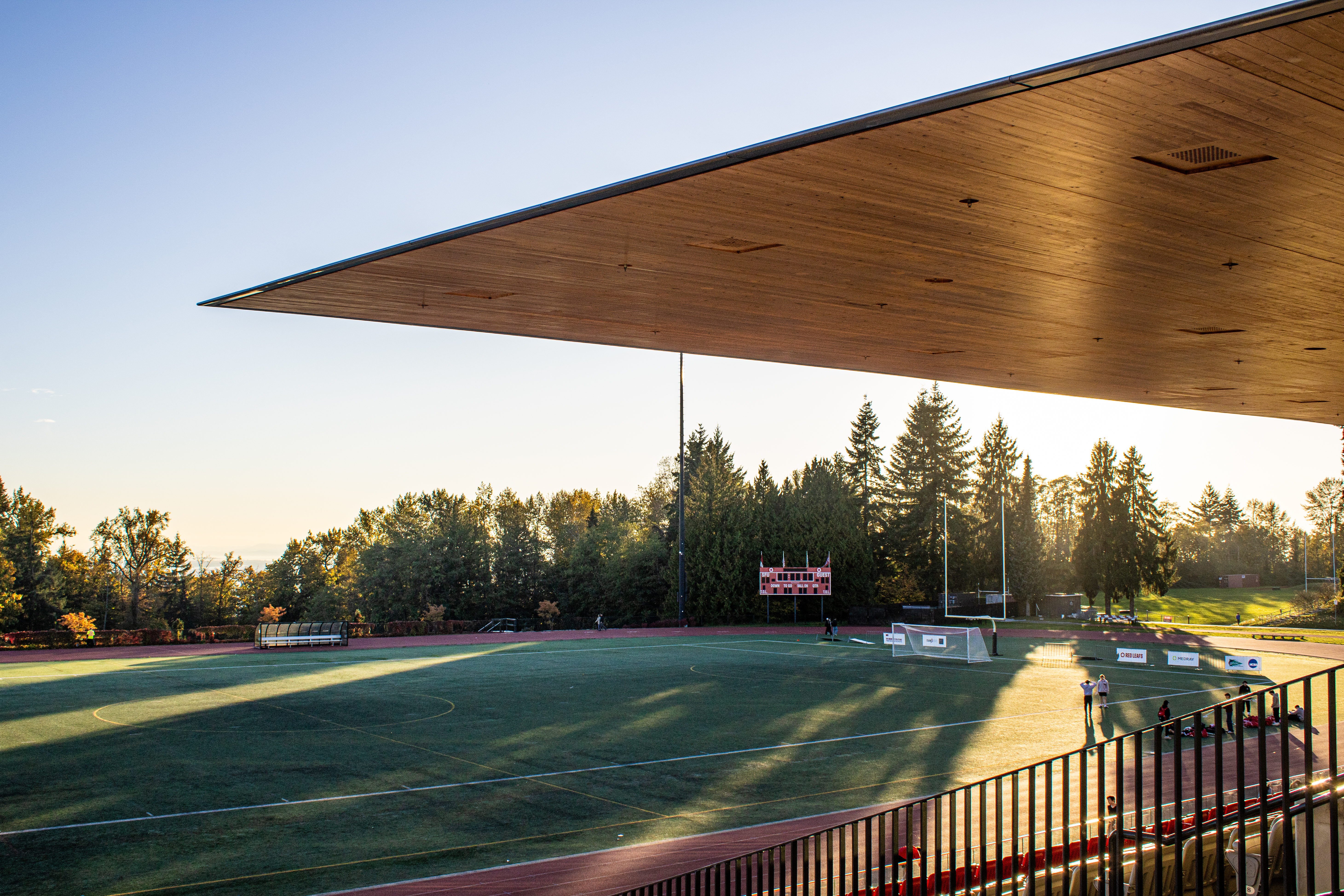
Today, SFU stands as the only non-American institution in the National Collegiate Athletic Association (NCAA), while most Canadian schools compete in U Sports, the country’s national sports governing body. Soon, however, that could change.
On September 17, the university announced it had commissioned a report “on the impacts of joining U Sports and/or other Canadian competitive frameworks.” Bob Copeland, senior vice-president of McLaren Global Sport Solutions Inc., was selected to conduct the review. Copeland, who previously investigated potential paths forward for SFU’s late football team, will provide an analysis in mid-November.
The Peak reached out to SFU for more information, but was unable to schedule an interview. “This is a complex situation,” the school wrote in a press release. “The SFU executive will make their decision aligned with SFU values and based on what is best for the university. They will consider many factors, including the independent consultant’s report, non-sport-related impacts of competing in the US, feedback from student-athletes, and financial implications, among others.” The Peak also contacted provost and vice-president academic Dilson Rassier, the spokesperson for the media release, but did not hear back by the publication deadline.
Jordan Thorsen, president of SFU’s Student-Athlete Advisory Committee (SAAC), corresponded with The Peak for more information. SAAC “bridges the gap between administrative personnel and the student-athlete body at SFU.”
“Student-athletes have been given the opportunity to share their thoughts with the independent consultant via survey. The executive committee of the SAAC has met with the consultant to voice our opinions as well,” Thorsen explained.
However, “there has not been any direct engagement by the university administration with student-athletes on this issue. Neither the president nor vice-president academic have invited SAAC to any discussions prior to the hiring of the consultant,” he said.
“Our poll of student-athletes has shown a unanimous desire to remain an NCAA affiliate. As such, the SAAC believes that SFU should remain in the NCAA,” Thorsen wrote. “We understand that the consultant is being tasked to assess the issue holistically, but if the university was serious about understanding the student’s position, surely, they should have spoken to us directly.”
Should the university elect to leave the NCAA, current opportunities for SFU varsity student-athletes may become limited. “Canadian collegiate athletic frameworks do not support many of our current programs, such as softball, golf, certain styles of wrestling, and nearly 60% of our NCAA-sanctioned track events,” Thorsen said. “SFU is able to field competitive sports programs largely because of the appeal of the NCAA framework. Take this away, and our potential to recruit high-level athletes is reduced immensely.”
Regarding why SFU may leave the NCAA, “as we understand, the biggest reason for considering a switch is sustainability,” Thorsen explained. “The main point of friction in terms of sustainability seems to be the uncertainty attached to the cost of currency exchange rates associated with operating an athletic program in the US,” he added.
“Athletics isn’t the only department or faculty that has or does business down south. The entire university, since its inception in 1965, has and continues to travel and do business, research, and engage with others throughout the world,” said Thorsen. “The uncertainty of currency rates have always been a part of the vice-president finance’s operations and budgets.”
As reported by The Province, “According to SFU sources, there are concerns there about things like rules being brought into the NCAA to limit the participation of transgender athletes.” In February, the NCAA announced a new policy in line with the Trump administration’s executive order, which allows only athletes assigned female at birth to compete in women’s sports. In March, SFU Queer Collective created a petition and sent a letter to the university to reconsider its NCAA membership in response to this policy. President Joy Johnson responded, “The changes to NCAA policy are in conflict with our values at SFU, and we are concerned about the impact on student-athletes and our broader community, as well as possible conflicts with BC and Canadian legislation.”
“We want to be part of the world’s most pre-eminent collegiate sports program. We also want to get a globally recognized, Canadian education. SFU is the only university in the world that can offer such an experience.”
— Jordan Thorsen, SFU Student-Athlete Advisory Committee president
“We choose the NCAA. We hope the university does too.”