

By: Phone Min Thant, Arts and Culture Editor
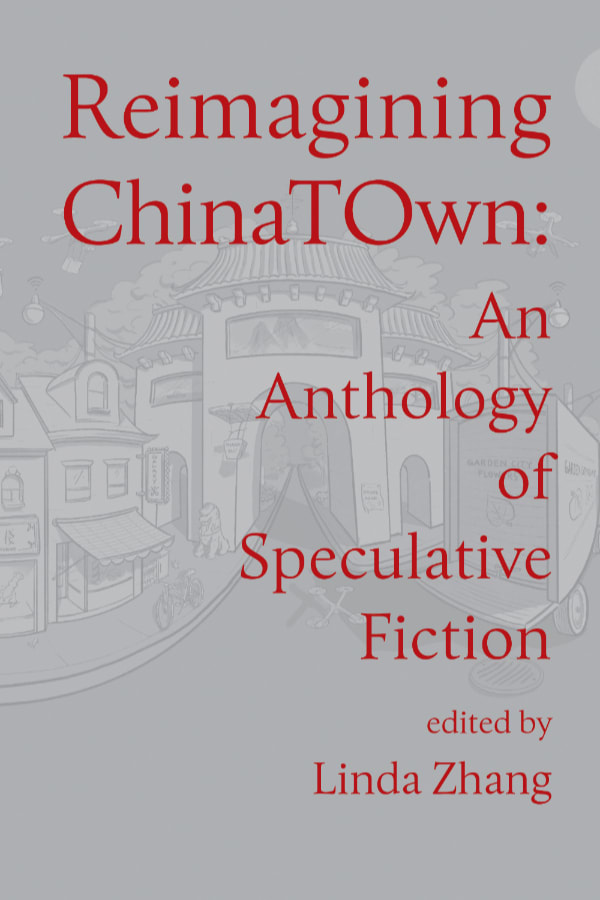
The year is 2050. Do Brussels sprouts go into a Chinese hotpot? Stephanie certainly has her doubts as she shares a large bowl of hotpot with several businessmen intent on “culturally redeveloping” Toronto’s Chinatown to cater to North American consumption. Thankfully, Brussels sprouts are not in hotpot yet — as far as I know — and Stephanie remains a character in “Hotpot Politics,” a chapter (by Helen Ngo) in Reimagining ChinaTOwn, an anthology of speculative fiction short stories edited by Linda Zhang. The foreword, written by the renowned Asian-American architect Jeremy Jih, described the book, and its contents as engaging “the complexities and dynamics of power, identity, generational change, nostalgia, and xenophobia.” As characters find answers to belonging in a changed world, navigating complex intertwinings of childhood and memories amid modernization and development — sometimes forced — they discover unity among diverse identities that meet in one of North America’s largest Chinatowns 25 years from now.
Each of the stories in the book focus on different themes with very divergent styles, written by authors whose backgrounds — often from immigrant families with artistic careers — have influenced the way they (re)imagine their connections to Chinatown, amid technological and social changes that have historically and continue to impact such a critical junction of communities, culture, arts, and identities. One of my favourite parts of the book was Zhang’s introduction. Describing the history of Chinatowns across North America, from San Francisco’s to Toronto’s, diving deep into how the current iterations of these cultural spaces have been made to conform to mainstream Canadian and American views — “a kind of consumable caricature model of Chinese architecture” — that came with both economic and political survival but also their continued othering. She puts this in the context of COVID-19, where anti-Asian sentiments caused the further marginalization of Chinatowns and their residents. The book is a direct “act of resistance.”
The stories reflect Zhang’s vision of resistance: from Ngo’s light-hearted quips at adapting hotpot to cater to Western tastebuds, to Tiffany Lam’s defence of the neighbourhood’s favorite restaurant from demolition and redevelopment teams (“Tasty”), and Razan Samara’s (“Planting Seeds”) and Eva Chu’s (“Accept”) longing for childhood nostalgia in Toronto’s Chinatown, each story treats the neighbourhood (or the future vision of it) both as a pained victim of forced changes but also a hallmark of community resilience and continuity. Similarities between the book’s settings and Vancouver’s Chinatown can be drawn in many instances.
Reading the book, I fondly remembered the congee and tea eggs I had with my grandparents at the Chinatown back home across the Pacific — despite having no connection to any similar North American locations. Reimagining ChinaTOwn has that effect on you that transports you to such memories, and you can’t help but smile along (or sometimes feel the characters’ melancholy) as each story unfolds.
“This book deserves to be cherished, read, and reread”